Mental Disorders: Impact, Incidence, Prevalence, and Trends (VCE SSCE Health and Human Development): Revision Notes
📚Revision Notes
Mental Disorders: Impact, Incidence, Prevalence, and Trends
Introduction
Mental health is a significant health and wellbeing issue for young Australians. According to the Australian Institute of Health and Welfare, too many young people experience discrimination, stress, anxiety or depression. Mental disorders contribute more to the burden of disease for youth than any other condition, making this a critical area requiring attention and action.
Important
Mental disorders contribute more to the burden of disease for youth than any other condition, making this the single most significant health issue affecting young Australians.
Understanding mental health conditions
Mental health conditions include both mental health problems and mental disorders. It's important to understand the distinction between these two terms.
Mental health problems have a negative impact on a person's thoughts, feelings and social abilities, but are often temporary and disappear with time. Examples include:
- Anger
- Changed eating patterns
- Loneliness
- Self-esteem issues
- Sleep problems
- Increased stress levels
Mental disorders are more serious conditions that affect how we feel, think and behave with greater severity and for prolonged periods. They include conditions such as anxiety and depression.
Note
The key distinction is duration and severity: mental health problems are temporary and less severe, while mental disorders are prolonged and have greater impact on daily functioning.
Why the youth stage is significant
The youth stage is often characterised by mood swings created by hormonal changes and changes to the structure of the brain. Extremes of mood, from anxious and irritable to joyous and excited, are common. However, many adults with mental health conditions have the first onset of mental health problems in childhood or youth. This makes prevention and early intervention crucial in reducing the burden of mental health problems throughout the lifespan.
Important
Most mental disorders are first experienced in the late teens or early twenties, but may only fully emerge later in life. These conditions have a greater severity of impact and longer duration than mental health problems.
Focus on anxiety and depression
Of the conditions included under the 'mental disorders' umbrella, anxiety and depression are the two most common among both male and female youth in Australia.
Anxiety
Anxiety is an uneasy emotional state that may be brought on by an actual or perceived threat to the safety and wellbeing of an individual.
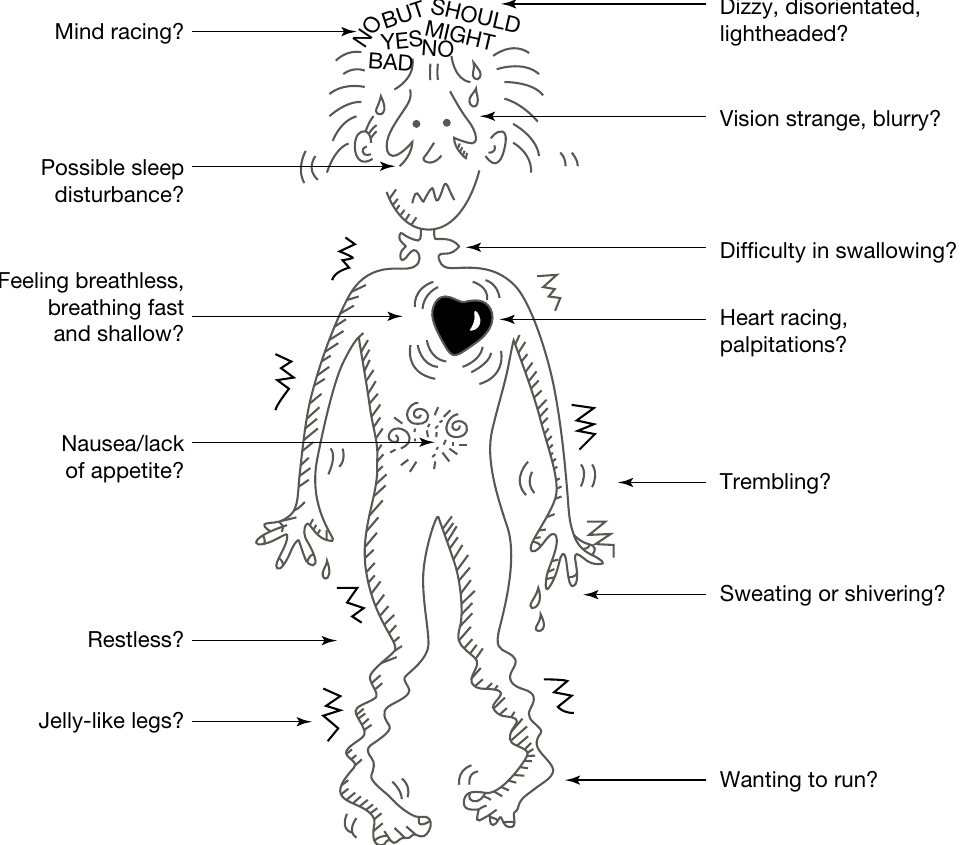
Everyone experiences anxiety at one time or another. It comes from a concern over having a lack of control over circumstances. Anxiety incorporates both the emotions and the physical sensations we might experience when we are worried or nervous about something. When anxiety is excessive, persists for many weeks without relief, or interferes with everyday life, an anxiety disorder may be diagnosed.
Note
Anxiety disorders cover a range of conditions including:
- Phobias - intense fear of specific objects or situations
- Panic disorder - fear that something bad is going to happen, creating a racing heart, shaking and difficulty breathing
- Generalised anxiety - persistent worry about various aspects of life
- Social anxiety - avoiding social situations due to concerns about how others see them or about communicating in an unfamiliar group
Depression
Depression involves extreme feelings of hopelessness, sadness, isolation, worry, withdrawal and worthlessness that last for a prolonged period and interfere with normal activities.
Everyone feels sad from time to time, but depression is more than feeling sad. Depression is a debilitating condition in which the feelings of sadness or worthlessness continue for an extended period. Depression is a feeling of low mood that lasts for a long time and affects everyday life rather than just 'feeling down'. It is a medical disorder with a biological and chemical basis.
Important
In its mildest form, depression doesn't stop a young person from leading a normal life, but it can make everything harder to do and seem less worthwhile. At its most severe, depression can make an individual feel suicidal and can be life-threatening.
Impact on dimensions of health and wellbeing
Anxiety and depression can have significant impacts across all five dimensions of health and wellbeing. Understanding these impacts helps explain why mental disorders are such a serious concern for young people.
Physical impacts
Anxiety causes the heart and breathing rates to increase, muscles to tense, and blood flow to be diverted from the abdominal organs to the brain. In the short term, anxiety prepares us to confront a crisis by putting the body on alert. However, these physical effects can also cause:
- Light-headedness, nausea, diarrhoea and frequent urination
- Sleep problems and panic attacks
- Increased heartbeat and shortness of breath
- Tight chest and upset stomach
- Muscle tension or shakiness
Depression causes chemical changes in the brain that affect hormone levels, resulting in appetite loss and disturbed sleep patterns due to changed serotonin levels. As a result:
- A young person's body may not be adequately rested, causing constant fatigue
- They may be unable to cope with day-to-day requirements at school
- Increased aches and pains may result, especially back pain, because changes to serotonin can alter sensitivity to pain
- The immune system may be weakened, making it harder for the body to fight infection
Mental and emotional impacts
Anxiety can cause young people to experience fear in inappropriate situations. They may constantly experience negative emotions relating to things that are a regular part of everyday life at school or home, or about things that aren't likely to happen in relation to their social group or family.
Depression affects a young person's mental and emotional wellbeing significantly. They may:
- Withdraw from their normal activities
- Find attending school or family occasions difficult
- Experience lowered self-esteem
- Have an inability to control emotions including pessimism, anger, irritability and anxiety
- Feel a reduced capacity to experience pleasure
- Be unable to enjoy usual activities with friends or family
- Experience poor concentration and memory
Note
Both the mental and emotional impacts of anxiety and depression can create a cycle where the condition makes it harder to engage in activities that might help improve wellbeing, such as socialising with friends or participating in enjoyable activities.
Social and spiritual impacts
Both anxiety and depression can lead to social isolation. Young people may withdraw from social interactions, not want contact with others, develop weaker social connections, and experience an altered friendship network.
Spiritually, these conditions can result in:
- Reduced motivation to achieve or see meaning in life
- Less hope and inner peace in life
- Feelings of worthlessness and lack of purpose
Summary table of impacts
The following table summarises how anxiety and depression can affect all dimensions of health and wellbeing:
| Physical | Mental | Emotional | Social | Spiritual |
|---|---|---|---|---|
| Increased heart rate, shortness of breath | Feeling stressed and anxious | Being unable to gain control of anxiety or worry | Social isolation through withdrawing from social interactions | Reduced motivation to achieve or see meaning in life |
| Nausea | Having negative thought patterns | Being unable to control sadness or pessimism | Not wanting contact with others, weaker social connections, altered friendship network | Less hope and inner peace in life |
| Difficulty falling or staying asleep, or restless sleep | Having low levels of confidence | Being unable to settle into activities or feel worthy of attention | ||
| Self-harm | Experiencing low self-esteem | Being unable to feel adequate or happy when undertaking social activities | ||
| Low energy and exhaustion | Being unable to feel satisfaction or hope | |||
| Overeating to improve mood or loss of appetite | ||||
| Increased aches and pains |
Important
Notice that mental disorders affect all five dimensions of health and wellbeing, not just mental health. This demonstrates the comprehensive impact these conditions have on young people's overall wellbeing and quality of life.
Incidence, prevalence and trends
Understanding the statistical data about mental disorders helps demonstrate why this is such a significant youth health issue.
Incidence
Incidence refers to the number of new cases of a condition occurring in a population over a specific time period.
Research into mental health diagnoses in Victorian Emergency Departments found that the number of young people presenting to hospital had increased for both physical and mental disorders. However, mental disorders have increased at a higher rate (46 per cent) compared to physical disorders (13 per cent).
Note
According to Orygen, the National Centre for Excellence in Youth Mental Health, "youth is the peak period for the emergence of mental ill-health", with the onset of most mental disorders falling from the early teens to the mid-20s, reaching a peak in the early 20s.
Prevalence
Prevalence refers to the total number of cases of a condition existing in a population at a particular time.
The rates of mental disorders are high among youth and contribute significantly to the overall burden of disease in this age group.
Note
Key prevalence statistics:
- About 26 per cent (or one in four) 16- to 24-year-olds had symptoms of a diagnosed mental disorder in the previous 12 months
- Anxiety disorders are the most common mental health problem experienced by young Australians
- One in six young Australians is currently experiencing an anxiety condition
- 15.4 per cent of Australians aged 16 to 24 have experienced an anxiety disorder in the last 12 months
- 7.7 per cent of 11- to 17-year-olds met the criteria for major depressive disorder
Psychological distress relates to unpleasant feelings and emotions that affect an individual's level of functioning. Recent data shows:
- In 2017-18, 13 per cent (2.4 million) Australians aged 18 and over experienced high or very high levels of psychological distress, a 12 per cent increase from 2014-15
- High or very high levels of psychological distress were more often reported by females than males (15 per cent and 11 per cent respectively)
- Of all age groups, young people (aged 18-24) were most likely to experience high or very high levels of psychological distress (15.2 per cent)
Important
Gender differences:
- The prevalence of major depressive disorder was higher in females than males (11 per cent compared with 4.5 per cent)
- Of males aged 16-17 years, 8.2 per cent met criteria for major depressive disorder, compared with 19.6 per cent of 16- to 17-year-old females
- A greater proportion of female than male respondents identified mental health as a concern (35.1 per cent compared with 25.0 per cent)
Trends
Trends refer to patterns or changes over time.
The 2017 Young Minds Matter report suggests that overall rates of mental conditions have remained constant, but there has been an increase in the proportion of youth experiencing a major depressive disorder (from 2.9 per cent in 1998 to 5 per cent in 2013-14).
Mission Australia's 2018 report found:
- Three in ten young people identified mental health as an important issue facing Australia today (30.6 per cent)
- For the first time in 2020, young people were asked to report on how much of the time they felt stressed in the past four weeks
- More than four in ten (42.6 per cent) young people responded that they felt stressed either all of the time or most of the time
Burden of disease
The Australian Institute of Health and Welfare Australian Burden of Disease Study 2015 shows that from the ages of 15 to 24, a variety of mental and substance use disorders accounted for a large proportion of the non-fatal burden of disease.
Note
DALY (Disability-Adjusted Life Years) is a measure used to quantify the burden of disease. It combines years of life lost due to premature death and years lived with disability.
Leading causes for females aged 15-24
The top causes of disease burden for young females are:
- Anxiety disorders (14.0; 11%)
- Depressive disorders (11.1; 8.7%)
- Asthma (7.9; 6.2%)
- Suicide/self-inflicted injuries (6.6; 5.2%)
- Bipolar affective disorder (5.7; 4.5%)
- Back pain and problems (5.7; 4.4%)
- Upper respiratory conditions (5.1; 4.0%)
- Polycystic ovarian syndrome (5.1; 4.0%)
- RTI/motor vehicle occupant (5.0; 3.9%)
- Alcohol use disorders (4.8; 3.8%)
Leading causes for males aged 15-24
The top causes of disease burden for young males are:
- Suicide/self-inflicted injuries (16.9; 11%)
- Alcohol use disorders (10.7; 7.1%)
- RTI/motor vehicle occupant (10.1; 6.7%)
- Depressive disorders (8.0; 5.3%)
- Asthma (7.2; 4.8%)
- Anxiety disorders (6.8; 4.5%)
- Upper respiratory conditions (5.5; 3.6%)
- Other musculoskeletal (4.5; 3.0%)
- Acne (4.4; 2.9%)
- Back pain and problems (4.3; 2.9%)
Important
Notice the gender differences: anxiety and depression rank highest for females, while suicide ranks highest for males. However, mental and substance use disorders appear prominently in the top causes for both genders, demonstrating the significant burden these conditions place on youth health.
Suicide statistics
Suicide is the biggest killer of young Australians and accounts for the deaths of more young people than car accidents. Key facts include:
- Of suicide deaths, 77 per cent were male deaths
- The rate of suicide is slowly declining in Australia, but many more males than females continue to die by suicide
- Aboriginal and Torres Strait Islander young people and LGBTIQ young people are also at higher risk
- The majority of those who attempt suicide have had a previous diagnosis of a mental disorder
Note
LGBTIQ is an acronym for commonly used definitions of people who are not heterosexual: lesbian, gay, bisexual, transgender, intersex, questioning.
Summary
Key Points to Remember:
- Mental disorders are the leading cause of disease burden for young Australians aged 15-24, affecting youth more than any other health condition
- One in four young people (26%) aged 16-24 have experienced a diagnosed mental disorder in the past year, with anxiety and depression being the most common
- Mental disorders affect all dimensions of health and wellbeing - physical, mental, emotional, social and spiritual - not just mental health
- Youth is the peak period for the emergence of mental ill-health, with most mental disorders first appearing from early teens to mid-20s, peaking in the early 20s
- Gender differences exist - females experience higher rates of anxiety and depression, while males have higher rates of suicide and alcohol use disorders. However, mental health issues affect young people of all genders and backgrounds
Exam tips
Summary
Exam Preparation Tips:
- When discussing mental disorders, always distinguish between mental health problems (temporary, less severe) and mental disorders (prolonged, more severe)
- Remember the five dimensions of health and wellbeing: Physical, Emotional, Mental, Social, Spiritual (use the acronym PEMSS)
- Be prepared to cite specific statistics, but focus on the patterns rather than memorising every number
- Understand gender differences in mental health - females have higher rates of anxiety and depression, while males have higher rates of suicide
- Know that youth (15-24 years) is the peak period for the emergence of mental disorders
- Be able to explain both the individual impacts (on health and wellbeing) and population impacts (burden of disease) of mental disorders