Considerations When Becoming a Parent (VCE SSCE Health and Human Development): Revision Notes
📚Revision Notes
Considerations When Becoming a Parent
Introduction to parenting
Parenting involves much more than just a biological relationship with a child. It encompasses the entire process of raising a child and promoting their physical, emotional, social, and intellectual development from birth to adulthood. This includes biological parents, step-parents, adoptive parents, foster parents, and other carers who carry out parenting responsibilities.
The parenting role includes both the daily behaviours parents use to meet their child's needs and the underlying beliefs and attitudes that guide these behaviours.
The UN Convention on the Rights of the Child
The United Nations Convention on the Rights of the Child establishes fundamental rights that every child should have. These rights form the foundation for understanding children's needs and parental responsibilities.
Note
Fundamental Rights of Every Child:
- The right to live a full life
- The right to good quality healthcare, clean water, nutritious food and a clean environment
- The right to a standard of living that meets their physical and mental needs
- The right to relax, play and participate in leisure activities
- The right to protection from harm and mistreatment, both physically and mentally

These rights establish that children must grow up in an environment where they can reach their full potential in life. Parents, with support from caregivers, family members, communities and governments, are responsible for ensuring these rights are fulfilled.
Changing social factors
Over the past 50 years, significant social changes have transformed how parents carry out their responsibilities. These changes include:
- More flexible work hours
- Increased numbers of women in full-time employment
- More people working from home
- Varying income and education levels
- Higher divorce and remarriage rates
- Increased single parenthood by choice
These factors mean that parenting responsibilities can be carried out in different ways and under different circumstances.
Parenting knowledge and skills
Parents must understand and respond appropriately to children's needs and rights from birth onwards. This requires both skills and knowledge. However, parenting knowledge can be limited by lack of exposure to parenting experiences.
Smaller family units today mean:
- Less opportunity to observe parents interacting with siblings
- Reduced contact with extended family networks
- Decreased confidence in parenting skills
Note
As a result, many people now gain parenting information from sources such as parenting courses, online sources, social networking sites, media, and professional services rather than solely from family experiences.
The responsibilities of parenting
Adults embarking on parenthood need to carefully consider three key questions about their readiness for this responsibility:
- Can a child's needs be met?
- Can an environment that promotes optimal development be provided?
- Are the changes that parenting will bring acceptable?
Can a child's needs be met?
A child's needs are constantly changing, and parents face the challenging task of identifying these needs and determining how best to meet them. Children have four main types of needs: physical, social, emotional, and intellectual.
Physical needs
Physical needs are linked to basic survival. Parents or carers must provide essential elements that enable physical health and wellbeing and support development.
Note
Essential Physical Provisions:
- An appropriate quantity and variety of nutritious food
- Conditions for adequate sleep
- Safety and protection from danger
- Adequate housing
- Access to healthcare
These provisions enable physical health and wellbeing and support development. A child who is cold, sick or hungry will have difficulty socialising or learning. When children feel unsafe or fearful, all their concentration goes towards calming the fear, leaving no capacity for other activities.
Social needs
Social needs are satisfied through interaction with others. This involves socialisation, which is the process by which children acquire beliefs, values and accepted behaviours through imitation, observation, family interaction and education systems.
To meet social needs, parents must provide:
- Love and attention
- Confidence-building experiences
- Opportunities for interaction with others
- Chances for achievement
- Encouragement of independence
Emotional needs
Children need to feel loved and wanted by their caregivers. Parents can meet emotional needs by:
- Using positive parenting practices
- Providing warmth and praise
- Creating emotional security and stability
- Maintaining good mental health and wellbeing themselves
- Building resilience
Through healthy relationships with parents and caregivers, children learn self-respect and develop confidence, achievement, independence and freedom. Human beings fundamentally need relationships with others and to feel love and belonging.

Intellectual needs
Intellectual needs include learning, communication and skill development. Parents can meet these needs by:
- Creating opportunities for problem solving
- Encouraging learning and understanding
- Supporting skill development
- Allowing children to have control over their environment
Meeting intellectual needs helps children develop the knowledge, understanding and curiosity they need to make sense of their world.
Can an environment for optimal development be provided?
Children need opportunities to develop physically, socially, emotionally and intellectually. Providing an optimal environment involves several key elements.
Physical and intellectual development
Physical and intellectual development involves children using their senses and actions to learn and grow, progressing from basic reflexes in newborns to more complex motor skills and thought processes in later childhood. Families need to provide:
- Opportunities for new experiences
- Age-appropriate toys
- Experiences that allow motor and sensory stimulation
Social and emotional development
A positive parent-child relationship allows children to develop socially through:
- Positive communication
- Encouragement of desirable social behaviour through praise
- Direct instruction from parents
- Appropriate sanctions (rewards or punishments)
- Parents acting as role models
- Meaningful interaction
Note
For emotional development, children need to learn to form appropriate feelings and reactions to situations. Parenting involves managing a child's behaviour through establishing limits, providing clear instruction, and enforcing appropriate consequences for problem behaviour.
Are the changes that parenting will bring acceptable?
With parenting, personal freedom gives way to responsibility. Prospective parents should consider whether they are prepared for significant lifestyle changes.
Pre-birth considerations
Parents-to-be should consider whether changes in diet and lifestyle are needed to ensure a healthy pregnancy and healthy child.

After the baby arrives
New parents often find it difficult to do all the things they used to do while caring for a newborn. They must be prepared to let some things go for a while. Changes may include:
- Changes in the couple's relationship
- Increase or change in household duties
- One parent becoming the sole provider
- One parent becoming a stay-at-home carer
- Altered financial priorities
- Need to balance career responsibilities and family commitments
Preparing for increased responsibility
Preparation might involve:
- Building up savings
- Deciding whether one parent will stay home full-time
- Taking newborn education or parenting classes
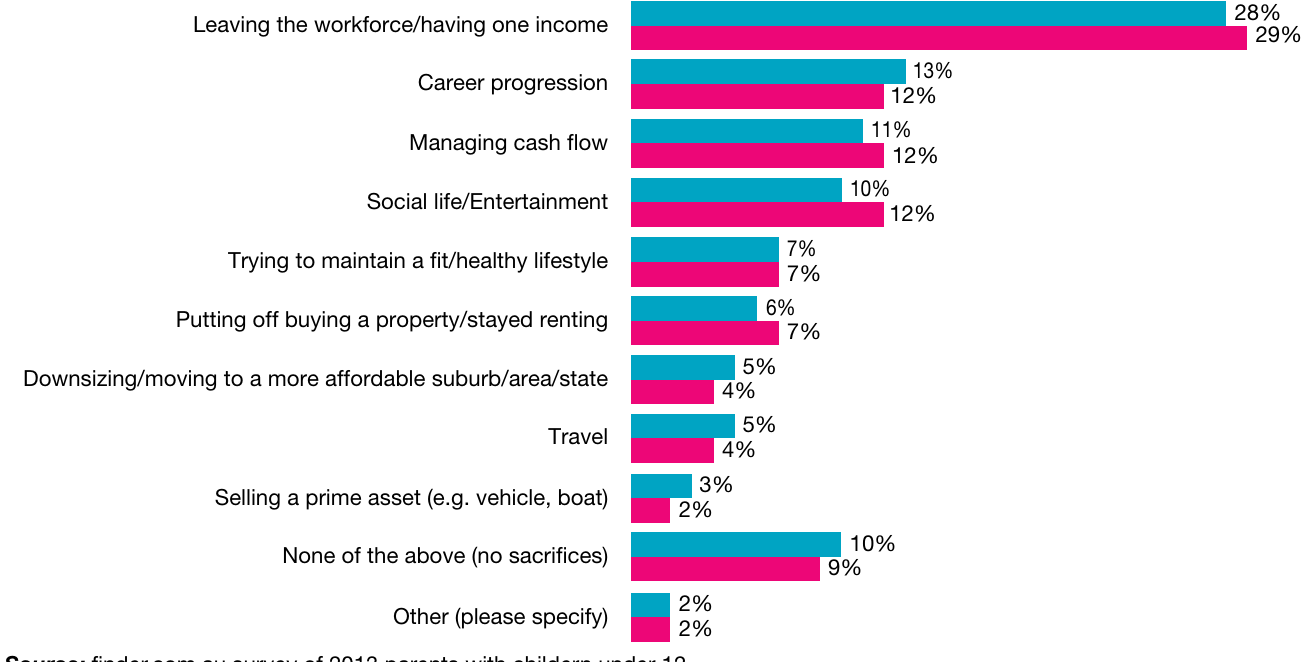
The chart shows the various sacrifices parents make when having their first child, with leaving the workforce or having one income being the most common sacrifice at 28-29%, followed by career progression, managing cash flow, and changes to social life and entertainment.
Relationship considerations
Important
To help get through the initial adjustment period, parents should have a strong relationship, develop good communication skills, and build a supportive network of friends and family to lean on. Spending less time together can sometimes lead to relationship friction and communication issues, making a strong foundation essential.
Parents should also:
- Be prepared for a significant decrease in social events they can attend
- Expect less time together as a couple
Social and emotional support for new parents
Once a person decides to become a parent or caregiver, they will need both social and emotional support. Parenting involves learning on the job, often without any previous experience of child rearing.
Social support
Social support refers to informal or practical assistance from relatives, friends, neighbours or the community. For new parents, this could include:
- Financial assistance
- Babysitting
- Help with meal preparation
- Care of other children
- Sharing of information
- Assistance with transport
- Help in case of emergencies
- Help with household tasks
Benefits of social support
Having family members, such as grandparents, available and prepared to babysit provides multiple benefits:
- Allows parents to work, increasing financial resources
- Greater financial resources enable parents to provide adequate housing, clothing and food
- Contact with extended family teaches children about history and culture through stories
Impact on parent and child wellbeing
Note
Research shows that parents with higher levels of social support are better able to cope with stress, are more resilient, and experience better mental health.
For example, women who receive strong social support from their families during pregnancy appear to be protected from sharp increases in stress hormones, making them less likely to experience depression after giving birth.
Good social support also benefits the child directly. Having other people in the child's life who show them affection, praise and warmth:
- Strengthens the child's trust and emotional security
- Increases the likelihood of them becoming competent and independent when interacting outside the family in later life
Emotional support
Emotional support refers to the feeling that others understand your needs and will try to help you. The idea of parenting can bring a mix of both positive and negative emotions.
Emotional challenges
Fears about whether they will be a good parent can lead to:
- Doubts and negative thoughts
- Stress for adults considering parenthood
Once the baby arrives, parents may experience:
- Frustration at losing their previous lifestyle
- Regret about reduced financial independence
- Concerns about career advancement
- Loss of spontaneity in relationships with partners or friends
The adjustment period
The birth of a baby involves a significant period of adjustment. A survey conducted by Healthdirect Australia revealed the biggest challenges facing new parents were:
- Lack of sleep for themselves and the baby
- Feeding difficulties
- Recovering from birth
- Juggling care for other children
During pregnancy, the top concern was that something might be wrong with their baby.
The "baby blues"
Note
During the first week after birth, up to 80 per cent of mothers experience the "baby blues", which can involve feelings of anxiety, mood swings, and irritability. These feelings tend to peak three to five days after the birth and are mainly caused by hormonal changes after childbirth.

Sources of emotional support
Emotional support can come from various sources:
- Grandparents sharing their own experiences
- Encouragement from others
- Active listening
- Reassurance
- Non-judgemental advice
People who are willing to share ideas and advice in a non-judgemental way can increase self-esteem and resilience for parents, helping them see things in a more positive light and identify ways to cope.
Importance of adequate support
Having adequate social and emotional support is crucial for parents and carers. Parents who are well supported:
- Are better able to provide for their child's needs
- Feel less stressed
- Feel better able to relate to their child
- Make better decisions
- Model appropriate behaviours
Important
All of this is positive for the child's mental health and wellbeing. Research shows that parents who perceive themselves as competent are more likely to have children with better health, wellbeing and development.
Children whose needs are met and who have strong social and emotional skills are likely to become adults who find it easier to create and maintain supportive social networks, increasing the likelihood that they will be effective parents themselves.
Resources new parents need
Families must be able to access and use resources effectively to undertake their parenting responsibilities. The key resources include time, knowledge, material resources, and government support at all levels.
Time as a resource
The amount of time a person can put into the role of parenting is a significant consideration when becoming a parent. Time is a major resource that impacts parents' ability to use other resources required for effective parenting.
Knowledge
Parents' level of education and knowledge is a crucial resource that affects the developing baby in numerous ways.
Health literacy
Knowledge of health and wellbeing behaviours (also known as "health literacy") can increase the probability of parents caring for themselves in ways that promote the health, wellbeing and development of their unborn baby. Parents with good health literacy are more likely to:
- Access healthcare services
- Consume nutritious food
- Avoid smoking
- Avoid alcohol and drugs
Parenting knowledge
Education increases knowledge about important aspects of childcare, such as:
- The benefits of breastfeeding
- Ways to avoid the risk of Sudden Infant Death Syndrome (SIDS)
Economic benefits
Note
Parental education also increases employment opportunities, improves the ability to generate adequate income, and enables access to resources such as adequate nutrition and healthcare.
Material resources
When a newborn child enters a household, significant financial changes occur. Income may decrease temporarily or permanently as carers withdraw from the workforce. Alternatively, household income may increase due to becoming eligible for family assistance.
Changes in spending patterns
According to the Australian Institute of Family Studies, parents of first-born children report:
- Increased expenditure on groceries
- Increased spending on health and wellbeing
- Increased spending on children's clothing
- Reduced levels of spending on holidays
Financial considerations
In terms of financial resources, new parents need to consider:
- Who will be the primary caregiver
- Whether the primary caregiver will work after the birth
- How family values affect these decisions
- Current financial commitments
Associated costs
New associated costs during and after pregnancy may include:
- Doctor and hospital bills
- Medical scans and special tests
- Maternity clothes
- Baby clothes and equipment
- Childcare (whether provided by family members or childcare centres)
Money is required for items to clothe, transport, bathe and feed a baby, as well as to provide a safe place to sleep and explore.
Federal government resources for new parents
The Australian federal government provides several important resources to support new parents.
Medicare
Medicare is Australia's universal health insurance scheme that provides free or subsidised treatment for all Australians through the public health system. For pregnant women, Medicare offers:
- Access to a range of Medicare-funded health services throughout pregnancy
- Free treatment in public hospitals
Benefits of Medicare
By making healthcare more affordable, Medicare:
- Increases accessibility to antenatal care (medical care given to pregnant women before their babies are born)
- Assists with early detection of issues during pregnancy
- Enables medical intervention when required
- Provides access to professional health workers such as nurses, midwives, doctors and obstetricians
- Covers the birthing procedure at no charge to the patient in a public hospital
Dad and Partner Pay
Dad and Partner Pay provides new dads or partners, including same-sex partners, with up to two weeks of government-funded pay while on unpaid leave from work during the first year following the birth or adoption of a child.
Benefits of Dad and Partner Pay
This programme provides partners with a chance to:
- Take time off work to bond and connect with the baby
- Learn by doing
- Share experiences as a family
- Support their partner
Payment details
Note
Dad and Partner Pay provides up to two weeks of government-funded pay at the rate of the National Minimum Wage (in 2020, $753.90 per week before tax).
Other federal benefits
Parental Leave Pay
This is a short-term payment while you are on leave from work to care for your new child.
Family Tax Benefit
This is a payment that helps eligible families with the cost of raising children.
Child Care Subsidy
This provides assistance to help parents with the cost of childcare.
The Pregnancy, Birth and Baby helpline
This service provides a free phone and online service for pregnant women and new parents who have a baby up to 12 months of age. The helpline:
- Provides information and advice on topics such as maternal nutrition, breastfeeding, baby development and sleeping habits
- Offers direction to maternity-related services including specialist and support services
- Is delivered by qualified maternal child health nurses
Raisingchildren.net.au
This is the Australian government parenting website that aims to equip parents with the information they need to optimise the health and wellbeing of their child.
State government resources for new parents
The Victorian state government provides several crucial resources to support new parents and their children.
Maternal and Child Health Service
The Maternal and Child Health Service is a primary health service that is free for all Victorian families with children from birth to school age.
Availability and funding
- There are maternal and child health centres in every local government area in Victoria
- Centres are jointly funded by state and local governments
- Usually managed by local government
- Staffed by highly qualified maternal and child health nurses
How the service works
After a baby is born:
- The hospital notifies the local service
- The nurse contacts a parent during the first days at home to arrange an appointment
- This is usually a home visit where the nurse provides:
- Location of the nearest centre
- Information about further visits and services
- How to contact a maternal and child health nurse at any time
Service provision
Note
The service is available 52 weeks of the year and provides appointments to check a child's health and wellbeing, growth and development. It offers ten key consultations at specific ages and stages from birth to three and a half years, focusing on parenting, growth, development, promotion of health and wellbeing and safety.
The service also provides social support and offers referrals and links with local communities.
The Maternal and Child Health (MCH) app
The Victorian Government has developed the Maternal and Child Health (MCH) app as a reliable tool for parents and carers to find essential and trustworthy information.
Features of the app
The app:
- Sends reminders about upcoming MCH appointments
- Assists parents and carers in finding useful contacts
- Allows users to search for more information via a digital assistant

My Health, Learning and Development Record
This resource is given to the parents of every newborn child in Victoria. It is designed for parents to record their child's milestones, health and wellbeing, growth, development and immunisations.
Features of the record
The record provides:
- A paper-based record of a child's health and wellbeing, growth and development
- A reminder for parents to attend maternal and child health visits and ask any questions
- Important child health and development education
- A booklet for information to be recorded at each visit to a maternal and child health nurse
- A way of communicating between parents, healthcare professionals and other healthcare providers
- Space for photos and plastic sleeves for important documents
National Children's Digital Health Collaborative
Note
This initiative aims to ensure every child in Australia can have a comprehensive digital health record from conception through the critical first years and adolescence.
It will include:
- A National Child Digital Health Record
- Upload of school immunisation records to the Australian Immunisation Register
- A National Digital Pregnancy Health Record
- National Digital Child Health Checks
Maternal and Child Health Line
The Maternal and Child Health Line is a telephone support service that provides 24-hour, seven-day-a-week support to families throughout Victoria with children from birth to school age.
Services provided
The line is staffed by qualified maternal and child health nurses who provide:
- Information, support and advice regarding child health and wellbeing
- Guidance on nutrition and breastfeeding
- Support for maternal and family health and wellbeing
- Parenting advice
- Links to the Maternal and Child Health Service
- Connections to other community, health and support services
Local government resources for new parents
Local governments implement a range of strategies and programmes to promote the health, wellbeing and development of children. Creating communities where children can grow up active, connected and healthy significantly influences lifelong health and also supports the health and wellbeing of their families, friends and neighbours.
Recreation facilities
Local governments provide access to:
- Walking and cycling paths
- Parks (including playgrounds)
- Gardens
- Public swimming pools
These facilities encourage physical activity and social interaction for children and families.
Community health and wellbeing plans
These plans aim to:
- Address the needs of the local community
- Promote healthy lifestyles
- Encourage healthy eating
- Promote exercise
- Facilitate social interaction
Immunisation programmes
Local governments implement immunisation programmes within the local community as part of the National Immunisation Program. These protect children from serious diseases.
Long daycare
Long daycare is a centre-based form of childcare service that:
- Provides all day or part-time care for children of working families and the general community
- May be run by local councils
- May provide care for school children before and after school and during school holidays
Locally based maternal and child health services
These services:
- Give parents support, information and access to professional advice
- Cover a range of health and wellbeing-related concerns from child behaviour and nutrition to breastfeeding and family planning
- Are jointly funded by the Victorian Government and local councils
- Are usually operated by local councils
Playgroups
Local governments provide playgroups for infants, toddlers and preschoolers and their parents or caregivers.
Benefits of playgroups
Note
Adults stay with their children at playgroup, which gives parents and carers the chance to meet other people going through similar experiences. Playgroups provide information about community, health and support services available within the local community, support social development for children, and provide social and emotional support for parents.
Remember!
Summary
Key Points to Remember:
-
Parenting is a significant responsibility that involves meeting a child's physical, social, emotional and intellectual needs while providing an environment for optimal development.
-
Support networks are essential – both social support (practical assistance) and emotional support (understanding and encouragement) help parents cope with the demands of parenting and promote better outcomes for both parents and children.
-
Multiple resources are required for effective parenting, including time, knowledge, material resources (money and equipment), and government support at federal, state and local levels.
-
Government resources provide crucial assistance through healthcare (Medicare), financial support (parental leave, family tax benefits, childcare subsidies), information services (helplines and websites), and health monitoring (Maternal and Child Health services).
-
Lifestyle changes are inevitable – prospective parents must consider how parenting will affect their relationship, career, finances, social life and personal freedom, and prepare accordingly for these changes.