Key Skills (VCE SSCE Health and Human Development): Revision Notes
📚Revision Notes
Key Skills
Introduction
Note
This topic covers three essential skills you need to develop for your studies in Health and Human Development. These skills are interconnected and build your understanding of how global organisations work together to improve health outcomes worldwide.
The three essential skills are:
- Understanding and justifying the United Nations' Sustainable Development Goals
- Analysing SDG 3 and how it connects with other goals
- Explaining the World Health Organization's priorities and work
These skills help you understand how global organisations work together to improve health, wellbeing and human development worldwide.
Describing the objectives of the UN's Sustainable Development Goals and justifying their importance
What are the Sustainable Development Goals?
In 2016, the United Nations launched the Sustainable Development Goals (SDGs), sometimes called the global goals. These goals guide international action through to 2030. The SDGs provide a shared framework that all countries can work towards, whether they are high-income or low-income nations.
The five Ps framework
Important
The SDGs focus on five broad areas, often called the five Ps:
- People - ending poverty and hunger, ensuring dignity and equality
- Planet - protecting natural resources and climate
- Prosperity - ensuring economic growth benefits everyone
- Peace - promoting peaceful and inclusive societies
- Partnership - working together to achieve the goals
An important feature of the SDGs is that they are integrated and interdependent. This means the goals are interconnected, and progress in one area often supports progress in others. The SDGs recognise that lasting improvements require partnerships rather than individual countries working in isolation.
Main objectives of the SDGs
The SDGs have three core objectives:
- End extreme poverty - eliminating the most severe forms of poverty globally
- Fight inequality and injustice - ensuring fair treatment and opportunities for all people
- Address climate change - tackling environmental challenges that threaten our planet
Achieving these objectives requires collaboration across governments, organisations, businesses and communities in all sectors.
Why were the SDGs introduced?
The SDGs were developed for three main reasons:
1. To replace the Millennium Development Goals
The Millennium Development Goals (MDGs) expired in 2015. A new set of goals was needed to continue guiding global development efforts.
2. To address unequal progress
Important
While significant improvements were made during the MDG era, these benefits were not shared equally. Many people were left behind, particularly:
- The poorest populations
- People disadvantaged by sex or gender
- Young children and older people
- People with disabilities
- People from certain ethnic backgrounds
- People living in remote or disadvantaged geographical locations
3. To tackle emerging global challenges
New issues arose that required international attention and coordinated responses. The SDGs were designed to address these contemporary challenges alongside ongoing development needs.
Why are the SDGs important?
As UN Secretary-General Ban Ki-moon stated, the SDGs represent "our shared vision of humanity and a social contract between the world's leaders and the people". They provide:
- A clear to-do list for improving conditions for people and the planet
- A blueprint for success that all 193 UN Member States agreed to follow
- A framework that addresses needs in both developed and developing countries
- A commitment that "no one should be left behind"
Note
The SDGs are important because they unite countries around common goals and create accountability for progress in improving lives globally. Unlike previous development frameworks, the SDGs apply to all countries - not just developing nations - recognising that every country has work to do to achieve sustainable development.
Describing key features of SDG 3 and analysing its relationships with other SDGs
Understanding collaboration between SDGs
An important concept to understand is collaboration. Different sectors and organisations work towards achieving different SDGs. However, their work interconnects with SDG 3 (Good health and wellbeing) because health, wellbeing and human development are outcomes of all the SDGs working together.
Note
When analysing relationships between SDGs, you need to consider how efforts to achieve one goal also help improve health, wellbeing and human development. This interconnected approach recognises that health doesn't exist in isolation - it's influenced by education, poverty, climate, gender equality, and many other factors.
Key features of SDG 3: Good health and wellbeing
SDG 3 focuses on ensuring healthy lives and promoting wellbeing for all people at all ages. The key features include:
Continuing progress from the MDG era:
- Reducing maternal mortality (deaths of women during pregnancy and childbirth)
- Reducing child mortality (deaths of children under five years)
- Ending epidemics of major diseases
Targeting communicable diseases:
- HIV/AIDS
- Tuberculosis (TB)
- Malaria
- Neglected tropical diseases
- Hepatitis
- Water-borne diseases
Addressing non-communicable diseases:
- Cardiovascular disease (heart disease and stroke)
- Diabetes
- Cancer
- Chronic respiratory diseases
Tackling emerging health issues:
- Promoting mental health and wellbeing
- Reducing deaths and injuries from road traffic accidents
- Reducing deaths from air, water and soil pollution
Health system strengthening:
- Achieving universal health coverage so all people can access preventative and curative medical services at affordable cost
- Ensuring access to essential medicines and vaccines
- Funding and training a skilled health workforce
- Building each country's capacity to prevent and manage potential health risks
Addressing harmful behaviours:
- Reducing harmful use of tobacco
- Reducing harmful use of alcohol
- Reducing use of other harmful drugs
Example: Malaria reduction through collaborative approaches
Example
Worked Example: How SDG 3 and SDG 13 Work Together
Let's examine how SDG 3 works together with other SDGs using malaria reduction as an example.
The malaria challenge:
Malaria is a life-threatening disease transmitted by mosquitoes. Young children and pregnant women face the greatest risk. The disease causes fever, headache, diarrhoea and vomiting. If left untreated, malaria can disrupt blood supply to vital organs, leading to death.
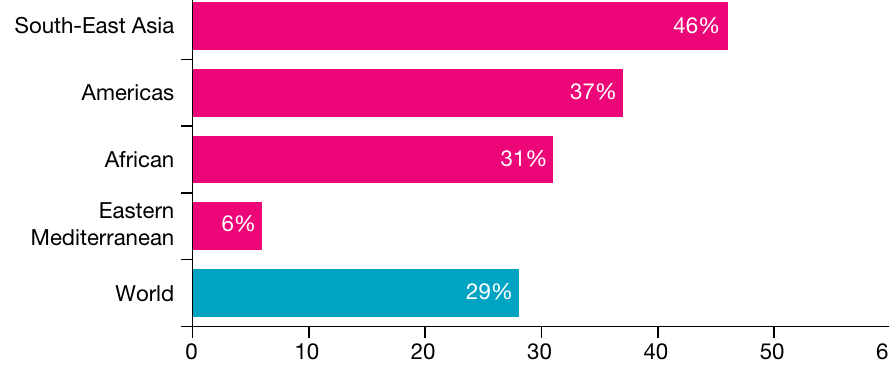
Between 2010 and 2015, significant progress was made in reducing malaria deaths across different regions:
How SDG 13 (Climate action) connects with malaria reduction:
Achieving further reductions in malaria mortality by 2030 depends not only on health interventions but also on addressing climate change through SDG 13: Climate action.
The relationship works like this:
- Over-reliance on fossil fuels produces greenhouse gases
- These gases contribute to global warming
- Rising temperatures create ideal breeding conditions for mosquitoes that carry malaria
- Without climate action, environmental conditions could undermine health sector gains
Collaborative actions needed:
To effectively reduce malaria mortality, collaborative approaches must include:
- Developing clean energy sources (SDG 13)
- Reducing vehicle emissions (SDG 13)
- Providing health interventions like mosquito nets and antimalarial drugs (SDG 3)
- Strengthening health systems (SDG 3)
This demonstrates how environmental action and health action must work together to achieve lasting results.
Impact on health, wellbeing and human development
Reducing malaria through collaborative approaches improves health, wellbeing and human development in multiple ways:
Physical health and wellbeing:
- Prevents life-threatening illness
- Reduces suffering from fever, headache and other symptoms
- Prevents disruption to internal organs
- Saves lives, particularly of children and pregnant women
Mental health and wellbeing:
- Reduces anxiety and stress associated with illness
- Improves quality of life for families
- Provides peace of mind
Human development:
- Education: Children can attend school regularly rather than missing classes due to illness, allowing them to develop knowledge and skills needed for future employment
- Economic participation: Adults can work consistently and earn income rather than losing work time due to illness or caring for sick children
- Standard of living: Families can maintain and improve their living standards when income isn't disrupted by illness
- Community participation: People have the energy and capacity to participate in their communities
- Decision-making: People can maintain control over decisions affecting their lives
Note
This example shows how addressing health issues through collaborative approaches between SDGs creates benefits across multiple dimensions of wellbeing and development. Health improvements don't just save lives - they enable people to participate fully in education, work, and community life.
Case study: Training female healthcare workers in Afghanistan
Example
Case Study: Multi-SDG Approach in Afghanistan
Afghanistan has one of the highest maternal and child mortality rates globally. Through programs supported by the United Nations Development Programme (UNDP), a new generation of female healthcare workers is being trained to address this challenge.
Abida, a nursing student in Jalalabad, recalled a neighbour who died from bleeding after childbirth. She is now part of a group of 200 nursing students who will graduate to provide essential healthcare to women in Afghanistan's most remote and disadvantaged areas.
This program addresses multiple SDGs:
- SDG 3: Improving health outcomes by training healthcare workers to reduce maternal and child mortality
- SDG 4 (Quality education): Providing education and training opportunities for women
- SDG 5 (Gender equality): Empowering women through education and employment in healthcare
- SDG 8 (Decent work and economic growth): Creating employment opportunities for women
The program contributes to health, wellbeing and human development by:
- Improving access to skilled healthcare for women in remote areas
- Reducing maternal deaths through better care during and after childbirth
- Providing education and career opportunities for young women
- Strengthening local health systems
- Promoting gender equality in healthcare workforce
- Building capacity within communities to care for their own populations
Explaining WHO priorities and work, and discussing how priorities are reflected in scenarios
The three WHO strategic priorities
Important
The World Health Organization (WHO) focuses on three strategic priorities:
1. Achieving universal health coverage
- Ensuring all people can access health services they need
- Making services affordable so financial hardship doesn't prevent care
- Including both preventative and curative services
- Providing essential medicines and vaccines
2. Addressing health emergencies
- Responding to disease outbreaks and epidemics
- Managing natural disasters and humanitarian crises
- Building capacity to detect and respond to health threats quickly
- Coordinating international emergency response
3. Promoting healthier populations
- Addressing non-communicable diseases (cardiovascular disease, diabetes, cancer, respiratory diseases)
- Tackling environmental health issues
- Promoting mental health
- Addressing impacts of climate change on health
- Reducing harmful behaviours (tobacco, alcohol, drug use)
The work of the WHO
The WHO carries out six main types of work to support global health:
1. Providing leadership and partnerships
- Coordinating international health efforts
- Building partnerships between countries, organisations and sectors
- Facilitating cross-border collaboration
- Expanding multi-sectoral partnerships
2. Conducting research and providing health information
- Carrying out scientific research on health issues
- Gathering and analysing health data
- Sharing findings with countries and organisations
- Monitoring health trends globally
3. Setting norms and standards
- Establishing guidelines for health practices
- Developing international health regulations
- Providing expert advice on health matters
- Creating frameworks for quality healthcare
4. Developing policies
- Helping countries create effective health policies
- Providing guidance on addressing health challenges
- Supporting evidence-based decision-making
- Aligning national policies with global goals
5. Providing technical support
- Offering expertise to countries implementing health programs
- Supporting capacity building in health systems
- Helping countries strengthen their health workforce
- Assisting with program implementation
6. Monitoring global health and wellbeing trends
- Tracking disease patterns and health outcomes
- Identifying emerging health threats
- Measuring progress towards health goals
- Reporting on global health status
Applying WHO priorities to real scenarios
Example
Worked Example: Global Fund to Fight AIDS, Tuberculosis and Malaria
In a recent funding round, more than US$12.9 billion was pledged over three years to support the Global Fund to Fight AIDS, Tuberculosis and Malaria. This initiative demonstrates both WHO priorities and WHO work in action.
WHO priority: Achieving universal health coverage
The Global Fund increases investment in building resilient and sustainable health systems. This ensures maximum impact from disease-specific interventions and moves countries toward universal health coverage, where all people can access the health services they need.
WHO priority: Promoting healthier populations
Infectious disease epidemics kill more than 4 million people annually. While progress occurred during the MDG era, many countries and regions are experiencing worsening epidemics. The Global Fund targets three major infectious diseases (AIDS, TB and malaria) that particularly affect vulnerable populations.
As countries reduce the burden of infectious diseases, they can focus resources on:
- Preventing and managing health emergencies
- Addressing non-communicable diseases
- Overcoming impacts of climate change
All these areas relate to promoting healthier populations.
WHO work demonstrated:
The example shows several areas of WHO work:
-
Leadership and partnerships: The WHO works closely with the Global Fund and other partners, coordinating multi-sectoral efforts and expanding regional and cross-border collaboration
-
Technical support: The WHO provides technical expertise to help countries implement effective disease programs and strengthen health systems
-
Research: The WHO conducts research to identify most effective interventions and address challenges like drug resistance
-
Monitoring trends: The WHO monitors health and wellbeing trends to help countries track progress, prevent new infections and save lives
Expected outcomes:
The US$12.9 billion investment will:
- Prevent 300 million infections
- Save 8 million lives
- Strengthen health systems in affected countries
- Create healthier workforces
- Build stronger economies
- Enable countries to address other health challenges
However, accelerating progress requires continued political and financial commitment, increased regional collaboration, and integration of infectious disease programs with broader health system strengthening efforts.
Note
Exam Tip: Analysing Scenarios for WHO Priorities and Work
When analysing scenarios for WHO priorities and work, follow these steps:
- Read the scenario carefully, noting key details about the health issue and responses
- Identify which WHO priority or priorities are being addressed (universal health coverage, health emergencies, or healthier populations)
- Look for evidence of WHO work (leadership, research, standards, policies, technical support, monitoring)
- Explain clearly how the priority is reflected in the specific actions described
- Use specific examples from the scenario to support your analysis
Remember!
Summary
Key Takeaways:
-
The Sustainable Development Goals (SDGs) were launched by the UN in 2016 to run until 2030, focusing on five Ps: people, planet, prosperity, peace and partnership. Their objectives are to end extreme poverty, fight inequality and injustice, and address climate change.
-
SDG 3 (Good health and wellbeing) addresses both communicable and non-communicable diseases, promotes universal health coverage, strengthens health systems, and tackles emerging health challenges. The SDGs work collaboratively - achieving health goals often depends on progress in other areas like climate action, education or gender equality.
-
The WHO has three strategic priorities: achieving universal health coverage, addressing health emergencies, and promoting healthier populations. The WHO carries out six types of work: providing leadership and partnerships, conducting research, setting standards, developing policies, providing technical support, and monitoring global health trends.
-
Understanding collaboration between SDGs means recognising that health and human development improve when different sectors work together. For example, reducing malaria requires both health interventions (SDG 3) and climate action (SDG 13).
-
When analysing scenarios, look for evidence of WHO priorities and work in action. Real-world examples like the Global Fund or healthcare training programs demonstrate how these priorities translate into practical improvements in health, wellbeing and human development globally.