Objectives and Rationale for the SDGs and Key Features of SDG 3 (VCE SSCE Health and Human Development): Revision Notes
📚Revision Notes
Objectives and Rationale for the SDGs and Key Features of SDG 3
What are the Sustainable Development Goals?
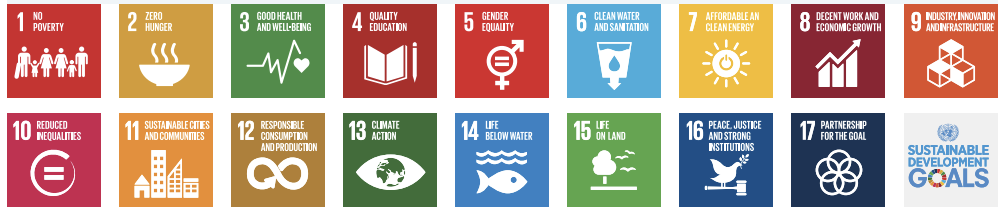
The Sustainable Development Goals (SDGs), also called the global goals, represent an ambitious framework for global progress. The framework consists of 17 goals that include 169 specific targets, all designed to be achieved by 2030.
These goals emerged through a truly collaborative process. United Nations member states worked together with non-government organisations and people around the world who share an interest in creating a better future. The result is a comprehensive set of goals that tackle global challenges and aim to meet the needs of all people in all countries.
The SDGs direct action across five critical areas of importance for humanity and the planet.
Note
The collaborative development process involved not just governments, but also civil society, businesses, and individual citizens from around the world. This inclusive approach ensured the goals reflected diverse perspectives and needs.
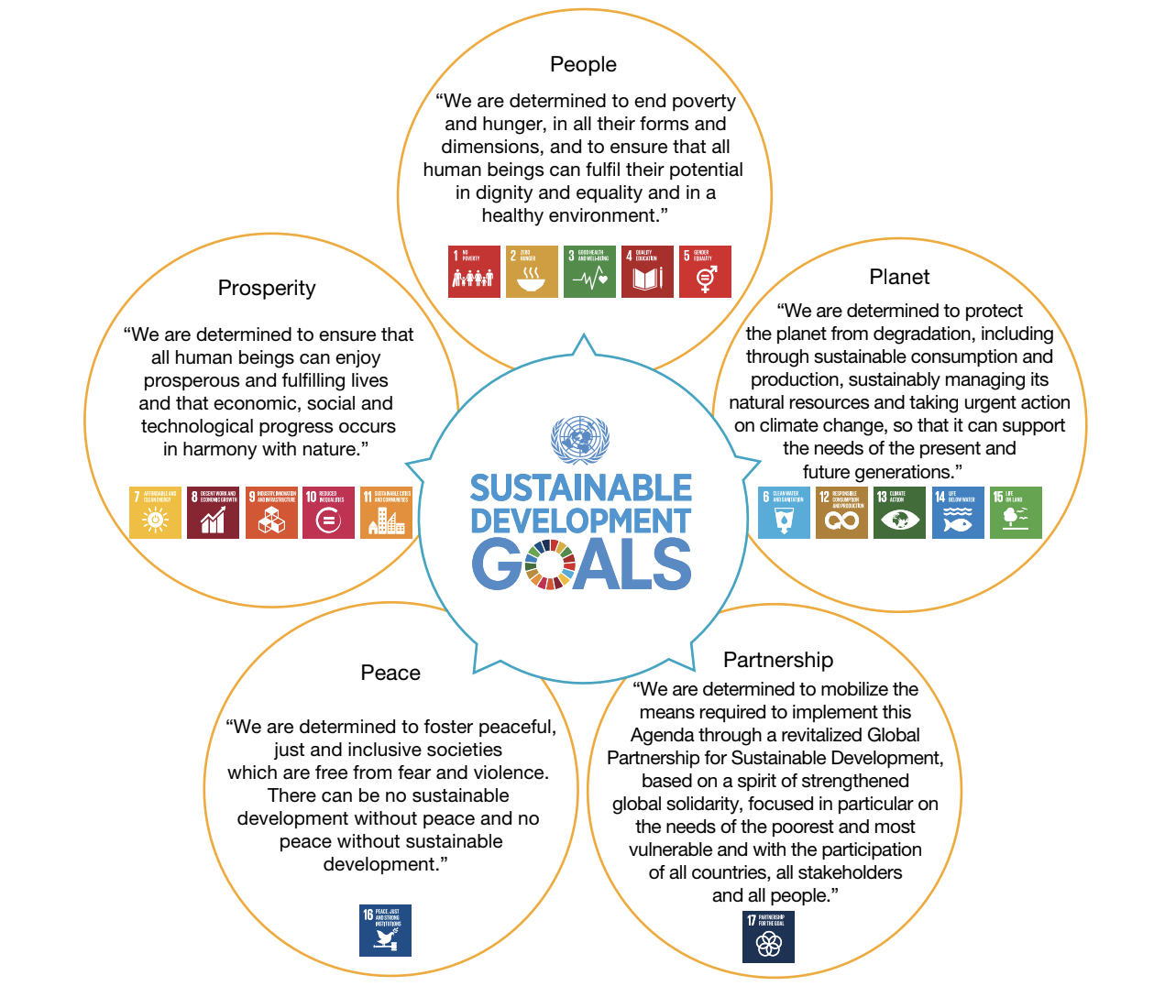
The five areas of importance
The SDGs focus on five interconnected areas, often called the "5 Ps":
People
This area focuses on ending poverty and hunger in all their forms and dimensions. The goal is to ensure that all human beings can fulfil their potential with dignity and equality, living in a healthy environment. This means addressing basic needs while also creating conditions for people to thrive.
Planet
The planet area emphasises protecting Earth from degradation. This includes promoting sustainable consumption and production patterns, managing natural resources responsibly, and taking urgent action on climate change. The aim is to support the needs of both present and future generations.
Note
Key term: Degradation
Degradation refers to the deterioration of the environment through the depletion of resources such as clean air, water and soil, the destruction of ecosystems, and the extinction of wildlife. This process can have irreversible consequences for both human societies and natural systems.
Prosperity
Under prosperity, the SDGs aim to ensure all people can enjoy successful and fulfilling lives. Economic, social and technological progress should occur in harmony with nature rather than at nature's expense.
Peace
The peace dimension recognises that sustainable development cannot exist without peace, and peace cannot exist without sustainable development. This area focuses on fostering peaceful, just and inclusive societies that are free from fear and violence.
Partnership
Achieving the SDGs requires a global partnership for sustainable development. This partnership must be based on strengthened global solidarity, with particular focus on the needs of the poorest and most vulnerable. It requires participation from all countries, all stakeholders, and all people.
Note
Key term: Stakeholders
Stakeholders are people, groups and organisations who are involved in or affected by a course of action. In the context of the SDGs, stakeholders include governments, businesses, NGOs, communities, and individual citizens.
Rationale for the SDGs
Three main reasons led to the introduction of the Sustainable Development Goals:
New goals were needed after the MDGs
When the Millennium Development Goals (MDGs) finished in 2015, a new set of goals and targets was required. The MDGs had provided a global framework of action to address poverty and make progress on education, health and wellbeing, hunger and the environment.
Note
Key term: Millennium Development Goals
The Millennium Development Goals were a set of goals introduced in 2000 to guide global action until 2015. They served as the predecessor framework to the current SDGs.
The MDGs achieved significant results. More than 1 billion people were lifted out of extreme poverty (living on less than US$1.90 per day). Progress was made against hunger (the continuing lack of food needed for an active and healthy life). More girls attended school, and some action was taken to protect the planet.
Progress was uneven
Despite these achievements, progress varied significantly across regions and countries. Millions of people were left behind, particularly the poorest and those disadvantaged due to sex, age, disability, ethnicity or geographical location. This uneven progress demonstrated that much work remained to be done.
Important
Critical Gap in MDG Achievement
While the MDGs achieved impressive results overall, the benefits were not distributed equally. The most vulnerable populations—including those in remote areas, people with disabilities, and marginalised ethnic groups—often saw little improvement in their circumstances. This inequality highlighted the need for more inclusive and comprehensive goals.
New global challenges emerged
New challenges appeared that needed to be addressed. These included:
- The impact of increasing conflict and extremism (belief in and support for ideas that are very far from what most people consider correct or reasonable)
- Widespread migration
- Economic and financial instability
- Large-scale environmental changes
These challenges had the capacity to undermine many of the achievements made through the MDGs.
Objectives of the SDGs
The 17 global goals work together to achieve three major objectives:
- End extreme poverty
- Fight inequality and injustice
- Address climate change
Broader aims
To achieve these objectives, the SDGs aim to:
- End poverty and hunger
- Promote health and wellbeing
- Address inequalities within and among countries
- Build peaceful, just and inclusive societies
- Protect human rights
- Promote gender equity and the empowerment of women and girls
All of these aims are underpinned by the promotion of a sustainable world.
What is a sustainable world?
Note
Key term: Sustainable development
Sustainable development means development that meets the needs of the present without compromising the ability of future generations to meet their own needs. This concept forms the foundation of all 17 SDGs.
A sustainable world has several key features:
- People can escape poverty (not having the resources to meet basic needs such as food, clothing and shelter) and enjoy decent work
- The Earth's essential ecosystems (communities of living things and the non-living components of the environment in which they live, including plants, animals, micro-organisms, water, air, soil and rocks) and resources are not harmed
- People can stay healthy and access the food and water they need
- Everyone has access to clean energy that doesn't contribute to climate change
- Women and girls are afforded equal rights and equal opportunities
Three dimensions of sustainability
The SDGs are underpinned by three dimensions of sustainability:
- Social - addressing human needs and wellbeing
- Economic - ensuring prosperity and growth
- Environmental - protecting the planet and its resources
Note
These three dimensions must work together in balance. Focusing on economic growth alone without considering social equity or environmental protection cannot lead to true sustainable development. Similarly, environmental protection must be pursued in ways that also support human wellbeing and economic opportunity.
The interconnected nature of the SDGs
A crucial feature of the SDGs is that no goal is more important than any other. The goals complement and interconnect with each other. They are designed as a set of goals and targets that are:
- Integrated - working together as a unified whole
- Interdependent - mutually reliant on each other
- Indivisible - unable to be divided or separated
Achieving the SDGs requires collaboration across all sectors and at international, national, regional and local levels. Progress in one goal often supports progress in others, while neglecting one goal can undermine progress elsewhere.
Important
Understanding Interconnectedness
The interconnected nature of the SDGs means that actions taken to achieve one goal will have ripple effects across other goals. For example:
- Improving education (SDG 4) can help reduce poverty (SDG 1) and promote gender equality (SDG 5)
- Addressing climate change (SDG 13) protects ecosystems and helps ensure food security (SDG 2)
- Reducing inequality (SDG 10) contributes to peace and justice (SDG 16)
This interconnectedness requires integrated approaches rather than tackling goals in isolation.
SDG 3: Good health and wellbeing
SDG 3 focuses on good health and wellbeing, which plays a central role in the achievement of many other SDGs. The relationship works in both directions: good health and wellbeing contributes to achieving other goals, while the achievement of other SDGs helps to promote good health and wellbeing.
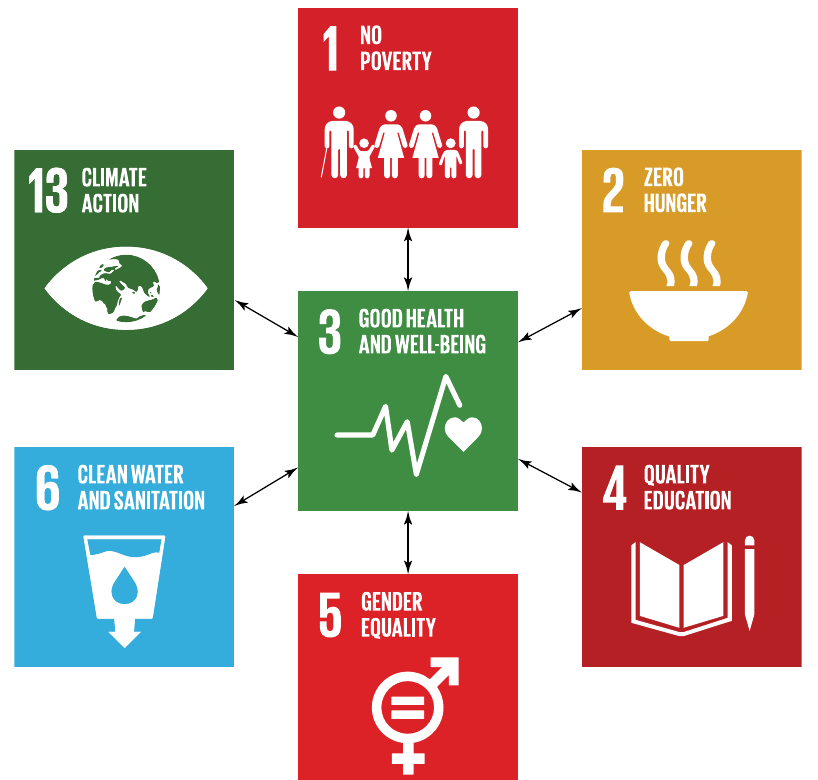
Related SDGs
This interconnection is why SDG 3 is studied alongside selected related SDGs:
- SDG 1: No poverty
- SDG 2: Zero hunger
- SDG 4: Quality education
- SDG 5: Gender equality
- SDG 6: Clean water and sanitation
- SDG 13: Climate action
Each of these goals has important links with health and wellbeing. For example, access to clean water and sanitation (SDG 6) directly affects health outcomes. Similarly, quality education (SDG 4) can improve health literacy and lead to better health decisions. Gender equality (SDG 5) ensures that women and girls have equal access to healthcare and health information.
Note
The Two-Way Relationship
The relationship between SDG 3 and other goals is bidirectional:
- SDG 3 supports other goals: Good health enables people to pursue education, work productively, and contribute to their communities
- Other goals support SDG 3: Reducing poverty, ensuring food security, and providing clean water all improve health outcomes
This mutual reinforcement demonstrates why an integrated approach to the SDGs is essential.
Exam tip
When discussing SDG 3 in exams, remember to explain the two-way relationship: how good health contributes to other goals, and how achieving other goals supports health and wellbeing. This demonstrates your understanding of the interconnected nature of the SDGs.
Summary
Remember! Key Points to Remember:
- The SDGs are 17 global goals with 169 targets, developed collaboratively by UN member states, NGOs and global citizens, to be achieved by 2030.
- The SDGs direct action across five areas (the 5 Ps): People, Planet, Prosperity, Peace and Partnership.
- Three main reasons led to the SDGs: the MDGs ended in 2015, progress under the MDGs was uneven, and new global challenges emerged.
- The three major objectives of the SDGs are to end extreme poverty, fight inequality and injustice, and address climate change.
- All 17 SDGs are interconnected, interdependent and indivisible, requiring collaboration at all levels to achieve.
- SDG 3 (Good health and wellbeing) is central to the framework, with important relationships to SDGs 1, 2, 4, 5, 6 and 13.