The Relationships Between SDG 3 and SDG 1 (VCE SSCE Health and Human Development): Revision Notes
📚Revision Notes
The Relationships Between SDG 3 and SDG 1
Introduction to the interconnectedness of SDGs
While SDG 3: Good health and wellbeing can be studied as a standalone goal, the Sustainable Development Goals are fundamentally interconnected and indivisible. This means that achieving one goal often depends on progress in other goals, and success in one area can support advancement in others.
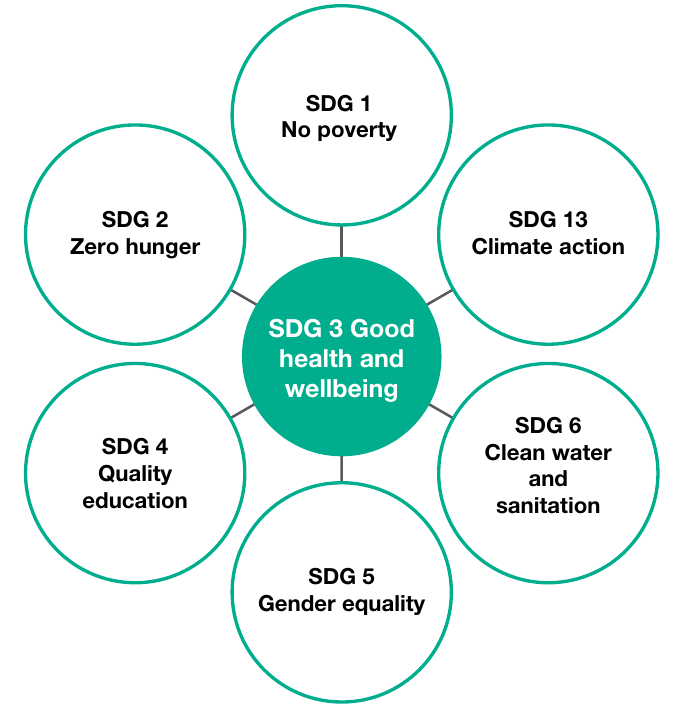
The achievement of SDG 3 both depends upon and supports the achievement of other SDGs. Without good health and wellbeing, many development goals become difficult to reach. Similarly, SDG 3 cannot be fully achieved without progress in other areas of sustainable development.
Note
The social model of health provides a framework for understanding these connections. This model recognises that health and wellbeing is determined by a range of economic, sociocultural and environmental conditions. As a result, good health and wellbeing is connected to multiple issues including poverty, nutrition, gender equality, education, access to safe water and sanitation, and climate change.
Intersectoral collaboration for health
The social model of health emphasises the importance of intersectoral collaboration. This means that the health sector cannot work in isolation to achieve health-related goals. Instead, multiple sectors must work together in a coordinated way.
Political decisions and policies made in sectors beyond health have significant impacts on population health and wellbeing. These include:
- Water and sanitation infrastructure
- Food production and agriculture
- Education systems
- Urban planning and development
- Transport networks
- Social protection programs
Each of these sectors plays a role in creating the conditions that allow people to achieve good health and wellbeing. For example, decisions about urban planning affect people's access to healthcare facilities, green spaces for physical activity, and exposure to air pollution. Similarly, transport policies influence road safety, physical activity levels, and access to essential services.
Example of SDG interdependence
The relationship between different SDGs can be illustrated through a practical example. Actions taken to end preventable deaths of newborns and children under five (part of SDG 3) will not succeed unless parallel actions address SDG 6: Clean water and sanitation.

Note
One of the major causes of death in newborns and children under five is dehydration resulting from diarrhoea caused by drinking contaminated water. Therefore, achieving the targets for SDG 3 depends directly upon achieving the targets in SDG 6. This demonstrates how health outcomes are tied to broader development issues.
The meaning of SDG 1: No poverty
SDG 1 aims to end poverty in all its forms everywhere by 2030. The World Bank defines extreme poverty as living on less than US$1.90 per day. This represents the minimum income needed to meet basic survival needs.
The targets of SDG 1 include:
- Eradicating extreme poverty for all people, currently measured as those living on less than US$1.90 per day
- Reducing by half the proportion of men, women and children living in poverty according to national definitions
- Implementing social protection systems to provide safety nets for vulnerable populations
- Ensuring equal rights and access to essential resources, services, ownership and control over land and other forms of property, inheritance, natural resources, appropriate new technology and financial services, including microfinance
- Building resilience of those in vulnerable situations and reducing their exposure to environmental disasters that can result in poverty
Note
Microfinance refers to small, low-cost financial services designed for people living in poverty. These services involve low-interest loans that enable individuals to develop small businesses and create income-generating opportunities. By providing access to capital that traditional banks would not offer, microfinance can help people escape the cycle of poverty.
Effects of poverty on health and wellbeing and human development
The bidirectional relationship between poverty and health
Important
Poverty is a major cause of ill health, and ill health is a major cause of poverty. This creates a vicious cycle that can trap individuals, families and communities.
When people live in poverty, they cannot afford to purchase essential items and services including:
- Adequate food and nutrition
- Clean water
- Appropriate clothing
- Safe and secure shelter
- Healthcare services
People living in poverty also face greater challenges in:
- Educating themselves and their children
- Finding and maintaining employment
- Accessing services that could help them escape poverty
Additionally, those who are poor experience greater vulnerability to environmental hazards. They are more likely to be exposed to air and water pollution, and face higher risks from natural disasters such as landslides, drought and flooding. All of these factors carry significant physical and mental health and wellbeing risks.
Without adequate resources, people cannot access medical care or protect their children through vaccination programs. Poverty is therefore the main factor contributing to:
- Low levels of childhood immunisation
- Low levels of literacy
- High death rates from infectious diseases such as tuberculosis, measles, whooping cough (pertussis), cholera, malaria and tetanus
Important
The impact is particularly severe for children. Those born into poverty are almost twice as likely to die before the age of five compared to children born to wealthier families.
Causes beyond income
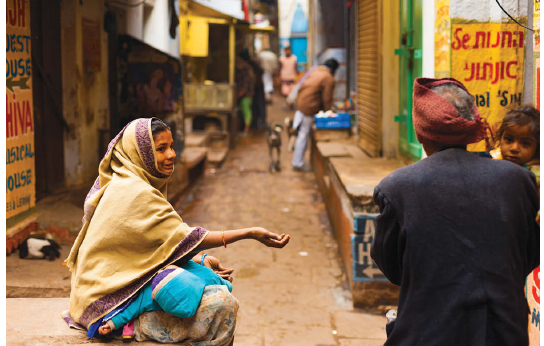
While lack of income is a primary cause of poverty, it can also arise from discrimination and social exclusion. In many countries, certain groups are disproportionately affected by poverty due to systematic discrimination:
- Women are more likely than men to live in poverty due to less access to paid work, fewer educational opportunities, lack of rights regarding property ownership and inheritance, and limited access to natural resources, new technologies and finance
- Youth may lack opportunities for education and employment
- The elderly may have insufficient income security
- Migrants often face barriers to accessing services and employment
- Those with disabilities may encounter discrimination and accessibility challenges
Impact on human development
The effects of poverty extend beyond physical health to impact mental and spiritual health and wellbeing. Discrimination and exclusion reduce people's standard of living and leave them politically and economically vulnerable.
Women, in particular, often lack opportunities to participate in making decisions that affect their lives and their communities. This exclusion reduces spiritual health and wellbeing by limiting their sense of purpose, connection and empowerment.
Global poverty statistics
Note
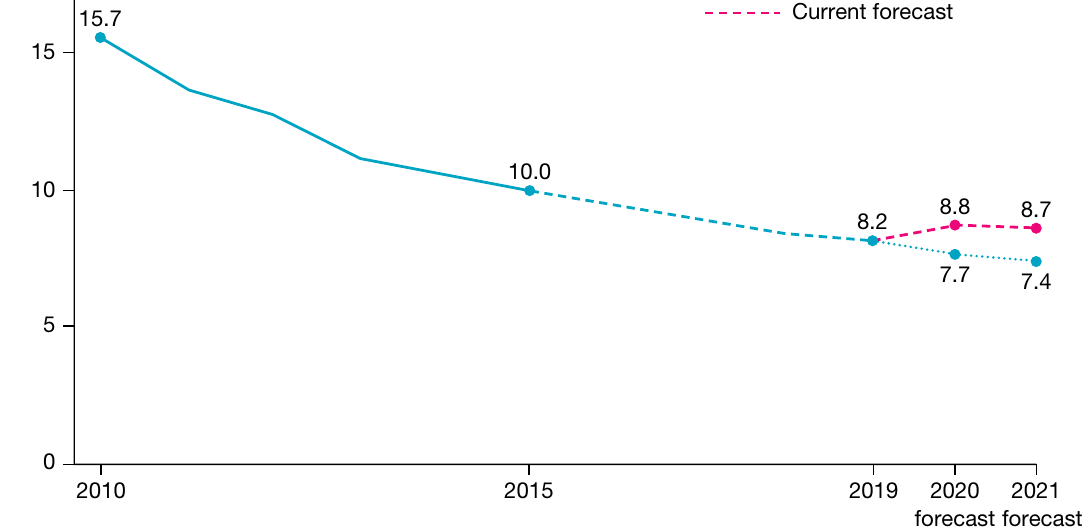
Progress has been made in reducing extreme poverty globally. The proportion of people living in extreme poverty has declined since 2010. However, significant challenges remain:
- In 2019, 8.2 per cent of the world's population (approximately 689 million people) were still struggling to afford their most basic human needs
- Poverty affects not only those in low- and middle-income countries but also people in high-income countries
- Currently, 30 million children live in poverty in high-income countries
The health and wellbeing and human development of all these people is directly affected by poverty, regardless of the overall wealth of their country.
Impact of COVID-19
Important
The COVID-19 pandemic has had a devastating impact on global poverty rates. COVID-19 is expected to result in an additional 71 million people being pushed into extreme poverty in 2020. This represents a reversal of progress made over the previous decade.
The graph above shows how the pandemic has altered poverty projections. While poverty was forecast to continue declining to 7.7% by 2020 and 7.4% by 2021, the current forecast shows poverty rising to 8.8% in 2020 and remaining elevated at 8.7% in 2021.
Links between SDG 1 and SDG 3
Government investment in public services
The governments of countries where poverty is prevalent often lack resources to invest in public health and wellbeing services. This creates a situation where poverty perpetuates poor health, which in turn perpetuates poverty. Essential services that may be underfunded or unavailable include:
- Safe water and sanitation infrastructure
- Health promotion programs
- Universal health coverage
- Education systems
- Social security benefits
All of these services are crucial for enabling people to enjoy good health and wellbeing.
Universal health coverage as a pathway out of poverty
One of the targets of SDG 3 is to achieve universal health coverage. This directly supports the achievement of SDG 1 by ensuring all people have access to essential medicines, vaccines and healthcare services at an affordable price.
Note
When healthcare is accessible and affordable, people are:
- Less likely to fall into poverty due to catastrophic health expenses
- Able to maintain their health and continue working
- Protected from the cycle of illness leading to poverty
- Able to access preventive services that stop health problems before they become severe
Social protection measures
Social protection measures are interventions put in place to prevent individuals and families from suffering poverty because of a crisis or unexpected event. These measures include:
- Provision of healthcare at no cost
- Income security for children
- Support for those who become sick or disabled
- Pensions and support for the elderly
- Unemployment benefits
- Maternity and paternity support
These measures are essential to ensure that, regardless of economic situation, all people can:
- Access high-quality healthcare
- Care for their children
- Provide food, shelter and education
- Maintain income security during unemployment, illness, pregnancy, disability or old age
Note
Countries that have implemented comprehensive social protection measures, such as Brazil and Argentina, have seen success in reducing poverty levels.
Natural disasters and disease outbreaks
Natural disasters and outbreaks of disease can rapidly push people, communities and entire countries into poverty. This has been strikingly evident during the COVID-19 pandemic.
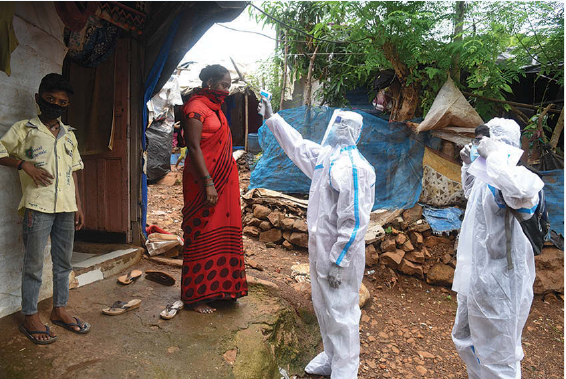
Many countries, particularly low-income nations, lack the resources and infrastructure needed to protect their populations from disease outbreaks. As a result, many people have been pushed back into poverty due to:
- Loss of employment
- Inability to work due to illness
- Costs associated with healthcare
- Economic disruption
Important
Collaborative approaches are needed to:
- Reduce risks from natural disasters and disease outbreaks
- Minimise the impact of events when they occur
- Ensure people do not experience poverty as a result of such events
- Build resilience in communities and countries
Countries must have strategies in place before crises occur. This includes developing robust healthcare systems, early warning systems, emergency response capacity, and social safety nets that can be rapidly deployed.
The role of good health in poverty reduction
The relationship works in both directions. Good health and wellbeing is a major contributor to human development, economic growth and poverty reduction. When people are healthy, they can:
- Work productively and earn income
- Care for their families
- Participate in education and training
- Contribute to their communities
- Build assets and savings
Many of the economic, sociocultural and environmental actions needed to achieve both SDG 1 and SDG 3 require collaboration across different sectors, including welfare, finance, legal, health, water and sanitation, and industry. No single sector can address these interconnected challenges alone.
Remember!
Summary
Key Points to Remember:
- SDG 3: Good health and wellbeing and SDG 1: No poverty are fundamentally interconnected and interdependent goals.
- Extreme poverty is defined as living on less than US$1.90 per day. In 2019, 8.2% of the world's population lived in extreme poverty.
- Poverty causes ill health, and ill health causes poverty, creating a vicious cycle that requires coordinated action across multiple sectors to break.
- Vulnerable groups including women, youth, the elderly, migrants and people with disabilities are disproportionately affected by poverty due to discrimination and social exclusion.
- Achieving SDG 3 requires universal health coverage and social protection measures that prevent people from falling into poverty due to health crises or unexpected events.