The Relationships Between SDG 3 and SDG 4 (VCE SSCE Health and Human Development): Revision Notes
📚Revision Notes
The Relationships Between SDG 3 and SDG 4
Introduction to SDG 4: Quality education
Sustainable Development Goal 4 focuses on ensuring that all people have access to inclusive, equitable, and high-quality education throughout their lives. This goal recognises that education is fundamental to improving people's lives and achieving good health and wellbeing.
Important
SDG 4 aims to: Ensure inclusive and equitable quality education and promote lifelong learning opportunities for all
By 2030, the specific targets for this goal include:
- Ensuring all children complete free, equitable and quality primary and secondary education
- Providing all children with access to quality early childhood development, care and pre-primary education
- Guaranteeing equal access to affordable and quality technical, vocational and tertiary education for all adults
- Increasing the number of young people and adults who have relevant skills for employment
- Eliminating all disparities in education and vocational training, particularly for people with disabilities, indigenous people and vulnerable children
- Ensuring all young people and adults have adequate literacy and numeracy skills
- Teaching all learners curriculum that promotes sustainable development
- Building and upgrading education facilities to create safe, inclusive learning environments
- Expanding scholarships available to low- and middle-income countries for essential skills training
- Increasing the number of qualified teachers
The meaning of SDG 4
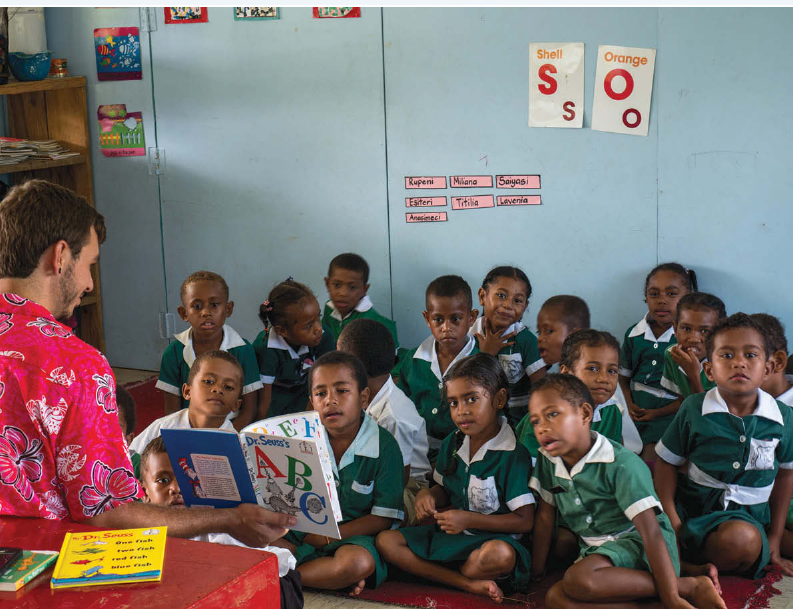
SDG 4 emphasises the importance of providing girls and boys with equal access to high-quality education at every level. This includes early childhood education (pre-primary), primary school, secondary school, and tertiary education such as university or technical colleges. The goal also focuses on developing the vocational skills that people need to find meaningful employment.
A central element of this goal is ensuring that children complete 12 years of publicly funded, high-quality primary and secondary education, with at least 9 years being compulsory. This extended period of education helps ensure that young people develop the knowledge and skills they need to participate fully in society and the economy.
Quality education depends on several key factors:
Qualified teachers: Building a skilled and qualified teacher workforce is essential. Teachers need appropriate training to deliver effective education and help students develop necessary knowledge and skills.
Relevant curriculum: The educational content taught in schools must be relevant and productive. It should help students build practical knowledge and skills that will benefit them throughout their lives.
Adequate infrastructure: Schools need basic facilities including electricity, clean water, sanitation, and safe buildings to create effective learning environments.
Challenges in achieving SDG 4
Education and girls
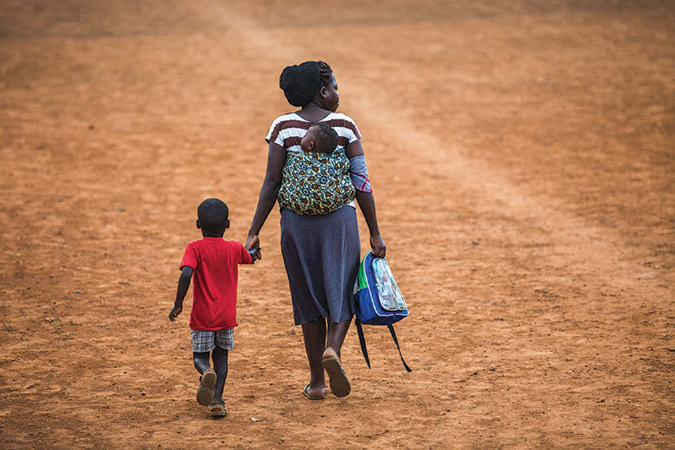
Girls face particular barriers when it comes to accessing and completing education. Several factors contribute to lower enrolment and higher drop-out rates for girls compared to boys:
Environmental and economic challenges: Drought, food shortages, armed conflict, poverty, child labour, and HIV/AIDS all reduce school enrolment and increase drop-out rates. However, these factors tend to have a greater impact on girls than boys.
Water collection responsibilities: In many communities, girls must spend a significant portion of their day fetching water for their families. This time-consuming task prevents them from attending school regularly.
Lack of sanitation facilities: The absence of separate and private toileting facilities for girls at schools discourages families from sending their daughters to school. This is particularly important when girls reach adolescence.
Important
Family priorities: When families have limited financial resources, they often prioritise educational opportunities for male children over their female siblings. This reflects broader gender inequality issues in many societies.
Progress in achieving quality education
There has been some progress towards achieving universal primary education, but significant challenges remain:
Participation rates: At the global level, participation in early childhood and primary education reached 85 per cent in 2019, which represents an improvement from 70 per cent in 2000. However, there is substantial variation between different countries and regions. Sub-Saharan Africa has the lowest participation rate at just 41 per cent, whilst northern Africa and western Asia have a rate of 52 per cent.
Note
Literacy rates: In 2018, youth literacy rates were estimated at 93 per cent for young men and 90 per cent for young women. Despite this progress, approximately 100 million young people remained illiterate, and 124 million children and youth were not enrolled in school at all. Furthermore, 757 million adults, two-thirds of whom were women, could not read or write.
Socioeconomic disparities: Children from the poorest households are still four times less likely to be enrolled in school compared to those from wealthier households. Significant differences also persist between rural and urban areas, with rural children having less access to quality education.
Quality of education: Whilst more students are attending school, the quality of education remains a concern. An estimated 617 million children and adolescents (58 per cent) of primary and lower-secondary age are not meeting minimum standards in reading and mathematics.
Important
COVID-19 impact: During the COVID-19 pandemic, many schools attempted to provide remote learning through virtual classrooms to reduce the impact of closures. However, this option was unavailable to many students. Lack of access to computers and the internet at home, combined with low levels of computer-related skills, put already marginalised students at a further disadvantage. The United Nations reported that remote learning remained out of reach for at least 500 million students worldwide.
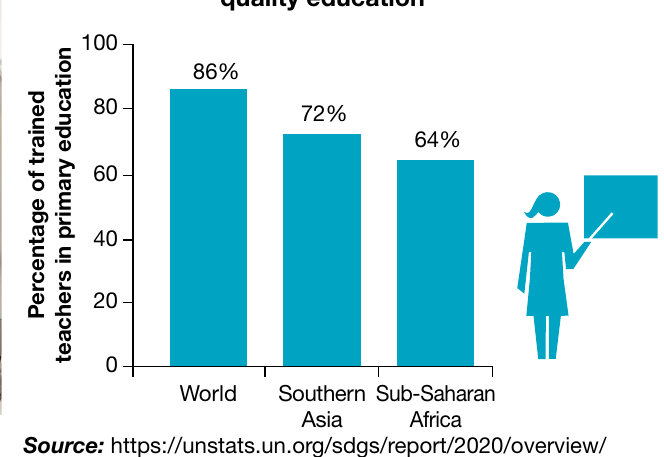
Teacher training: Having qualified and skilled teachers is essential for improving literacy and numeracy and developing vocational skills. In 2018, an estimated 86 per cent of primary school teachers worldwide had received training. However, the proportion was only 72 per cent in southern Asia and 64 per cent in sub-Saharan Africa.
Infrastructure challenges: Low-income countries face particular difficulties in providing schools with basic infrastructure. In 2018, only 34 per cent of primary schools in low-income countries had access to electricity, and just 38 per cent were equipped with basic handwashing facilities, which are critical for preventing diseases such as COVID-19.
Links between SDG 4 and SDG 3
Actions taken to achieve SDG 4 (Quality education) will also help achieve SDG 3 (Good health and wellbeing), and vice versa. This means that collaborative action is needed between the health and education sectors to maximise progress towards both goals.
Note
Quality education serves as the foundation for improving people's lives and achieving good health and wellbeing. At the same time, good health and wellbeing is essential for achieving high levels of educational attainment. This creates a positive cycle where improvements in one area support improvements in the other.
When people experience poor health and wellbeing, their opportunities to attend school are significantly reduced. Missing school limits their educational attainment, which in turn reduces their opportunities for employment and earning an income. Without adequate income, people struggle to purchase nutritious food, shelter, clean water, healthcare and education - all of which are necessary for maintaining good health and wellbeing.
Economic benefits of education
An educated and skilled workforce contributes to greater economic growth within a country. This economic growth provides governments with more resources to invest in:
- Universal health coverage
- Essential medicines
- Social protection measures
When these health services are available, people can access both preventative and curative healthcare, which helps reduce illness (morbidity) and death (mortality) from both communicable diseases (like malaria and tuberculosis) and non-communicable diseases (like diabetes and heart disease).
Education and maternal health
Educating women and girls produces particularly important health outcomes. Education for women and girls results in:
- Falling fertility rates
- Stable population growth
- Improved maternal and child health outcomes
Important
The impact of maternal education on child survival is profound. A mother's income has 20 times more impact on child survival than a father's income.
Educated mothers experience several advantages:
- They have fewer children
- Their children are healthier overall
- They are 50 per cent more likely to immunise their children compared to uneducated mothers
- Their children have a 40 per cent higher survival rate
- They are twice as likely to send their own children to school compared to mothers without an education
Education and the Human Development Index
Quality education plays an important role in promoting human development overall. Education is one of the key factors used to calculate the Human Development Index, which measures a country's level of human development based on health, education, and standard of living.
Impact of education on health and wellbeing and human development
Education has far-reaching effects on multiple dimensions of health and wellbeing, as well as on broader human development.
Physical health and wellbeing
Education creates opportunities for employment, which enables families to purchase essential items including nutritious food, clean water, appropriate clothing, and adequate shelter. Having an income also means families can afford healthcare services when needed.
For girls and women specifically, education provides additional physical health benefits. Educated girls tend to marry later in life, which reduces health risks associated with early pregnancy. They are also less likely to experience sexual violence and are better able to protect themselves from HIV/AIDS and other diseases. All of these factors contribute to improved physical health and wellbeing.
Social health and wellbeing
Improved physical health creates opportunities for people to develop and maintain relationships with others. When people are healthier, they can participate more fully in their communities and build stronger social connections. This promotes social health and wellbeing by enabling people to form meaningful relationships and feel part of a community.
Mental health and wellbeing
Education tends to make people happier and more confident. Educated individuals are more likely to feel empowered and in control of their lives. This sense of empowerment and the confidence that comes with knowledge and skills promotes mental health and wellbeing. People who feel competent and capable generally experience better mental health outcomes.
Spiritual health and wellbeing
Education and the employment opportunities it creates can provide people with a sense of purpose and belonging. Having meaningful work and being part of a community contributes to spiritual health and wellbeing by helping people feel that their lives have meaning and that they belong to something larger than themselves.
Promoting human development
Improving education, particularly for girls, is fundamental to promoting human development. Education increases people's knowledge and skills, which creates opportunities for employment and income. This expansion of capabilities gives people more choices about how to live their lives.
When people are more educated, they are more likely to take an interest in and participate in decisions that impact their community. This civic engagement strengthens democratic participation and community development.
For girls specifically, education helps ensure equity in opportunity. This means girls and women gain greater ability to make choices and to live their lives according to their own needs and interests, rather than being limited by gender-based discrimination and lack of opportunity.
Remember!
Summary
Key Points to Remember:
-
SDG 4 aims to ensure inclusive and equitable quality education for all, with a focus on completing 12 years of education, having qualified teachers, and delivering relevant curriculum.
-
Girls face specific barriers to education, including water collection duties, lack of sanitation facilities, poverty, and family preferences for educating boys. Overcoming these barriers is essential for achieving gender equality and improving health outcomes.
-
Education and health are interconnected: quality education improves health and wellbeing, whilst good health is necessary for educational attainment. This creates a positive cycle where improvements in one area support the other.
-
Maternal education has a powerful impact: educated mothers have fewer and healthier children, are more likely to immunise them, and their children have a 40 per cent higher survival rate. They are also twice as likely to send their own children to school.
-
Education promotes all dimensions of health and wellbeing: it improves physical health through better nutrition and healthcare access; social health through stronger relationships; mental health through empowerment and confidence; and spiritual health through purpose and belonging. Education is fundamental to human development, expanding people's choices, capabilities, and opportunities to participate in their communities.