The Relationships Between SDG 3 and SDG 5 (VCE SSCE Health and Human Development): Revision Notes
📚Revision Notes
The Relationships Between SDG 3 and SDG 5
Understanding SDG 5: Gender equality
Sustainable Development Goal 5 focuses on achieving gender equality and empowering all women and girls worldwide. This goal recognises that gender equality is both a fundamental human right and an essential driver for economic development. By working to end discrimination and violence against women and girls, SDG 5 addresses barriers that prevent half the world's population from reaching their full potential.
SDG 5 is closely interconnected with SDG 3 (Good health and wellbeing), as gender equality has direct and significant impacts on health outcomes for women, children, and entire communities.
Key aims of SDG 5 by 2030
SDG 5 sets out ambitious targets to be achieved by 2030:
- End all forms of discrimination against women and girls in every context
- Eliminate violence against women and girls, including human trafficking and sexual exploitation
- Remove harmful practices such as child marriage, forced marriage, and female genital mutilation
- Recognise and value unpaid domestic work that women disproportionately perform
- Ensure full participation of women in decision-making at all levels of political, economic, and public life
- Provide universal access to sexual and reproductive healthcare
- Guarantee equal rights to economic resources, property ownership, financial services, inheritance, and natural resources
- Enhance information communication technology (ICT) to support equality and empower women
- Implement policies and legislation that actively support gender equality and empowerment
The meaning of SDG 5
What is gender equality?
Gender equality means that women and men have the same level of power and control over all aspects of their lives. It represents a fundamental human right. However, despite women and girls comprising half the world's population, true gender equality remains unachieved globally.
Current state of gender inequality
Women and girls face discrimination across political, economic, and social spheres of life. In many low- and middle-income countries, this inequality manifests in particularly severe ways:
- Denial of access to basic education and healthcare
- Exposure to violence and discrimination
- Limited participation in decision-making processes
- Restricted access to employment opportunities beyond agriculture
Violence against women and girls
Important
Violence against women represents one of the most serious violations of human rights. Currently, one in three women worldwide has experienced physical or sexual violence during their lifetime. This violence has devastating impacts on physical, mental, social, and spiritual health and wellbeing, creating fear and limiting women's ability to participate fully in society.
Economic inequality and unpaid work
Women face significant economic disadvantages that limit their opportunities and wellbeing:
Unpaid domestic work: Women perform approximately 80% of unpaid work in agricultural communities. This unpaid work includes essential household tasks such as preparing meals, collecting firewood and water, and caring for children, elderly family members, and sick relatives. As a result, women spend roughly three times as many hours on unpaid domestic work compared to men, leaving them with significantly less time for education, paid employment, or personal development.
Wage inequality: Even when women do access paid employment, they typically earn 10 to 30% less than men for performing the same work. This wage gap contributes to women's economic vulnerability and dependence.
Limited political representation: Women remain underrepresented in political and economic decision-making processes, meaning their voices and perspectives are often excluded from policies that affect their lives.
The digital divide
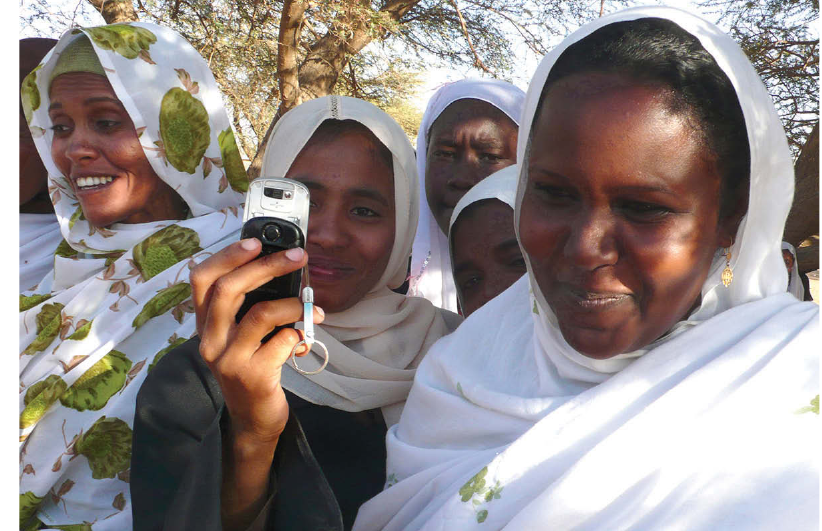
Access to information communication technologies represents another area of significant gender inequality. Women and girls are 16% less likely to have access to mobile phones and computers compared to men and boys. This digital divide has serious consequences because mobile phones and digital technologies can:
- Help women feel safer and more connected to support networks
- Save time by enabling access to services remotely
- Provide access to mobile banking and financial services
- Deliver health information and education
- Create employment opportunities and pathways to education
Example
Case Study: Digital Technologies Reducing the Gender Gap
Whilst 80% of people in developing countries own a mobile phone, ownership rates differ significantly between men and women. On average, women are 14% less likely to own a mobile phone than men, and this gap widens dramatically in certain regions. In South Asia, women are 38% less likely to own a mobile phone compared to men.
The gender gap becomes even more pronounced when examining internet access. In Africa, women are 50% less likely to use the internet than men. Beyond issues of ownership and access, women face additional barriers around control and permission to use technology. Research in India found that:
- 12% of women avoided using the internet because they felt it was inappropriate for them
- More than 8% did not access the internet because family or friends would disapprove
How digital technologies can reduce gender inequality:
Transform employment opportunities - Digital technologies enable more flexible work arrangements, connect women to job opportunities, and create new possibilities through online work, e-commerce, and the sharing economy.
Amplify women's voices - Social media platforms provide outlets for women to participate in public discussions, voice their opinions, and share their experiences. This digital participation helps empower women and challenges traditional barriers that silence women's perspectives.
Legal discrimination
Important
In some countries, legal systems actively discriminate against women, denying them basic rights that men enjoy:
- Voting rights - Some women are prohibited from voting or participating in political processes
- Property ownership - Women may be legally prevented from owning property or taking ownership of land from an inheritance, even when their husband dies
- Financial access - Women may be unable to take out bank loans or access financial services in their own name
- Personal autonomy - In some contexts, women and girls are legally considered the property of their husband or father, giving men authority to make decisions about their lives, including forcing them into marriage or prostitution
These legal barriers leave women economically vulnerable and at increased risk of human trafficking and sexual exploitation.
Child marriage
Child marriage represents a harmful practice that affects millions of girls worldwide, denying them their childhood, education, and opportunities for healthy development. In 2019, an estimated 20% of women aged 20 to 24 reported they were married or in a partnership before reaching age 18.
Note
Whilst child marriage rates have declined in recent years, particularly in Southern Asia, approximately 23.8% of girls and women today were married during childhood. This means nearly one in four young women had their rights violated through early marriage.
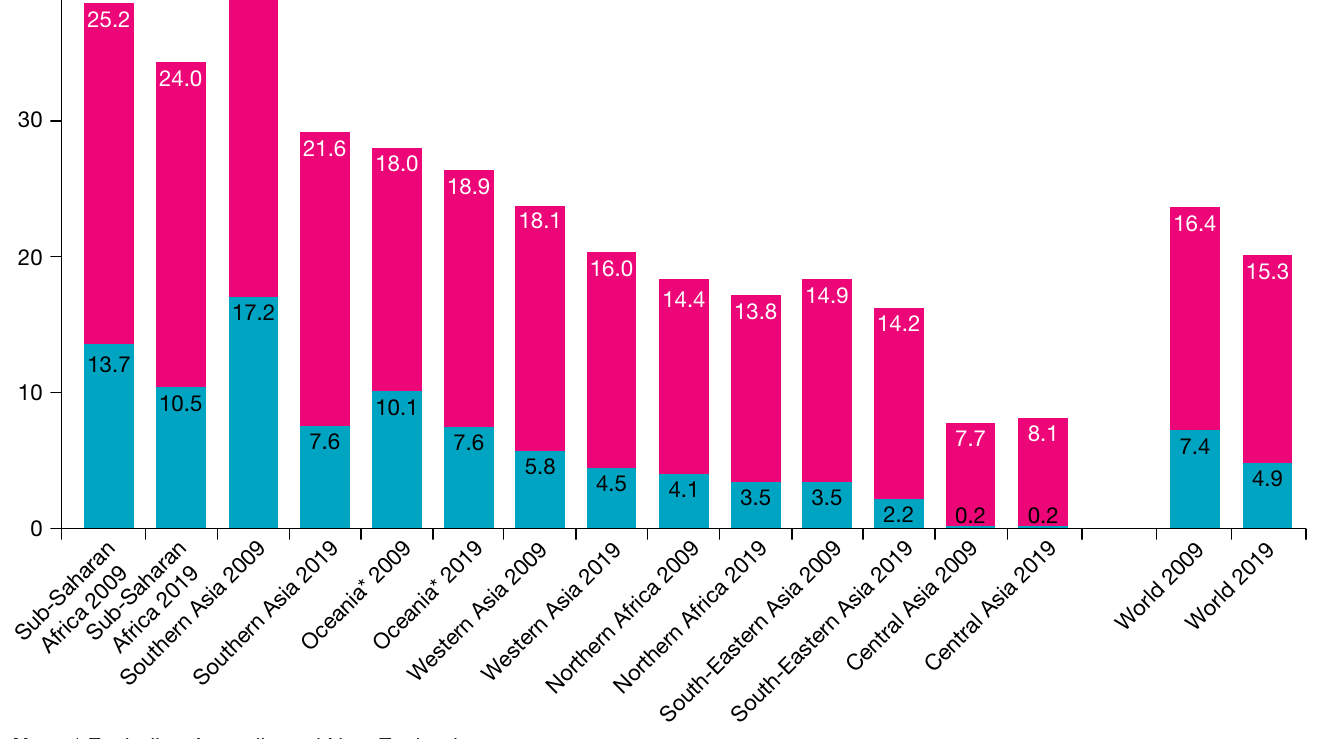
The chart above shows regional variations in child marriage, with Sub-Saharan Africa showing the highest rates. The data demonstrates marriages occurring in two age categories:
- Before age 15 (shown in cyan/turquoise)
- Between ages 15 and 18 (shown in pink/magenta)
Progress has been made, particularly in Southern Asia where rates declined significantly between 2009 and 2019, but child marriage remains a persistent barrier to girls' health, education, and development.
Female genital mutilation
Female genital mutilation (FGM) involves the practice of partially or totally removing a girl's external genital organs for non-medical reasons. This harmful practice has devastating effects on girls' physical, emotional, mental, and overall wellbeing.
Health consequences of FGM include:
- Increased risk of contracting HIV
- Serious complications during pregnancy and childbirth
- Potential death of both mother and baby during delivery
- Long-term physical pain and complications
- Psychological trauma and mental health impacts
Important
In 2019, at least 200 million girls and women had been subjected to female genital mutilation across 31 countries where this practice is most common. Ending FGM represents a critical target within SDG 5.
Links between SDG 5 and SDG 3
Achieving gender equality creates powerful positive effects that extend far beyond women and girls themselves, generating benefits for entire communities and contributing directly to improved health and wellbeing.
Economic benefits of gender equality
Empowering women through gender equality drives economic growth and helps end poverty. Research has demonstrated that small loans provided to women in Bangladesh increased family income twice as much as similar loans given to men. This shows that investing in women generates significant returns for families and communities.
Additionally, water and sanitation systems controlled by women have proven to be more sustainable and effective than those managed by men. Better water and sanitation directly contribute to good health and wellbeing for all community members across all age groups.
Impact on health and wellbeing
Actions taken to achieve gender equality create multiple positive impacts on health and wellbeing:
Ending violence: Eliminating violence against women and girls promotes good physical, mental, and spiritual health and wellbeing. Violence causes injuries and, in the worst cases, death. Living in constant fear reduces mental, spiritual, and social wellbeing. Ending violence also helps prevent sexual assault, which has serious implications for physical, spiritual, social, and mental health.
Education and employment: When gender equality enables girls to access education and women to gain employment, the benefits multiply across generations. Educating women and girls represents the single most effective measure to:
- Raise overall economic productivity
- Lower infant mortality rates
- Reduce maternal mortality
- Educate the next generation more effectively
- Improve nutrition in families and communities
- Promote health and wellbeing across all dimensions
Social participation: Gender equality provides opportunities for women to participate fully in their society, to vote, and to become leaders in their communities. This participation promotes social and spiritual health and wellbeing whilst advancing human development.
Why collaborative action matters
Note
SDG 5 demonstrates clear interconnections with other Sustainable Development Goals, particularly SDG 3 (Good health and wellbeing). Gender equality serves as both a goal in itself and an enabler of progress across multiple development areas. This interconnection shows why collaborative action across different SDGs is essential for achieving sustainable development.
Remember!
Summary
Key Points to Remember:
-
Gender equality means equal power and control for women and men over all aspects of their lives, representing a fundamental human right that remains unachieved globally.
-
Women face multiple forms of discrimination including violence (affecting 1 in 3 women), economic inequality (earning 10-30% less for the same work), vastly more unpaid domestic work (3 times as much as men), and reduced access to technology (16% less likely to have ICT access).
-
Harmful practices persist including child marriage (affecting 23.8% of current young women) and female genital mutilation (affecting 200 million girls and women), both of which have serious health consequences.
-
Gender equality drives health improvements through reduced maternal and infant mortality, improved nutrition, better access to healthcare, and elimination of violence, directly supporting SDG 3 outcomes.
-
Empowering women benefits everyone with research showing loans to women generate twice the family income increases, women-managed water systems prove more sustainable, and educating girls represents the single most effective development measure.