The Relationships Between SDG 3 and SDG 6 (VCE SSCE Health and Human Development): Revision Notes
📚Revision Notes
The Relationships Between SDG 3 and SDG 6
Introduction
The Sustainable Development Goals work together as an interconnected system. SDG 3 (Good health and wellbeing) and SDG 6 (Clean water and sanitation) have a particularly strong relationship. Access to safe water and proper sanitation forms the foundation for achieving good health outcomes, whilst healthy populations can better contribute to water infrastructure development.
Note
The relationship between SDG 3 and SDG 6 is bidirectional - progress in one goal directly supports achievement of the other, creating a mutually reinforcing cycle of improvement.
Understanding SDG 6: Clean water and sanitation
The focus of SDG 6 is to guarantee that every person worldwide has access to safe water supplies and proper sanitation facilities. This goal recognises that clean water and adequate sanitation are fundamental to promoting health and wellbeing across populations. When communities lack these essential services, they face increased risks of both communicable and non-communicable diseases.
Having access to safe water and sanitation reduces pollution levels and helps prevent diseases such as diarrhoea and vector-borne illnesses. It also improves housing quality and environmental conditions by reducing contamination of water sources and soil.
Key targets by 2030
SDG 6 aims to achieve several important targets by 2030:
- Achieve universal and fair access to safe and affordable drinking water for all people
- Enable access to adequate and equitable sanitation and hygiene facilities for everyone
- Improve water quality by reducing pollution, eliminating dumping practices and minimising the release of hazardous chemicals and materials
- Increase the efficient use of water resources and ensure sustainable access to clean water
- Implement integrated water resources management at all levels, including across international borders
- Protect and restore water-related ecosystems such as rivers, lakes and wetlands
- Expand international cooperation and build capacity to support low and middle-income countries in achieving their water and sanitation targets
- Support the participation of local communities in water and sanitation management
Current global situation
Each person requires between 20 and 50 litres of water daily for drinking, cooking and maintaining hygiene. Sanitation refers to the safe disposal of human wastes, alongside maintaining hygienic conditions through garbage collection and wastewater disposal.
Important
Despite water and sanitation being recognised as basic human rights, significant gaps remain globally. These gaps disproportionately affect low and middle-income countries and vulnerable populations.
Despite water and sanitation being recognised as basic human rights, significant gaps remain globally:
- 785 million people lack access to clean water, with most living in low and middle-income countries
- 2 billion people do not have access to sanitation facilities such as toilets
- In 2017, 673 million people were practising open defecation (using open spaces rather than toilets to pass human waste)
- More than 800,000 people die each year due to inadequate water, sanitation and hygiene
Note
Open defecation refers to the practice of using open spaces rather than a toilet to pass human waste. This practice poses severe health risks to communities by contaminating water sources and spreading disease.
Progress since 1990
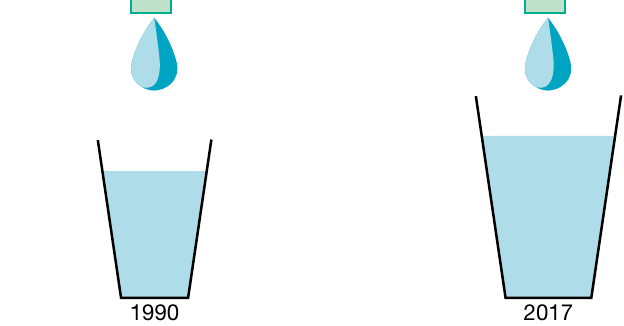
Despite the challenges, significant improvements have occurred. Between 1990 and 2017, 2 billion people gained access to safe drinking water. In 1990, 2 billion people had access to piped drinking water, whilst by 2017 this figure had increased to 4.3 billion people. This demonstrates that progress is possible when countries prioritise water infrastructure development.
Water contamination and disease transmission
Water becomes contaminated and transmits disease when bacteria, viruses, parasites or other micro-organisms enter water supplies. These contaminants can enter drinking water through several pathways:
- Animals and humans excreting into catchment areas
- Contaminated water seeping into leaky or damaged pipes in distribution systems
- Unhygienic handling of stored household water
- Industrial and agricultural waste, including pesticides, arsenic and other chemicals
Important
The scale of water pollution is alarming. Every day, an estimated 2 million tons of waste (including human excreta and agricultural wastes) is dumped into lakes and rivers.
Almost 70 per cent of water taken from rivers, lakes and aquifers is used for irrigation. Approximately 10 per cent of the world's population consumes food that has been irrigated using wastewater.
Access to water, sanitation and hygiene services has also become crucial for preventing infection and containing the spread of viruses such as COVID-19.
Effects on health and wellbeing
Diseases linked to unsafe water and sanitation
When people lack access to safe water, they cannot properly bathe, clean their clothes or maintain hygienic homes. This creates conditions where waterborne diseases can spread rapidly.
Diarrhoea is the most widely recognised disease linked to contaminated water. Tragically, 297,000 children die each year from diarrhoea caused by contaminated water and poor sanitation. Beyond diarrhoea, many other people suffer from neglected tropical diseases and water-related illnesses, including:
- Schistosomiasis and other worm infestations
- Cholera
- Dysentery
- Hepatitis A
- Typhoid
- Trachoma
Important
All of these conditions are caused by unsafe water and inadequate sanitation. Children are particularly vulnerable to these diseases, which can be fatal or cause long-term health complications.
Water scarcity impacts
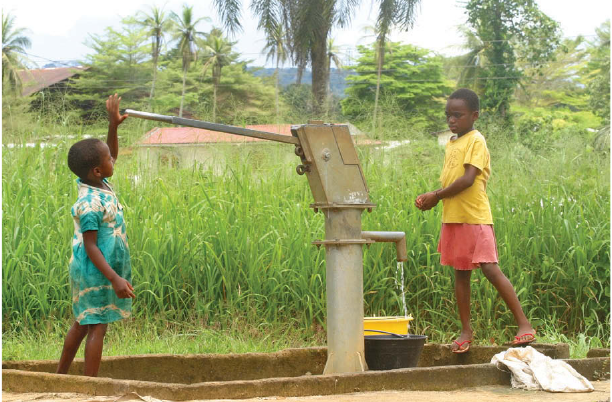
Water scarcity affects one in five people globally. This shortage can result from drought, conflict or the lack of adequate infrastructure. When water infrastructure is insufficient, women and children must often walk long distances to collect water, taking time away from education and income-generating activities.
When water becomes scarce, people are forced to use unsafe sources of drinking water. They may also decide that handwashing is not a priority, which increases the likelihood of diarrhoea and other diseases spreading. The lack of access to clean water and sanitation is also a major contributor to malnutrition and poverty, creating a cycle that is difficult to break.
Note
The poverty-water cycle: Lack of water access contributes to poverty (through illness, lost education, and reduced income), whilst poverty makes it harder to access clean water. This creates a self-reinforcing cycle that requires coordinated intervention to break.
Addressing the challenges
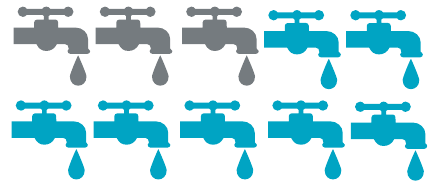
Ensuring everyone has access to safe water and sanitation by 2030 requires countries to invest in adequate infrastructure, provide sanitation facilities and encourage hygiene practices. However, infrastructure alone will not solve the problem. People need education so they understand the connections between clean water, sanitation and health. This education is more likely to succeed when local communities participate in developing culturally appropriate communication tools and implementing school-based programmes.
The critical link between SDG 6 and SDG 3
How SDG 6 supports SDG 3
Progress made in water and sanitation directly supports efforts to accomplish health and wellbeing goals. Without clean water and sanitation, achieving the targets within SDG 3 becomes extremely difficult or impossible. Specifically, reductions in maternal and child mortality, communicable diseases and diseases caused by soil and water pollution cannot be achieved without addressing water and sanitation needs first.
Access to high-quality healthcare services is also dependent on achieving SDG 6. In low and middle-income countries:
- 25 per cent of healthcare facilities lack any water source
- 10 per cent do not have improved sanitation
- 33 per cent lack water and soap for handwashing
Important
These statistics highlight how healthcare facilities themselves cannot function effectively without water and sanitation infrastructure. How can healthcare workers prevent infections or maintain hygiene if they lack basic water supplies and handwashing facilities?
Economic benefits of water and sanitation investment
Improved water and sanitation, combined with better management of water resources, can increase economic growth and contribute to poverty reduction. The economic case for investment is compelling:
- Every $1 spent on sanitation brings a $5.50 return from keeping people healthy and productive
- The potential global economic gains from investing in sanitation and water are estimated to be $260 billion per year
Note
Economic multiplier effect: Investment in water and sanitation generates returns far beyond the health sector. By keeping people healthy and productive, these investments boost overall economic activity, creating a virtuous cycle of development.
These economic gains provide greater capacity for countries to invest resources into:
- Providing universal health coverage
- Sexual and reproductive health services
- Access to essential and affordable medicines and vaccines
How SDG 3 supports SDG 6
The relationship between these goals works in both directions. When people enjoy good health and wellbeing, they are more able to work and contribute to their country's economic growth by contributing to the taxation system. This provides increased funding for governments to invest in water and sanitation infrastructure for all people, not just those living in urban areas.
This demonstrates how collaborative action is necessary between the sector responsible for safe water and sanitation services and the achievement of good health and wellbeing. Neither goal can be fully achieved in isolation.
Case study: COVID-19 and safe water access
The critical role of water in pandemic response
In March 2020, UN experts highlighted the critical connection between safe water access and controlling the COVID-19 pandemic. They emphasised that washing hands with soap and clean water is vital in fighting COVID-19, and that governments worldwide must provide continuous access to sufficient water to populations living in the most vulnerable conditions.
Important
The UN experts stated that the global struggle against the pandemic has little chance of success if personal hygiene (the main measure to prevent contagion) is unavailable to the 2.2 billion people who lack access to safe water services.
Government responsibilities
The UN experts called on governments to:
- Immediately prohibit water cuts to those who cannot pay water bills
- Provide water free of cost for the duration of the crisis to people in poverty and those affected by economic hardship
- Enforce public and private service providers to comply with these fundamental measures
Vulnerable populations
The case study identified specific groups needing continuous access to sufficient and affordable water:
- People living in informal settlements
- Homeless individuals
- Rural populations
- Women
- Children
- Older persons
- People with disabilities
- Migrants
- Refugees
- All other groups vulnerable to pandemic effects
These groups need continuous water access to comply with health institutions' recommendations for strict hygiene measures.
The vicious cycle of water poverty
Important
The pandemic poverty trap: The UN experts expressed concern that economically vulnerable people can become trapped in a vicious cycle:
- Limited access to water makes them more likely to become infected
- Infection leads to illness and isolation measures
- Illness makes it difficult for people without social security to continue earning a living
- Their vulnerability increases
- This results in even more limited access to water
Breaking this cycle requires governments to implement special measures that ensure marginalised groups (who are rarely at the centre of public policies related to water and sanitation) receive the support they need.
Remember!
Summary
Key Points to Remember:
-
SDG 6 and SDG 3 are interconnected: Progress in water and sanitation directly supports achievement of health and wellbeing goals, and vice versa.
-
Massive gaps remain: Despite progress since 1990, 785 million people still lack clean water access and 2 billion lack sanitation facilities, leading to over 800,000 deaths annually.
-
Water investment brings economic returns: Every $1 spent on sanitation returns $5.50 through keeping people healthy and productive, with potential global gains of $260 billion annually.
-
Healthcare facilities need water too: In low and middle-income countries, 25% of healthcare facilities lack any water source, making it impossible to deliver quality healthcare services.
-
Education and community participation matter: Infrastructure alone is insufficient; people need education about the links between water, sanitation and health, delivered through culturally appropriate methods with community involvement.