The UN’s Sustainable Development Goals and the World Health Organization (VCE SSCE Health and Human Development): Revision Notes
📚Revision Notes
The UN's Sustainable Development Goals and the World Health Organization
Introduction to the World Health Organization
The World Health Organization (WHO) was established in 1948 as a specialized branch of the United Nations. Operating across 194 countries through six regional offices and 150 locations worldwide, the WHO collaborates with governments and partner agencies to advance global health outcomes for all populations.
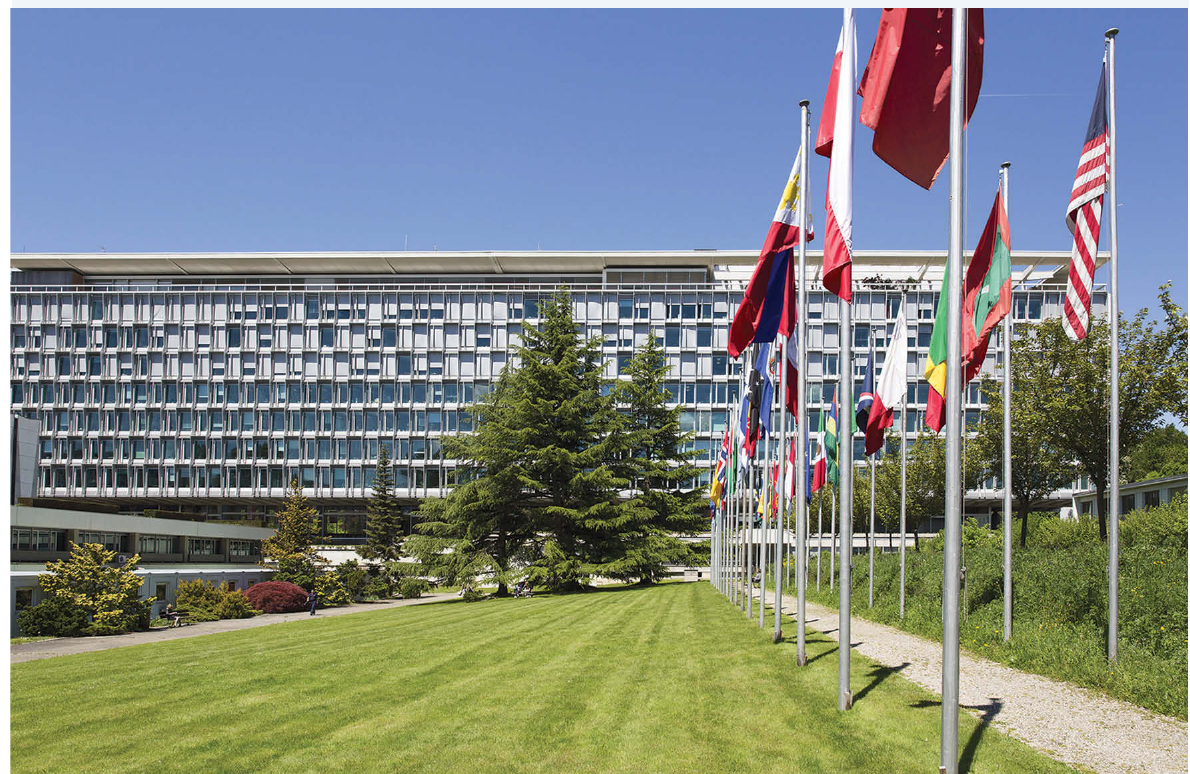
As the leading international authority on health matters, the WHO assembles top health professionals globally to provide strategic direction and support countries in addressing diverse health challenges. The organization's work spans all income levels – from low-income to high-income nations – and fundamentally connects to achieving the health-related targets outlined in the Sustainable Development Goals.
Vision and mission
The WHO envisions a world where every person can achieve the highest possible standard of health and wellbeing. To realize this vision, the organization's mission focuses on three core objectives:
- Promote health – advancing wellbeing globally
- Keep the world safe – protecting populations from health threats
- Serve the vulnerable – supporting those most at risk
Core principles
Important
Three Fundamental Principles Guiding All WHO Activities:
-
Health as a human right: Achieving the best possible health status is a basic right for every person, regardless of race, religion, political beliefs, or economic and social circumstances.
-
Health for peace and security: The wellbeing of all populations forms the foundation for peace and security, requiring full cooperation between individuals and nations.
-
Shared responsibility: Unequal progress across countries in promoting health and controlling diseases, particularly communicable diseases, poses a collective threat to all.
The work of the World Health Organization
As the international authority on health, the WHO organizes its activities around six core functions that provide a comprehensive framework for action.
Six core functions
| Function | Explanation | Example |
|---|---|---|
| Provide leadership and create partnerships | The WHO collaborates with member nations and organizations to establish international policies and regulations for preventing and managing disease outbreaks and coordinating disaster relief efforts. | Partnerships have facilitated the development of effective vaccines for meningitis, Ebola, and malaria, as well as supporting COVID-19 vaccine development. |
| Conduct research and provide information | The organization ensures access to current research that informs decisions promoting health and wellbeing, preventing diseases, improving health systems, and achieving universal healthcare access. The WHO offers expertise in research and development to enhance disease prevention, diagnosis, management, and treatment. | Guidelines and recommendations for preventing and treating conditions including asthma, hepatitis, and Zika virus. During COVID-19, the WHO provided clear, accessible information on preventing disease transmission. |
| Set norms and standards | Working with agencies and governments, the WHO standardizes research methodologies, establishes common indicators for data collection, and creates uniform health terminology. This standardization enables more effective information sharing, disease monitoring, and program evaluation. | The International Classification of Diseases provides a universal standard for reporting diseases globally. The WHO Essential Medicine List guides countries on crucial medicines for health systems. Air and water quality standards, and safe medicine guidelines have been established. An emerging focus is protecting antibiotic effectiveness amid drug resistance. |
| Develop policies | Policies enable governments and the international community to implement proven actions that improve health and wellbeing. The WHO assists countries in adapting these policies to local contexts and supports implementation. | Examples include the Global Framework Convention on Tobacco Control, the Stop TB Strategy, Healthy Eating and Physical Activity Guidelines, and recommendations on sugar intake to reduce non-communicable disease risk. |
| Provide technical support | The WHO offers guidance and assistance to countries implementing changes in areas such as universal healthcare provision, health financing, and workforce training. Support includes strengthening capacity for early warning systems, risk reduction, and health risk management. | Assistance includes developing national health finance strategies and providing policy guidance on free healthcare provision. |
| Monitor health and wellbeing | Through the Global Health Observatory, the WHO maintains and shares health-related data, helping countries identify disease patterns, affected populations, and resource needs to target interventions effectively. | Annual influenza trend analysis determines vaccine composition for the following season. The WHO closely tracked COVID-19 spread and provided real-time global data. |
Note
These six core functions work together to create a comprehensive approach to global health improvement. Each function supports the others, creating a robust framework for addressing health challenges at international, national, and local levels.
WHO's strategic priorities
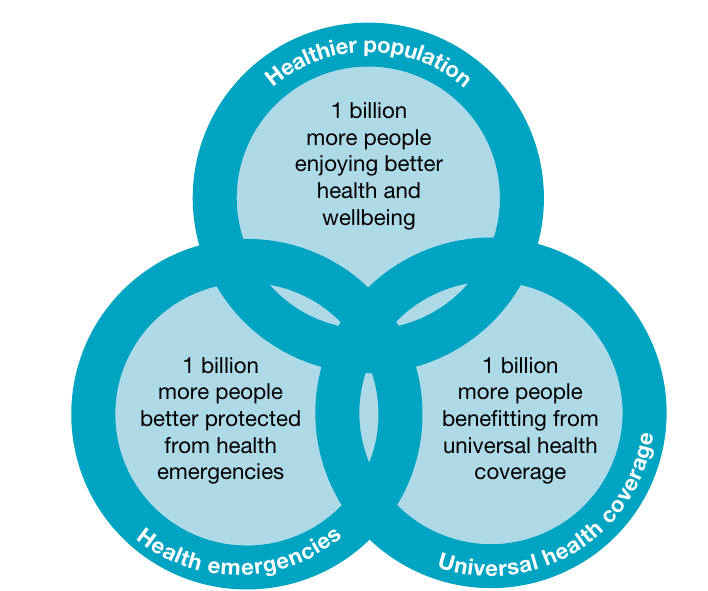
In 2018, the WHO established three interconnected strategic priorities through the Thirteenth General Programme of Work (2019-2023). These priorities align directly with Sustainable Development Goal 3: Good health and wellbeing, and apply to all countries regardless of income level.
Each priority includes an ambitious target known as the "triple billion" goals, aiming to impact billions of people by 2023:
- Achieving universal health coverage – 1 billion more people benefitting from universal health coverage
- Addressing health emergencies – 1 billion more people better protected from health emergencies
- Promoting healthier populations – 1 billion more people enjoying better health and wellbeing
Note
These priorities interconnect and collectively advance the WHO's mission. All work toward achieving these goals reflects the organization's six core functions, creating a unified approach to global health improvement.
Priority 1: Achieving universal health coverage
Understanding universal health coverage
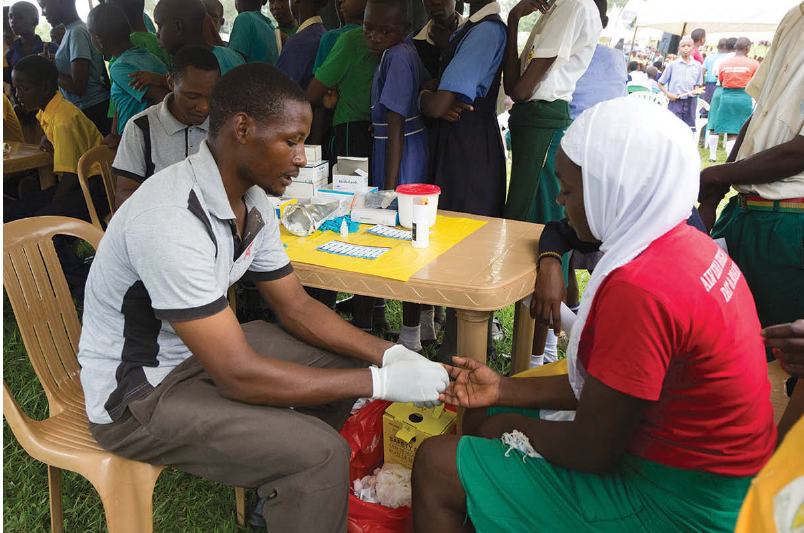
Universal health coverage means establishing strong, resilient, people-centered health systems built on primary care, health promotion, and disease prevention. Many countries currently lack affordable health services, forcing people to either forgo necessary healthcare or face poverty when paying for medical treatment.
Important
Major Barriers to Universal Health Coverage:
Achieving universal health coverage faces multiple barriers that must be addressed:
- Economic barriers: Unaffordable costs preventing access to services
- Geographical barriers: Services unavailable in certain areas or regions
- Cultural barriers: Services lacking cultural sensitivity for effective delivery or uptake
Overcoming these barriers is crucial for reducing poverty, achieving health equity, and promoting stable, secure societies.
Universal health coverage focuses on providing accessible, affordable essential healthcare services, including medicines and vaccines. This is crucial for reducing poverty, achieving health equity, and promoting stable, secure societies.
Seven areas of action
The WHO advances universal health coverage through seven interconnected areas:
- Service access and quality: Collaborating with countries to ensure all people can access quality essential healthcare services meeting community needs, regardless of location.
- Health workforce: Ensuring sufficient trained health workers are available to provide healthcare services to everyone requiring them.
- Access to medicines, vaccines and health products: Working with countries to provide safe, effective essential medicines and vaccines. Essential medicines address the primary healthcare needs of populations and facilitate faster recovery from disease.
- Governance and finance: Supporting countries to strengthen governmental capacity for developing and implementing health policy, organizing effective health systems, regulating services, providing necessary funding, creating health budgets, and tracking expenditure.
- Health information systems: Improving systems to monitor health risks, track morbidity and mortality rates with their risk factors, and assess health system performance.
- Advocacy: Providing leadership by raising global awareness of universal health coverage benefits, advocating for investment across all health system aspects, and actively promoting investment benefits.
- Country support: Partnering with countries at all levels to implement primary healthcare systems aligned with their health priorities.
Note
These seven areas work together synergistically. Progress in one area often facilitates improvements in others, creating a comprehensive approach to achieving universal health coverage that addresses both immediate healthcare needs and long-term system strengthening.
Priority 2: Addressing health emergencies
This priority directly supports the SDG 3 implementation target of strengthening capacity for early warning, risk reduction, and managing health risks.
Early threat detection, risk assessment, information sharing, and rapid emergency response are essential for preventing large-scale illness, injury, death, and economic losses. Achieving this goal means all countries will be better prepared for health emergencies like COVID-19 through resilient health systems. In many nations, health systems collapse during emergencies, conflicts, and crises, limiting response and recovery capabilities – as witnessed during the COVID-19 pandemic in countries such as Mexico.
Two key components
1. Building epidemic preparedness capacity
All countries face disease outbreak risks, many capable of spreading rapidly into epidemics. These include influenza and cholera, alongside emerging diseases such as COVID-19, Ebola, and Zika virus, which present new global challenges.
Note
The WHO developed the International Health Regulations (2005), recommending actions to reduce cross-border disease spread and global threats. Measures include:
- Airport controls
- Quarantine protocols
- Ensuring resources are readily available for treating outbreaks
The WHO supports countries in implementing these regulations and coordinates research, development, and innovation needed to better detect, prevent, and respond to emerging diseases and risk sources.
2. Ensuring universal access to essential services during emergencies
The WHO works with countries to ensure essential life-saving health services reach the most vulnerable populations, particularly those in fragile and conflict-affected areas. These services include:
- Health promotion and disease prevention
- Mental health and psychosocial support
- Nutrition services, including exclusive breastfeeding support
The organization also ensures national health emergency programmes receive support from a well-resourced, efficient WHO Health Emergencies Programme.
Priority 3: Promoting healthier populations
This priority focuses on achieving SDG 3's health and wellbeing targets, aiming to reduce maternal, child, and newborn mortality; decrease diseases like HIV, tuberculosis, malaria, and neglected tropical diseases; and promote wellbeing across all life stages. Focus areas include family planning, early childhood development, and youth health.
Five platforms for action
1. Improving human capital across the lifespan
The WHO targets interventions at critical life stages – early childhood, child and adolescent health and development, and family planning, pregnancy, and childbirth – where long-term health improvements can be achieved. Investment in these areas can reduce mental health disorders and non-communicable diseases later in life. This work directly supports the SDG 3 implementation target for sexual and reproductive healthcare services access and SDG 5's target for universal sexual and reproductive health and rights.
2. Preventing non-communicable diseases and promoting mental health
Important
Four Main Risk Factors for Non-Communicable Diseases:
Most morbidity and premature mortality from non-communicable diseases could be prevented by addressing these key risk factors:
- Tobacco use
- Harmful alcohol use
- Unhealthy diets
- Physical inactivity
Prevention efforts must combine with equitable access to effective treatment for cardiovascular diseases, cancer, diabetes, chronic respiratory diseases, and mental health conditions.
Mental health disorders significantly contribute to the global disease burden, yet most affected individuals lack treatment access. Additional efforts are needed to address road traffic injuries and violence. The WHO supports countries in implementing preventive strategies for non-communicable diseases.
3. Eliminating high-impact communicable diseases
Achieving the 2030 target of ending AIDS, tuberculosis, malaria, and neglected tropical disease epidemics, while combating hepatitis, water-borne diseases, and other communicable diseases like COVID-19, requires significantly accelerated prevention, control, and elimination efforts through cost-effective, high-impact interventions. These diseases remain major public health challenges in many countries, and the WHO intensifies support for implementing elimination actions.
4. Tackling antimicrobial resistance
Important
What is antimicrobial resistance?
Antimicrobial resistance occurs when microorganisms (bacteria, fungi, viruses, parasites) change after exposure to drugs designed to prevent or treat diseases. These resistant microorganisms are sometimes called "superbugs." Previously effective medicines become ineffective, infections persist, and transmission risk to others increases.
While antimicrobial resistance naturally develops over time through genetic changes, medication misuse and overuse accelerate this process. Antibiotics are frequently overused and misused – for example, when taken for viral infections like colds and flu, where they provide no benefit.
Why does it matter?
Antimicrobial resistance threatens effective prevention and treatment of numerous infections. Without effective antibiotics, major surgeries and cancer chemotherapy success would be compromised. New resistant microorganisms are emerging and spreading globally, threatening our ability to treat common infectious diseases and resulting in prolonged illness, disability, and death.
The WHO works with countries to increase awareness and understanding of correct antimicrobial medicine use and promotes research and development into addressing antimicrobial resistance.
5. Addressing climate change health effects in small island developing states
These nations are vulnerable to increasing climate and pollution-related risks, with women, children, and the poorest particularly affected. Air pollution significantly contributes to non-communicable diseases, and greater resilience is needed to prevent vector-borne, water-borne, food-borne, and work-related disease spread. The WHO works to prevent pollution-related disease and supports small island developing states in building health systems resilient to extreme weather and climate-sensitive diseases.
Note
Exam tip
When answering questions about WHO work, explain how their activities will contribute to health and wellbeing improvements. Don't just describe what they do – explain the impact and outcomes.
Case study: Antimicrobial resistance in Australia
Example
Case Study: Antimicrobial Resistance in Australia
Recent data shows Australia's antibiotic use has fallen for the first time in two decades, suggesting awareness campaigns are working. However, antibiotics continue to be overprescribed and misused, causing several dangerous bacteria to develop increasing resistance to common medicines.
Key findings
The third annual surveillance report from the Australian Commission on Safety and Quality in Healthcare warned that antibiotic resistance shows little sign of diminishing and poses an ongoing, substantial risk to patient safety.
Common pathogens including E. coli, Salmonella, and gonorrhoea-causing bacteria are growing progressively resistant to major drug classes and, in some cases, last-resort treatments.
In 2017, over 10 million Australians had at least one antibiotic dispensed, with more than 26 million antimicrobial prescriptions issued. Significantly, many patients received antibiotics for conditions where no evidence supports their benefit, including influenza.
Golden staph concern
Drug-resistant Staphylococcus aureus (golden staph) is of particular concern. This common bacterium, normally harmless on skin, can cause infections ranging from mild to severe, including meningitis and pneumonia. While drug-resistant golden staph has decreased in hospitals, it has increased in aged care homes and remote regions, becoming primarily a community problem rather than a hospital issue.
E. coli resistance
E. coli, the most common cause of urinary tract infections (UTIs), is slowly developing resistance to antibiotics, including some reserve drugs. Healthcare workers report patients needing hospital admission for intravenous antibiotics because no tablets were available to treat UTIs – infections previously easily managed in the community.
Aged care challenges
Multi-drug-resistant organisms appear in high numbers in aged care homes, where over half of prescriptions are issued to residents showing no infection signs or symptoms.
Impact and outlook
According to the OECD, an average of 290 people die in Australia annually from infections caused by eight drug-resistant bacteria. Experts stress that antibiotic resistance containment is critical to modern medical care, as hospital care heavily depends on effective antibiotics.
Contrary to common perception, limited antibiotic development is occurring despite global need for new drugs. Good hygiene practices, particularly hand washing, remain important for reducing transmission risk of bacteria and superbugs between people.
Summary
Key Points to Remember:
-
The WHO was established in 1948 as a UN branch, working across 194 countries to improve global health
-
The organization's mission is to promote health, keep the world safe, and serve vulnerable populations
-
Six core functions guide WHO work: leadership and partnerships, research and information, setting standards, developing policies, providing technical support, and monitoring trends
-
Three strategic priorities form the "triple billion" goals: achieving universal health coverage, addressing health emergencies, and promoting healthier populations
-
Universal health coverage focuses on accessible, affordable essential healthcare through seven key areas including service quality, workforce, medicines access, governance, information systems, advocacy, and country support
-
Health emergency preparedness involves building epidemic response capacity and ensuring essential service access during crises
-
Promoting healthier populations targets five platforms: improving human capital, preventing non-communicable diseases, eliminating communicable diseases, tackling antimicrobial resistance, and addressing climate change health effects
-
Antimicrobial resistance is a growing global threat caused by microorganisms developing resistance to drugs designed to treat them, accelerated by antibiotic misuse and overuse