Overview of the Human Lifespan (VCE SSCE Health and Human Development): Revision Notes
📚Revision Notes
Overview of the Human Lifespan
Understanding the human lifespan and its various stages helps us examine and discuss how health, wellbeing and development occur throughout life. The lifespan can be divided into different stages, though different cultures may define these stages in varying ways.
Note
One universal agreement exists across all cultures: the human lifespan begins at fertilisation and ends at death.
In Australian society, like most Western societies, humans progress through several distinct stages as they age.
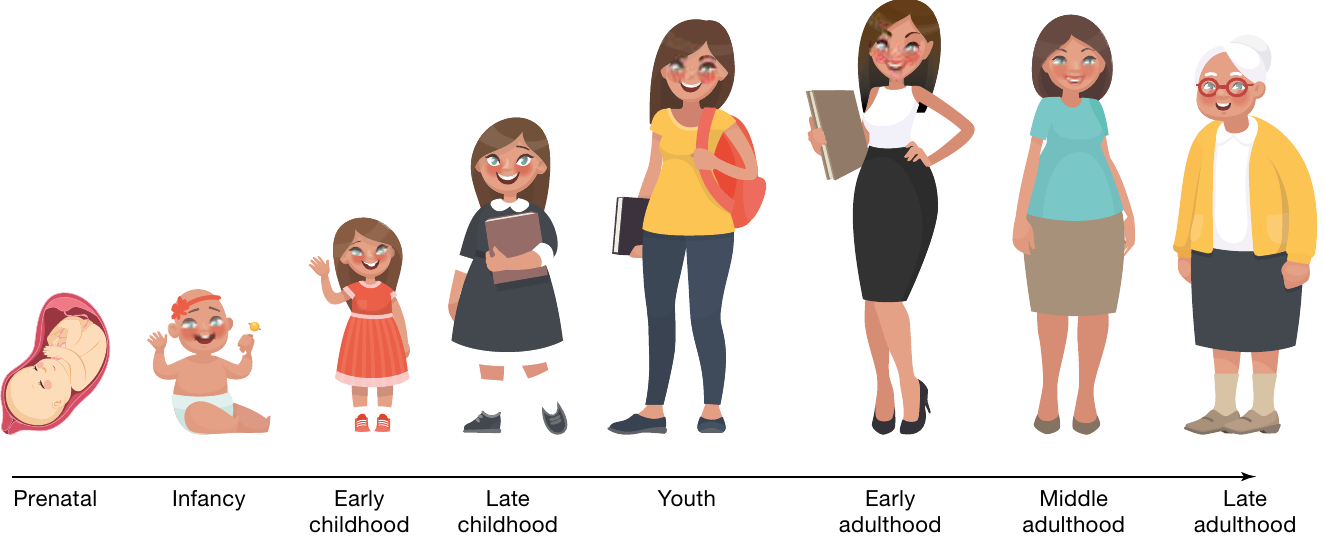
What is development?
Development refers to the series of orderly, predictable changes that happen from fertilisation until death. These changes can occur across four key areas:
Note
The Four Dimensions of Development
- Physical development - changes to the body and its systems
- Social development - changes in relationships and interactions with others
- Emotional development - changes in feelings and how we express them
- Intellectual development - changes in thinking, learning and understanding
All four areas interact and influence each other throughout the lifespan.
Prenatal stage
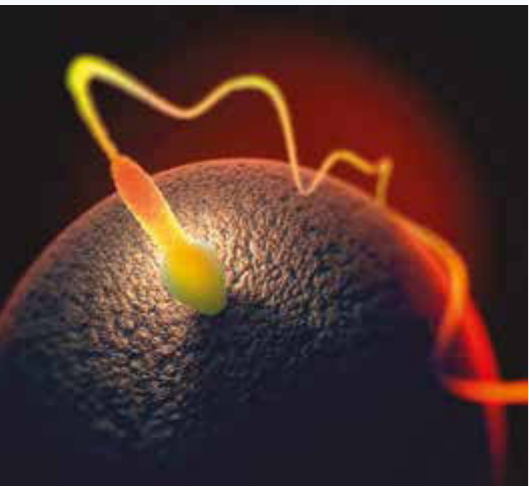
The prenatal stage marks the very beginning of human life. It starts when a sperm penetrates an egg through a process called fertilisation (also known as conception). This creates one complete cell called a zygote.
Key characteristics
This stage continues from fertilisation until birth and features remarkable changes:
- The body's organs and structures develop
- Significant growth occurs throughout
- The unborn baby transforms from a single cell (smaller than a quarter of a millimetre) to more than 200 billion cells at birth
- Average birth weight is around kilograms
- The entire process takes approximately weeks
Important
Fastest Growth Period
The prenatal stage represents the fastest growth period of the entire human lifespan. It is also one of the most vulnerable stages, with risks associated with completing the prenatal stage and surviving the birth process.
Key term - Fertilisation: The fusing of a sperm and an egg cell, marking the beginning of pregnancy.
Key term - Zygote: A complete cell formed from the fusion of a sperm and an ovum.
Infancy
There is some debate about when infancy ends, but everyone agrees it begins at birth. Historically, infancy was thought to continue until a child could speak. However, because infants vary greatly in when they start speaking, many professionals now consider infancy to end at approximately the second birthday.
Key characteristics
Infancy is marked by rapid growth and numerous changes. A newborn baby is vastly different from a two-year-old child. By age two, infants have typically:
- Developed motor skills and can walk
- Used simple words
- Identified people familiar to them
- Played social games
- Expressed strong emotions (including tantrums when frustrated)
Many of the developmental milestones achieved during infancy influence how individuals develop in later years.
Key term - Developmental milestone: A significant skill or event occurring in a person's life, such as learning to walk, getting a job or having children.
Childhood
Like infancy, the exact boundaries of childhood can be difficult to define. Most people agree it ends at the onset of puberty, though this age varies considerably. For our purposes, we'll consider childhood to end at the twelfth birthday, which typically coincides with completing primary school in Australia.
Note
Because substantial development occurs during childhood, this stage is divided into two phases: early childhood and late childhood.
Early childhood
Early childhood spans from the end of infancy (around age ) until the sixth birthday.
Key characteristics
This stage features slow and steady growth and the accomplishment of many new skills:
- Learning social skills for interacting with others
- Making friends
- Learning to eat with adults at the table
- Becoming toilet trained

Late childhood
Late childhood begins at the sixth birthday and ends at the twelfth birthday.
Key characteristics
Like early childhood, this stage is marked by slow and steady growth. Many changes occur across all developmental areas:
- Physical: Refining motor skills
- Social: Understanding gender stereotypes, developing peer relationships
- Emotional: Greater emotional regulation
- Intellectual: Refining reading and writing skills, developing long-term memory
Note
Primary schooling significantly influences development during this stage, as children spend considerable time learning foundational academic and social skills.
Key term - Puberty: Biological changes that occur during youth, preparing the individual for sexual reproduction.
Youth
The youth stage has gradually lengthened over the past century. This has occurred because puberty now starts earlier, and young people take longer to gain independence and reach maturity in other life aspects. Consequently, youth is perhaps the hardest lifespan stage to define. We'll consider youth to span from age to , though this may vary in different research. Secondary school years typically mark this stage for many young people in Australia.
Key characteristics
Youth is characterised by:
- Rapid growth
- Increased independence
- Sexual maturity
- Moving from childhood to adulthood
Young people must undergo significant physical changes to achieve sexual maturity and the ability to reproduce. They also experience major social, emotional and intellectual changes as they adjust to:
- Greater independence
- More complex relationships
- Development of life goals
The end of youth is marked by reaching maturity across physical, social, emotional and intellectual development.
Key term - Youth: People aged 12 to 18 years. However, classifications for the youth stage can differ across agencies.
Youth vs adolescence
Important
Understanding the Terminology
The term 'adolescence' traditionally meant the period between the onset of puberty and the cessation of growth (physical maturity). However, as society has changed, physical changes are now seen as only one aspect of the transition from childhood to adulthood.
Young people now spend more time reaching maturity in areas such as:
- Tertiary study
- Finding a career
- Moving out of the family home
- Gaining financial independence
Therefore, the term 'youth' is now more commonly used because it encompasses all changes experienced during this transition, not simply physical changes.
Adulthood
Adulthood begins at the 18th birthday and continues until death. This is generally the longest of all lifespan stages, so it's broken down into three groups: early, middle and late adulthood. While there's debate about when each sub-stage begins and ends, general developmental milestones are associated with each.
Early adulthood
Early adulthood spans from the 18th birthday to the 40th birthday.
Key characteristics
Physically, this stage features:
- The body reaching its physical peak around ages 25-30
- A steady decline in body systems thereafter
- Some growth may continue at the beginning
- Maintenance and repair rather than periods of growth
Common life events during early adulthood include:
- Focusing on building a career
- Choosing a life partner
- Getting married
- Having children
These events lead to many physical, social, emotional and intellectual changes.
Middle adulthood
Middle adulthood begins at age and continues until age . Events during this period vary between cultures and individuals.
Key characteristics
Common characteristics include:
- Stability in work and relationships
- Further development of identity
- Maturation of values and beliefs
- Financial security
- Physical signs of ageing
- For women, menopause
- Children gaining independence and leaving home
Note
Empty Nest Syndrome
When children leave home, parents may experience a new sense of freedom. Sometimes this creates a sense of loss or loneliness, often called 'empty nest syndrome'.
Many individuals in middle adulthood experience the joy of becoming grandparents, though this can also occur in late adulthood.
Late adulthood
Late adulthood is the final stage of the lifespan, occurring from age until death.
Key characteristics
This period features:
- Lifestyle changes arising from retirement
- Financial security (for most)
- Greater participation in voluntary work
- Increased leisure activities
- Potential grief from the death of friends or spouse
- Changes in living arrangements
- Declining health and wellbeing

As health begins to decline significantly, older people often reflect on their lives and achievements. This reflection may provide a sense of satisfaction or regret, depending on how they assess their life choices.
Case study: Teenage sleep
Example
Case Study: Understanding Adolescent Sleep Patterns
Sleep patterns are not consistent throughout life. During the teenage years, sleep habits change dramatically, and these changes have a biological basis rather than being due to laziness or anti-social behaviour.
Sleep across the lifespan
Sleep duration varies with age:
- Newborn babies: - hours per day (in naps)
- Age 5: About hours
- Puberty and adolescence: Sleep time increases again
Puberty lasts until approximately years in boys and years in girls (measured by the end of bone growth). Adolescence continues for a few more years beyond this.
Biological changes during adolescence
Adolescence represents the transition between childhood and adulthood. During this time, the natural circadian rhythm is significantly affected by two biological changes:
1. Delayed sleep onset
- Melatonin is released later in adolescents
- Teenagers genuinely are not tired at pm
- Early bedtimes are biologically impossible for most adolescents
2. Increased sleep needs
- Adolescents require - hours of sleep every night
- One marker of adolescence ending is the switch to shorter, earlier adult sleep hours
- This typically occurs at years in women and years in men
The sleep deprivation problem
The teenage years create challenging circumstances for sleep:
- Adolescents cannot fall asleep early
- They need - hours of sleep
- School often starts early (sometimes very early for sports)
- During term time, they sleep two hours fewer on weeknights
- They try desperately to catch up on weekends
- The average high school student experiences semi-permanent sleep deprivation
Consequences of sleep deprivation
Research has linked adolescent sleep deprivation to:
- Rebellious behaviour
- Depressive symptoms
- Cigarette smoking
- Obesity
- Anxiety disorders
- Poor school marks
- Reduced IQ test performance (up to points lower when tired)
- Increased road deaths (% of all road deaths are caused by fatigue-related microsleeps, with about half of these fatigue-related deaths occurring in people aged -)
Signs of severe sleep deprivation
Studies have examined REM-sleep (Rapid Eye Movement sleep), which is when most dreaming occurs. REM-sleep normally begins - minutes after falling asleep. However, research found that half of high school students, when given the opportunity to sleep at school in mid-morning, dropped into REM-sleep within just a few minutes rather than the usual hour-and-a-half. This indicates severe sleep deprivation.
Students who work or more hours per week for money experience even more exhaustion and sleep deprivation.
Possible solutions
To address adolescent sleep deprivation:
- Avoid caffeine: Caffeinated drinks disrupt circadian rhythms
- Remove technology from bedrooms: Computers and TVs in bedrooms encourage staying awake longer
- Adjust school start times: Some experts recommend that universities and high schools start at am, allowing young people to stay up later, get adequate sleep, and be alert in class
This research suggests that society may need to adjust to adolescents' altered sleep patterns rather than expecting teenagers to conform to adult sleep schedules.
Important
Key Insight from Sleep Research
The teenage sleep problem is not a matter of poor choices or laziness - it is a biological reality. Adolescents' brains are wired differently during this developmental stage, making it physically impossible for them to fall asleep early while requiring more total sleep hours.
Remember!
Summary
Key Points to Remember:
- The human lifespan starts at fertilisation and ends at death.
- There are eight main stages: prenatal, infancy, early childhood, late childhood, youth, early adulthood, middle adulthood, and late adulthood.
- The prenatal stage is the fastest growth period of the entire lifespan.
- Development occurs across four areas: physical, social, emotional and intellectual.
- Youth (ages -) is characterised by rapid growth, increased independence and sexual maturity, representing the transition from childhood to adulthood.
- Early adulthood sees the body reach its physical peak around ages 25-30, followed by gradual decline.
- Each life stage brings unique developmental milestones that influence later development.