Differences Between Those Living Within and Outside of Australia’s Major Cities (VCE SSCE Health and Human Development): Revision Notes
📚Revision Notes
Differences Between Those Living Within and Outside of Australia's Major Cities
Introduction
Australia's vast landscape creates unique health challenges for its residents. People living outside major cities generally face worse health outcomes than those in urban areas, influenced by factors such as remoteness, access to services, social isolation, and environmental challenges like droughts, bushfires, and floods.
Defining geographical classifications
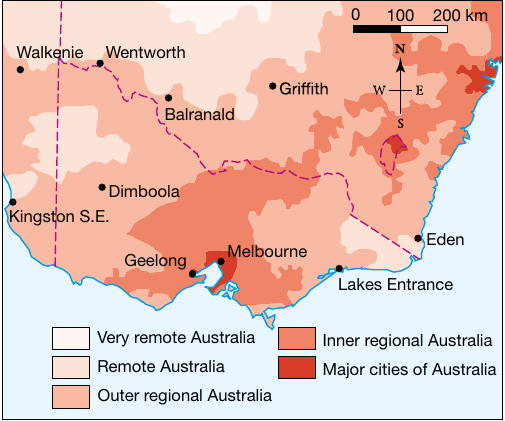
Australia uses specific classifications to categorise geographical locations based on remoteness:
Major cities include Melbourne and Geelong in Victoria. In other states, major cities are Sydney, Newcastle, Wollongong, Tweed Heads and the Tweed Coast, Brisbane, most of the Gold Coast and much of the Sunshine Coast, Adelaide, Perth, and Canberra and Queanbeyan.
Note
Notably, Hobart and Darwin are not included in the major cities classification, despite being state and territory capitals.
Outside major cities encompasses three main categories:
- Inner regional areas: Near regional centres such as Hobart, Darwin, Bendigo, and Ballarat
- Outer regional areas: More distant from major centres
- Remote and very remote areas: Locations such as Genoa and Murrayville (Victoria contains no 'very remote' areas)
Population distribution
Approximately 28 per cent of Australia's population lives outside major cities, distributed as follows:
- 18 per cent in Inner regional areas
- 8.1 per cent in Outer regional areas
- 1.1 per cent in Remote areas
- 0.8 per cent in Very remote areas
Important
An important consideration is that 65 per cent of Aboriginal and Torres Strait Islander people live outside major cities, compared to around 29 per cent of other Australians. Additionally, people outside major cities are more likely to be of lower socioeconomic status, meaning health concerns associated with Indigenous Australians and low socioeconomic groups often overlap with those living in rural and remote areas.
Key differences in health status
A clear pattern emerges when examining health outcomes: health status declines as remoteness increases. Those in remote areas generally experience poorer health outcomes than those in regional areas, who in turn fare worse than major city residents.
Life expectancy
People living outside major cities have lower life expectancy than their urban counterparts. The gap widens with increasing remoteness:
- Rural areas: One to two years less than major cities
- Remote areas: Up to seven years less than major cities
Burden of disease
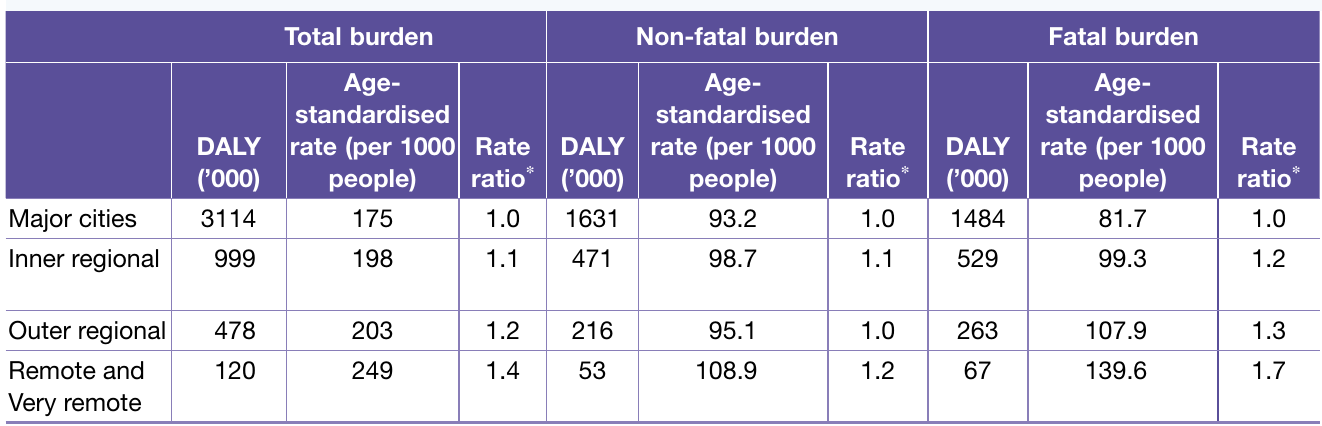
Those living outside major cities experience higher burden of disease from both fatal and non-fatal causes. The Disability-Adjusted Life Year (DALY) rates increase proportionally with remoteness.
Note
The table above shows that the age-standardised DALY rate increases from 175 per 1000 people in major cities to 249 per 1000 people in remote and very remote areas. The rate ratio of 1.4 for total burden in remote areas means that for every 1 DALY contributed by major city residents, remote residents contribute 1.4 DALYs.
Specific health conditions
People outside major cities experience higher rates of numerous conditions:
Cardiovascular conditions:
- Higher death rates from cardiovascular disease, including coronary heart disease
- Mortality rates overall are 1.4 times higher than major cities
Cancers:
- Higher rates of preventable cancers including lung cancer and melanoma
- Higher rates of detectable cancers such as cervical cancer
Chronic conditions:
- Higher rates of type 2 diabetes
- Higher rates of arthritis
- Higher rates of asthma and chronic obstructive pulmonary disease (COPD)
Injuries and mental health:
- Higher rates of avoidable deaths
- Higher rates of injury, with mortality from land transport accidents being 4 times higher
- Higher rates of suicide and self-inflicted injuries
- Higher rates of mental health disorders
Other conditions:
- Higher rates of dental decay
Note
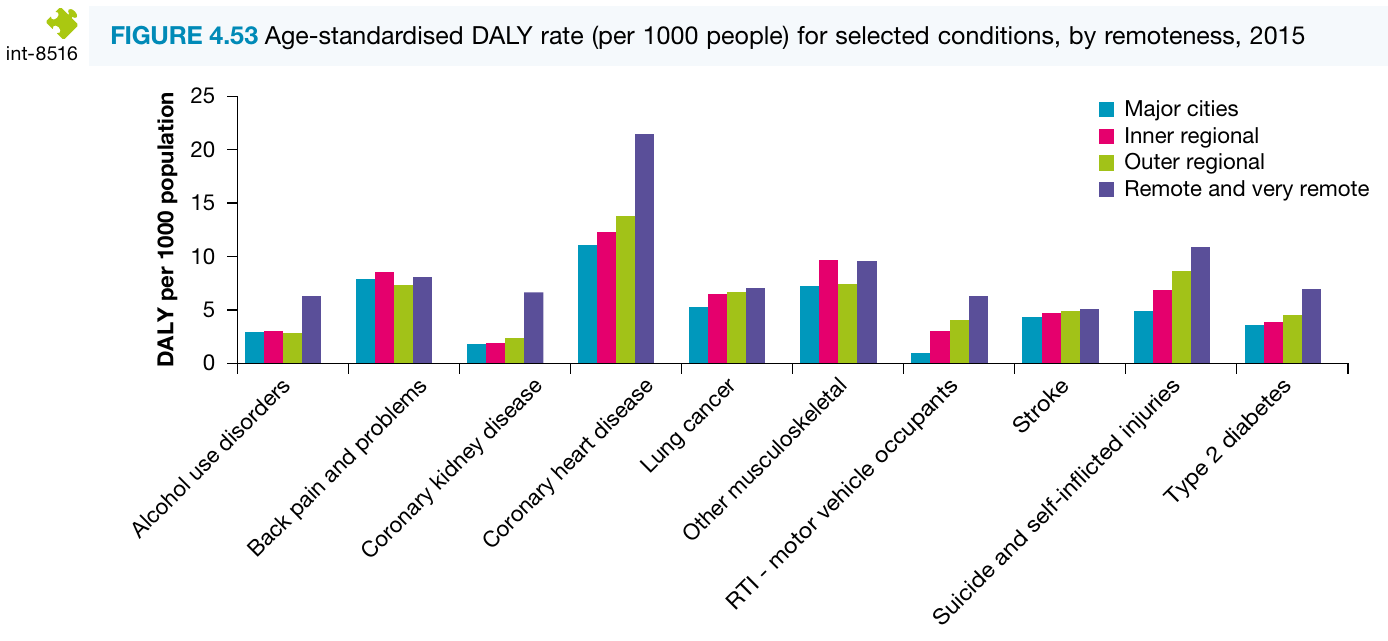
The bar chart above illustrates how DALY rates for selected conditions vary by remoteness. Notice that coronary heart disease shows particularly high rates in remote and very remote areas (approximately 22 per 1000), significantly exceeding major city rates.
Factors contributing to variations in health status
Understanding the health disparities between urban and rural populations requires examining biological, sociocultural, and environmental factors that contribute to these differences.
Biological factors
Biological factors represent measurable physical and physiological characteristics that influence health outcomes. Five key biological factors contribute to poorer health status for those outside major cities.
Body weight
High body mass index (BMI) levels are approximately 10 per cent higher among people living outside major cities compared to urban residents. Elevated BMI increases the risk of developing serious conditions including type 2 diabetes, cardiovascular disease, and certain cancers. The higher prevalence of overweight and obesity in rural and remote areas directly contributes to the increased burden of these chronic diseases.
Note
The relationship between elevated BMI and chronic disease is particularly significant in rural areas, where access to health services for managing these conditions may be limited.
Blood cholesterol
People living outside major cities are 10 per cent more likely to experience high blood cholesterol than city dwellers. High cholesterol is a significant risk factor for cardiovascular disease and hypertension. This elevated prevalence helps explain the higher rates of heart disease and stroke observed in rural and remote populations.
Glucose regulation
Impaired glucose regulation is more common among people living outside major cities, with rates increasing as remoteness increases. Poor glucose regulation raises the risk of developing type 2 diabetes and kidney disease. This factor directly contributes to the higher diabetes burden observed in regional, rural, and remote areas.
Birth weight
The percentage of low birth weight infants is considerably higher in remote areas. In very remote areas, approximately 11.2 per cent of babies are born with low birth weight, compared to 6.6 per cent in major cities. Low birth weight babies face increased risks of developmental problems, health complications, and infant mortality.
Important
The near-doubling of low birth weight rates in very remote areas compared to major cities represents one of the most significant biological disparities and has lasting impacts on health throughout the lifespan.
Blood pressure
Hypertension rates are 1.2 times higher in people living outside major cities compared to urban residents. High blood pressure significantly increases the risk of cardiovascular disease, including heart attack and stroke. This elevated prevalence contributes substantially to the higher burden of cardiovascular disease in rural and remote populations.
Sociocultural factors
Sociocultural factors encompass the social and economic circumstances that influence health. These factors often interact and compound each other, creating complex health challenges for people outside major cities.
Socioeconomic status
More than half of outer regional, remote, and very remote residents live in areas of socioeconomic disadvantage, compared to about one-quarter in major cities. This disparity stems from limited opportunities for education and employment in rural areas.
Lower socioeconomic status contributes to higher rates of risky health behaviours, including smoking and physical inactivity. These behaviours increase the risk of preventable diseases such as cancer and cardiovascular disease, ultimately contributing to lower life expectancy.
Note
Financial challenges are evident in the higher reliance on social security payments among rural and remote residents compared to those in major cities. Financial struggle impacts access to adequate food supplies and healthcare services, further compromising health outcomes.
Unemployment
Higher unemployment rates characterise areas outside Australia's major cities. Unemployment is both a cause and consequence of lower socioeconomic status. The lack of employment opportunities in rural and remote areas creates financial hardship, limiting access to health-promoting resources and contributing to poorer overall health status.
Food security
People in rural and remote areas are 1.2 times more likely to experience food insecurity than city residents. Two main factors drive this disparity: high costs and lack of access.
Transporting food to remote areas adds significant costs, particularly for fresh produce. Consequently, people may rely more heavily on processed foods with long shelf lives, such as canned and packaged items. These foods often contain high levels of fat, salt, and sugar, contributing to increased rates of obesity, type 2 diabetes, and cardiovascular disease.
Example
Impact of Food Transport Costs:
A remote community may pay $8 for a kilogram of fresh vegetables that costs $3 in a major city. This price difference, combined with limited availability, leads residents to purchase more processed foods. A typical shopping basket might contain:
- Fewer fresh fruits and vegetables (due to cost and availability)
- More canned vegetables and fruits (longer shelf life, lower transport risk)
- More packaged snacks and processed meals (shelf-stable)
This dietary pattern directly contributes to the higher rates of obesity (approximately 10% higher BMI) and related chronic diseases observed in remote areas.
Early life experiences
Maternal smoking during pregnancy is significantly more prevalent in remote areas. Data shows that approximately 36.4 per cent of mothers in very remote areas smoked during pregnancy in 2016—five times the rate in major cities (6.9 per cent).
Important
Smoking during pregnancy contributes to numerous adverse outcomes including higher rates of low birth weight babies, babies born with asthma, and increased infant and under-five mortality. These early life disadvantages have lasting impacts on health throughout the lifespan.
Social isolation
While people outside major cities often report high levels of community participation and strong community connections, they may still experience social isolation due to geographic distances. Social isolation results from limited contact with family, neighbours, and friends.
The consequences of social isolation are serious, contributing to higher rates of mental health disorders and suicide. Isolated individuals may experience loneliness and lack access to support during difficult times, increasing psychological distress and the risk of self-harm.
Environmental factors
Environmental factors relate to the physical surroundings and infrastructure that influence health. The unique environmental characteristics of rural and remote areas create distinct health challenges.
Infrastructure
Road conditions in rural and remote areas are generally poorer than in cities. Combined with longer driving distances, increased likelihood of wildlife crossing roads, and poor lighting at night, these factors contribute significantly to higher mortality and morbidity from transport injuries.
Water infrastructure also varies by location. Many remote communities lack access to mains water supplies, which are typically fluoridated. The absence of fluoridated water increases the risk of dental health issues, particularly dental caries, contributing to the higher rates of dental decay observed outside major cities.
Geographic location
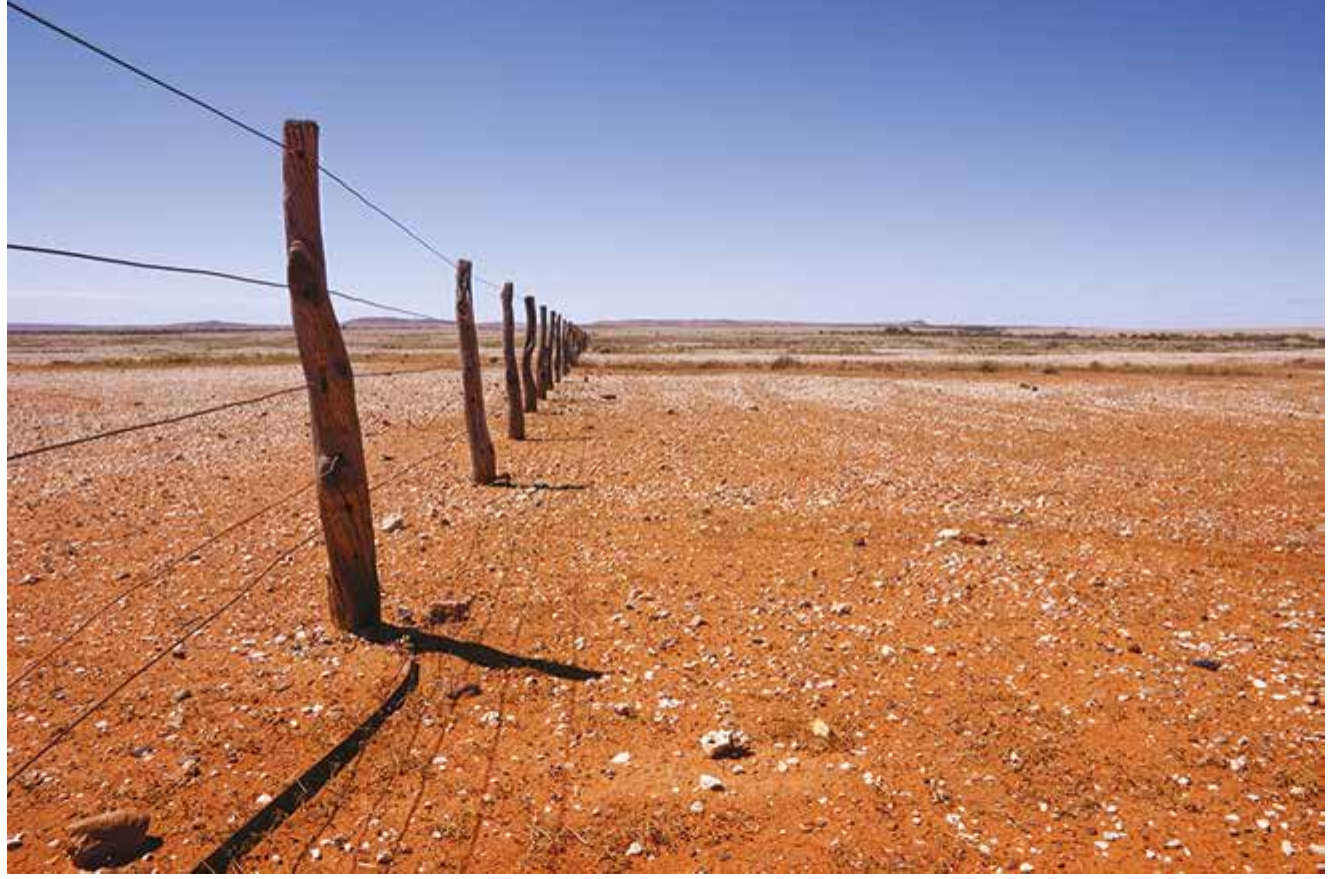
Proximity to resources represents a significant challenge for rural and remote residents. The location of health services critically influences whether people can access healthcare when needed.
Note
Research shows that in 2016, the proportion of people unable to access health services due to geographical barriers increased dramatically with remoteness—from 6.2 per cent in major cities to 38 per cent in remote and very remote areas. This lack of access means conditions may go undiagnosed and untreated, increasing morbidity and mortality.
When specialist services or hospitalisation are required, family members often must take time off work to transport ill relatives to distant facilities. This creates additional financial costs and increases stress and anxiety for families.
Geographic location also determines access to various food types. Remote residents may struggle to access fresh foods such as fish, fruit, and vegetables, leading to greater reliance on processed foods high in fat, salt, and sugar. This dietary pattern increases the risk of overweight, obesity, cardiovascular disease, and type 2 diabetes.
Important
Other geographical barriers include limited access to recreation facilities, transport services, and employment opportunities. These barriers contribute to low socioeconomic status, unemployment, increased morbidity and mortality risk, and lower life expectancy. Geographic isolation also reinforces social isolation, compounding the sociocultural challenges discussed earlier.
Climate and climate change
Rural and remote residents experience greater hardship from climate conditions. Droughts, floods, and fires can severely disrupt farming operations, leading to unstable income. This income instability lowers socioeconomic status and increases stress levels.
Climate change is predicted to have a disproportionate impact on rural and remote areas compared to major cities. Increased frequency of natural disasters—including fires, floods, and droughts—affects health by increasing injury risk and mental health disorders. The relative isolation of remote areas particularly limits access to support services for dealing with climate change impacts.
Example
Impact of Prolonged Drought:
During the 2010s, south-eastern Australia, including Victoria, experienced prolonged drought. This event demonstrated the interconnected impacts of climate on rural health:
- Economic impact: Reduced water availability for agriculture and livestock severely affected livelihoods of rural residents
- Mental health consequences: Mental health disorders and self-harm rates increased notably during this period
- Community stress: Uncertainty about rainfall patterns created ongoing anxiety and financial pressure
- Long-term effects: The cumulative stress of unpredictable weather patterns contributed to sustained elevated rates of mental health issues
This example illustrates how environmental factors cascade through economic and social systems to ultimately affect health outcomes.
Work environments
Common occupations outside major cities include farming, mining, and fishing. All these industries carry specific risks associated with their physical environments, including a higher risk of injuries. Research indicates that undersupply of work may lead workers to accept more hazardous working conditions.
Many rural and remote jobs are outdoors, increasing ultraviolet (UV) exposure. This contributes to higher incidence of skin cancer, particularly melanoma, among rural and remote populations.
Summary
The following diagram summarises the key factors contributing to health status variations between those living within and outside Australia's major cities:
Summary
Key Understanding:
Understanding these factors is essential for addressing health inequalities. The interactions between biological, sociocultural, and environmental factors create complex health challenges that require comprehensive, multi-faceted approaches to improve health outcomes for rural and remote Australians.
The compounding nature of these factors is particularly important to recognise—disadvantages in one area often lead to or reinforce disadvantages in others, creating cycles that are difficult to break without coordinated intervention strategies.
Remember!
Summary
Essential Points to Remember:
-
Health status declines with remoteness: People in remote areas experience life expectancy up to 7 years lower than major city residents, with regional areas falling in between.
-
Three factor categories: Biological factors (body weight, cholesterol, glucose regulation, birth weight, blood pressure), sociocultural factors (socioeconomic status, unemployment, food security, early life experiences, social isolation), and environmental factors (infrastructure, geographic location, climate, work environments) all contribute to health disparities.
-
Burden of disease increases with remoteness: DALY rates show that remote and very remote residents experience 1.4 times the total burden of disease compared to major city residents, with even higher ratios for fatal outcomes.
-
Key health outcomes: Higher rates of cardiovascular disease, preventable cancers, diabetes, injuries (particularly transport accidents), suicide, respiratory diseases, arthritis, and dental decay characterise populations outside major cities.
-
Intersecting disadvantages: Many factors compound each other—for example, lower socioeconomic status contributes to food insecurity, which increases obesity risk, which leads to cardiovascular disease and diabetes. Understanding these connections is crucial for addressing rural and remote health inequalities.