Sociocultural Factors Contributing to Variations in Health Status (VCE SSCE Health and Human Development): Revision Notes
📚Revision Notes
Sociocultural Factors Contributing to Variations in Health Status
Introduction to sociocultural factors
Sociocultural factors are the social and cultural conditions into which people are born, grow, live, work and age. These conditions have a powerful impact on health status, yet many are beyond individual control.
Important
Key Definition: Sociocultural Factors
Sociocultural factors include socioeconomic status, social connections, family and cultural norms, food security, early life experiences, and access to affordable, culturally appropriate healthcare.
People experiencing poor sociocultural conditions consistently show worse health status across all societies. The gap between those at the top and bottom of the sociocultural ladder has widened over time, with those at the bottom experiencing significantly poorer health outcomes.
Note
Sociocultural factors often interrelate. A person experiencing one disadvantage is more likely to experience multiple disadvantages compared to those who are more fortunate. The longer someone lives in sociocultural distress, the more physiological wear and tear they suffer, reducing their likelihood of enjoying a healthy old age.
Socioeconomic status
Socioeconomic status (SES) refers to a person's position in society compared to others. It is determined by three interconnected factors: income, occupation and education.
People who are more socioeconomically disadvantaged consistently have poorer health status across most countries and cultures.
Income
Income influences the ability to access essential health resources including:
- Adequate housing
- Nutritious food
- Healthcare services and private health insurance
- Recreation and leisure activities
- Transport
- Education
These resources help people maintain a healthy body weight, prevent disease, stay socially connected and access healthcare when needed. This combination reduces both morbidity and mortality rates.
Occupation
A person's occupation significantly influences their health status in several ways:
Manual labour occupations (including many trades):
- Increase risk of soft tissue injuries and back pain
- Often involve greater occupational hazards
- Typically associated with higher mortality rates
- Often linked to lower socioeconomic backgrounds
Sedentary occupations (including many administrative roles):
- Reduce levels of physical activity
- Increase risk of obesity
Note
Research shows that manual workers, such as builders and farmers, experience higher mortality rates compared to those in managerial or professional occupations.
Education
Education impacts health status through multiple pathways:
Health literacy is a crucial connection between education and health. This describes the degree to which individuals can obtain, process and understand basic health information and services needed to make appropriate health decisions.
People with higher education levels are more likely to:
- Be health literate
- Understand and follow health promotion messages
- Make informed decisions about healthy lifestyles
- Access healthcare when required
This promotes better health status and decreases the impact of preventable and treatable conditions including cardiovascular disease, some cancers, respiratory diseases and type 2 diabetes.
Important
Low Health Literacy
Low health literacy contributes to people with low socioeconomic status being:
- Less likely to notice or act on health promotion messages, increasing risk of preventable diseases
- More likely to smoke
- More likely to be obese due to poor nutrition and physical inactivity
The interconnection of SES components
All three components of socioeconomic status are related and influence each other. For example, a person with high education levels is more likely to work in a higher-paying job. Such jobs usually carry greater status than lower-paying jobs. As education level increases (for example, from high school to tertiary education), the status of occupation and average income generally increase as well.
Unemployment
The link between unemployment and health status is well established. According to the Australian Institute of Health and Welfare (2006), unemployed people have a higher chance of dying and suffer from more illnesses than employed people of similar age. Suicide, lung cancer and cardiovascular disease rates are all higher among unemployed individuals.

Effects of long-term unemployment
The effects of long-term unemployment on health status can be particularly serious, mainly due to:
- Psychological factors: Stress, anxiety, depression
- Financial factors: Especially when individuals fall into debt
The unemployment-health cycle
Important
The Bidirectional Relationship
There is a two-way (bidirectional) relationship between health outcomes and unemployment:
- For some people, ill health causes unemployment (such as an injury or disease preventing work)
- For others, unemployment causes health problems (such as stress and depression)
Despite the different causal pathways, ill health and unemployment often create a vicious cycle that is difficult to break.
Health impacts before unemployment occurs
The effect on health status can begin even before unemployment occurs. An employee concerned about job security may experience elevated levels of stress and anxiety while still working. This can lead to physiological implications including:
- Sleep problems
- Increased risk of cardiovascular disease
Comparison of health problems
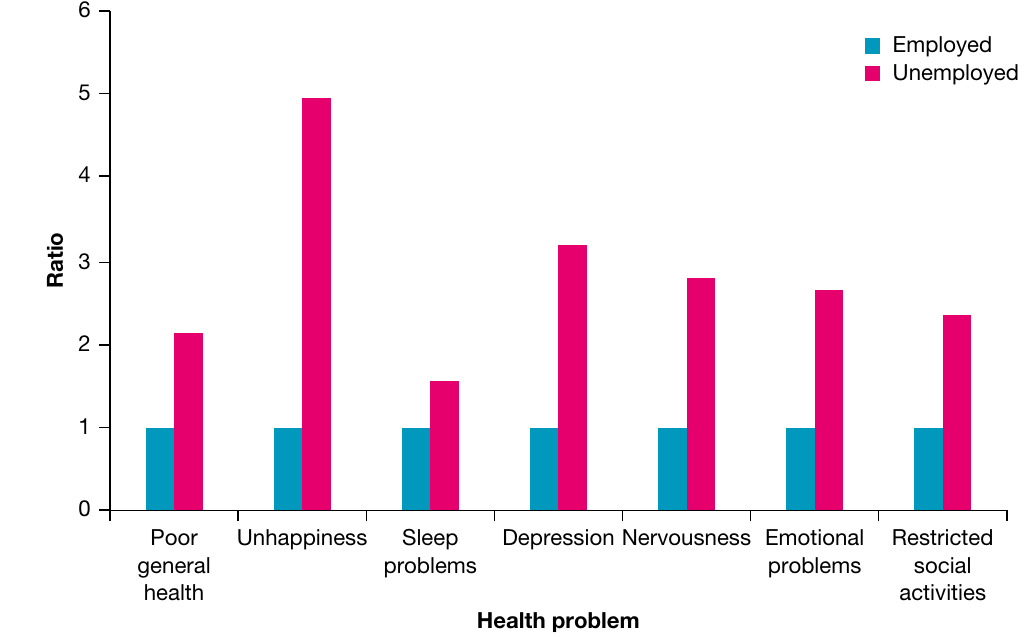
Research shows that unemployed individuals experience significantly higher rates of multiple health problems compared to employed individuals, including:
- Poor general health
- Unhappiness (approximately 5 times higher)
- Sleep problems
- Depression
- Nervousness
- Emotional problems
- Restricted social activities
Social connections and social exclusion
Social connections
Social connections relate to the bonds between an individual and their relations, friends and acquaintances, and the ability to participate in the society in which they live. Being socially connected has been associated with:
- Lower morbidity rates
- Increased life expectancy
Social exclusion
The opposite of social connectedness is social exclusion, which contributes to significant variations in health status.
Important
Key Definition: Social Exclusion
Social exclusion refers to the segregation that people experience if they are not adequately participating in the society in which they live.
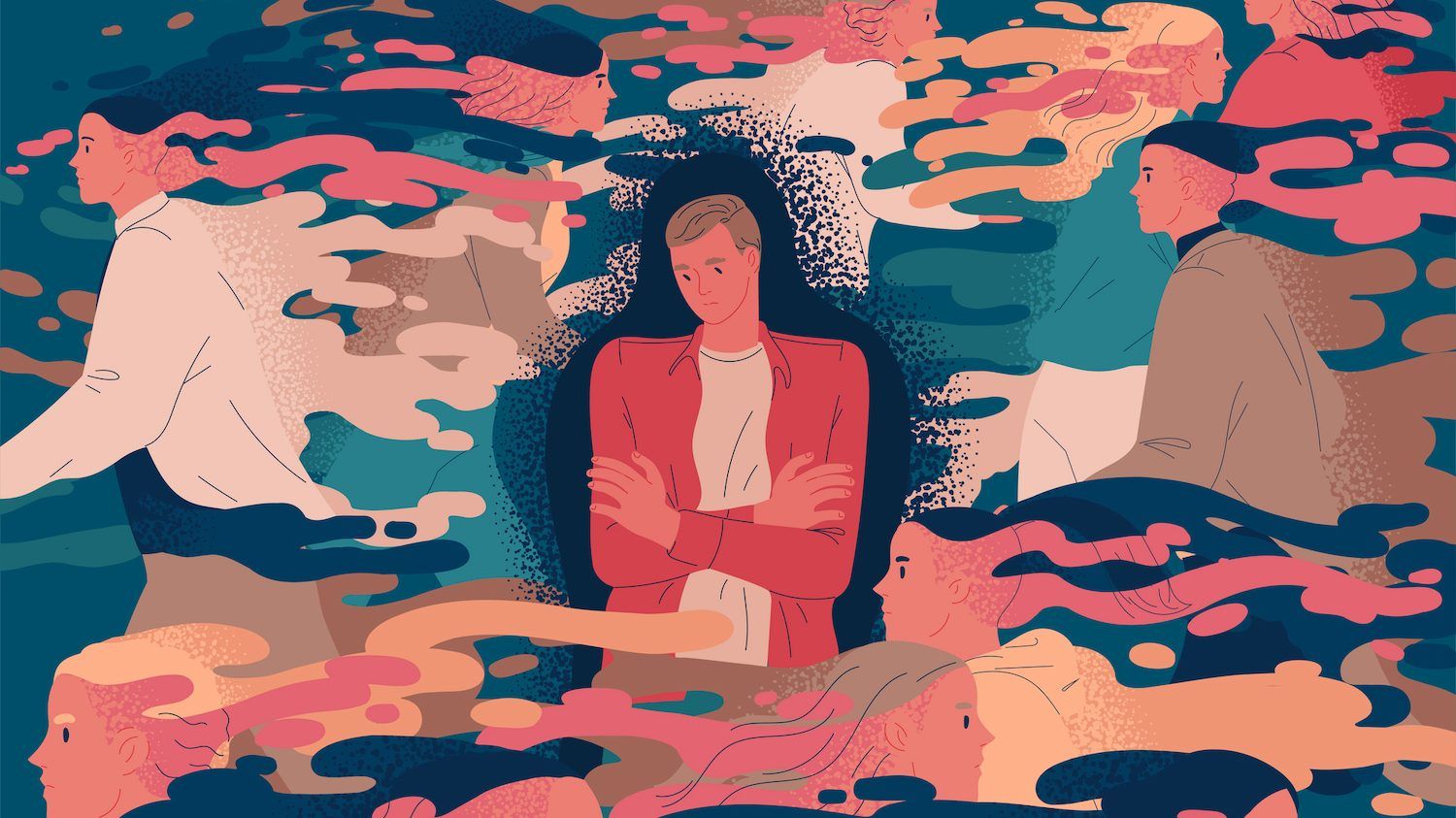
Social exclusion includes those who:
- Experience feelings of disconnectedness
- Do not get opportunities to use available societal resources (education, employment, housing, healthcare, social security services)
- Were historically referred to as 'social outcasts'
The vicious cycle of social exclusion
The causes of social exclusion are often also the results of social exclusion. Therefore, sufferers can find themselves trapped in a vicious cycle.
Note
Social exclusion can be caused by, or contribute to:
- Increased risk-taking behaviours (alcohol and drug misuse)
- Poor physical and mental health and wellbeing, including increased risk of mental disorders
- Disability
- Inability to access services (healthcare, education, employment, social security)
- Family breakdown
- Homelessness
- Discrimination, including racism
- Low income
Social isolation
Important
Key Definition: Social Isolation
Social isolation refers to not being in regular contact with others.
Causes of social isolation
Social isolation can result from various barriers:
- Geographical barriers: Particularly affecting people in remote areas who cannot easily interact with others
- Disability
- Disease
- Lack of transport
- Communication barriers: Especially affecting the elderly and those from non-English speaking backgrounds
Health impacts
Regular social contact provides opportunities to communicate and socialise, which promotes physical, social, emotional, mental and spiritual health and wellbeing.
People who are isolated from others lack:
- Emotional support
- Psychological support
- Health-related support
Note
These forms of support can significantly improve health status. In times of difficulty, socially isolated people may feel they have no one to turn to, contributing to mental health problems including:
- Depression
- Stress
- Anxiety
Cultural norms
Cultural norms relate to customs, ideas, values and traditions of a particular society that are passed through generations. Cultural norms that impact health status include:
- Gender stereotypes
- Food intake patterns
- Attitudes and beliefs
Gender stereotypes
Gender stereotypes relate to behaviours that are culturally acceptable for males and females. Although many traditional roles and expectations have broken down over recent decades, some cultures still retain distinct roles for males and females. These roles are learned from a very young age and shape many aspects of wider society.
Examples of gender stereotypes include:
- Males working whilst females stay at home to look after children
- Males being 'macho' and needing to feel strong
Example
Worked Example: Gender Stereotypes and Alcohol Consumption
Alcohol consumption is an accepted part of life for many Australians. This contributes to negative health outcomes, especially for males, who typically consume more alcohol than females. Alcohol contributes to various conditions, including injuries, which males experience at higher rates.
Dietary intake and traditional foods
The dietary intake of cultural groups often evolves over long periods and influences the types of foods people consume. Changes to traditional diets can contribute to differences in health status.
Example
Worked Example: Traditional Diet Changes in Aboriginal and Torres Strait Islander Peoples
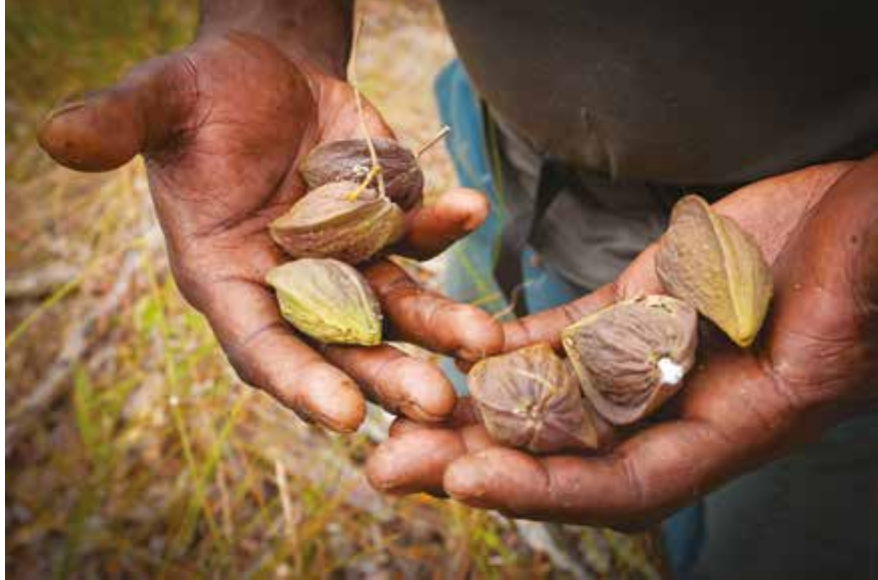
The traditional diet of Aboriginal and Torres Strait Islander peoples included low-fat meats and a range of fruits and vegetables. The dietary changes that accompanied European settlement contribute significantly to the high rates of obesity seen today in Aboriginal and Torres Strait Islander peoples.
Attitudes and beliefs
Attitudes toward various aspects of life all affect health status:
- Education and employment: Influence career opportunities and income
- Recreation: Including substance use patterns
- Healthcare: Including preferences for traditional medicine versus western medicine
Example
Worked Example: Traditional Medicine Preferences
The traditional medicine of Aboriginal and Torres Strait Islander peoples is culturally different from western medicine. This can reduce the ability of Aboriginal and Torres Strait Islander peoples to access culturally appropriate medicine in a society dominated by western medical practices.
Food security
Important
Key Definition: Food Insecurity
Food insecurity occurs when healthy, affordable food is not obtainable.
The quality, availability and affordability of the food supply all affect what people eat.
Food insecurity
A shortage of nutritious food can lead to:
- Deficiency diseases
- Other health complications
Food excess
At the other end of the scale, food excess can contribute to:
- Overconsumption
- Increased risk of diet-related diseases (type 2 diabetes, cardiovascular disease)
Sociocultural factors affecting food security
Although environmental factors (such as living far from food outlets) impact food availability, sociocultural factors also play a major role:
Income: People unable to afford healthy foods may be forced to buy cheaper processed foods. These are often:
- Made from poorer quality produce
- Have added fat, salt and/or sugar to add flavour
- Increase risk of diet-related diseases (obesity, cardiovascular disease)
Note
Nutritional knowledge: Lack of knowledge about healthy eating can prevent people from making nutritious food choices even when resources are available.
Early life experiences
Every person is partly a product of their past experiences. Such experiences help shape each individual, their outlook on life and the behaviours they engage in throughout their lives.
Maternal behaviours during pregnancy
Behaviours of women during pregnancy are early life experiences for unborn babies that can contribute to a range of health issues:
Risk factors during pregnancy:
- Maternal tobacco use
- Maternal alcohol use
- Maternal drug use
- Poor maternal nutrition
- Exposure to certain chemicals, bacteria and viruses
Important
Impacts on the Baby
Immediate impacts:
- Low birth weight
- Increased risk of infections
- Higher under-five mortality rates (U5MR)
Later life impacts:
- Higher rates of cardiovascular disease
- Increased risk of diabetes
Positive early experiences
Having optimal growth and strong emotional attachment in the early years can assist physical, social, emotional, mental and spiritual health and wellbeing in adulthood. Such experiences begin even before conception with the physical health and wellbeing of the mother, and become more important after conception and during pregnancy.
Benefits of positive early experiences:
- Better preparation for formal education challenges
- More positive behaviour patterns
- Less likely to be socially excluded in adulthood
- Exposure to healthy lifestyle choices (healthy food intake, non-smoking environment, physical activity)
Note
Infants who experience positive emotional stimulation are better prepared to take on challenges and exhibit positive behaviours throughout life.
Negative early experiences
Abuse or neglect during the early years can have serious long-term consequences:
- Affects brain function and development
- Contributes to emotional and behavioural problems later in life
- Increases risk of tobacco and substance use
- Slowed growth during infancy may lead to impaired cardiovascular, respiratory and kidney function
- Can result in ill health in later life
Access to healthcare
Healthcare refers to services that promote and preserve health and wellbeing. These services diagnose, treat and/or manage disease and injury. In Australia, healthcare services are provided by doctors, nurses, scientists, dentists, pharmacists and other health professionals such as physiotherapists and naturopaths, often working together in hospitals or medical centres.
Barriers to accessing healthcare
Numerous factors can limit an individual's ability to access healthcare:
Cultural barriers:
- Many Aboriginal and Torres Strait Islander peoples find it culturally inappropriate to access western medicine
- Some associate hospitals with death
- Lack of culturally appropriate services
Financial barriers:
Patients are sometimes responsible for paying for healthcare services. Those with low socioeconomic status may avoid healthcare due to cost.
Note
According to the Australian Bureau of Statistics (2020), the proportion of Australians who delayed or did not see a health professional due to cost in 2018–19 was approximately:
- 19 per cent for dentists
- 8 per cent for specialists
- 4 per cent for general practitioners
Health literacy barriers:
Some people with geographical access to health services fail to use them due to lack of health literacy and understanding of when and how to access care.
Health impacts of limited access
Important
Sociocultural barriers to healthcare can contribute to:
- Conditions going undiagnosed and untreated
- Higher mortality rates
- Lower life expectancy
- Increased prevalence of preventable and treatable diseases
Remember!
Summary
Key Points to Remember:
- Sociocultural factors are social and cultural conditions that significantly impact health status, often beyond individual control
- Socioeconomic status is determined by three interconnected components: income, occupation and education
- Unemployment and ill health create a two-way, cyclical relationship that can be difficult to break
- Social exclusion and social isolation differ: exclusion involves inadequate participation in society, whilst isolation refers to lack of regular contact with others
- Cultural norms, including gender stereotypes and dietary traditions, shape health behaviours and outcomes across generations
- Early life experiences, beginning before conception and during pregnancy, have lasting impacts on health throughout the life course
- Multiple barriers (cultural, financial, health literacy) prevent many Australians from accessing healthcare services, contributing to variations in health status