Demonstrations (VCE SSCE Legal Studies): Revision Notes
📚Revision Notes
Demonstrations
Introduction to demonstrations
Demonstrations (also called protests or rallies) are gatherings where groups of people come together to express their shared concerns or dissatisfaction with an existing law or issue. They serve as a powerful tool for individuals and groups to influence law reform.
Note
Demonstration: A gathering of people to protest or express their common concern or dissatisfaction with an existing law as a means of influencing law reform.
Demonstrations work to influence law reform in two key ways:
- They alert the government to the need for legal change
- They raise community awareness about issues requiring legislative reform, which generates broader public support
While demonstrations take different forms, they all share the same objective: bringing an issue to the attention of both the community and lawmakers with the goal of influencing legal change.
Case study: the 'Change the date' movement
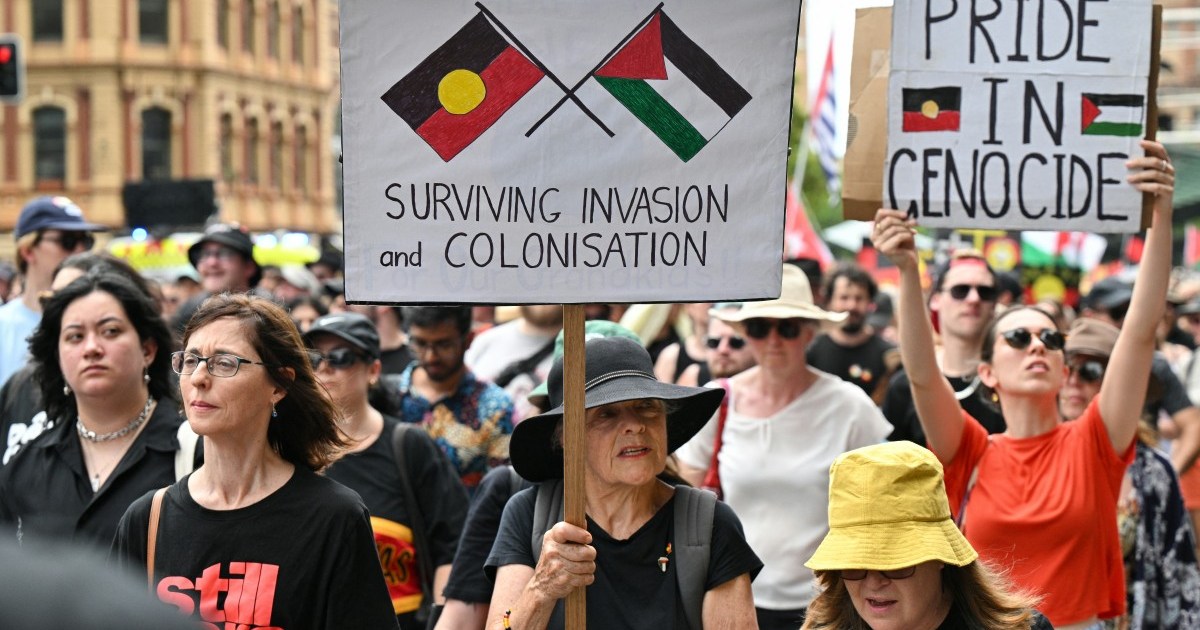
Each year on 26 January, demonstrations occur across Australia to protest Australia Day celebrations. This date marks the anniversary of British arrival and the colonisation of Australia.
Example
Case Study: Australia Day Protests
Why this date is controversial: For many Australians, particularly First Nations people, celebrating Australia on this date is inappropriate and offensive. The date commemorates a day of sorrow when First Nations people lost their independence and sovereign right to control their land, culture and families. This is why some refer to the day as 'Invasion Day' or 'Survival Day' rather than Australia Day.
What the demonstrations aim to achieve:
- Raise community awareness about the suffering colonisation caused First Nations peoples
- Influence law reform to address human rights problems facing First Nations people
- Advocate for changes to how Australia Day is recognised
Proposed reforms include:
- Changing the date of Australia Day to a more appropriate and inclusive date
- Abolishing Australia Day entirely
- Renaming and reframing Australia Day to recognise First Nations peoples' contributions and acknowledge what 26 January 1788 meant for them
Impact: Each year, tens of thousands of people gather in Melbourne's CBD and other locations for 'Invasion Day' or 'Survival Day' rallies, demonstrating growing public support for change.
Examples of demonstrations
School Strike 4 Climate
Global movements have become more organised through social media platforms, allowing for coordinated international action. The 'School Strike 4 Climate' movement exemplifies this trend.
Note
Social media: A range of digital tools, applications and websites used to share information in real time between large groups of people (e.g. Facebook, YouTube, WhatsApp and Instagram).
How it works: School students worldwide skip classes on designated days to join rallies demanding action on climate change. The movement was inspired by Greta Thunberg, a young climate change activist.
Example
Impact of School Strike 4 Climate
On 20 September 2019, an estimated 4 million people worldwide participated in one of the largest climate strikes in history. In Melbourne alone, approximately 100,000 people attended, demonstrating the movement's ability to mobilise significant community support.
Extinction Rebellion (XR) Australia
XR Australia forms part of a global movement using non-violent civil disobedience to 'disrupt business as usual', raising community awareness and demanding government action on climate change.
Example
October 2022 'Spring Rebellion' Actions
National Gallery of Victoria demonstration: Two activists glued their hands to a Pablo Picasso painting (protected by plastic, so undamaged). This controversial action resulted in police arrests but gained national and global media attention.
Melbourne CBD peak hour demonstration: Hundreds of XR activists and other climate action groups marched together during peak hour (5.00 pm) for climate justice, maximising disruption and visibility.
Melbourne Fringe Festival participation: Activists used a float featuring a 'burnt koala' puppet to represent animals destroyed in the 2019-20 bushfires.
Purpose: To demand the end of fossil fuel projects (gas, coal and oil) and logging in Victoria.
Animal rights activists
Groups including Vegan Rising and Justice for Captives undertake protests to draw attention to animal cruelty.
Example
Animal Rights Demonstrations
2022 Parliamentary demonstration: Activists protested outside Victorian Parliament against the Livestock Management Amendment (Animal Activism) Act 2021 (Vic). This Act bans animal activists from entering Victorian farms and businesses without permission to photograph livestock practices and creates fines for offenders. During the demonstration, some activists taped their mouths shut and held dead animals to raise awareness of alleged animal abuse.
Supermarket demonstration: Activists gathered in a Melbourne supermarket's meat section during Sunday trading to raise awareness and pressure parliaments to strengthen laws regarding alleged animal abuse, including banning sow stalls (small enclosures for pregnant pigs). They displayed images and played audio of pigs being mistreated.
Are demonstrations effective?
The effectiveness of demonstrations as a law reform mechanism largely depends on their ability to attract media and public attention. When successful, demonstrations can educate community members about social, economic, political and legal injustice and the need for law change.
Important
Key Principle: The greater the community support for law reform, the more likely members of parliament (who rely on electoral support) will respond to the need for change.
However, certain factors can impact effectiveness. Violent or inconvenient demonstrations, or those with very few participants, tend to have less impact. Similarly, disorganised demonstrations or those lacking a central message or clear call for action are often less effective.
Factors affecting effectiveness
Positive factors (explanation points)
Note
Large participation numbers: Demonstrations attended by thousands or hundreds of thousands of people demonstrate to parliament that the majority supports a change in the law. Historical examples include climate change and gender equality demonstrations.
Note
Media attention: Demonstrations attracting large numbers often gain media coverage, which generates further public support for the desired law reform. Since members of parliament aim to make laws reflecting community views, they're more likely to consider reforms with strong community support.
Note
Parliamentary support: Demonstrations can gain support from members of parliament wanting to 'adopt a cause', particularly ones that might improve their public profile or image.
Note
Educational value: Demonstrations alert and educate community members about social, economic, political and legal injustice and the need for law change, bringing change over time.
Limiting factors (discussion points)
Note
Participation numbers: Demonstrations with only a few participants may not generate interest, awareness or media attention. However, this can depend on the demonstration's nature – an original, creative, ongoing or controversial 'small' protest may still gain media attention.
Type and nature of demonstration:
Important
Violent or inconvenient demonstrations: Those causing public inconvenience, becoming violent or leading to law breaches may be less effective in generating positive media attention and support from the community and parliament. Members may prefer to associate with positive campaigns rather than ones causing conflict or violence.
Note
Non-violent civil disobedience: Disruptive but non-violent demonstrations (e.g. forming a human blockade to prevent logging) may generate media attention and discussion, persuading community members to consider injustices and the need for law reform.
Note
Single events: Demonstrations that are one-off events may not generate ongoing support for the desired law reform.
Note
Scope of issue: Demonstrations may focus on injustices or issues that parliament cannot change (e.g. human rights issues in other countries where Australia has no authority or little influence), although they may attract global attention and have longer-term influence.
Note
Organisation and messaging: Disorganised demonstrations or those with no clear call for action or messaging may be less effective. Organised demonstrations, particularly those with global movements or messaging, tend to have more impact.
Exam guidance
When evaluating demonstrations as a law reform mechanism, you need to consider multiple factors and apply appropriate analytical frameworks.
Important
Analysis approach:
- Identify the specific demonstration and its objectives
- Assess its ability to attract media attention and public support
- Consider the number and nature of participants
- Evaluate the organisation and clarity of messaging
- Examine whether the demonstration led to actual law reform
Evaluation approach:
- Weigh positive factors (media attention, participation, organisation) against limiting factors (violence, disruption, unclear messaging)
- Consider the context – some disruptive demonstrations may be more effective than peaceful ones in certain circumstances
- Assess both short-term impact (media coverage, public awareness) and long-term impact (actual law reform)
- Reference specific examples to support your evaluation
Note
Common command words:
- Analyse: Break down how demonstrations work to influence law reform, examining their mechanisms and effectiveness factors
- Evaluate: Make a judgment about how effective demonstrations are, considering both strengths and limitations
- Assess: Determine the extent to which demonstrations successfully influence law reform, using evidence and examples
Remember!
Summary
Key Points to Remember:
- Demonstrations are gatherings where people express shared concerns about laws or issues to influence law reform
- They work by alerting government and raising community awareness, which generates support for change
- Effectiveness depends on media attention, participation numbers, organisation, and the nature of the demonstration
- Large, peaceful, well-organised demonstrations with clear messaging tend to be most effective
- Examples include the 'Change the date' movement, School Strike 4 Climate, Extinction Rebellion and animal rights protests
Key Terms:
- Demonstration: A gathering of people to protest or express their common concern about an existing law
- Social media: Digital tools used to share information in real time between large groups of people
- Civil disobedience: Non-violent action that deliberately breaks rules to draw attention to an issue
Critical Framework: When evaluating demonstrations, consider: Media attention + Participation numbers + Organisation + Clear messaging + Type of action = Potential effectiveness