Electrical Safety (VCE SSCE Physics): Revision Notes
📚Revision Notes
Electrical Safety
Understanding electrical safety is essential for working with electricity. While electricity powers our modern lives, it can be extremely dangerous if not handled correctly. This note covers the dangers of electricity, how electric shocks affect the human body, safety devices that protect us, and practical measures to prevent electrical accidents.
Why birds can sit on power lines safely
You may have noticed birds sitting on high-voltage power lines without any apparent harm. Understanding why birds are safe helps explain fundamental electrical safety principles.

When a bird stands on a single power line with both feet, only a small potential difference exists between its feet. The bird's body sits in parallel with the wire. Because the wire has much lower resistance than the bird's body, most current flows through the wire rather than through the bird. According to Ohm's law, current takes the path of least resistance.
Note
If the bird stands on one leg only, there is no complete circuit, so no current flows through the bird at all. However, if a bird's wings touch two different wires simultaneously, a large potential difference exists across its body. This causes a large current to flow through the bird, resulting in rapid heating and death.
This same principle explains why humans can be electrocuted by touching electrical equipment. The key factor is the amount of current flowing through the body, which depends on both the potential difference and the body's resistance.
Important
Key principle: It is current that kills, not voltage alone.
Dangers of electricity in power distribution
Electricity travels long distances through transmission lines before reaching homes. Understanding this system helps explain why electrical safety matters.
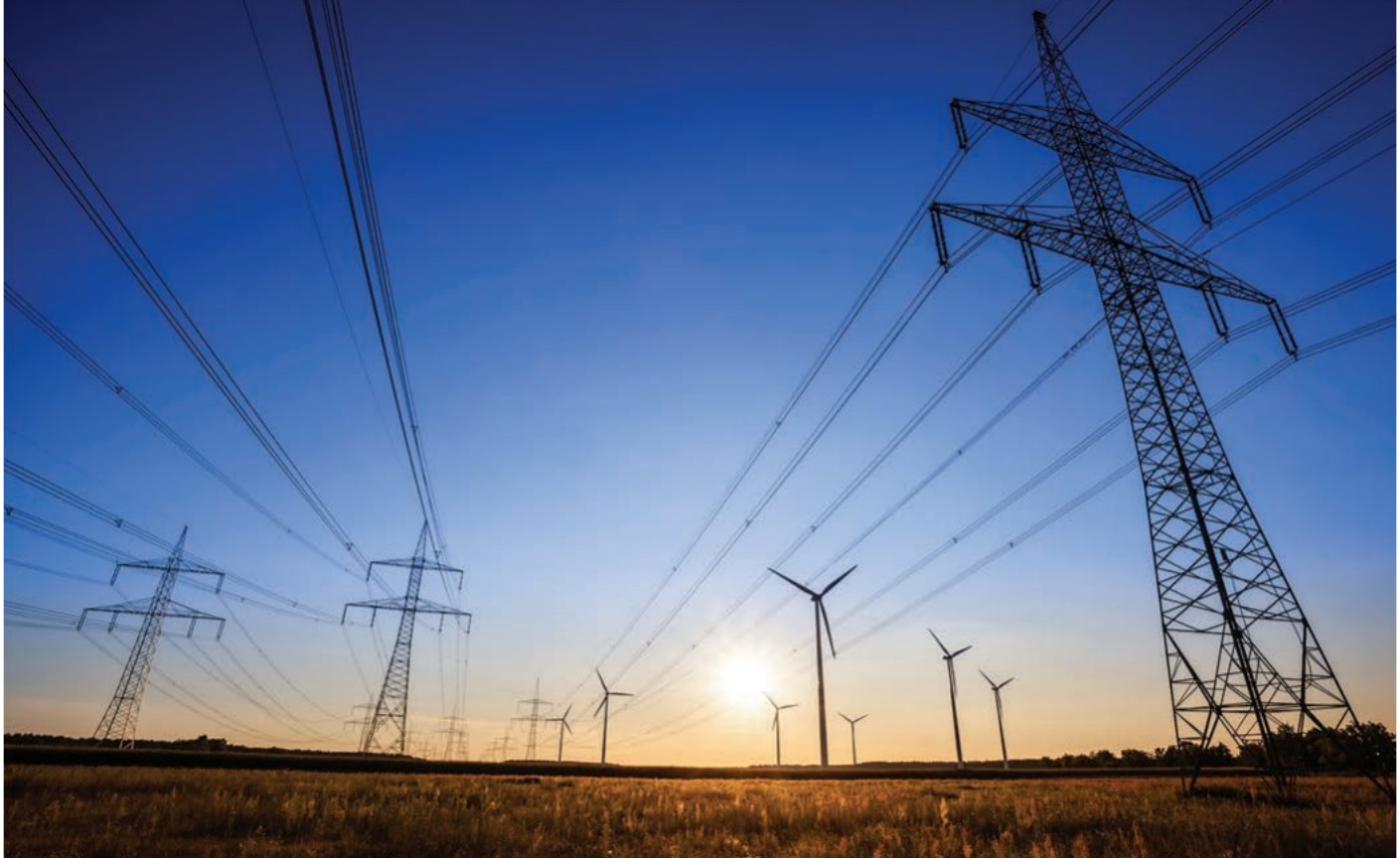
Power authorities use high-voltage transmission lines to distribute electricity efficiently across the state. Transmission voltages can reach up to 500 kV for long distances, such as from the Snowy Mountains Scheme to Victoria. Regional distribution uses 66 kV lines to supply substations serving suburbs or towns.
By the time electricity reaches your home, transformers have stepped down the voltage to the standard 230 V supply (with a tolerance of −6% to +10%). This stepping down process reduces danger, but 230 V still presents significant hazards to human life.
Transformer: A device that transfers energy via an alternating current (AC) from one circuit to another, usually with an increase or decrease in potential difference.
Note
Higher voltages increase the potential for dangerous currents to flow through anyone who contacts a high-potential wire while also touching a low potential (such as the ground) without proper insulation. This is why power line workers need extensive safety training and equipment.
Effects of electric shock on the human body
Electric shock can cause serious injury or death. The severity depends on the current magnitude and how long it flows through the body.
Current levels and their effects
Even voltages as low as 32 V AC or 115 V DC can cause dangerous currents through the human body. The table below shows what happens at different current levels when exposed to 230 V, 50 Hz AC mains electricity for 0.5 seconds:
| Current | Effect on the body |
|---|---|
| 1 mA | Able to be felt |
| 3 mA | Easily felt |
| 10 mA | Painful |
| 16 mA | Maximum current an average person can grasp and 'let go' |
| 20 mA | Respiratory muscles paralysed |
| 50 mA | Severe shock |
| 100 mA | Ventricular fibrillation (heart muscle) |
| 150 mA | Breathing very difficult |
| 200 mA | Death likely |
| 500 mA | Serious burning, breathing stops, death inevitable |
| 15–20 A | Typical current rating for circuit breakers or fuses to disconnect mains |
Fibrillation: A dangerous state of rapid, uncoordinated quivering contractions of heart muscle fibres that fail to pump blood effectively.
Important
Even brief exposure to electric shock can cause fibrillation, which starves the brain of oxygen. Without medical treatment, this leads to brain damage and eventually death.
Duration of exposure
The length of time current flows through the body also affects severity. For a 50 mA current at 230 V 50 Hz:
| Time (milliseconds) | Effects on the body |
|---|---|
| 10–200 | Noticeable but usually no dangerous effect |
| 200–400 | Significant shock, possibly dangerous |
| >400 | Severe shock, possible death |
Skin resistance and danger
The current flowing through your body depends on three factors:
- The potential difference of the electricity supply
- The path taken by current through your body
- Your skin resistance
For the average person:
- Dry skin resistance: approximately 100,000 Ω between outstretched hands and arms
- Wet skin resistance: approximately 1,000 Ω (100 times lower!)
Body tissues below the skin conduct electricity well because they contain water and electrolytes. Skin provides the main resistance barrier. This is why wet skin is so dangerous—it dramatically reduces your body's protection.
Important
The most dangerous path for current is from one limb to another across the chest, as this affects the heart. Lower resistance means more current flows through the body, creating greater danger to life. You should always avoid situations where electricity and water are close together.
Note
Exam tip: Remember that wet skin has about 100 times less resistance than dry skin. This explains why touching electrical equipment with wet hands is extremely dangerous.
First aid for electric shock
If you encounter someone who has suffered an electric shock, follow these steps:
Important
1. Assess and call for help
Call an ambulance on triple zero (000) immediately if the person has:
- Lost consciousness, even briefly
- Very fast or very slow breathing
- Very fast, very slow, or irregular heartbeat
Even if you don't call an ambulance, the victim should visit an emergency department or see a doctor as soon as possible, as internal injuries may not be immediately visible.
2. Look first, don't touch
The person may still be in contact with the electrical source. If you touch them, you will also receive a shock.
Indoors:
- Turn off electricity at the nearest switch
- Pull out the plug if an appliance caused the shock
- Turn off mains power if possible
- If you cannot turn off the supply, use a wooden broom handle or other insulating material to move the person away from the electrical source
Outdoors:
- Stay at least 6 m away from fallen power lines
- In car accidents, do not touch the vehicle or occupants if live wires contact the vehicle
- Wait until the electricity supply authority declares the area safe
- Ask the person not to move
3. Check consciousness and breathing
Once the danger is cleared:
- Gently touch and talk to the person
- If conscious, reassure them
- Treat burns with cold running water for at least 20 minutes
- Cover burns with sterile gauze or clean cloth (not blankets, tissues, or towels, as loose fibres stick to burns)
4. Perform CPR if necessary
If the person doesn't respond:
- Start cardiopulmonary resuscitation (CPR)
- Continue until the ambulance arrives
- Ask other bystanders to assist
Hospital treatment
Doctors will test for heart damage or soft tissue injury. Most people can go home unless they have heart damage requiring hospital treatment. The most common complication is infection. Some people experience brain damage causing seizures, depression, anxiety, or personality changes.
Avoiding electric shock
Understanding common causes of electric shock helps you prevent accidents.
Common causes
- Exposed electrical wires
- Water on electrical appliances
- Cutting through live cables (e.g., with power tools or lawnmowers)
- Old, deteriorated wiring
- Faulty appliances
- Lightning strikes (occasionally)
Prevention measures
General safety:
- Install safety switches (circuit breakers and RCDs) and test them regularly
- Use licensed electricians for all electrical work
- Repair damaged power points or switches promptly
- Never use faulty power tools, appliances, or leads with frayed cords
- Keep electrical appliances away from wet areas and pools
- During thunderstorms, do not shelter under trees—seek indoor shelter or lie flat on the ground
Important
Around water:
- Never use electrical appliances near water
- Never touch electrical equipment with wet hands or bare feet
- Never leave electrical appliances where they can fall into baths or basins
- Never leave electrical appliances unattended around children
- Switch off and unplug portable appliances (hairdryers, straighteners, shavers) after use
- Do not use portable heaters in bathrooms—use properly installed strip heaters or ceiling units
- Immediately dispose of any electrical appliance that has been immersed in water
- Do not use extension leads in wet areas unless specifically designed for that purpose
- Wear rubber or plastic-soled shoes when using electrical appliances in laundries, on concrete floors, or outdoors
Swimming pool safety:
Electric shocks near swimming pools are more likely to be fatal because bare feet, minimal clothing, and wet skin reduce your body's resistance.
Note
Never use portable electrical appliances or place extension cords where they could be splashed or fall into pools.
Near power lines:
Do not fly kites, drones, or model aeroplanes anywhere near overhead power lines.
Domestic connections to mains power
Understanding how electricity connects to your home helps you recognise safety features.
The three-wire system
Mains electricity is AC (alternating current), not DC. We don't use the terms 'positive' and 'negative' for AC. Instead, the three wires are:
Active wire: The 'live' wire in an AC supply that carries the potential difference (often called voltage). Coloured brown by international convention. Anything connected to this wire is dangerous.
Neutral wire: The blue wire in an AC circuit that completes the circuit, providing a close to zero potential for current to flow.
Earth wire: The wire that provides a low-resistance path for current to flow into the ground. It is the third wire in a plug or socket, coloured green and yellow striped, and is attached to external metal casings of appliances for safety.
Note
The earth wire connects via a thick cable to an earth stake or electrode driven into the ground. In most installations, the neutral and earth wires link together at the consumer's fuse box. The earth is defined as zero electrical potential—current flows to it from positive terminals and from earth to negative terminals.
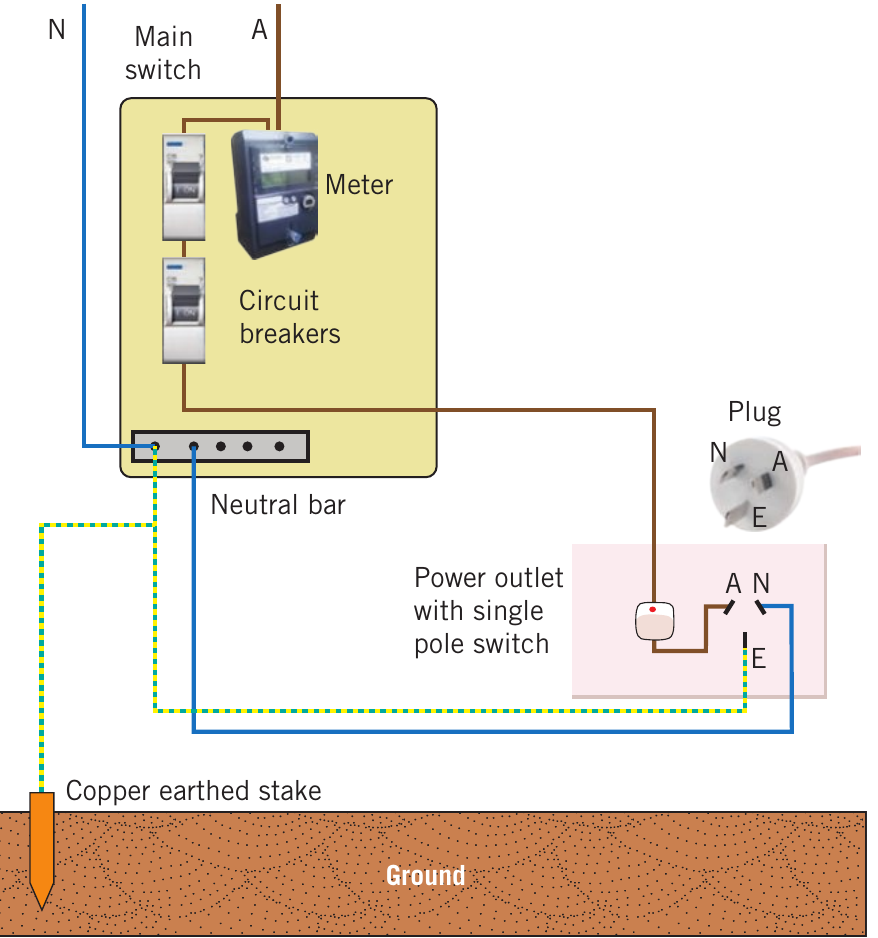
The diagram above shows how mains electricity (230 V, 50 Hz) enters a house through the meter, main switch, and circuit breaker box. Note how the neutral bar connects to the earthed stake to ensure the neutral potential difference stays close to zero.
If the active wire accidentally contacts an appliance casing, a large current flows through the low-resistance path to earth. This causes the circuit breaker to trip and disconnect the active, making the appliance safe.
Safety devices: fuses and circuit breakers
Several safety features protect against electrical faults in your home.
Short circuits and their dangers
When a fault occurs in an electrical appliance, a short circuit may develop. For example, a knife blade might disrupt fine wires inside a toaster. This creates a very large current flow.
Short-circuit: An accidental connection in a circuit where a conductor is placed across a potential difference, causing excessive current flow and possibly dangerous heating or electric shock.
Important
The heating effect of this excessive current can cause:
- Overheating in appliances
- Damage to wall plaster
- Fires
Fuses
Fuse: A piece of thin wire that acts as a safety device by melting when too much current passes through it, disconnecting the active wire and preventing further damage.
A fuse connects in series with the active wire in each household circuit and in some appliances. It can conduct a certain amount of current without problems. However, if excessive current flows (from a short circuit, for example), the fuse wire overheats and melts. This disconnects the active wire from the circuit, preventing further damage.
After correcting the fault, you must replace a 'blown' fuse with a new one. In appliances, replace the entire fuse. In old fuse boxes, replace the melted wire with a new length of wire.
Circuit breakers
Modern houses use circuit breakers instead of fuses.
Circuit breaker: A type of automatic switch where a large current creates an electromagnet, which trips the switch and cuts the supply. It can be turned back on manually after a fault is corrected, without needing replacement like a fuse.
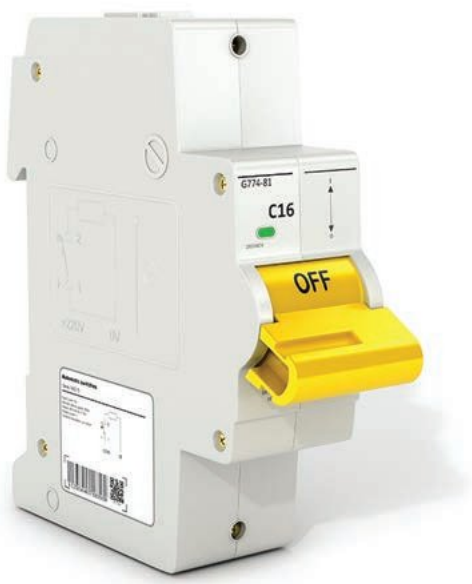
Electromagnetic switch: A switch that uses a magnetic field created by electric current flowing through a wire coil to move the switch toggle. Unlike a permanent magnet, the magnetic field ceases when current stops.
When an abnormally high current flows due to a circuit fault, the circuit breaker automatically turns off. Once you correct the fault, reset it by moving the switch fully off, then back to the 'on' position.
Note
If a circuit breaker continually trips:
- Disconnect all appliances from the circuit
- Test appliances one at a time to find the faulty one
- Repair or replace the faulty appliance
A small house or flat typically has six or more circuit breakers installed in its circuit breaker box, each protecting a different circuit.
Earthing for safety
Many electrical appliances have metal parts. A fault could bring an active wire into contact with metal parts, making them 'live' and dangerous to touch.
To prevent this, all exposed metal parts in appliances are 'earthed'—connected to the earth wire of the mains supply.
Example
How earthing protects you:
If metal parts become live due to a fault:
- Current flows harmlessly into the ground via the earth wire instead of through you
- Because the path to earth uses thick copper wire with low resistance, a large current flows
- This large current blows the fuse or triggers the circuit breaker
- The appliance becomes safe to handle
The earth acts as both a source and sink of electrons, defined as 0 V potential. The neutral connection usually connects to earth at the switchboard, keeping the neutral potential close to zero. Meanwhile, the active potential difference alternates 50 times per second between +230 V and −230 V.
Residual current devices (RCDs)
An RCD provides an additional safety measure, particularly for double-insulated equipment.
Residual current device (RCD): A device in the switchboard that activates circuit breakers when it detects an imbalance between active and neutral current, protecting against electrocution.
How RCDs work
An RCD operates by comparing the neutral and active currents. If there is an imbalance, it automatically trips within 30 milliseconds (faster than a circuit breaker) and turns off power by disconnecting from the active.
Note
If more current flows in the active compared to the neutral, current must be leaking from the equipment to earth—potentially through a person experiencing electric shock.
Legal requirements
Many houses in Victoria now have RCDs installed at the switchboard. Since March 2023, it has been illegal for rental properties not to include this safety device. From June 2022, rental providers must ensure a licensed electrician conducts an electrical safety check of all electrical installations and fittings every two years.
Double insulation
Some appliances are not earthed but instead use double insulation.
Double insulated: Two layers of insulation are used for added safety, typically on appliances that are not earthed. The layers are placed between live parts and external metal parts of the appliance.
A double-insulated appliance isolates live circuit parts from the user by placing two separate insulation layers between them:
- Functional insulation (rated for 230 V)
- Protective insulation (also rated for 230 V)
Note
In normal operation, both insulation layers would need to break down simultaneously to create a hazard. Although this provides high safety, it's still possible to bypass both layers—for example, by accidentally wetting a drill with a hose while using it.
Australian wiring colour code
Mains appliances must be connected correctly to the electricity supply. An international colour code ensures correct connections.
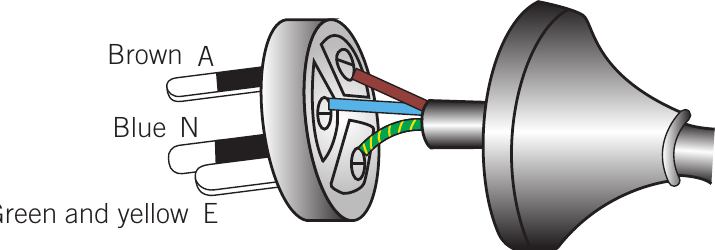
The Australian standard colour coding is:
- Brown = Active (A)
- Blue = Neutral (N)
- Green and yellow striped = Earth (E)
This is also the international code for electrical wiring. An older colour system that caused problems for colour-blind electricians may still exist in some old appliances.
Important
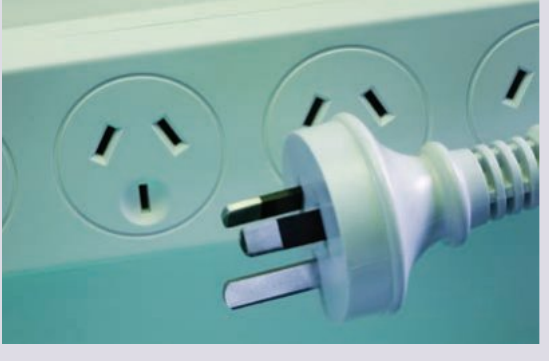
Important: Only qualified electricians are allowed to connect wiring on mains electrical equipment. Modern electrical plugs cannot be disassembled—manufacturers mould the complete plug body from one piece of plastic that cannot be opened.
All mains electrical appliances manufactured in Australia are sold with a moulded plug already fitted to reduce the risk of incorrect wiring.
Electrical safety checks for home appliances
There is substantial energy in mains electricity. Used carefully, it provides a comfortable lifestyle, but ignoring safety can be fatal. Here are important checks to perform at home.
Important
Important: Do not attempt to repair faulty electrical appliances yourself. Only qualified repair technicians or licensed electricians should repair appliances.
Appliance checks
- Discard any appliance that has given anyone a shock, overheated, or produced fumes
- Check older appliances for frayed cords, cracked or broken plugs
- Replace old plugs that lack safety barriers between connections
- Ensure all plugs have insulated active and neutral pins
- Look for the regulatory compliance mark (RCM) on all appliances
- Do not touch or attempt to repair loose, cracked, or broken power point switches—cover them immediately and arrange for a licensed electrician to replace them
- Avoid 'piggybacking' adaptors—use a power board with a built-in safety device instead
- Remove build-up of fluff, dust, and lint around electric motors in exhaust fans
- Clean air conditioner input filters and air filters regularly (this also improves efficiency and prevents circuit overheating)
- Remove lint from tumble dryer filters every time you use the dryer (build-up may cause fire)
- Clean rangehood filters regularly
- Clean ovens and cooktops regularly to prevent build-up of spilled fats and burned foods
- Do not spray household cleaners, detergents, or insecticides on electrical accessories—they may cause cracking and create electrical hazards
Maintenance requirements
From March 2021 in Victoria, residential rental providers (landlords) must ensure a licensed electrician conducts an electrical safety check of all electrical installations and fittings every two years. If a check hasn't been conducted within the last two years when a renter occupies the premises, the rental provider must arrange one as soon as practicable.
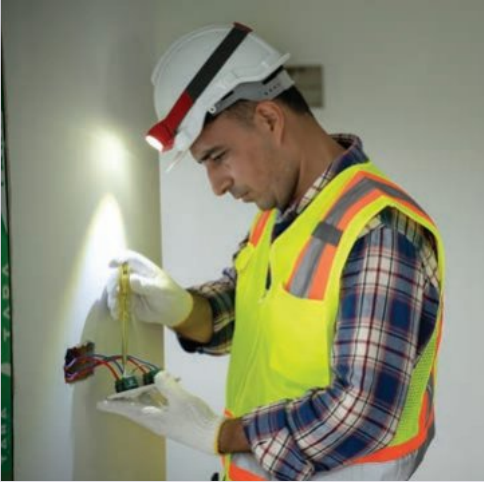
If the safety check reveals that electrical repairs are needed to make the property safe, the rental provider should employ a licensed electrician to do the repair work.
Summary
Summary
Key Points to Remember:
-
Current kills, not voltage alone: The amount of current flowing through your body determines the danger level, which depends on both voltage and your body's resistance.
-
Wet skin is 100 times more dangerous: Dry skin resistance is about 100,000 Ω, but wet skin resistance drops to about 1,000 Ω, allowing 100 times more current to flow through your body.
-
Three safety devices protect you: Fuses melt to break the circuit, circuit breakers trip and can be reset, and RCDs detect current imbalances and disconnect power within 30 milliseconds.
-
The three-wire system keeps you safe: Active (brown) carries the voltage, neutral (blue) completes the circuit at near-zero potential, and earth (green/yellow) provides a safety path to ground for fault currents.
-
First aid priorities: Look first, don't touch; call 000; only approach when the electrical source is disconnected; check consciousness and breathing; perform CPR if needed.