Processing of Visual and Gustatory Information (VCE SSCE Psychology): Revision Notes
📚Revision Notes
Processing of Visual and Gustatory Information
Introduction
Perception involves the mental process of recognising, interpreting and giving meaning to information received by our sense organs. When we process sensory information from our environment, our brain uses two distinct yet complementary approaches: top-down processing and bottom-up processing. Understanding how these processing types work helps explain why different people can perceive the same stimulus in different ways.
Note
An interesting example of how our senses interact comes from research by Zampini and Spence (2008), who won an Ig Nobel Prize for their work on gustatory perception. They gave participants identical potato chips whilst playing modified crunching sounds through headphones. Participants rated chips with louder, deeper crunching sounds as fresher and better tasting, despite all chips being identical. This demonstrates how our expectations and sensory experiences combine to shape perception.
Types of processing
Top-down processing
Top-down processing is the processing of sensory information by applying prior knowledge and expectations. When using this approach, the brain draws upon existing mental frameworks (schemas) to interpret incoming sensory data. This processing style works from general concepts down to specific details.
Schema refers to our pre-existing mental ideas relating to a given concept that help us organise and interpret new information. Everyone possesses different schemas based on their unique experiences, which explains why people can perceive the same stimulus differently.
Top-down processing offers several advantages. It provides a time-efficient method for interpreting the world, allowing us to quickly link new information to existing knowledge and draw rapid conclusions. This processing style guides our attention, influencing what we notice and how we interpret it. However, this efficiency comes with a trade-off: perceptions formed through top-down processing can be prone to inaccuracies, particularly when dealing with unfamiliar situations.
Example
Worked Example: Proofreading Errors
Consider proofreading your own assignment - because you already know what the text should say, you tend to read words as you expect them to appear, causing you to miss simple spelling mistakes.
In contrast, when proofreading a friend's unfamiliar work, you have fewer existing schemas to draw upon and are more likely to detect errors.
This explains why teachers often recommend having someone else review your work or reading it aloud.
Another example involves reading signs. When glancing quickly at a warning sign near water, your brain might read it as saying "shallow water" because that's what you expect to see in that context. Only upon closer inspection might you notice the sign actually says something different. Your prior knowledge and expectations shaped your initial perception.
Bottom-up processing
Bottom-up processing is the processing of sensory information beginning with salient sensory data, which is then integrated to form a bigger picture. This approach works from specific sensory details up to broader concepts and is sometimes called data-driven processing because it relies primarily on incoming sensory information.
Sensations are the information from the environment detected by the sensory organs and transmitted to the brain. Bottom-up processing focuses on salient (noticeable or conspicuous) sensations - those stimuli that stand out against their surroundings.
This processing type proves particularly useful when encountering unfamiliar situations where existing schemas provide little guidance. For example, when reading and encountering an unfamiliar word, you examine it closely, sound out its component parts, and piece them together to form a whole. This detailed analysis of individual elements characterises bottom-up processing.

Example
Example: Detecting Illness
When feeling unwell, you might first notice a sensation of nausea or pain. You then focus attention on detecting other sensations - perhaps a headache, elevated temperature, or muscle aches - interpreting these individual symptoms together to form a perception of illness.
This demonstrates how bottom-up processing builds a complete picture from individual sensory elements.
Important
Whilst bottom-up processing takes longer and requires more mental effort compared to top-down processing, it typically produces more accurate perceptions. This accuracy stems from careful attention to actual sensory data rather than relying on potentially incorrect expectations or assumptions.
Comparing the two processing types
In reality, perception rarely relies exclusively on one processing type. Instead, top-down and bottom-up processing work together dynamically, with different situations favouring one approach over the other.
Example
Worked Example: The Classroom Visitor
You're sitting in class when someone opens the door. Your initial thought, based on top-down processing and your schema of classroom visitors, suggests a late-arriving student.
However, as a foot enters - the only visible part at this stage - you notice through bottom-up processing a heavy work boot covered in paint, contradicting your student expectation. This prompts you to consider your schema for adults with heavy boots at school, perhaps the groundskeeper.
As more of the person becomes visible, you observe (using bottom-up processing) a high-visibility shirt and toolbelt. The person gestures to your teacher, who points towards a taped-over electrical socket.
Finally, drawing on your prior knowledge that the socket needs repair and your schema for tradespeople, you accurately perceive the person as an electrician.
This illustrates how top-down processing provides quick initial judgements whilst bottom-up processing refines these judgements using actual sensory data, leading to accurate perception.
Similarities between top-down and bottom-up processing:
- Both are methods for perceiving the world
- Both operate as automatic processes
- Both function unconsciously
Differences:
Top-down processing:
- Influenced by schemas and perceptual set
- Guides attention, affecting what we perceive
- Provides time-efficient interpretation
- Can lead to inaccurate perceptions
Bottom-up processing:
- Influenced by salient environmental stimuli
- Used for making sense of unfamiliar situations
- Requires more time and cognitive effort
- Tends to produce highly accurate perceptions
Processing visual information
Visual information consists of sensory data received by the brain through the eyes. Both processing types play important roles in how we interpret visual stimuli, with various factors influencing which type dominates in any given situation.
Top-down processing of visual information
When applying top-down processing to visual stimuli, we use our experiences and expectations to shape perceptions. Even when viewing only part of an object, we can draw upon our knowledge about that type of object to mentally complete what we cannot see, perceiving it as whole.

Note
Consider an image showing black spots on a white background. If you've previously seen a Dalmatian or similar spotted dog, your mind fills in the gaps based on expectations about what a Dalmatian should look like. Rather than perceiving disconnected black marks, you see a complete Dalmatian dog.
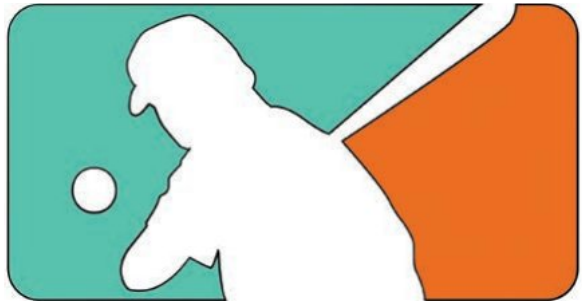
Similarly, a logo showing a silhouette against a split-coloured background can evoke the image of a baseball player hitting a ball, even though no player has been explicitly drawn. Using top-down processing, your brain completes the image based on your understanding of baseball and possibly familiarity with this type of logo. You might even form an idea of what the player's face looks like, despite it not being visible.
Bottom-up processing of visual information
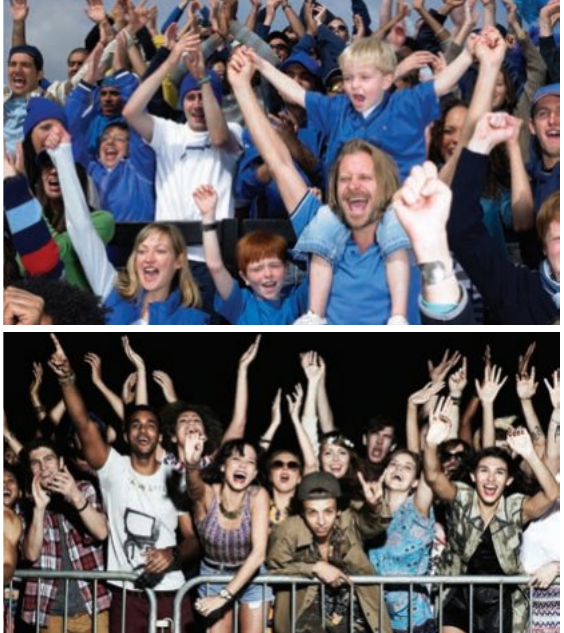
When applying bottom-up processing to visual stimuli, we draw upon salient sensory data to construct our perceptions. Consider walking through a busy city with headphones blocking out ambient sound - you must rely solely on vision to make sense of your environment.
Example
Example: The Rushing Crowd
Suddenly, you notice a crowd rushing towards you. Examining their faces reveals excitement. Some reach out their arms or grab their phones.
Having never encountered this exact situation, you piece together these salient visual stimuli - people running, excited expressions, unified direction - to perceive that they're rushing towards something noteworthy.
Other visual information might be present, but if it isn't salient (conspicuous against the surroundings), it won't contribute significantly to your perception.
Processing gustatory information
Gustation is the sense of taste. Gustatory information includes sensory data received by the brain through both the olfactory (nasal) system and taste buds within the mouth. Like visual processing, gustatory processing employs both top-down and bottom-up approaches, influenced by factors including our taste experiences and expectations (top-down level) and our ability to attend to taste and olfactory stimuli (bottom-up level).
Top-down processing of gustatory information
When applying top-down processing to gustatory experiences, we draw upon our experiences and expectations to shape taste perceptions. This includes familiarity with how a food or drink typically tastes and smells, how it has previously reacted with our body, and expectations about how something should taste.
Note
Consider placing a tiny chocolate fragment in your mouth. Despite the small amount, you experience the full flavour because top-down processing fills in gaps based on past chocolate experiences - the smell, taste, texture, and associated feelings.
Example
Worked Example: Different Perceptions of Chocolate
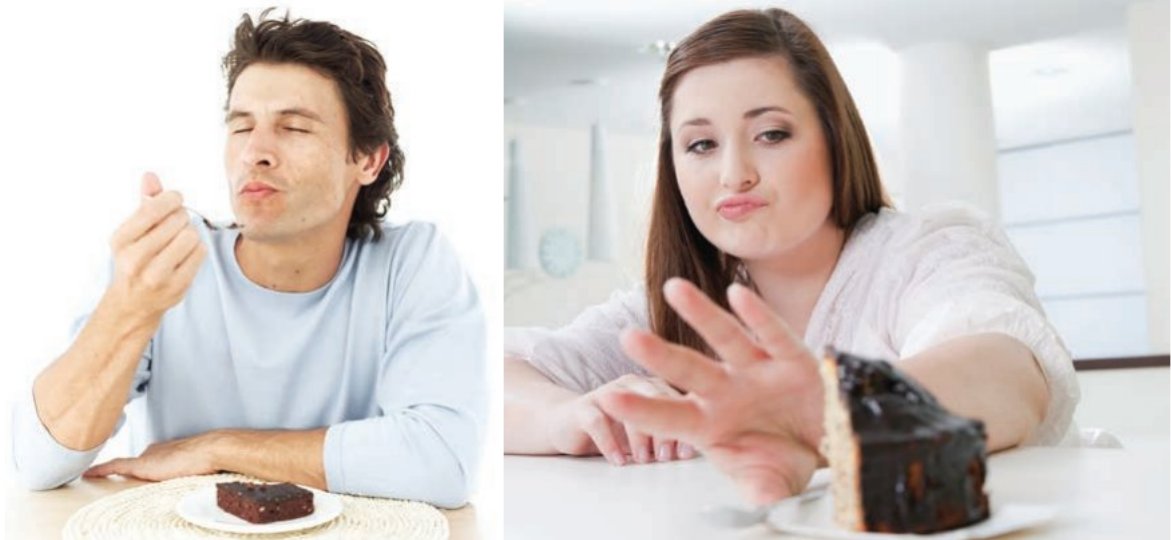
Two people can react quite differently to identical food. Imagine Riku absolutely loves chocolate and associates it with positive experiences like rewards after achievements. His recent chocolate experiences have been particularly delicious.
His friend Carmen also likes chocolate, but her recent experiences have been disappointing and made her feel ill.
When Riku surprises Carmen with his favourite chocolate whilst watching a film together, he finds it delicious, but Carmen rates it as merely adequate.
Their different past experiences and expectations concerning chocolate meant they perceived the identical chocolate quite differently.
Important
If you've experienced food poisoning, you likely still remember the responsible food and may feel ill even thinking about eating it again. This demonstrates how strongly past experiences shape our gustatory perceptions through top-down processing. When our last experience with a food was strongly positive, we expect positive experiences subsequently. Conversely, disappointing or negative food experiences create low expectations or active avoidance.
Bottom-up processing of gustatory information
When applying bottom-up processing to gustatory experiences, we gather various salient sensory data - using both smell and taste - to form perceptions. The complexity of taste perception means we rarely rely solely on bottom-up processing, but certain situations require this approach.

Example
Example: Unknown Taste
Imagine sitting in class, concentrating hard, when you suddenly detect an unexpected, unknown taste in your mouth. You explore with your tongue, searching for the source, eventually finding a tiny food fragment caught between your teeth.
You manipulate it onto your tongue, examining it until you identify its origin. This demonstrates bottom-up processing - focusing on salient sensations to construct a complete understanding of the taste.
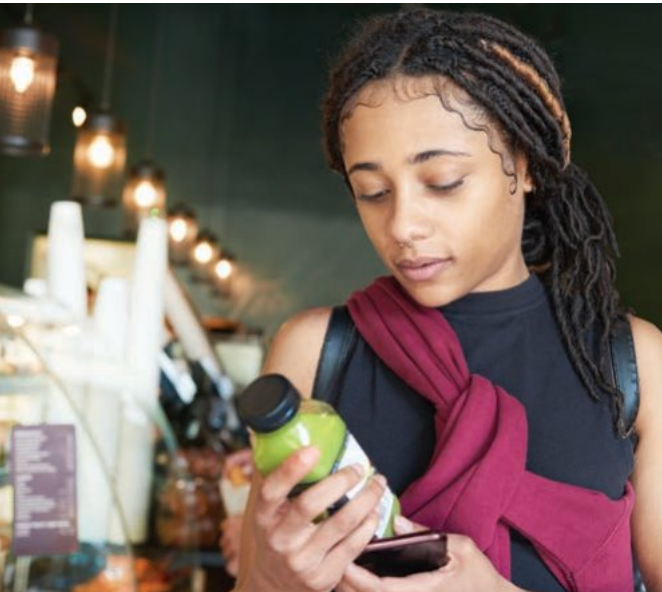
Another situation requiring bottom-up taste processing occurs when trying food for which you have no existing schema - perhaps an unusual fruit from a friend's home country or an unfamiliar dish. Without prior knowledge and the ability to use top-down processing, you must rely purely on environmental information, including the food's smell and taste, to create your perception.
Note
You can recreate this experience by tasting unfamiliar food whilst blindfolded. Without visual information and prior knowledge, you rely on salient stimuli (smell and taste) to understand what you're tasting and whether you enjoy it. When you remove the blindfold and see the food, bottom-up processing typically gives way to top-down processing as you connect your sensory experience with your knowledge of the food, helping you perceive it more completely.
Remember!
Summary
Key Points to Remember:
-
Top-down processing uses prior knowledge and expectations to interpret sensory information quickly, but can lead to perceptual errors, particularly with unfamiliar stimuli
-
Bottom-up processing builds perceptions from basic sensory features, taking longer but typically producing more accurate results
-
Both processing types work together dynamically, with most perceptual experiences involving elements of both approaches
-
Visual processing uses top-down processing to complete partial images based on expectations, and bottom-up processing to construct perceptions from salient visual features
-
Gustatory processing combines taste and smell information, with top-down processing influenced by past food experiences and bottom-up processing relying on salient taste and olfactory stimuli