Observational Learning (VCE SSCE Psychology): Revision Notes
📚Revision Notes
Observational Learning
Introduction to observational learning
Observational learning is a form of learning that occurs when individuals acquire new behaviours and skills by watching others. This type of learning represents a social-cognitive approach, where people process, remember and learn information within social contexts to understand and predict both their own behaviour and that of others.
The ability to learn through observation has existed throughout human history, with children naturally learning from adults around them. However, modern technology has transformed this process dramatically.
Note
Platforms such as YouTube, TikTok and Twitch have created a worldwide network where people can observe and learn diverse skills ranging from gaming strategies to cooking techniques. By 2020, gaming videos alone had become one of YouTube's primary content categories, with this form of skill-sharing evolving into a multibillion-dollar industry.
Key terminology
Before exploring the stages of observational learning, it is essential to understand two fundamental terms:
Learner: The individual who observes, remembers and imitates the actions of the model.
Model: The live, pre-recorded or symbolic person whose behaviour is being observed.
Bandura's Bobo doll experiments
In 1965, psychologist Albert Bandura conducted groundbreaking research to investigate how children learn behaviour through observation. His experiments focused on what would happen when children (learners) watched adults (models) interact aggressively with a Bobo doll, which was a large inflatable toy.
Bandura's research aimed to demonstrate that children could learn behaviour indirectly by observing an adult's actions and the consequences that followed.
Important
Key Findings from Bandura's Research:
Children who witnessed the adult model being rewarded or receiving no consequence for aggressive behaviour were considerably more likely to display those same aggressive behaviours compared to children who saw the model being punished.
These results revealed that:
- The consequences experienced by the model directly affected whether children would imitate the behaviour
- Children learned the model's behaviour even if they did not immediately reproduce it, suggesting that learning and performance are separate processes
- Observational learning is a distinct type of learning, separate from classical and operant conditioning
Overview of observational learning
Observational learning can be defined as a type of social learning that occurs when a learner observes a model's actions and their consequences to guide their future actions. This form of learning is considered active because the learner must engage cognitive processes throughout the experience. It is also regarded as more efficient than operant conditioning because learners do not need to personally experience consequences through trial and error; instead, they can learn from watching others' experiences.
The social-cognitive approach emphasises the importance of the environment, or social context, in which learning takes place. People naturally learn from those around them, making observation a powerful mechanism for acquiring new behaviours and skills.
The five stages of observational learning
Observational learning follows a sequential process involving five distinct stages. Each stage must occur in order for successful learning to take place. These stages are: attention, retention, reproduction, motivation and reinforcement.
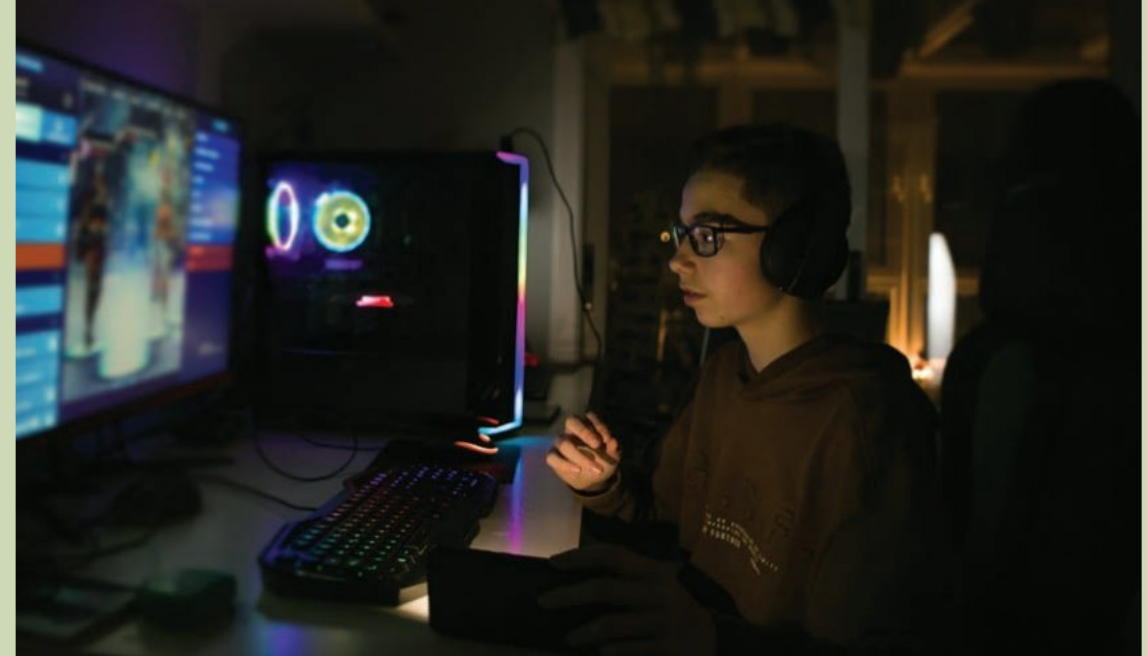
To illustrate these stages, consider a teenager (learner) who watches an online gamer (model) to learn new gaming skills and techniques.
Attention
The first stage requires the learner to actively watch the model's behaviour and observe the consequences that follow. This is not passive viewing; the learner must focus deliberately on what the model is doing.
Example
Gaming Example - Attention Stage:
The teenager must actively watch the gamer's moves and strategies, paying attention to how these techniques benefit the model in the game.
Several factors influence whether a learner will pay attention to a model:
- The model's attractiveness, credibility and status
- Whether the model is perceived as an authority figure or well-respected individual
- The learner's own motivation and interest level
- The degree of similarity between the model and learner (greater similarity typically increases attention)
Retention
During the retention stage, the learner must store a mental representation of the model's behaviour in their long-term memory for future use. This requires cognitive skills to encode and retain the observed information.
The teenager must use their cognitive abilities to create and store a memory of the gaming move or trick, including how it benefited the model. The meaningfulness of this memory directly affects how accurately the learner can later replicate the behaviour. More meaningful memories lead to more accurate reproduction.
Reproduction
For the learner to perform the observed behaviour, they must possess the necessary physical and mental capabilities. The behaviour must fall within the learner's competency levels.
Note
The teenager must have the physical skills, such as hand-eye coordination, to manipulate the game controller in the same way as the online gamer. They must also have the mental capabilities to execute the strategy. If the behaviour exceeds the learner's current abilities, reproduction cannot occur regardless of how well the previous stages were completed.
Motivation
At this stage, the learner's desire to imitate the model's behaviour determines whether they will actually perform it. The learner must want to execute the behaviour to gain something, achieve a goal or receive a reinforcer.
The teenager must have the desire to perform the observed gaming technique to progress further in the game or accumulate more points. Without this internal drive or external incentive, the learner may possess the knowledge and ability but still choose not to perform the behaviour.
Reinforcement
The final stage involves reinforcement, which influences both the learner's desire to perform the behaviour and the likelihood they will reproduce it in future. The expectation of reinforcement or punishment affects the learner's cognitive processes and decision-making.
The teenager becomes more likely to reproduce the online gamer's behaviour if positive outcomes occur, such as feeling proud, gaining access to exclusive gaming groups or avoiding removal from gaming communities. This reinforcement can come from:
Consequences to the learner: The teenager's own experience of success or failure when attempting the behaviour influences future performance.
Vicarious reinforcement: Consequences observed happening to the model also affect the learner's behaviour. If the online gamer performs a move that receives cheers and positive feedback from viewers, learners may be more inclined to reproduce that behaviour. Conversely, if a move leads the model to lose the game, learners may avoid reproducing it.
Application to real-life scenarios
Understanding the sequential nature of observational learning stages is essential for applying this concept to real-world situations. Each stage depends on the successful completion of previous stages.
Important
A learner cannot reproduce a behaviour without first creating a mental representation of it through retention. Similarly, storing a mental representation is impossible if the learner failed to pay attention to the behaviour initially.
Example
Worked Example: Cooking Paella
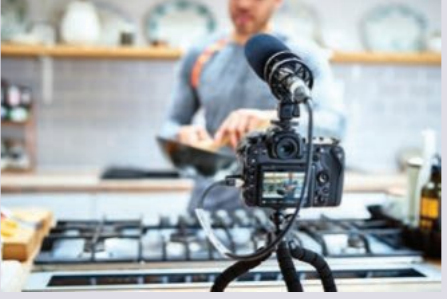
Roberto, a well-known Spanish chef, uploads a TikTok video demonstrating how to cook paella, a traditional Spanish rice dish. John, who is similar in age to Roberto, watches the video because he wants to learn how to prepare paella for his family in Australia.
Attention stage: John must actively watch Roberto cooking paella and observe the successful completion of the dish. His attention is likely enhanced because Roberto is credible (a well-known chef) and because John has strong motivation to learn.
Retention stage: John must store a mental representation of Roberto's cooking process, including the ingredients, techniques and sequence of steps, in his long-term memory for future use.
Reproduction stage: John must possess the physical and mental capabilities to cook paella like Roberto. This includes having the hand coordination to chop ingredients properly and the mental capability to concentrate on following the recipe through to completion.
Motivation stage: John must have the desire to prepare paella like Roberto. His motivation might stem from wanting to share his cultural heritage with family or simply to provide an enjoyable meal.
Reinforcement stage: Watching Roberto successfully complete and enjoy the paella influences John's desire and likelihood of cooking paella himself. Alternatively, John's own self-motivation to cook for his family serves as reinforcement that increases the probability he will prepare paella in the future.
Summary
Key Points to Remember:
-
Observational learning is a social-cognitive approach where learners acquire behaviours by watching models and their consequences, making it an active and efficient form of learning.
-
The five stages must occur sequentially: Attention (actively watching), Retention (storing mental representations), Reproduction (having necessary capabilities), Motivation (desire to perform), and Reinforcement (consequences affecting future behaviour).
-
Bandura's Bobo doll experiments demonstrated that children learn aggressive behaviour through observation and that consequences experienced by the model significantly influence whether learners will imitate the behaviour.
-
The effectiveness of observational learning depends on characteristics of both the model (attractiveness, credibility, similarity to learner) and the learner (attention, motivation, physical and mental capabilities).
-
Modern technology has expanded observational learning opportunities globally through platforms like YouTube and TikTok, transforming skill-sharing into a multibillion-dollar industry whilst following the same psychological principles identified by Bandura.