Conformity (VCE SSCE Psychology): Revision Notes
📚Revision Notes
Conformity
What is conformity?
Conformity describes the process through which individuals adjust their thoughts, feelings, behaviours, or perspectives to align more closely with those of groups they belong to or wish to join. We conform in social situations because we want to fit in, even when we disagree with the group's particular belief, attitude, or action.

Common examples of conformity include using the same language as friends, laughing at jokes you don't understand, styling your garden like your neighbours, or wearing similar clothes to colleagues. When entering a crowded elevator, most people automatically face the door like everyone else, conforming to the unspoken expectations of those already inside.
Note
Conformity is a universal human behaviour that occurs across all cultures and societies, though the extent and circumstances of conformity may vary significantly based on cultural values and social context.

Asch's conformity studies
Background
In the 1950s, psychologist Solomon Asch investigated the factors that influence conformity. His research aimed to determine how group pressure could lead people to conform even when they knew the group was incorrect.
Procedure
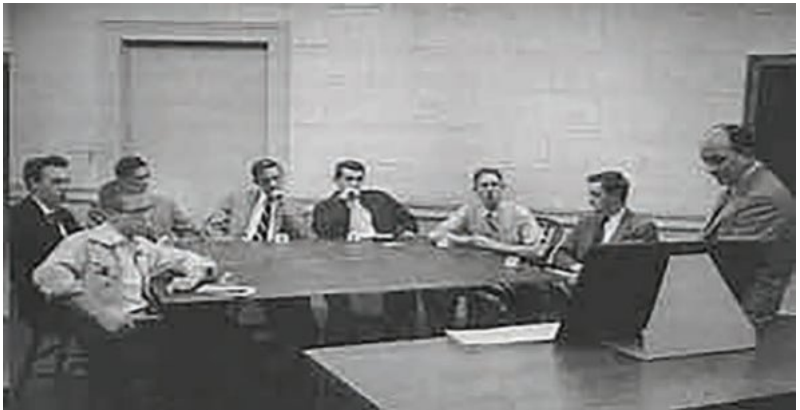
In 1956, Asch recruited 50 male students from Swarthmore College in the United States to participate in what they believed was a vision test. The experimental setup involved:
Participants:
- One genuine participant
- Seven confederates (individuals aware of the study's true purpose who followed predetermined instructions)
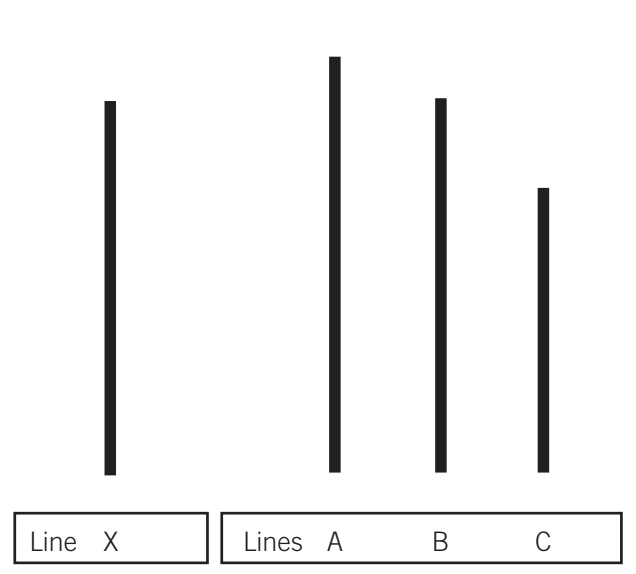
Task: Participants viewed a stimulus line (Line X) and had to identify which of three comparison lines (A, B, C) matched its length. The correct answer was obvious to anyone without vision impairment.
Arrangement: All participants sat around a table in a semicircle. The genuine participant was positioned last, meaning they heard all the confederates' responses before giving their own answer.
Example
Experimental Design: Asch's Line Study Setup
Step 1: The setup
- 7 confederates + 1 real participant seated in a semicircle
- Real participant always positioned to answer last
Step 2: The trials
- Total of 18 trials conducted
- 12 "critical trials" where confederates gave wrong answers
- 6 trials with correct answers to avoid suspicion
Step 3: The task
- Participants viewed a target line (Line X)
- Had to match it to one of three comparison lines (A, B, or C)
- Announced answers aloud in sequence around the table
Trials:
- 18 total trials in the experimental condition
- 12 'critical trials' where confederates deliberately gave incorrect answers
- Initially, confederates answered correctly to avoid suspicion
- The study aimed to examine whether participants would modify their answers to match the obviously incorrect group response
Control group:
- 37 participants completed the task individually by writing their answers
- This ensured people could accurately judge line lengths without group pressure
- Control group accuracy: 99%
Findings
The results demonstrated the powerful influence of group pressure on individual judgement:
- Average conformity rate: Approximately 32% (one-third) of responses conformed to the incorrect majority during critical trials
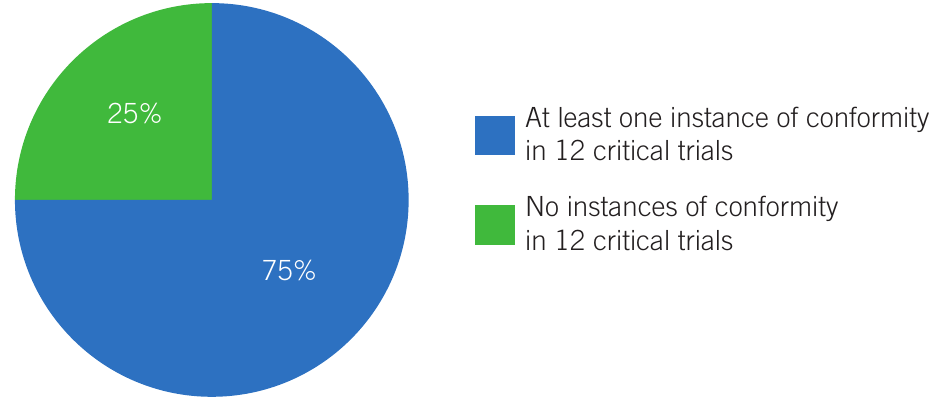
- At least one conforming response: 75% of participants conformed at least once across the 12 critical trials
- No conforming responses: 25% of participants never conformed
- Control group error rate: Less than 1%, confirming the task was straightforward
Note
During debriefing, participants explained their conforming behaviour in two ways:
- They believed their own answer must be wrong since everyone else gave the same (incorrect) response
- They feared standing out from the group, so chose the obviously wrong answer to fit in, despite knowing it was incorrect
Asch concluded that people conform for two main reasons: to be accepted by the group (normative influence) and because they believe the group possesses better information than they do (informational influence).
Evaluation: strengths
- Used a control group to establish baseline accuracy levels, allowing for meaningful comparison
- Clear operational definition of conformity (choosing the incorrect line to match the group)
- Quantifiable results that could be replicated and compared across studies
Evaluation: weaknesses
Methodological issues:
| Issue | Explanation |
|---|---|
| Biased sample | Only male participants of a similar age were tested, limiting the ability to generalise findings to other genders or age groups |
| Artificial experimental setting | Laboratory conditions do not reflect the environments in which conformity typically occurs in everyday life |
Ethical issues:
| Issue | Explanation |
|---|---|
| No harm principle violated | Participants were not protected from psychological stress or embarrassment that may have resulted from disagreeing with the majority |
| Deception | Asch deceived participants by telling them the study concerned vision rather than conformity. However, this deception was necessary to produce valid results, as knowledge of the true purpose would have influenced their responses |
Important
Critical Evaluation Points:
While Asch's study provided valuable insights into conformity, researchers must consider its limitations:
- The biased sample (only male students) means findings may not apply equally to women or other age groups
- The artificial laboratory setting raises questions about whether people conform the same way in real-life situations
- Despite ethical concerns about deception, this methodology was necessary to obtain valid results - participants knowing the true purpose would have changed their behaviour
Factors that affect conformity
Asch's research sparked interest among other psychologists, leading to further studies that identified several factors influencing conformity. These include normative influence, culture, informational influence, unanimity, group size, social loafing, and deindividuation.
Normative influence
Normative influence occurs when we conform because we want others to like us. We assume that behaving similarly to group members will increase their acceptance of us. The social norms adopted by a group guide our behaviour within that group. When we're aware of these norms, this awareness influences both whether we conform and how strongly we conform.
This process is explained by our desire for acceptance rather than rejection. We're more likely to conform with people we like, admire, or aspire to be like, because similarity to others represents a valuable means of gaining acceptance and approval. Research shows that individuals who care little about others' opinions conform less than those who care considerably.
Note
Understanding Normative Influence:
Think of normative influence as "conforming to belong." It's driven by our fundamental human need for social acceptance. The stronger our desire to be part of a particular group, the more likely we are to conform to that group's expectations and behaviours.
Culture
Cultural background plays a vital role in determining conformity likelihood. Psychologists Bond and Smith compared results from 133 different studies based on Asch's original experiment, conducted at various times across 17 countries. Their analysis revealed cultural differences in conformity rates.
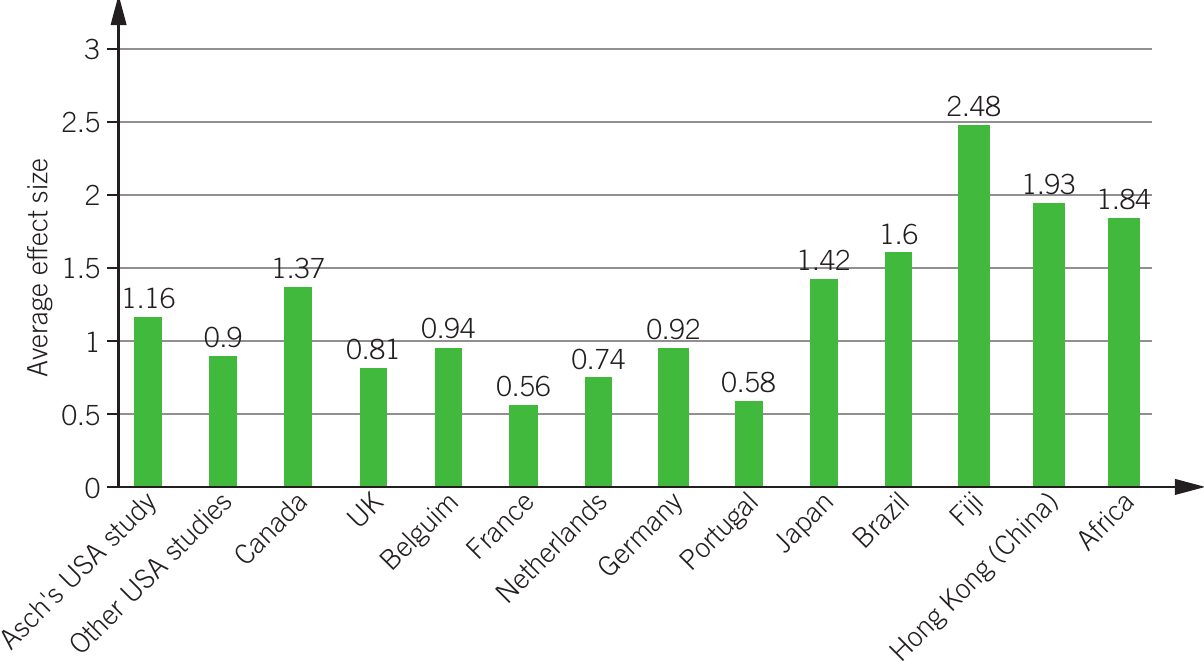
Countries such as Japan, Fiji, and those in Africa demonstrated higher conformity levels than Western countries including the United States, Canada, France, and Portugal. The researchers attributed this difference to the distinction between individualist and collectivist cultures:
Individualist cultures:
- Focus on individuality, personal achievement, and independence
- Conforming is viewed as undesirable and may be seen as weakness
- Lower conformity rates observed
Collectivist cultures:
- Work towards group goals
- Encourage uniformity and values promoting group aims
- Stepping out of line is considered rude and works against group cohesion
- Higher conformity rates observed
Important
Cultural Differences in Conformity:
The distinction between individualist and collectivist cultures is crucial for understanding conformity patterns worldwide:
- Individualist cultures (USA, Western Europe) emphasize personal goals and independence, leading to lower conformity rates
- Collectivist cultures (Asia, Africa, Pacific Islands) prioritize group harmony and shared goals, resulting in higher conformity rates
This doesn't mean one approach is better than the other - both reflect different cultural values about the relationship between individuals and society.

Informational influence
Informational influence involves conforming because we want to be correct, so we look to others whom we believe have more knowledge. When uncertain about a situation or lacking expertise, people conform to the group's behaviour or viewpoint, assuming the group is better informed.
Some participants in Asch's experiment believed they were wrong because nobody else agreed with them, leading them to change their responses to be 'correct'. This phenomenon appears in everyday situations as well.

Examples include:
- At a formal restaurant, someone unsure about which fork to use might observe nearby diners
- When travelling to different countries, people often rely on observing locals to guide appropriate behaviour
- Jury members uncertain about a defendant's guilt might be influenced by more confident jurors' opinions
Note
Informational vs Normative Influence:
While both lead to conformity, the motivations differ:
- Normative influence: "I'll go along with the group because I want them to like me"
- Informational influence: "I'll go along with the group because they probably know better than I do"
Understanding which type of influence is operating can help explain why conformity occurs in different situations.
Unanimity
Unanimity refers to complete agreement among group members regarding the answer. Group unanimity was a key factor in Asch's results. When the majority is unanimous in their beliefs, individuals experience considerable pressure to conform. However, when just one person disagrees with the majority, conformity among other members drops substantially.
In Asch's experiments, when one confederate was set up to disagree with the majority view, participants' conformity dropped to under 10%. This demonstrates the powerful effect of breaking unanimity.
You may have experienced this yourself. If all your friends express dislike for a certain teacher, you might do the same even if you have no problem with that teacher. Because all your friends feel the same way together, you conform to their beliefs. However, if just one friend admitted the teacher was acceptable, you would be more likely to admit you also don't mind that teacher.
Important
The Power of Breaking Unanimity:
One of Asch's most significant findings was that a single dissenting voice dramatically reduces conformity. When unanimity is broken, conformity rates plummet from 32% to under 10%.
This has important implications: even in situations where everyone seems to agree, just one person expressing a different view can empower others to think independently and resist group pressure.
Group size
In his 1951 experiment, Asch manipulated the number of confederates present, ranging from one to 15. The results showed that up to a certain point, larger dominant groups (more confederates) led to more frequent conformity:
- Group of 1: 3% conformity
- Group of 2: 12% conformity
- Group of 3: 32% conformity
- Group of 4 or more: 32% conformity (no significant increase)
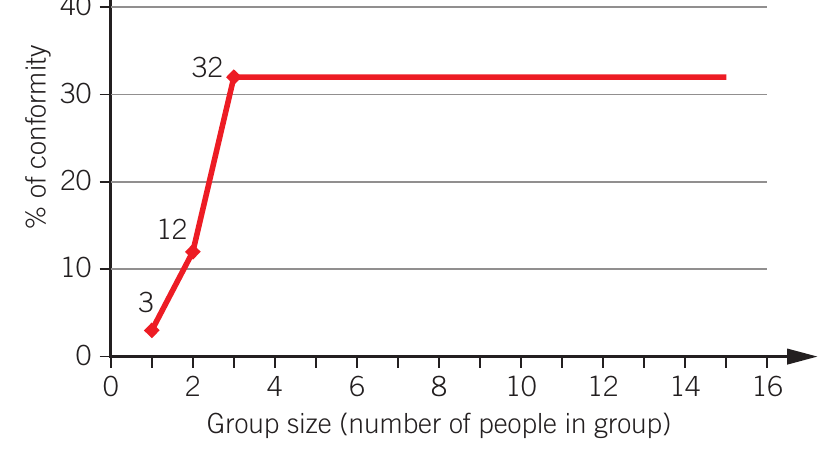
Further research by David Wilder suggested that a group's actual size matters less than its psychological size. When everyone in a group gives the same verbal answer, you would probably only regard the first few responses as independent assessments. After three or four people respond identically, you'd likely assume they're simply following everyone else. Therefore, you'd only consider the first few responses when forming your own.

Note
Psychological vs. Actual Group Size:
Wilder found that when people's responses are perceived as independent, conformity increases with group size. For example, in a classroom where the teacher asks students to respond aloud to a maths question, if you're sitting at the back and the first few students give the same answer (different from yours), you'd likely conform to their response when your turn comes. This would occur regardless of whether the class had 24 students or five, as long as the first four students provided the same answer.
The key factor is whether you perceive the responses as independent judgements or simply people copying each other.
Social loafing
Social loafing describes a person's tendency to reduce effort when working in a group compared to working alone. Examples include:
- A group member contributing minimally to an assignment or work project
- A team sport player making less effort to win the game
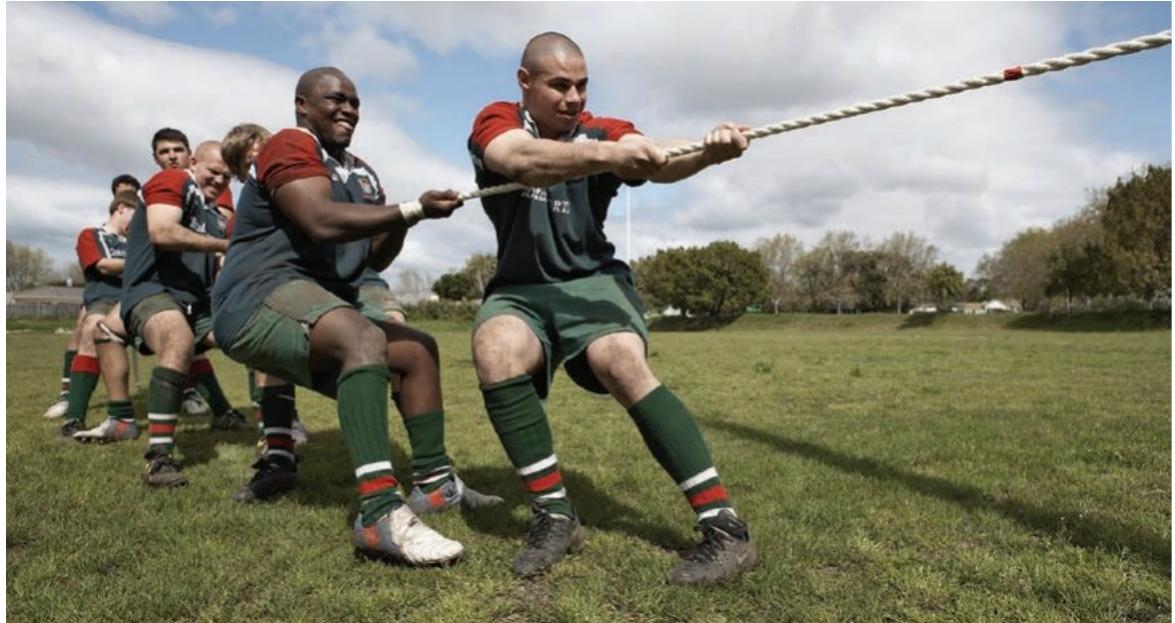
In terms of conformity, when a task requires effort (such as carefully distinguishing between similar-length lines in the Asch experiment), an individual may conform with the majority simply to avoid the effort involved in making a personal judgement.
Note
Social loafing represents a form of "cognitive laziness" in conformity situations. Rather than expending mental effort to make an independent assessment, individuals may simply adopt the group's answer as an easier alternative. This is particularly likely when:
- The task is difficult or requires concentration
- Individual contributions are not easily identifiable
- The person doesn't feel personally responsible for the outcome
Deindividuation
Deindividuation occurs when people act in certain ways because they have 'disappeared' into a group, becoming 'faceless'. It can be described as the loss of individuality and the gained sense of anonymity that occurs in group situations.
Regarding conformity, if an individual is anonymous or has no social status within a group, they're more likely to absolve themselves of responsibility for providing a correct answer. In Asch's experiments, individuals believed they were part of a group, and therefore their individual responses didn't matter. They could justify an incorrect response by thinking 'everyone else was doing it' and responding in the same manner.
Important
Deindividuation and Conformity:
Deindividuation creates a psychological state where individuals feel:
- Less personally identifiable within the group
- Reduced sense of personal responsibility
- Greater willingness to engage in behaviours they wouldn't normally do alone
This can lead to both negative outcomes (conforming to incorrect answers) and positive ones (feeling empowered to participate in group activities). The key factor is the loss of individual identity and the accompanying sense that "what I do won't be traced back to me personally."
Remember!
Summary
Key Takeaways About Conformity:
-
Conformity definition: Modifying ideas, attitudes, behaviours, or perceptions to match those of groups we belong to or wish to join
-
Asch's key findings: 75% of participants conformed at least once, with an average conformity rate of 32% in critical trials, compared to 99% accuracy in the control group
-
Two main reasons for conforming:
- Wanting to fit in (normative influence)
- Believing the group knows better (informational influence)
-
Cultural differences: Collectivist cultures show higher conformity rates than individualist cultures
-
Seven factors affecting conformity:
- Normative influence
- Culture
- Informational influence
- Unanimity
- Group size (up to 3-4 people)
- Social loafing
- Deindividuation