Groupthink and Group Shift (VCE SSCE Psychology): Revision Notes
📚Revision Notes
Groupthink and Group Shift
Groupthink
What is groupthink?
Groupthink occurs when maintaining group harmony and loyalty becomes more important than making the best decisions. In this phenomenon, individuals suppress their personal beliefs and conform to the majority view, even when they privately disagree with the group's position.

When groups prioritize reaching unanimous agreement over carefully evaluating all available options, groupthink can develop. Members may set aside their own judgements to preserve social cohesiveness within the group. This can range from simply not expressing doubts to completely ignoring the ethical or moral consequences of the group's actions.
People often engage in groupthink because they:
- Fear that voicing disagreement will disrupt group harmony
- Worry that expressing contrary views might lead to rejection by other members
- Feel uncertain about whether their ideas have merit when everyone else seems to agree
Example
Example: The Netflix Dilemma
Imagine having lunch with friends when your best friend praises a new science fiction programme on Netflix. You haven't seen it and generally dislike science fiction, so you stay quiet. Other friends agree enthusiastically and begin discussing the show in detail. Your best friend then suggests everyone come over to watch it together after school. Despite having no interest in watching, you agree rather than "rock the boat" and risk being judged negatively.
As this pattern repeats, members holding opposing views come to believe their perspectives conflict with the majority. This encourages them to withhold information and ideas they fear will meet with disapproval.
Note
Healthy disagreement has been linked to more creative thinking and greater innovation within organisations. One effective strategy against groupthink involves asking one person to deliberately take an opposing view and challenge the majority's proposed solutions.
The eight symptoms of groupthink
Researchers have identified eight distinct symptoms that characterize groupthink situations:
- Illusions of invulnerability: The group displays excessive optimism and takes significant risks. Members feel they are perfect and that everything they do will succeed.
- Belief in the group's inherent morality: Members believe whatever the group does must be appropriate because they all know right from wrong. This causes them to overlook the consequences of their decisions.
- Collective rationalisation: Members rationalize thoughts or suggestions that challenge the majority view. They try to explain away why others disagree whilst continuing with their original decisions.
- Self-censorship: Individuals believe that if they are the only one disagreeing with the group's decision, they must be wrong.
- Illusions of unanimity: When disagreeing members remain silent rather than voicing opposition, their silence is interpreted as acceptance of the majority's decision.
- Direct pressure on dissenters: The majority directly threatens members who question the group's decisions, telling them they can leave if they don't agree. The group applies pressure to force dissenters to conform.
- Self-appointed mind guards: Some members take it upon themselves to discourage alternative ideas from being expressed within the group.
- Outgroup stereotypes: The group believes that members who disagree oppose them on purpose. They stereotype disagreeing members as incapable of making correct decisions and as weak or evil.
Factors that influence groupthink
Groupthink is more likely to occur when certain conditions are present:
- Highly similar group members: When there is a strong group identity, members tend to perceive their group as superior and express scorn towards outsiders.
- Powerful and compelling leader: A charismatic leader who commands the group increases the likelihood of groupthink.
- Lack of personal knowledge: When people feel they lack expertise or believe other group members are more qualified, they are more likely to conform.
- Extreme stress or moral dilemmas: High-pressure situations or complex ethical problems make groups more vulnerable to groupthink.
Consequences of groupthink
Whilst groupthink may allow groups to make decisions and complete tasks quickly, it frequently results in poor decision-making. Better options are overlooked as people ignore their instinct to provide alternatives, critiques, or new perspectives.
Important
Critical Problems Associated with Groupthink:
- Incomplete survey of alternatives
- Poor skills in searching for information
- Selective bias when processing information
- Failure to develop contingency plans
These issues lead to unmet goals, unsuccessful problem-solving, and a low probability of successful outcomes. Whilst groupthink can be damaging in minor situations, it can have catastrophic consequences in critical settings.

Real-world example: The Challenger disaster
Example
Case Study: The Challenger Disaster (1986)
On 28 January 1986, the space shuttle Challenger exploded 73 seconds after lift-off, killing all seven astronauts on board. Investigators discovered that a series of poor decisions rooted in groupthink had led to this tragedy.
What happened: The day before launch, engineers warned NASA flight managers that the O-ring seals on the booster rockets would fail in the freezing temperatures forecast for the following morning. However, NASA personnel overrode the scientific evidence presented by the technical experts, falling victim to groupthink. When flight readiness reviewers received approval for launch from lower-level NASA managers, no mention was made of the engineers' objections. The shuttle launched as scheduled, with catastrophic results.
The lesson: This example demonstrates how groupthink can lead to decisions that cost lives and have lasting consequences.
Group shift
What is group shift?
Group shift occurs when discussion leads a group to adopt attitudes or actions that are more extreme than the initial positions of individual members. This phenomenon represents a dramatic change in members' attitudes, moving them towards a more extreme version of whatever position they were already leaning towards before the group discussion.
As a result:
- Conservative individuals become more cautious
- Aggressive individuals take more risks
Note
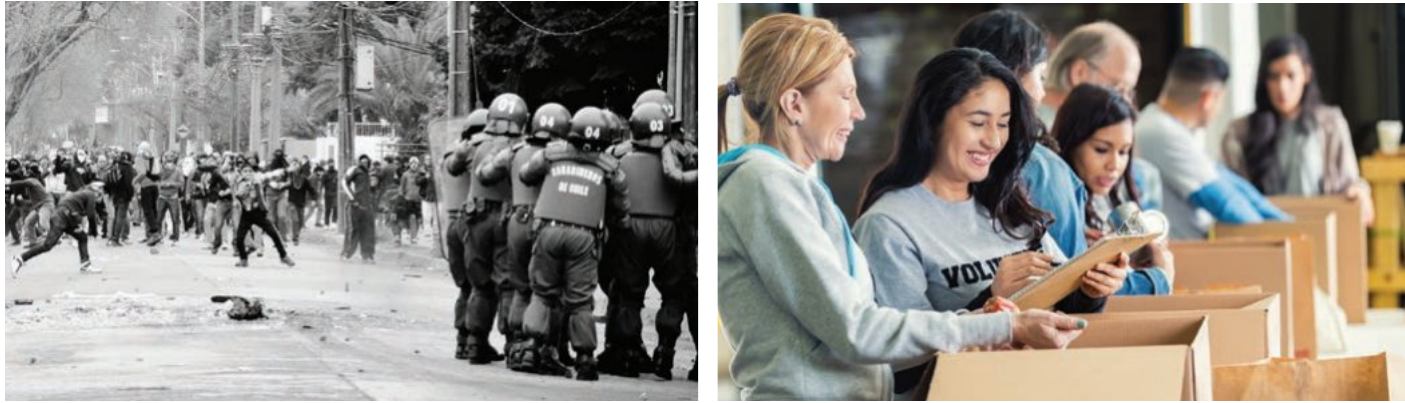
Group shift can result in both antisocial behaviours (such as rioting and looting) and prosocial behaviours (such as charity work and volunteering).
Origins: James Stoner's research
In 1961, MIT student James Stoner developed the "risky shift" theory, which proposed that decisions made within a group are riskier than those made individually before the group meets.
Stoner's method:
- Presented subjects with hypothetical situations requiring them to judge whether an individual's decision would be beneficial or risky
- Asked subjects to record their individual judgements on a list of probabilities
- Had subjects discuss the situation in groups
- Recorded the group decisions
Findings: Subjects chose safer courses of action in their individual recordings but adopted riskier approaches during group discussions.
Stoner's theory inspired extensive research, and the concept was eventually renamed "group shift" to reflect that the shift could be towards either more risky or more cautious positions.
How group shift works
Example
Example: The Book Club Effect
Consider a book club where members read books individually and then discuss them together. An individual might think a particular book was acceptable but somewhat bland. Other members might share this lukewarm opinion. However, when the book club meets and discusses the book, the group amplifies the positive elements. Members leave with a more favourable opinion than they arrived with.
Similarly, research has shown that when prejudiced students debate racial issues, they become more prejudiced. Conversely, when less-prejudiced students discuss the same topics, they become even less prejudiced.
Real-life examples of group shift include terrorist attacks, mob mentality, public policy decisions, violent acts, peer pressure, college life dynamics, and jury verdicts.
Explanations for group shift
Three main factors explain why group shift occurs:
| Factor | Explanation |
|---|---|
| Diffusion of responsibility | Group members can behave in ways they think are best because responsibility is diffused within the group. Individual members are not held responsible for the group's ultimate decision when that decision is made collectively. As a result, greater risk may be accepted, as no single member can be held entirely accountable. |
| Social status | Risk-taking is frequently linked to social standing within groups. We admire people who are willing to take chances, and group discussions encourage members to demonstrate that they are as eager to take risks as their colleagues. |
| Familiarity of risk | Group members become more familiar with one another through debate, and they become bolder and more radical as they grow more comfortable. Additionally, people become more accustomed to a potential action or decision the longer they consider it, perceiving less danger in it over time. |
Relationship to groupthink
Group shift may be regarded as a subset of groupthink. When a group discusses how they will behave in a situation, the decision on whether to change behaviour is influenced by the ideas of those with the highest status in the group. However, how they change their behaviour is influenced by existing norms that indicate whether the group is likely to engage in cautious or risky behaviour.
Summary
Key Points to Remember:
-
Groupthink prioritizes harmony over quality: Members suppress doubts and conform to maintain group cohesion, leading to poor decision-making.
-
Eight symptoms characterize groupthink: These include illusions of invulnerability and unanimity, self-censorship, pressure on dissenters, and belief in the group's inherent morality.
-
Certain conditions increase groupthink risk: Strong group identity, powerful leaders, lack of expertise, and extreme stress all make groupthink more likely.
-
Group shift amplifies existing tendencies: Group discussion leads members to adopt more extreme versions of their initial positions, whether towards risk or caution.
-
Three factors explain group shift: Diffusion of responsibility, desire for social status, and increasing familiarity with risk all contribute to the phenomenon.