Modern Media Sources (VCE SSCE Psychology): Revision Notes
📚Revision Notes
Modern Media Sources
Introduction to modern media
When we want to listen to music, watch entertainment, check current events or communicate with friends, we increasingly turn to personal devices rather than traditional sources. Media refers to the various broadcasting mediums through which information is transmitted, including the internet, newspapers, magazines, television, radio, billboards and smartphones.

The evolution of media has transformed how we gather information, entertain ourselves and communicate with others. Traditional media sources such as television, newspapers and radio have been supplemented and, in many cases, replaced by digital alternatives accessible through smartphones, tablets and computers. This shift means information is now available at our fingertips from virtually any location, enabling us to connect with others on a global scale.
Note
The transition from traditional to digital media represents one of the most significant cultural shifts of the 21st century. Within just two decades, the way billions of people access information, entertainment and social connection has been fundamentally transformed by digital technology.
How media shapes behaviour
The specific type of media source we choose matters because the medium shapes how we receive and interpret messages, which influences our subsequent behaviour. For instance, a diet product advertisement might succeed on social media by showing a celebrity's visual transformation, attracting users who respond to visual appeal. However, the same product advertised on radio would need to emphasize health benefits through description alone, as there is no visual component. An advertisement relying solely on text would likely fail on visually-oriented platforms like social media or television, despite potentially working in print media.
Example
Understanding Media Impact: The Diet Product Example
Consider how the same product requires different approaches across media:
- Social Media: Shows celebrity before-and-after photos with visual transformation → Effective because users respond to visual appeal
- Radio: Describes health benefits and testimonials → Effective because it uses descriptive language
- Television: Combines visual transformation with testimonials → Effective because it engages multiple senses
- Text-only Platform: Lists product features in print → May be less effective on visual platforms but works well in print media
This demonstrates that the same message must be adapted to suit the strengths of each medium.
Australian media consumption patterns
Over the past two decades, Australian consumers have substantially increased their use of digital media. As of 2020, 60.8% of Australians identify the internet as a leading news source, with 37.7% specifically nominating social media. Television usage as a primary news source has declined to 59.4%, though it remains one of the most trusted information sources, with 33.4% of Australians nominating it as their leading source. Traditional media such as radio and printed newspapers have experienced further declines in popularity since 2018.
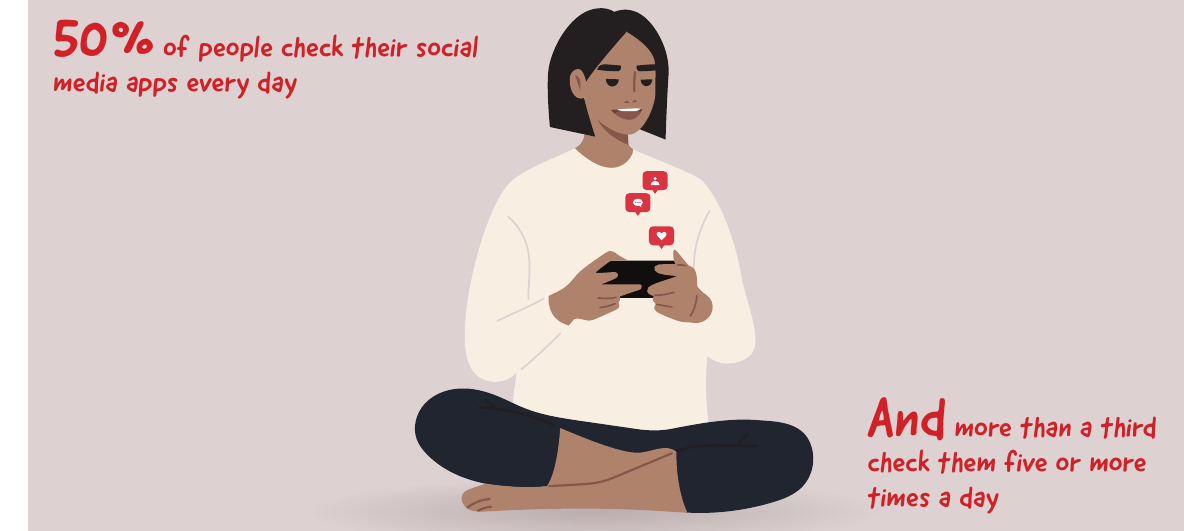
Social media usage has grown particularly dramatically. In 2021, four out of five people (80%) reported using social media at least occasionally, whilst 59% accessed social media daily or most days. More than one-third of people (35%, up from 26% in 2020) check social media five or more times daily. Among 18 to 29-year-olds, 89% check social media at least once daily.
Important
The Digital Shift in Australia
The statistics reveal a clear trend: Australians are moving away from traditional media toward digital platforms. Internet sources have now overtaken television as the primary news source for the majority of the population. This shift has significant implications for how information spreads, how businesses advertise, and how people stay informed about current events.
Types of modern media sources
Advertising
Advertising is an activity and industry that employs psychological techniques to promote products, services or ideas to wide audiences. It operates through numerous channels, reflecting the diversity of modern media consumption.
Traditional advertising channels include newspapers, television, radio, leaflets, flyers, brochures, posters, billboards, direct mail and business cards. Modern digital channels encompass social media, email marketing, chatbots, SMS, web push notifications, podcasts, landing pages, video marketing and pay-per-click advertising. Guerrilla marketing techniques, including ambush marketing, ambient marketing, undercover marketing and experiential marketing, represent more unconventional approaches.
Note
The Breadth of Modern Advertising
Advertising has evolved from simple print announcements to sophisticated multi-channel campaigns. Modern advertisers must understand psychology, technology, and consumer behavior across dozens of platforms. The goal remains the same—to influence consumer decisions—but the methods have become increasingly sophisticated and data-driven.
Advertising surrounds us in daily life. Morning television might feature a celebrity endorsing a shampoo product, claiming it has made their hair shinier and more manageable. A bus journey to school might expose us to poster advertisements for new footwear. Multiple billboards along the route could promote a low-fat milk brand, all attempting to influence consumer choices through repeated exposure.
Example
Advertising in Daily Life
Consider a typical morning:
- 6:30 AM: Wake to radio advertisement for breakfast cereal
- 7:00 AM: Watch TV while getting ready—celebrity shampoo endorsement appears
- 7:30 AM: Bus journey to school passes three billboards promoting different products
- 8:00 AM: Check phone—see sponsored social media posts for new footwear
- 8:15 AM: Arrive at school—notice posters for local businesses
This demonstrates how advertising reaches us through multiple touchpoints throughout our day, using various media to reinforce messages and influence our purchasing decisions.
Television
Television is a telecommunication medium that transmits moving images, either in black and white or colour, accompanied by sound. It serves as a mass medium for advertising, entertainment, news and sports coverage.
Television remains one of the most common forms of media use, with Australian adults spending approximately 15 hours weekly watching TV. However, consumption patterns have evolved considerably. Whilst individuals and families continue using free-to-air television for news and sports, paid entertainment subscriptions have become increasingly popular for accessing music, films, television programmes and educational resources.
Example
Modern Television Consumption
Television usage has adapted to modern lifestyles:
- After Day Care: Young children watch educational programmes on dedicated children's channels
- Saturday Evening: Families stream films together through subscription services like Netflix or Disney+
- Weekday Morning: Couples watch news on free-to-air television before work
- Live Events: Sports fans tune in to live broadcasts of major sporting events
- On-Demand: Teenagers binge-watch entire series on streaming platforms
This variety shows how television has evolved from a purely broadcast medium to one that incorporates on-demand streaming services, meeting diverse viewing preferences and schedules.
Video games

A video game (or computer game) is an electronic game involving interaction with a user interface or input device to generate visual feedback. Input devices include joysticks, controllers, keyboards and motion-sensing equipment.
Video games encompass numerous genres, including social network games, educational and art games, roleplaying games, simulation games and arcade games. They appeal to diverse age groups and are used in schools, workplaces, research facilities and homes for various purposes: entertainment, distraction, social connection, physical fitness and education.
Note
Video Games Across Generations
A common misconception is that video games are exclusively for young people. In reality, the average player age is in the 30s, and games serve diverse purposes across all age groups. From educational games for children to cognitive training for older adults, video games have become a legitimate form of media consumption and entertainment for people of all ages.
Real-world examples demonstrate this diversity. A young woman might play Candy Crush Saga on her phone whilst waiting to meet a friend. A young child could use a tablet to play vocabulary-building games. Friends might gather at a party for casual gaming. A couple could spend an afternoon playing an online roleplaying game that connects them with players worldwide. This versatility explains why video games appeal across age groups, despite common misconceptions that they are exclusively for young people (the average player age is actually in the 30s).
Example
Diverse Video Game Applications
Video games serve multiple purposes in modern life:
- Entertainment: Playing Candy Crush Saga while waiting for a friend
- Education: Children using tablet apps to build vocabulary and math skills
- Social Connection: Friends gathering for party games or online multiplayer sessions
- Fitness: Using motion-sensing games for physical exercise
- Global Interaction: Couples playing online roleplaying games with players worldwide
- Professional Use: Simulation games used for training in schools, workplaces, and research facilities
These examples demonstrate that video games are versatile tools for entertainment, learning, and social connection rather than mere distractions.
News sources
News refers to information about current events. It is consumed through various formats, including television, newspapers, online newspapers, radio, internet sources and social media. Australian consumers have recently shown a preference for obtaining news from internet sources rather than television or newspapers.
Typical news consumption includes reading a newspaper on the train, discussing breaking news seen on Facebook with friends, or teachers searching online news websites for articles suitable for classroom analysis. This demonstrates the shift from scheduled news broadcasts to continuous, accessible news consumption throughout the day.
Important
The Challenge of Fake News
A contemporary challenge in modern news media is "fake news", where individuals, groups and organisations use self-publishing platforms and social media to rapidly create and share false or misleading information. Such content can reach large audiences before anyone questions its accuracy.
Critical skills needed:
- Verify sources before sharing information
- Check multiple news outlets for confirmation
- Look for credible author credentials
- Be skeptical of sensational headlines
- Understand the difference between opinion and fact
This highlights the importance of critical evaluation of news sources in the digital age.
Social media
Social media refers to internet-based technology that facilitates sharing ideas, thoughts and information through virtual networks and communities. It is accessible on smartphones, smartwatches, tablets and computers.
As of October 2021, more than 4.5 billion people worldwide use social media. Its reach extends beyond personal communication, with governments and politicians using these platforms to engage with constituents and voters.
Note
Popular Social Media Platforms
Social media encompasses numerous technology-enabled activities, including photo sharing, blogging, social gaming, social networks, video sharing, business networks, virtual worlds and reviews.
Most Popular Platforms (January 2021):
- YouTube
- Facebook Messenger
- TikTok
- Douyin
- Sino Weibo
These platforms serve different purposes, from professional networking to entertainment, demonstrating the diverse ways people use social media in their daily lives.
Practical examples illustrate social media's diverse applications. A family planning international travel might research hotel reviews online before making reservations. Friends separated by distance maintain contact through Facebook. A group might create a dance routine that becomes viral on TikTok, potentially reaching millions of viewers globally. These examples demonstrate how social media has transformed from simple communication tools into platforms for entertainment, information gathering and community building.
Example
Social Media in Action
Real-world applications demonstrate social media's versatility:
- Travel Planning: Family researches hotel reviews online before booking international travel
- Maintaining Friendships: Friends separated by distance stay connected through Facebook messaging and photo sharing
- Content Creation: Group creates dance routine that goes viral on TikTok, reaching millions globally
- Professional Networking: Professionals connect with colleagues and industry experts on LinkedIn
- Community Building: People with shared interests join online groups and forums
- Political Engagement: Citizens interact directly with politicians and government representatives
These examples show how social media has evolved from simple communication tools into multifaceted platforms that serve entertainment, information, professional, and civic purposes.
Summary
Key Points to Remember:
-
Modern media has evolved from traditional sources (newspapers, radio, television) to digital platforms accessible on personal devices, fundamentally changing how we access information and communicate.
-
The five main media sources are advertising, television, video games, news sources and social media, each with distinct characteristics and consumption patterns.
-
Australian media consumption has shifted significantly toward digital sources, with 60.8% using the internet as their primary news source and 59% accessing social media daily.
-
The medium through which we receive information shapes the message itself and influences how we respond, making the choice of media source crucial for effective communication.
-
Social media has experienced explosive growth, with over 4.5 billion users worldwide and more than one-third of people checking their platforms five or more times daily, demonstrating its central role in modern communication.
-
Critical thinking is essential: With the rise of fake news and misinformation, the ability to evaluate sources and verify information has become a crucial skill for navigating modern media.