The Role of Person Perception: Attributions and Bias (VCE SSCE Psychology): Revision Notes
📚Revision Notes
The Role of Person Perception: Attributions and Bias
What are attributions?
When we observe people's behaviour or experience events, we naturally seek to understand what caused them. This process of explanation involves making attributions. Attributions are inferences that we make about the causes of events and the causes of behaviours (both our own and those of others).
Note
Understanding Attributions Through an Example
Consider this scenario: Laura and Sophie take a practice exam. Laura fails whilst Sophie achieves a perfect score. When discussing the results, Laura claims the test contained trick questions, the teacher didn't properly teach the content, and that the teacher marked Sophie's test more favourably because the teacher likes Sophie better. Laura is making attributions to explain both her own poor performance and Sophie's success.
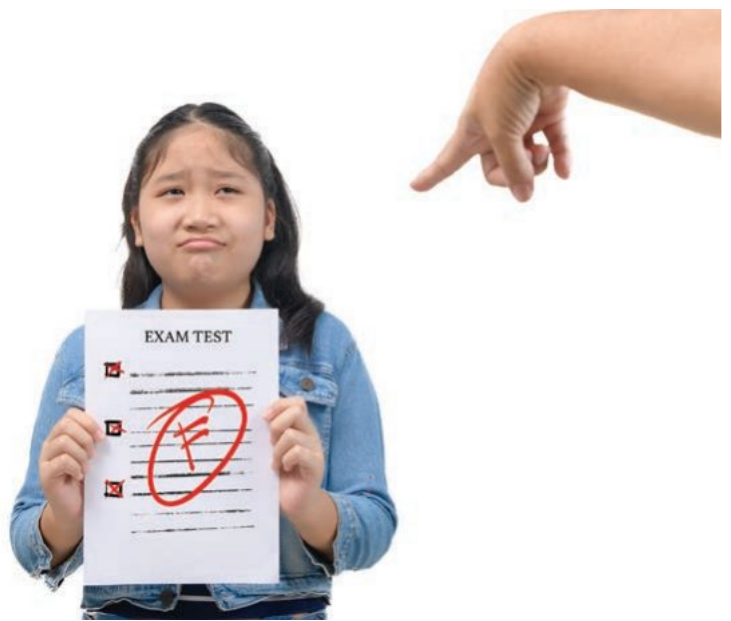
We use attributions constantly in daily life to make sense of behaviour when we lack complete information. For example, if a colleague arrives 30 minutes late to dinner, we might attribute this to external factors like traffic congestion or lack of parking. Alternatively, if we know the person well, we might attribute their lateness to internal characteristics such as poor time management or disorganisation.
Attributions serve an important psychological function: they help us create coherent explanations for events and predict future behaviour. However, as we shall see, the attributions we make are not always accurate and can be influenced by systematic biases.
Types of attributions
Psychologist Fritz Heider first described attributions in 1958, proposing that people tend to explain behaviour by considering factors that are either internal or external to the person being observed.
Personal attributions
Personal attributions (also called dispositional attributions) are explanations of a person's behaviour based on their characteristics, such as their ability, personality or energy. These attributions focus on internal factors within the individual.
When making personal attributions, we explain behaviour by referring to:
- Personality traits (e.g. "She's naturally outgoing")
- Abilities and skills (e.g. "He's talented at mathematics")
- Attitudes and beliefs (e.g. "They're environmentally conscious")
- Effort and motivation (e.g. "She works incredibly hard")
Example
Worked Example: Personal Attribution
If Mei observes that her friend Anna rarely arrives on time, she might make a personal attribution by concluding that Anna is disorganised or lacks good time management skills. This attribution explains Anna's behaviour through her internal characteristics rather than external circumstances.
Situational attributions
Situational attributions are explanations of a person's behaviour based on factors outside the person involved, such as luck or something in the environment, in the task or in the actions of another person. These attributions focus on external circumstances beyond the individual's control.
When making situational attributions, we explain behaviour by referring to:
- Environmental conditions (e.g. "The weather was terrible")
- Task difficulty (e.g. "The test was unfairly difficult")
- Luck or chance (e.g. "She got lucky with the questions")
- Actions of others (e.g. "The other driver cut him off")
Example
Worked Example: Situational Attribution
If Zareen observes Anna arriving late, she might make a situational attribution by assuming Anna encountered heavy traffic or couldn't find parking. This attribution explains Anna's behaviour through external circumstances rather than her personal characteristics.
Comparing the two types
The key distinction between these attribution types lies in where we locate the cause of behaviour. Personal attributions place responsibility within the individual, whilst situational attributions place responsibility in external circumstances. Both our own behaviour and others' behaviour can be explained using either type of attribution. However, as we'll explore next, systematic biases affect which type of attribution we're more likely to make in different situations.
Attribution biases
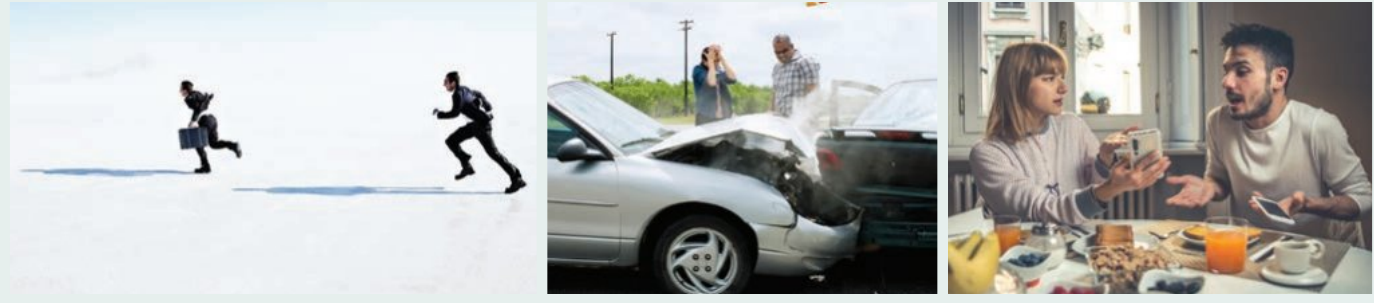
Although attributions help us understand behaviour, our judgements are often influenced by systematic errors called attribution biases. Three major biases affect how we perceive both our own behaviour and the behaviour of others.
Fundamental attribution error
The fundamental attribution error (or fundamental attribution bias) is the tendency to overemphasise personal characteristics and ignore situational factors when judging the behaviour of other people. In other words, we have a strong inclination to attribute others' behaviour to their internal characteristics rather than their circumstances.
This bias leads us to make quick judgements about others' character. When someone behaves poorly, we're inclined to conclude they're a bad person rather than consider situational factors that might explain their actions.
Note
For instance, if another driver overtakes us sharply on the road, our immediate reaction is often "What a terrible driver!" rather than considering they might be rushing to hospital for an emergency. This demonstrates how quickly we jump to personal attributions about others.
Why the fundamental attribution error occurs
Several factors contribute to this bias:
Limited information: As observers, we typically lack knowledge about the situational factors affecting another person. We can readily see their behaviour but cannot access information about the pressures, constraints or circumstances they face.
Perceptual focus: Our attention naturally centres on the person we're observing rather than their surrounding context, making their characteristics more salient than their situation.
Cognitive efficiency: Making quick judgements based on personality is cognitively simpler than carefully considering all possible situational influences.
The just-world hypothesis
Important
The fundamental attribution error is often reinforced by the just-world hypothesis, a cognitive bias in which people believe that the world is fair or just, and that everyone gets what they deserve. This bias makes us think that misfortune results from personal failings rather than situational factors.

The just-world hypothesis can lead to serious errors in judgement and harmful attitudes. People might believe that:
- Those who caught COVID-19 were careless with their health
- Victims of family violence provoked their attackers
- Crime victims weren't sufficiently careful
- People receiving unemployment benefits are lazy
- Someone who loses their job must have been incompetent or lazy, rather than considering business closures or economic factors
These attributions can result in victim-blaming and unfair judgements that ignore the complex situational factors affecting people's lives.
Actor-observer bias
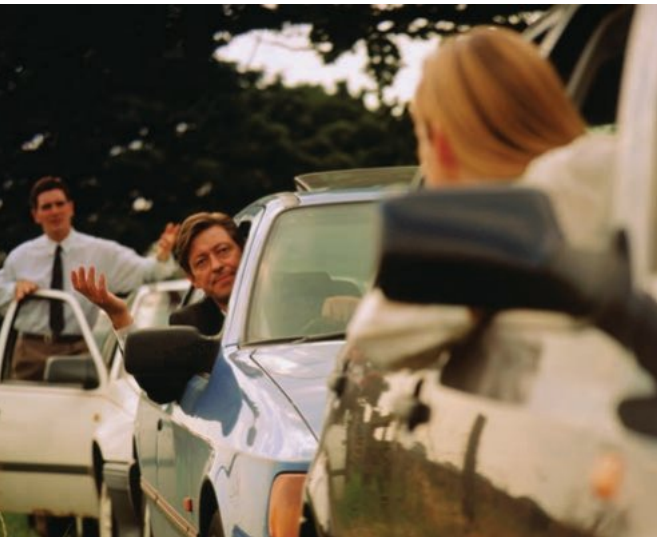
Whilst the fundamental attribution error affects how we judge others, the actor-observer bias reveals a double standard in how we explain our own behaviour compared to others' behaviour. The actor-observer bias is the tendency to attribute our own behaviour to situational (external) causes, but to attribute the behaviour of others to their internal factors.
Example
Worked Example: Actor-Observer Bias in Action
This bias creates opposite patterns of attribution depending on whether we're acting or observing:
When observing others:
- Someone else trips and falls → we think they're clumsy (personal attribution)
- Another driver cuts us off in traffic → we judge them as rude or aggressive (personal attribution)
When acting ourselves:
- We trip and fall → we blame the slippery or uneven pavement (situational attribution)
- We cut off another driver → we justify it because we were late for an important appointment (situational attribution)
Why the actor-observer bias occurs
The primary explanation for this bias centres on information availability. We possess far more information about our own circumstances, thoughts, pressures and constraints than we do about others' situations. When explaining our own behaviour, we can access detailed knowledge about the external factors influencing our actions. However, when observing others, we can only see their behaviour without understanding their full situation.
Note
Interestingly, the actor-observer bias diminishes when we know people well. Greater familiarity provides more information about someone's circumstances and typical situational constraints, reducing our tendency to make dispositional attributions about their behaviour.
Self-serving bias
The self-serving bias is the tendency to attribute our successes to internal factors, and our failures to external factors. This bias operates differently from the previous two because it depends on whether the outcome we're explaining is positive or negative.
Example
Worked Example: Self-Serving Bias Patterns
When explaining our successes, we make personal attributions:
- "I won the game because I'm skilful"
- "I got the job because I'm qualified and performed well in the interview"
- "I achieved a high grade because I studied effectively"
When explaining our failures, we make situational attributions:
- "I lost the game because the rules were unfair"
- "I didn't get the job because they'd already decided on an internal candidate"
- "I got a low grade because the test was poorly designed"
The function of self-serving bias
This bias serves an important psychological purpose: protecting our self-esteem and maintaining positive impressions that others hold of us. By claiming credit for successes and deflecting blame for failures, we "save face" and preserve our sense of competence and worth.
The self-serving bias can affect any situation involving success or failure, including:
- Academic performance
- Job applications
- Award nominations
- Sporting competitions
- Relationship outcomes
- Professional achievements
Important
Whilst this bias protects our self-esteem, it can also prevent us from learning from mistakes if we consistently attribute failures to external factors rather than recognising areas for personal improvement.
Distinguishing between the three attribution biases
Understanding how these three biases differ is essential for recognising when they might be affecting our judgements.
Note
The Three Attribution Biases Compared
Fundamental attribution bias: Affects how we perceive others' behaviour. We overemphasise personal factors and underemphasise situational factors when judging other people.
Actor-observer bias: Affects how we perceive others' behaviour compared to our own. We attribute others' behaviour to personal factors but our own behaviour to situational factors.
Self-serving bias: Affects how we perceive our own behaviour. We attribute our successes to personal factors but our failures to situational factors.
Key distinctions:
- The fundamental attribution error applies only to judgements about others
- The actor-observer bias creates a contrast between how we judge ourselves versus others
- The self-serving bias applies only to judgements about ourselves and depends on outcome valence (success vs failure)
- All three biases demonstrate that our attributions are often self-protective or result from limited information rather than objective analysis
Remember!
Summary
Key Points to Remember:
-
Attributions are explanations we construct about why events occur and why people behave in particular ways. We make attributions about both our own behaviour and others' behaviour.
-
Two types of attributions exist: Personal attributions explain behaviour through internal characteristics (personality, ability, effort), whilst situational attributions explain behaviour through external factors (environment, luck, task difficulty, others' actions).
-
The fundamental attribution error causes us to overemphasise personality and undervalue situation when judging others, often reinforced by the just-world hypothesis that people get what they deserve.
-
The actor-observer bias creates different standards for judging behaviour: we blame situations for our own behaviour but blame personality for others' behaviour, largely because we have more information about our own circumstances.
-
The self-serving bias protects our self-esteem by leading us to credit successes to our abilities but attribute failures to external circumstances, helping us maintain positive self-regard and social image.