Planning and Conducting Investigations: Fieldwork and Other Methodologies (VCE SSCE Psychology): Revision Notes
📚Revision Notes
Planning and Conducting Investigations: Fieldwork and Other Methodologies
Fieldwork
Fieldwork refers to a type of investigation methodology that collects information through observing and interacting with a selected environment. Unlike controlled laboratory experiments, fieldwork typically occurs in real-world settings. The focus is usually on identifying correlations between variables rather than establishing cause-and-effect relationships, as extraneous variables remain uncontrolled.
Note
Fieldwork's strength lies in its naturalistic approach - by studying behaviour in real environments rather than artificial laboratory settings, researchers can observe how people and systems actually function in everyday contexts. This authenticity often reveals patterns that might not emerge in controlled conditions.
Fieldwork employs various methods including direct observations, participant observation, interviews, questionnaires, focus groups and yarning circles. Each method has distinct characteristics, strengths and limitations.
Direct observations and sampling
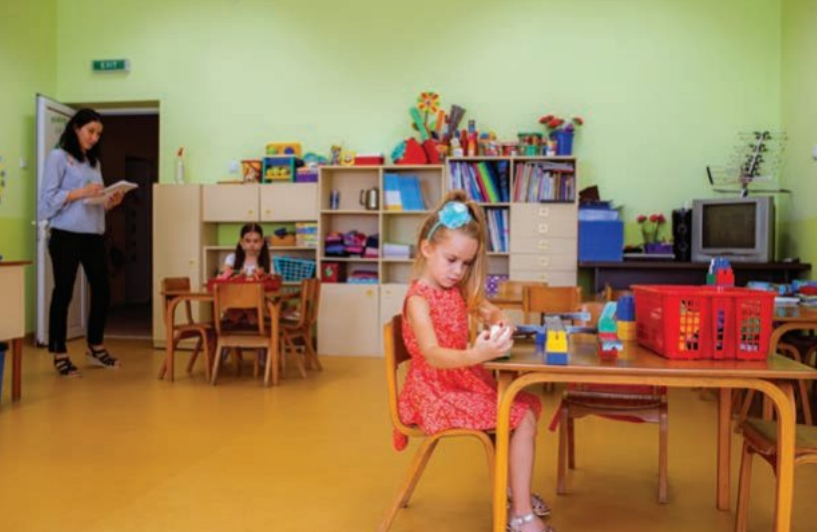
Direct observations involve watching and recording participant behaviour in their natural environment, typically without interference from researchers. This method can collect both qualitative and quantitative data.
Researchers employ three main sampling techniques to obtain representative data:
Time sampling records behaviour only during specific time intervals. For example, a researcher might observe student behaviour for one minute out of every ten minutes during a class period, rather than continuously throughout the lesson.
Example
Worked Example: Time Sampling
A researcher studying classroom engagement uses time sampling by observing students for 30 seconds at the start of every 5-minute interval during a 40-minute lesson. This creates 8 observation windows without requiring continuous monitoring throughout the entire class period, making data collection more manageable whilst still capturing representative behaviour patterns.
Event sampling captures behaviour only when particular events occur. For instance, recording how many students respond when a teacher poses a question in class focuses on that specific trigger event.
Example
Worked Example: Event Sampling
A researcher investigating classroom participation uses event sampling by recording student responses only when the teacher asks a question. Rather than observing continuously, the researcher focuses exclusively on this trigger event, documenting which students raise their hands, call out answers, or remain silent each time a question is posed.
Situational sampling records the same behaviour across multiple contexts. This might involve observing student-teacher interactions in the classroom, playground and at the bus bay after school to understand how setting influences behaviour.
Note
Sampling Strategy Selection
The choice between time, event, or situational sampling depends on your research question:
- Use time sampling when behaviours occur frequently and you need regular snapshots
- Use event sampling when you're interested in responses to specific triggers
- Use situational sampling when you want to understand how context affects behaviour
Participant observation
In participant observation, researchers become active members of the group under study. This approach takes two forms:
Disguised participant observation involves the researcher going 'undercover' and posing as a genuine group member. The participants remain unaware of the researcher's true identity and purpose. A well-known example is psychiatrist David Rosenhan's experiment, where he simulated psychiatric symptoms such as hallucinations to gain admission to a psychiatric hospital. Once admitted, Rosenhan observed staff and patient behaviours whilst disguised as a patient himself.
Important
Ethical Considerations in Disguised Observation
While disguised participant observation can reveal authentic behaviour unaffected by researcher presence, it raises serious ethical concerns about informed consent and deception. Modern research ethics committees carefully scrutinize proposals involving disguised observation, requiring researchers to justify why the benefits outweigh the ethical costs.
Overt participant observation occurs when the researcher's presence and purpose are not concealed. Participants know they are being studied and understand the researcher's identity.
Participant observation enables researchers to guide study direction and prompt in-depth discussions that outsiders might find impossible to access. The method provides unique insights into group dynamics and behaviours.
Interviews, questionnaires, focus groups and yarning circles
These methods represent self-report approaches where participants respond to questions about their thoughts, feelings and behaviours.

Interviews consist of structured or unstructured questions answered verbally by participants. They can be conducted face-to-face, by telephone or via video conference, with responses recorded by the interviewer. This format allows participants to emphasise certain points and elaborate using their own words to describe experiences. For example, an interview about mobile phone preferences might ask: "Explain why Android is your preferred mobile phone operating system."
Questionnaires present structured, written questions in open or closed-ended formats. Participants complete them face-to-face, on paper, online or by telephone. Questions might include: "Select your preferred mobile phone operating system: Android or iOS", "How many years have you owned Android devices?" or "What is the model of your current mobile phone?"
Note
Interviews vs. Questionnaires
While both gather self-report data, interviews provide rich qualitative detail through verbal elaboration, whereas questionnaires efficiently collect standardized responses from larger samples. Choose interviews for depth and questionnaires for breadth.
Focus groups involve a trained moderator conducting collective interviews with multiple participants simultaneously. This dynamic interaction generates rich understanding of perspectives, opinions, ideas and beliefs. For instance, a school might conduct a focus group with eight students from different year levels to explore their views on using tablets versus laptops for schoolwork.
Yarning circles provide a culturally informed alternative to focus groups for Indigenous participants. This method explores topics through reciprocal dialogue, storytelling and informal conversations, offering insight into Indigenous participants' thoughts and feelings. Indigenous peoples have used yarning circles for centuries to learn from the collective group, build respectful relationships and transmit cultural knowledge. Yarning creates a non-judgemental space where inclusion, respect and collaboration are paramount. Verbal contributions can range from single words to longer explanations. For example, yarning circles could evaluate the effectiveness of a youth sporting programme aimed at increasing attendance at a high school in an Indigenous community.
Important
Cultural Sensitivity in Research
Yarning circles represent an essential adaptation of Western research methods to Indigenous cultural practices. Unlike traditional focus groups that may prioritize efficiency and structured questioning, yarning circles honor Indigenous ways of knowing through storytelling, relationship-building, and collective wisdom. Using culturally appropriate methods demonstrates respect and generates more authentic, meaningful data from Indigenous participants.
Through these diverse fieldwork methods, researchers gather extensive data on personal experiences, behaviours, attitudes, beliefs and opinions that may be difficult or impossible to observe directly.
Strengths and limitations of fieldwork
Understanding the strengths and limitations of fieldwork helps researchers select appropriate methods and interpret findings accurately.
| Strengths | Limitations |
|---|---|
| Information on sensitive topics can be obtained using fieldwork | Observed behaviour is subjective and open to interpretation and bias by the researcher |
| Large amounts of quantitative data can be gathered in questionnaires in less time than controlled experiments | Fieldwork is prone to social desirability bias, where participants respond as they think they should, particularly if the researcher is present |
| Participant anonymity in questionnaires can reduce dishonest or biased answers | In questionnaires, interviews, focus groups and yarning circles, responses may be inaccurate due to dishonesty, memory issues, communication difficulties, language abilities or misunderstanding questions |
| Rich qualitative responses can be obtained in participants' own words | Qualitative data can be difficult to summarise |
| Natural settings are more likely to show behaviour that reflects real life | Interviews, focus groups and yarning circles can be time-consuming |
| If participants are unaware of being studied, their behaviour remains unchanged by expectations | Minimal control over extraneous variables means results may not be replicable |
| Fieldwork can be used when controlled experimental methods would be impossible or unethical | Ethical concerns arise from the lack of informed consent in some cases |
| Fieldwork can help gain insight into existing data or unexpected behaviours |
Note
Balancing Strengths and Limitations
The key to successful fieldwork lies in recognizing which limitations affect your specific study and taking steps to minimize their impact. For example, if social desirability bias is a concern, consider using anonymous questionnaires rather than face-to-face interviews.
Literature review
A literature review collates and analyses secondary data findings and viewpoints from multiple published sources, including scholarly books and journal articles. Literature reviews synthesise theories and results to answer research questions, provide background information explaining observed events, or establish starting points for primary data collection.

Unlike primary research, literature reviews do not present new data but offer comprehensive, critical reviews providing an overview of current understanding in a particular area. Multiple sources are compared and critiqued, with relevant information summarised by:
- Discussing how knowledge has evolved over time
- Acknowledging what research has already been completed
- Highlighting key researchers and evaluating their methodologies
- Identifying areas of controversy
- Describing currently accepted knowledge
- Identifying emerging knowledge trends or gaps in current research to justify proposed investigations
Important
Primary vs. Secondary Data
Secondary data refers to information obtained from research conducted by someone else for a different purpose, whilst primary data is collected through first-hand research for an intended purpose.
This distinction is crucial: literature reviews use only secondary data, while fieldwork and experimental studies typically generate primary data. Understanding this difference helps researchers recognize the complementary roles these investigation types play in building scientific knowledge.
Conducting a literature review
Literature reviews follow three main steps:
- Find key literature relevant to the investigation topic
- Review and analyse the literature
- Synthesise and organise the literature into a logical order before writing the review
Example
Worked Example: Literature Review Process
A researcher investigating the effects of sleep deprivation on student academic performance would:
Step 1 - Find: Search academic databases using keywords like "sleep deprivation", "academic performance", "students", and "cognitive function" to identify relevant studies from the past 10-15 years.
Step 2 - Review: Read each study carefully, noting methodologies used, sample sizes, key findings, and any limitations. Identify patterns, contradictions, and gaps in the research.
Step 3 - Synthesise: Organize findings thematically (e.g., short-term vs. long-term effects, different age groups, various cognitive domains affected) and write a coherent narrative that shows how knowledge has developed and what questions remain unanswered.
Literature reviews can be presented differently depending on their purpose. They may form part of a larger work's introduction section or stand as separate full-length journal articles. Stand-alone literature reviews typically contain three main sections: introduction, body and conclusion. The body usually includes subheadings to organise various review components.
Strengths and limitations of literature reviews
| Strengths | Limitations |
|---|---|
| Literature reviews determine what is already known and whether a solid knowledge foundation exists based on multiple sources | Key studies may be missed if search criteria or review focus is too narrow, resulting in reviews lacking depth |
| They introduce existing understanding and context for primary research | Selection bias in chosen studies may produce unrepresentative reviews or unbalanced conclusions |
| They identify expert researchers in the field | Literature reviews may not comment on original research validity or study selection criteria, preventing readers from determining individual study quality or overall review quality |
| They identify gaps in current understanding and areas for future research | Literature reviews may describe multiple studies but lack deeper analysis of individual studies |
| They identify methodologies that have been successful or unsuccessful at generating findings | Only secondary data is acquired |
Note
The Foundation for Research
A well-conducted literature review serves as the foundation for all subsequent research. It prevents researchers from "reinventing the wheel" by showing what's already known, identifies the most promising methodologies based on previous successes and failures, and reveals the gaps where new research can make meaningful contributions.
Modelling and simulation
Modelling involves constructing and manipulating physical or conceptual models of systems. Once created, simulations use these models to replicate and study the behaviour of real or theoretical systems.
Models replicate small or large physical objects or represent systems involving concepts that help people understand or simulate those systems. Simulations aim to imitate real experiences. These approaches prove useful for studying psychological concepts that cannot logistically or ethically be tested in controlled experiments due to complexity, size, speed, accessibility or danger.

Applications of modelling and simulation
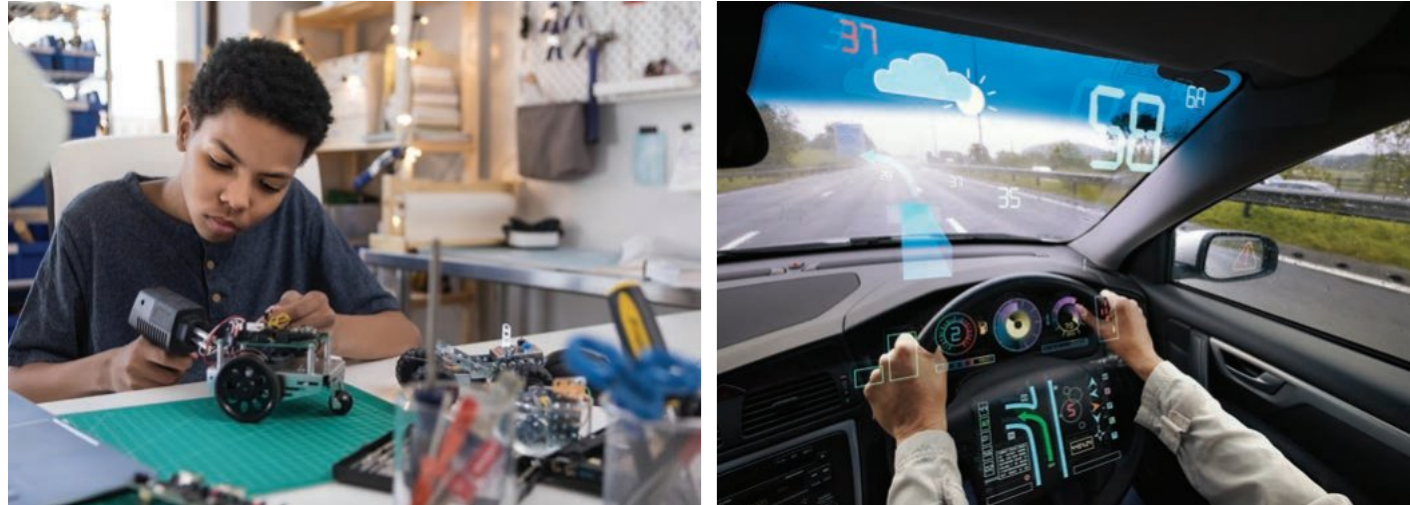
Understanding how new aeroplane pilots respond in emergency situations is essential, yet placing novice pilots directly into real dangerous situations would be unethical. By creating models of emergency in-flight situations, pilots can practise responses and skills safely. Additionally, investigators can compare multiple pilots' responses using identical controlled simulation testing conditions. Mice and rats often serve as models for human conditions before human trials become possible, particularly in neuroscience and addiction studies.
Example
Worked Example: Flight Simulation Training
When training pilots to handle engine failure during takeoff, instructors use flight simulators that model:
- Realistic cockpit controls and displays
- Authentic aircraft responses to control inputs
- Emergency warning systems and alerts
- Environmental factors (weather, visibility, terrain)
The simulation allows pilots to practice the critical decision-making and procedural steps repeatedly until they achieve mastery, without risking lives or expensive aircraft. Instructors can introduce various emergency scenarios systematically, ensuring pilots experience a wide range of situations they might encounter in decades of flying—all within a few hours of training.
Simulations take various formats. Virtual reality technology can simulate therapeutic procedures, whilst simulated people in simulated environments can model COVID-19 transmission rates, with predicted outcomes simulated by various transmission prevention strategies.
Modelling and simulation can precisely replicate events. Researchers might construct a computational model of a complex neurological case requiring brain surgery, then use simulation technology to practise the surgical procedure safely with actual equipment. This reveals potential problems in surgical procedures, equipment and techniques before real-life application.
Note
Modelling Complex Systems
The true power of modelling and simulation lies in handling complexity. When systems involve multiple interacting variables—like brain function, disease transmission, or pilot decision-making—it becomes impossible to study all combinations through traditional experiments. Models allow researchers to explore thousands of scenarios efficiently, identifying patterns and principles that would take decades to discover through direct observation alone.
These methods are valuable in psychology due to the complex interaction of factors influencing behaviour that controlled experiments may not consider. The Blue Brain Project represents an ongoing study aiming to create the first complete computer simulation of a rodent brain. Researchers have modelled a group of neurons comprising a small functional brain component called a neocortical column, thought to be responsible for conscious thought. The project aims to expand this model to a complete mouse brain for simulating the mammalian brain and identifying fundamental principles of brain structure and function.
Example
Worked Example: The Blue Brain Project
The Blue Brain Project demonstrates modelling and simulation at the cutting edge of neuroscience:
Model Creation: Scientists use detailed anatomical and physiological data from real neurons to build computational models of individual brain cells, including their structure, chemical properties, and electrical behaviour.
Scaling Up: These individual neuron models are connected according to known brain architecture, creating models of neural circuits and eventually entire brain regions.
Simulation: The complete model runs on supercomputers, simulating how millions of neurons interact in real-time, allowing researchers to observe patterns of activity and test hypotheses about brain function.
Application: This simulation helps scientists understand how brain structure relates to function, predict responses to drugs or disease, and potentially develop treatments for neurological conditions—all without conducting invasive studies on living brains.
Models advance our understanding of psychology and our ability to predict probable occurrences. Researchers have created mathematical models of consciousness that, through simulations, can anticipate and explain cognitive processes such as decision-making and behavioural reactions. These models have been used to experiment with different cases of psychological illnesses.
Strengths and limitations of modelling and simulation
| Strengths | Limitations |
|---|---|
| Modelling can allow unobservable events to be visualised | Large amounts of valid source data may be needed to create a model |
| Once established, computer simulations can run quickly with multiple trials in short periods, including events that would usually be long-running | Computer simulations require precise, consistent statistical analysis to function accurately as valid, repeatable and replicable measures |
| Modelling and simulation can safely study new devices, therapies or treatments that would be too dangerous, unethical or logistically impossible to conduct in controlled experiments | Psychological theories may be well understood but difficult to apply as working models |
| Simulations allow us to predict future events and 'what if' situations | Simulations are not the real thing and people may respond differently in reality, so simulations involve assumptions about behaviour that lower external validity due to artificiality |
| Modelling and simulations can test products before creation | Complex models and simulations may be expensive |
Important
The Reality Gap
The most significant limitation of modelling and simulation is what researchers call the "reality gap"—the difference between how a model behaves and how the real system behaves. No matter how sophisticated, a simulation makes assumptions and simplifications. Always validate simulation findings against real-world data when possible, and remain cautious about applying simulation results directly to practice without additional verification.
Product, process and system development
Product, process and system development involves designing products, processes or systems to meet human needs. These may incorporate technological applications alongside scientific knowledge and procedures.
Constant advances in technology and scientific understanding enable researchers to review the effectiveness of current products, processes and systems to find solutions that best help people function effectively. This principle applies across all life aspects.
Products
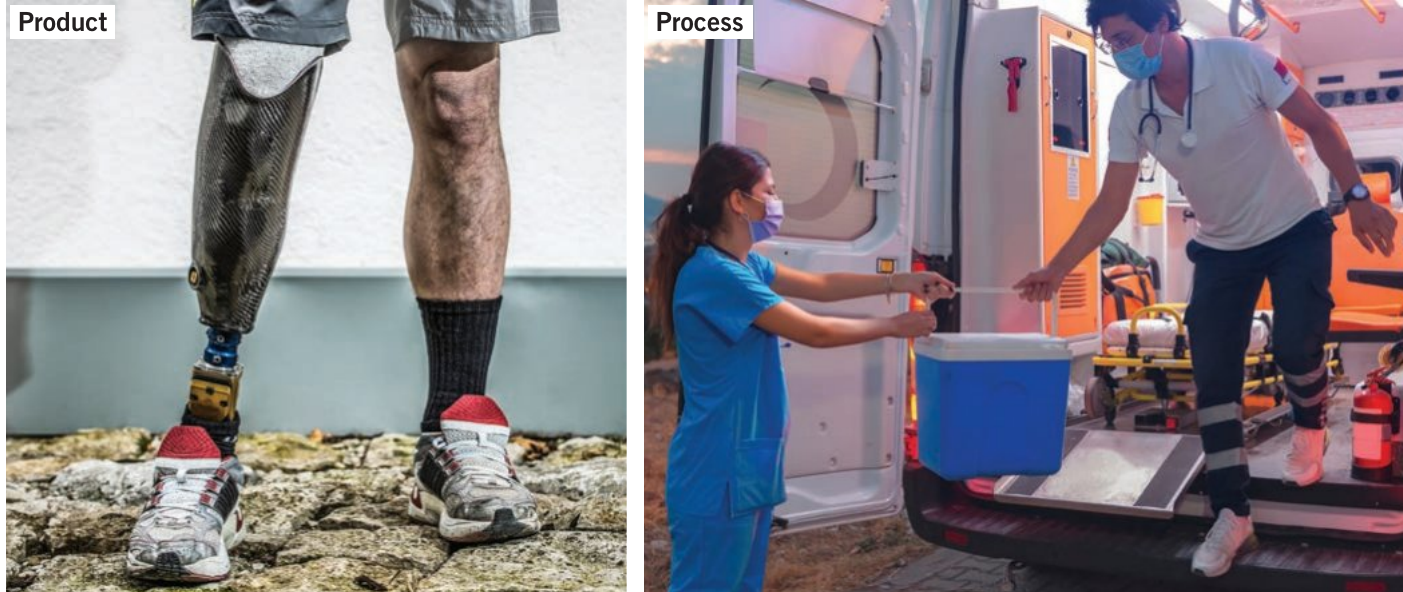
Examples of developing new products and improving existing ones include:
- Continued development of reusable bags, coffee cups and drink bottles has enabled more Australians to reduce plastic waste and move towards healthier, safer environments
- Developments in wearable technology mean we can track sleep and movement continuously
- AI-powered chatbots can provide virtual mental wellbeing support
- Recent electroencephalography (EEG) technology developments producing portable, relatively cheap EEG devices mean wider populations can now monitor real-time brain activity. EEG headsets monitor drowsiness in long-haul drivers or mining machine workers to reduce fatigue-related accidents, or track elite athletes' brain activity
Example
Worked Example: EEG Headset Development
The development of portable EEG headsets demonstrates product development meeting human needs:
Problem Identified: Traditional EEG equipment was expensive (tens of thousands of dollars), bulky, and required trained technicians to operate, limiting brain activity monitoring to specialized laboratories.
Product Development: Engineers and neuroscientists collaborated to design:
- Miniaturized sensors that maintain accuracy
- Wireless connectivity for untethered use
- User-friendly interfaces requiring minimal training
- Affordable manufacturing processes (devices now cost hundreds rather than thousands of dollars)
Applications: The resulting product now monitors fatigue in high-risk occupations like truck driving and mining, preventing accidents by alerting workers when brain activity indicates dangerous drowsiness levels.
Processes
Process design meeting people's needs can streamline event series into logical orders, improving repeatability, efficiency and predictability across many life aspects. Reliable processes are essential for:
- Making laws safely and ethically
- Enabling safe and ethical organ donations
- Developing and trialling new drugs for safe public use
Developing new processes or refining current ones can fill gaps in meeting people's needs or solve existing problems.
Note
The Importance of Process
Well-designed processes ensure consistency, safety, and quality. In healthcare, standardized processes for diagnosing conditions or administering treatments reduce errors and improve patient outcomes. In research, established processes for ethical review protect participants and maintain scientific integrity. Every reliable system depends on clearly defined processes that people can follow consistently.
Systems
Systems allow for structuring and organising multiple parts working together to create efficient behavioural frameworks. Having 'the right systems in place' improves productivity and enhances wellbeing. Examples include:
- The Diagnostic and Statistical Manual of Mental Disorders provides health professionals with reliable structures for diagnosing mental illness in patients
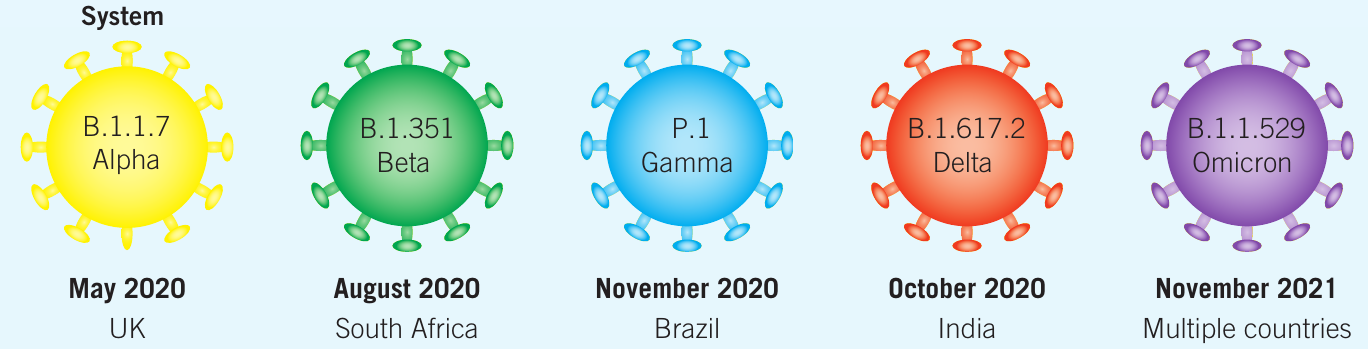
- In 2021, the World Health Organization created a system for naming emerging coronavirus strains according to the Greek alphabet instead of their discovery locations. This system has reduced geographical stigma and discrimination observed during the pandemic's first year
Example
Worked Example: WHO Variant Naming System
The WHO's Greek alphabet naming system for coronavirus variants demonstrates system development addressing a social problem:
Problem: Early in the pandemic, variants were named after their discovery locations (e.g., "South African variant"), leading to stigma and discrimination against people from those regions and discouraging countries from reporting new variants.
System Design: WHO developed a systematic approach using Greek letters (Alpha, Beta, Gamma, Delta, Omicron, etc.) to name variants of concern.
Benefits: This system provides:
- Clear, memorable names that are easy to communicate
- No geographical associations that could cause stigma
- Sequential ordering that helps track variant emergence
- International standardization across all countries and organizations
Impact: Countries became more willing to report new variants, improving global surveillance and response to the pandemic.
Summary
Key Points to Remember:
-
Fieldwork collects information in real-world settings through observation and interaction, using methods such as direct observation, participant observation, interviews, questionnaires, focus groups and yarning circles. It prioritizes naturalistic data over strict experimental control.
-
Literature reviews analyse published research to establish current knowledge, identify gaps and provide context for new investigations using only secondary data. They form the foundation for understanding what is already known before conducting primary research.
-
Modelling and simulation create representations of systems to study behaviour that cannot be ethically or practically tested in real life, offering safe ways to predict outcomes and test new approaches. They excel at handling complexity but require careful validation against reality.
-
Product, process and system development designs solutions to meet human needs using scientific knowledge and technology, improving effectiveness and addressing gaps in current provision. These practical applications translate research into real-world benefits.
-
Each investigation methodology has distinct strengths and limitations that make it suitable for different research contexts and purposes. Selecting the appropriate methodology requires understanding both your research question and the tradeoffs each approach entails.