Trends of Period 3 Elements: Atomic Radius (AQA A-Level Chemistry): Revision Notes
📚Revision Notes
2.1.2 Trends of Period 3 Elements: Atomic Radius
Explanation of Atomic Radius Trend
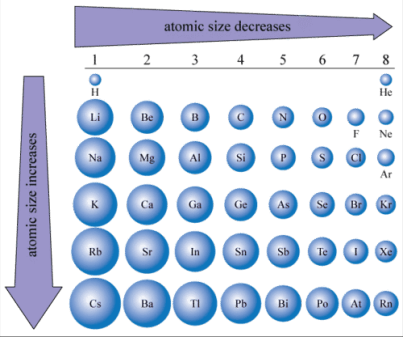
The atomic radius is the distance from the nucleus of an atom to the outermost electron shell. Across Period 3 of the Periodic Table (from sodium, , to argon, ), the atomic radius decreases steadily.
Reasons for the Trend
Increase in Nuclear Charge
As you move across the period from left to right, the number of protons in the nucleus increases, leading to a higher nuclear charge. This greater positive charge in the nucleus exerts a stronger electrostatic attraction on the electrons, pulling them closer to the nucleus.
The Same Number of Electron Shells
Despite the increase in nuclear charge, the electrons across Period 3 elements are all added to the same energy level (third shell). There is no increase in shielding because there are no additional electron shells between the nucleus and the outermost electrons, so the stronger nuclear charge pulls the electrons closer to the nucleus.
Greater Attraction to Nucleus
As a result of the increasing nuclear charge and consistent shielding, the outer electrons are pulled closer to the nucleus, reducing the atomic radius.
Note
Summary
- Across Period 3, from to , the atomic radius decreases due to the increasing nuclear charge and the same number of electron shells.