Shapes of Simple Molecules & Ions (AQA A-Level Chemistry): Revision Notes
📚Revision Notes
1.5.1 Shapes of Simple Molecules & Ions
Key Principles
Electron Pairs as Charge Clouds
- Bonding pairs and lone pairs (non-bonding) are charge clouds that repel each other.
- Electrons in the outer shell of atoms arrange themselves as far apart as possible to minimise repulsion.
Different Types of Repulsion
- Lone pair-lone pair repulsion is stronger than lone pair-bond pair repulsion.
- Lone pair-bond pair repulsion is stronger than bond pair-bond pair repulsion.
- These differences in repulsion affect bond angles and molecular shapes.
Effect on Bond Angles
- The bond angle decreases as the number of lone pairs increases due to their stronger repulsive forces.
The Valence Shell Electron Pair Repulsion (VSEPR) Theory
- This theory is used to predict the shape of molecules based on the idea that electron pairs around a central atom repel each other.
- Molecules take the shape that allows the electron pairs to be as far apart as possible, minimising repulsion.
Common Molecular Shapes and Bond Angles
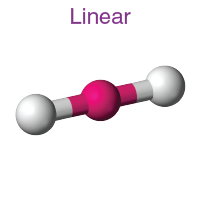
1. Linear Shape
- Example:
- Electron Pairs: 2 bonding pairs, 0 lone pairs.
- Bond Angle: 180°.
- Explanation: The two bonding pairs repel each other, positioning themselves on opposite sides.
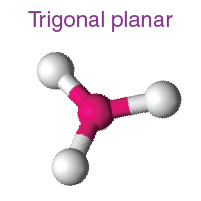
2. Trigonal Planar
- Example:
- Electron Pairs: 3 bonding pairs, 0 lone pairs.
- Bond Angle: 120°.
- Explanation: The bonding pairs are equally spaced around the central atom.
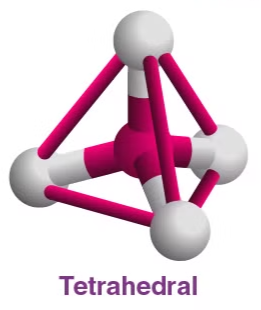
3. Tetrahedral
- Example:
- Electron Pairs: 4 bonding pairs, 0 lone pairs.
- Bond Angle: 109.5°.
- Explanation: The bonding pairs are arranged in a tetrahedral shape to minimise repulsion.
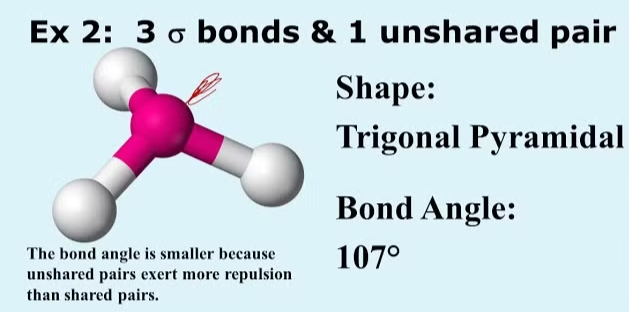
4. Trigonal Pyramidal
- Example:
- Electron Pairs: 3 bonding pairs, 1 lone pair.
- Bond Angle: 107°.
- Explanation: The lone pair repels more strongly, pushing the bonding pairs closer together.
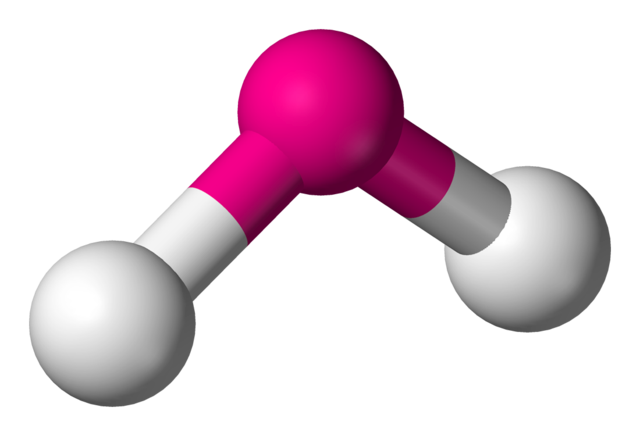
5. Bent or V-Shaped
- Example:
- Electron Pairs: 2 bonding pairs, 2 lone pairs.
- Bond Angle: 104.5°.
- Explanation: Two lone pairs exert stronger repulsion, reducing the bond angle.
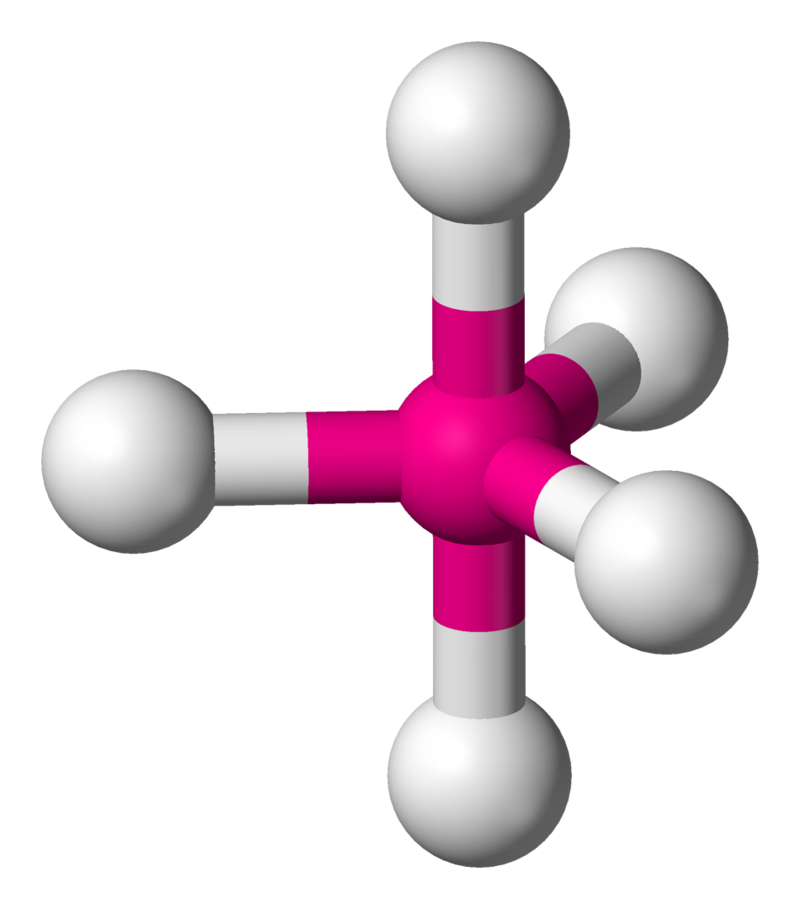
6. Trigonal Bipyramidal
- Example:
- Electron Pairs: 5 bonding pairs, 0 lone pairs.
- Bond Angles: 120° (equatorial) and 90° (axial).
- Explanation: Bonding pairs arrange in two planes to minimise repulsion.
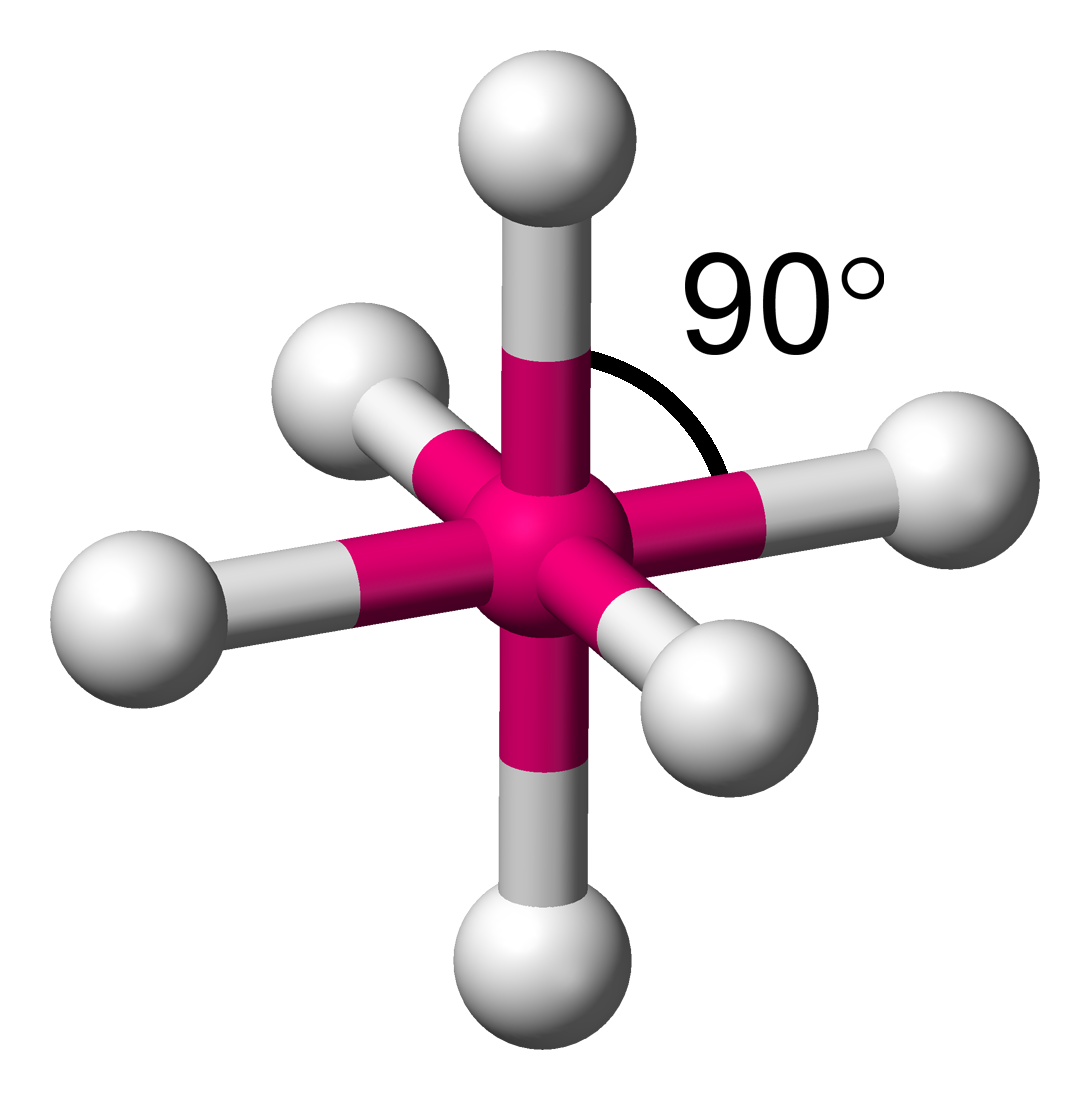
7. Octahedral
- Example:
- Electron Pairs: 6 bonding pairs, 0 lone pairs.
- Bond Angle: 90°.
- Explanation: The six bonding pairs arrange themselves symmetrically around the central atom.
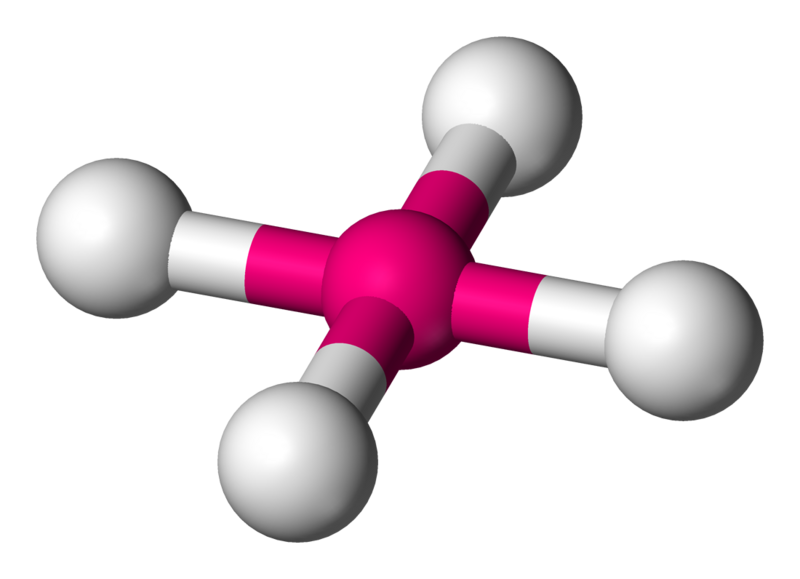
8. Square Planar
- Example:
- Electron Pairs: 4 bonding pairs, 2 lone pairs.
- Bond Angle: 90°.
- Explanation: The lone pairs are placed opposite each other, leading to a flat, square shape.
Lone Pair Influence on Molecular Shapes
- Lone pairs take up more space than bonding pairs because they are only attracted to one nucleus. This leads to greater repulsion and smaller bond angles.
- Example: In water (H₂O), the bond angle is 104.5° due to the two lone pairs, which repel the bonding pairs more strongly.
Summary of Shapes Based on Electron Pairs
| Shape | Bonding Pairs | Lone Pairs | Bond Angle | Example |
|---|---|---|---|---|
| Linear | 2 | 0 | 180° | |
| Trigonal Planar | 3 | 0 | 120° | |
| Tetrahedral | 4 | 0 | 109.5° | |
| Trigonal Pyramidal | 3 | 1 | 107° | |
| Bent (V-Shaped) | 2 | 2 | 104.5° | |
| Trigonal Bipyramidal | 5 | 0 | 90° & 120° | |
| Octahedral | 6 | 0 | 90° | |
| Square Planar | 4 | 2 | 90° |
Note
Exam Tip:
- Always count the total number of electron pairs around the central atom (both bonding and lone pairs).
- Use VSEPR theory to deduce the shape based on electron pair repulsion.