Perception of place (AQA A-Level Geography): Revision Notes
📚Revision Notes
Perception of place
Introduction to perception of place
Understanding how places are perceived is fundamental to geography. Our perception shapes how we interact with, value, and make decisions about different locations.
Important
Perception of place is the meaning attributed to a place that develops through what we have heard, seen or read about it.
The way we perceive places rarely comes from just one source. Instead, our mental images and feelings about locations are built up through multiple representations and experiences. For instance, Dartmoor National Park in Devon is strongly associated with ideas of nature and wilderness, partly because of how it has been portrayed in literature such as Arthur Conan Doyle's The Hound of the Baskervilles (1902). These literary and artistic representations can be so powerful that they overshadow the reality of human activities in the area, such as mining, farming and military training.
Why perception matters
Research demonstrates that developing a strong sense of place brings several important benefits:
- Knowledge and appreciation: Connecting with your surrounding environment helps you understand and value its resources
- Identity development: A sense of place contributes to how you develop your personal identity
- Stewardship and empathy: A strong attachment to place can inspire people to care for it and understand others' connections to their places
Note
There is an important question to consider: is our own personal experience and enjoyment of place essential to understanding it? Geography fieldwork plays a key role here. Whilst practical skills are clearly important in fieldwork, it is our direct engagement and interaction with places outside the classroom that ultimately shapes our understanding of them.
Sources that shape perception
Our perceptions of places are influenced by a wide range of sources and representations. These include:
- Advertisements and tourist agency materials
- Local exhibitions featuring art, film and photography
- Poetry and literary works
- Songs and music
- Media coverage (newspapers, television, social media)
- Personal experiences and word of mouth
Different sources can create contrasting or even conflicting images of the same place. This is why it is valuable to examine multiple representations when studying any location.
Influence at different scales
International places
Perceptions of international places tend to be shaped more by media coverage than by personal, direct experience. Consider your current views of countries like Afghanistan or Syria. How have these perceptions developed? Media representations play a dominant role, but other factors also matter:
- Historical relationships and political connections between countries
- Trading links and economic ties
- Government efforts to attract trade and investment
Note
Governments are often keen to promote positive perceptions of their countries internationally. Organisations such as the British Council work to promote the UK through educational and cultural links. The government and monarchy also play important roles in fostering international relations.
Local places
At the local scale, perceptions are increasingly important. Organisations now actively work to promote places, build place brands and improve how locations are perceived. Investment in a place is crucial for its survival, and people are more likely to want to live or work in areas with good reputations and positive images.
Agents of change
Different agents of change work to manage and manipulate how places are perceived. These include:
- National and local government
- Corporate bodies
- Tourist organisations
- Community groups
Each of these stakeholders has different motivations and may have competing interests when it comes to shaping place perception.
Government strategies
At both national and local levels, governments have adopted strategies to manage and shape perception of places to attract people and investment. These strategies include place marketing, rebranding and re-imaging.
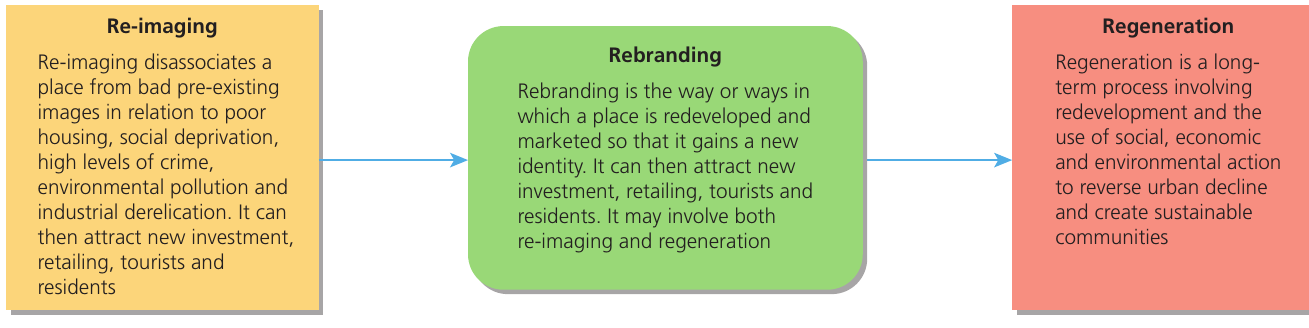
The three-stage process
Important
Re-imaging disassociates a place from bad pre-existing images related to poor housing, social deprivation, high levels of crime, environmental pollution and industrial dereliction. It can then attract new investment, retailing, tourists and residents.
Important
Rebranding is the way or ways in which a place is represented and marketed so that it gains a new identity. It can then attract new investment, retailing, tourists and residents. It may involve both re-imaging and regeneration.
Important
Regeneration is a long-term process involving redevelopment and the use of social, economic and environmental action to reverse urban decline and create sustainable communities.
These three processes are interconnected. Re-imaging changes negative perceptions, rebranding creates a new identity, and regeneration brings physical and social improvements. Together, they work to transform how a place is perceived and experienced.
Summary
Understanding the Three-Stage Process:
- Re-imaging: Removes negative associations and perceptions
- Rebranding: Creates a fresh identity and market position
- Regeneration: Delivers actual physical and social transformation
- All three work together to comprehensively change how a place is perceived and experienced
Place marketing
Marketing or public relations (PR) companies are often employed by national and local governments to improve or create positive perceptions of places. A good example is Weston-Super-Mare in Somerset, where strategies have included:
- Advertising campaigns, including social media marketing through Facebook
- An official website and newsletter for Weston-Super-Mare
- Creation of a distinctive logo
- Development of the first ever Love Weston Winter Wonderland, a festive attraction featuring the annual Christmas lights switch-on, aimed at increasing perceptions of the town as a destination for Christmas shopping
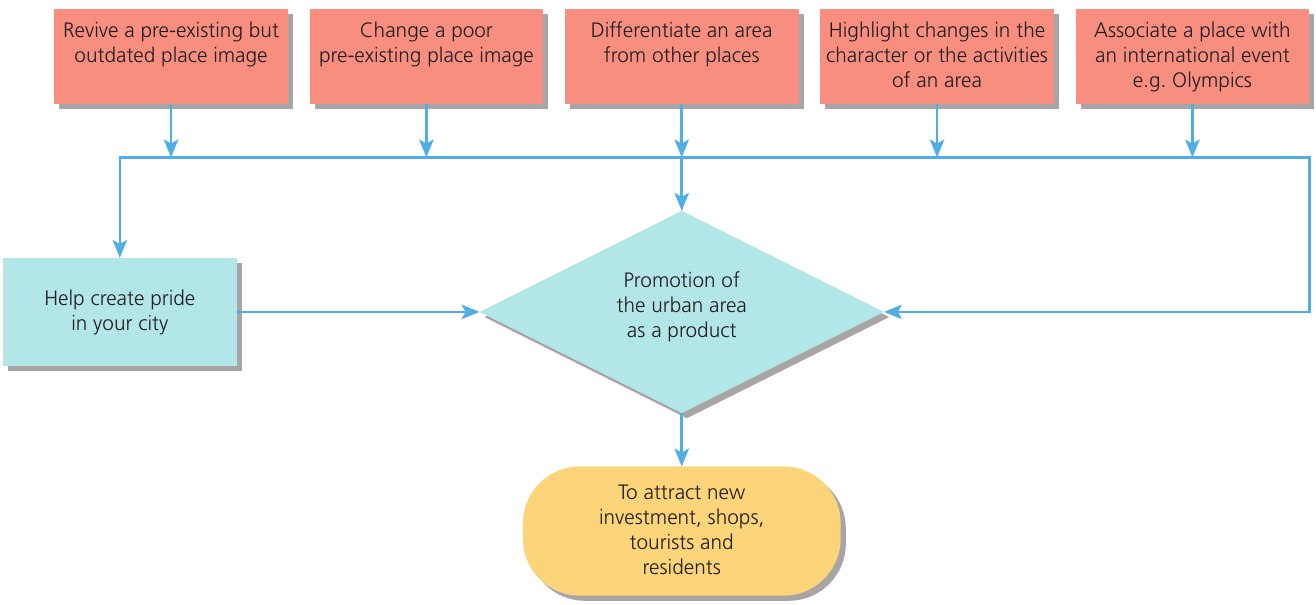
The flowchart above illustrates how various rebranding strategies work together to promote urban areas as products, with the ultimate goal of attracting new investment, shops, tourists and residents.
Case study: Belfast's two representations
Belfast, the capital city of Northern Ireland, demonstrates how a single place can have multiple representations that reflect different aspects of its identity and history.
Representation one: Economic regeneration
Belfast is home to 340,000 inhabitants and serves as the region's economic powerhouse. It has an industrial heritage - the Titanic was built there, and the city was once the world's largest producer of linen. During the 30-year period of conflict known as 'the Troubles', Belfast suffered greatly. However, since the Good Friday Peace Agreement was signed in 1998, the city has experienced sustained calm and substantial economic and commercial growth.
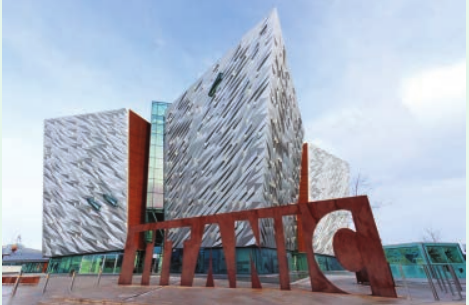
The city centre has undergone large-scale redevelopment, with different areas rebranded as 'quarters' that emphasise their unique history and culture. The Titanic Quarter is one of Europe's largest brownfield redevelopment sites and includes the Titanic Studios and more than 100 companies, including Citi, Microsoft and HBO. This represents the creative and cultural Belfast promoted by the City Council and Tourist Board, aiming to build a cosmopolitan city that is open and welcoming.
Note
Tourism has become a major part of Belfast's economy. In 2018, visitors spent 5.2 million nights in Belfast and contributed $400 million to the local economy. The evidence suggests that Belfast has successfully managed to change its international image, with visitors from all over the world attracted by the city's culture and vibrancy rather than being deterred by past events.
Representation two: Political and religious division
The other representation connects to Belfast's complex political history, the high degree of religious segregation, and the image of bombs, bullets and balaclavas that dominated newspaper front pages in the late twentieth century. Peace walls and political parades are an important part of the city's history, but some argue they reflect a city still struggling to move beyond the disputes and arguments that have shaped its past.
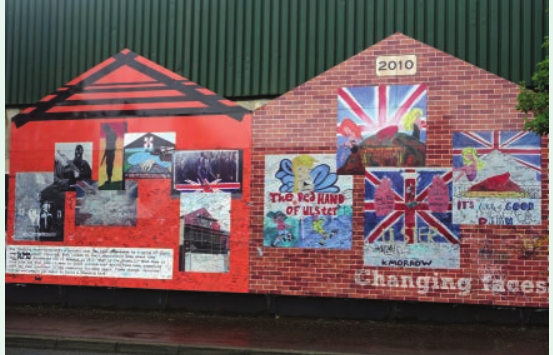
These contrasting representations show how a single place can be perceived in fundamentally different ways depending on which aspects are emphasised.
Rebranding strategies
Understanding rebranding
Rebranding is used to discard negative perceptions of a place. Its main aim is to make a location a desirable place to live (as well as to invest in and develop industrial activity) so that people will want to visit for social and recreational purposes, and to shop and spend money.
The 'People Make Glasgow' campaign
Example
Case Example: Glasgow's Crowdsourced Rebranding
In 2013, the slogan 'People Make Glasgow' was introduced as the new brand name for Scotland's largest city. It was chosen following a crowdsourcing social media campaign involving more than 1,500 people from 42 countries. The campaign emphasises that people are the heart and soul of this particular place.
Challenges and tensions
Many geographers argue that place rebranding must start from the inside, involving local residents with 'insider' experiences. Geographers Edward Relph and Yi-Fu Tuan have emphasised the importance of being inside a place to truly understand it. Likewise, it has been argued that without a thorough understanding of place, one would find it difficult to regenerate and rebrand effectively.
Important
Rebranding is not without problems. Different stakeholders may have conflicting interests:
- Pre-existing residents: Often want to protect and project their local distinctiveness
- Local businesses: May have concerns about changes
- Potential investors: Seek available technology and international links
- Local government: May establish place brands based on government incentives
- Development agencies: Focus on creating desirable locations for new residents
In some cases, city regeneration schemes have actually driven out the local people they originally intended to help, as rising property prices and rents favour more affluent people.
Case study: Rebranding Amsterdam
In the late twentieth century, Amsterdam's reputation as a major international cultural centre faced several threats:
- Greater competition from other cities both within and outside the Netherlands
- Social and economic decline in some areas
- The city's reputation for being liberal towards soft drugs and prostitution, seen as inappropriate for attracting new investors and enterprises
- A failed bid to host the Olympic Games
The 'I amsterdam' campaign
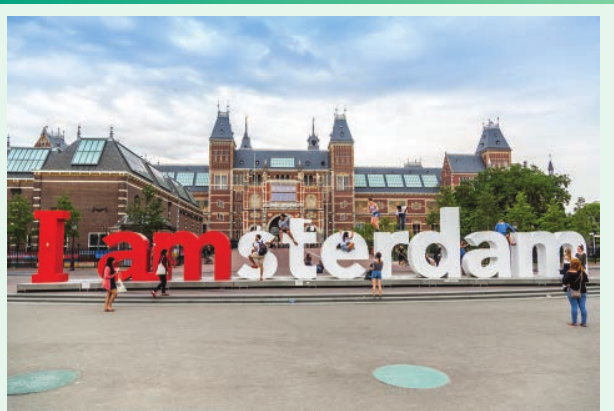
A number of rebranding strategies were adopted, but the most successful was the 'I amsterdam' slogan. This was seen to be clear, short, powerful and memorable. The large three-dimensional 'I amsterdam' letters were positioned in front of the city's famous Rijksmuseum in 2005.
Example
Case Example: Amsterdam's Social Media Success
The sculpture quickly became the city's most photographed item, being photographed over 8,000 times a day on sunny days. The use of smartphones and social media saw the image spread all over the world, and Amsterdam became one of the most successful destination brands on social media.
It has been argued that the re-imaging was too successful, with many people beginning to talk about 'overtourism' in the city. Before the COVID-19 pandemic in 2020, tourist numbers were predicted to rise to over 20 million per year.
Note
Other European cities such as Barcelona have undergone successful rebranding programmes in recent decades. When studying changing places, it is valuable to investigate the different strategies used to 'rebrand' locations and evaluate how successful they have been.
Re-imaging strategies
Linked to rebranding, re-imaging seeks to discard negative perceptions of a place and generate a new, positive set of ideas, feelings and attitudes about that place. This may include reviving a pre-existing but outdated place image. More commonly, it seeks to change a poor pre-existing image of a place.
Liverpool's transformation
Example
Case Example: Liverpool's Cultural Re-imaging
A well-documented example of re-imaging is Liverpool in the 1980s and 1990s. Deindustrialisation had caused an economic downturn in the city, and riots in 1981 dominated newspaper headlines. Large-scale regeneration began, and the Tate Liverpool art gallery was one of several projects aimed at re-imaging the city's industrial heritage through culture.
The Merseyside Development Corporation used the term 'There's life in the old docks yet.' The exterior of the Grade I-listed warehouses of the Albert Docks remained untouched, but the derelict interiors were transformed into modern art galleries. The Tate's presence in the city was seen as a key factor in Liverpool winning the title of European Capital of Culture in 2008 and lifted the city from the negative imagery of the early 1980s.
Corporate bodies
Important
Corporate body is an organisation or group of persons that is identified by a particular name. Examples include institutions, businesses, non-profit enterprises and government agencies.
Many corporate bodies have an interest in places, but some actively work to manipulate perceptions of those places.
Tourist agencies
Tourist agencies aim to 'sell' places to potential visitors, and marketing positive perceptions makes this easier. In the UK, tourist organisations range from Visit Britain (the non-departmental public body funded by the Department for Digital, Culture, Media and Sport) to individuals responsible for promoting specific tourist attractions.
The strategies are similar: make a place look as good as it can and attract as many visitors as possible. Promotional materials such as brochures, videos, websites, magazine advertisements, slogans and logos are used, and places may adopt a unique selling point.
Pembrokeshire Coast National Park
Example
Case Example: Vintage-Inspired Tourism Marketing
In 2012, the Pembrokeshire Coast National Park Authority used vintage-inspired designs featuring nostalgic images of the Pembrokeshire coast on show at Cardiff Airport, UK railways stations and across the London Underground to increase tourism to the area.
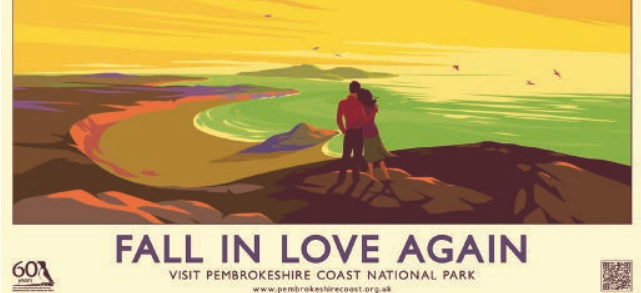
The posters won numerous awards and were also successful in attracting more people to the area.
Airlines and train companies
Airlines and train companies also seek to manage perceptions of places, but they do so to get people to use their travel services to visit these places. Railway posters emerged at the beginning of the twentieth century as railway companies commissioned posters, sometimes by famous artists, to sell the delights of British coasts and countryside and boost passenger numbers.
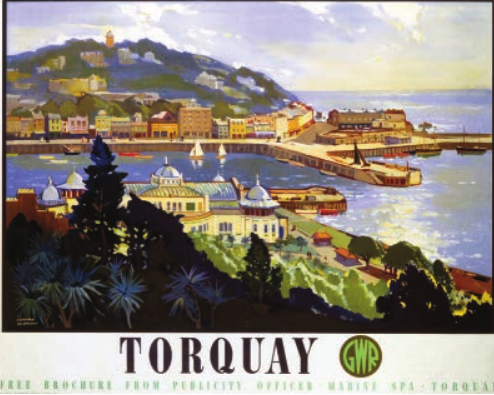
These vintage tourism posters from companies like Great Western Railway (GWR) promoted destinations such as Torquay, portraying them as desirable, scenic locations worthy of visits.
The role of community and local groups
Community or local groups may take an active role in managing and improving the perception of their place to attract investment and improve opportunities and services within the area. Regeneration and rebranding strategies have increasingly involved local people, since they have the 'insider' experience of place and will be the people most affected by any changes.
Residents' associations and heritage associations play an important role, and social media is increasingly being employed to engage and involve local people in planning and place-making schemes.
Note
However, there can be tensions. Pre-existing residents often want to protect and project their local distinctiveness, while development agencies seek to establish place brands based on government incentives, available technology and international links.
Remember!
Summary
Key Points to Remember:
-
Perception of place is the meaning we give to locations based on what we've heard, seen or read about them, not just personal experience
-
Three key strategies are used to change place perception: re-imaging (changing negative perceptions), rebranding (creating new identity), and regeneration (physical redevelopment)
-
Multiple agents influence place perception including governments, corporate bodies, tourist agencies and community groups - each with different motivations
-
Successful rebranding requires balance between attracting investment/visitors and maintaining local character and community needs
-
Case studies matter: Examples like Belfast's dual representation, Amsterdam's 'I amsterdam' campaign, and Liverpool's Tate regeneration show both successes and challenges in changing place perception