Economic developments to 1914 (AQA A-Level History): Revision Notes
📚Revision Notes
Economic developments to 1914
📌 Serfdom and Emancipation (1861):
Background:
Prior to 1861, the majority of Russia's population were serfs, legally tied to the land owned by the nobility. This system stifled economic progress and labour mobility.
Emancipation Edict of 1861:
Tsar Alexander II issued the edict freeing the serfs, aiming to modernise agriculture and integrate Russia into the capitalist economy.
Redemption Payments:
Serfs were required to make payments to the state over 49 years for the land they received, placing a heavy financial burden on them. For example, peasants in the fertile black soil regions paid significantly higher redemption taxes compared to less fertile areas.
Mir System: Land was distributed to village communes (mirs), which retained control over land allocation. This communal system limited individual enterprise and mobility, as peasants were reluctant to leave their land.
The economic landscape of Russia up to 1914 underwent significant transformations driven by state-led initiatives, industrial growth, and attempts to modernise agriculture.
Despite these efforts, structural weaknesses and social inequalities persisted, contributing to the revolutionary fervour that culminated in the early 20th century. This overview provides detailed insights into key economic policies, reforms, and their impacts.
Agriculture 1880 - 1914


- Agricultural production was stagnant between 1860 and 1880
- The practice of agriculture changed little in the years following the emancipation. Peasants continued to farm using the strip system, yields remained low and peasants had to rent land from estate owners
- The situation began to change after 1880, aided by the Peasants' Land Bank created in 1883, peasants could now buy and sell land
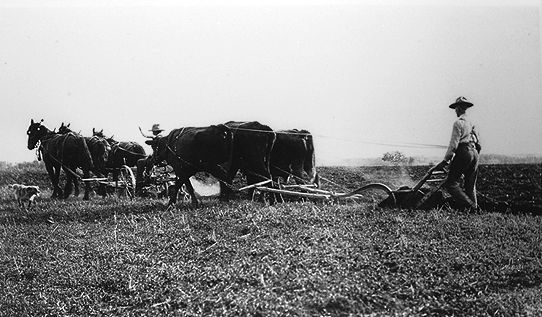
History of Agriculture
- Between 1877 and 1905 the amount of land owned by peasants grew from 6 million to 21.6 million hectares
- By 1905, 27% of landlord land had passed on to the peasantry
- Peasants were renting land from nobility in ever increasing amounts
- By 1913 peasants owned 66% of arable land and rented more
- Agricultural production grew rapidly
- Grain production grew by 2.1% annually between 1883 and 1914
- This kept it ahead of the substantial increase in population
There were great geographical variations in production. The central agricultural region had weakest production.
This was a huge area and was the most densely populated rural part of Russia.
There were many reasons for this:
- There was considerable poverty
- The amount of land received by each peasant household after the emancipation was less than previously farmed
- The communes were conservative and used backwards agricultural methods
- Huge increase in population of 50 to 79 million during 1861-1897 created pressure on the land
- When land was repartitioned, households ended up with smaller, less efficient units
Outside of the central area, there was progress:
- In parts of the Baltic, landowners with access to western grain markets had established capitalist farms worked by wage-labourers
- In the western Ukraine there were huge sugar-beet farms
- The fertile regions of the south had mixed farms that were producing grain and other products
- In western Siberia, access to the markets by way of the Trans-Siberian railway allowed peasants to produce cereals, livestock, and dairy products, particularly butter
📌 Stolypin's Reforms (1906-1911):
Objective:
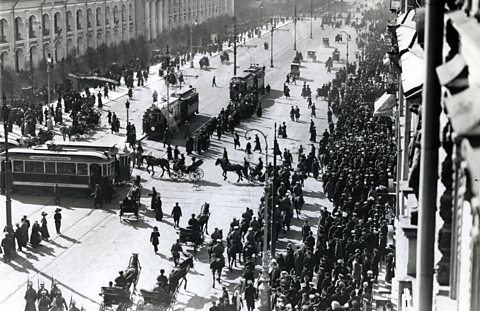
Reforms of Stolypin
Prime Minister Pyotr Stolypin sought to create a class of independent, prosperous farmers (kulaks) to modernise Russian agriculture and stabilise the rural economy.
Note
Prime Minister Pyotr Stolypin aimed to transform Russian agriculture by fostering a class of independent, prosperous farmers known as kulaks. His reforms were designed to modernise the rural economy, increase productivity, and stabilise the countryside, ultimately strengthening the nation's stability.
Key Measures:
Encouragement of Private Land Ownership:
Withdrawal from the Mir System: Stolypin encouraged peasants to leave the communal mir system and establish private farms (khutors or otrubs) to consolidate their strips of land into single, privately owned farms.
Khutors:
- These were individual family farms separate from the village, often with houses located on the farm itself.
- Otrubs: These were plots of consolidated land, but the farmhouse remained within the village.
- 20% of peasant households had successfully consolidated their lands.
- Agricultural Loans: The Peasant Land Bank provided loans to peasants for purchasing land, facilitating the expansion of private ownership. By 1910, the bank had lent money for the purchase of over 4 million hectares of land.
- November 1906 Decree: Allowed peasants to demand the consolidation of their land holdings into private property and leave the mir.
- 1907-1911 Laws: Series of laws that reinforced the 1906 decree, facilitating the transfer of communal land to private ownership and simplifying the process for peasants to consolidate their strips of land.
- Impact: While these reforms aimed to break the cycle of poverty, they faced significant resistance from conservative peasants and were not fully implemented due to Stolypin's assassination in 1911. Nevertheless, they laid the groundwork for potential agricultural modernisation.
Industrialisation and Urbanisation
Witte's Economic Policies:
- Sergei Witte (Finance Minister, 1892-1903): Witte's policies were instrumental in accelerating Russia's industrialisation and integrating it into the global economy.
Key Policies:
- Railway Expansion: Significant investment in railway construction, including the Trans-Siberian Railway, which connected European Russia with the Far East, fostering economic integration and regional development. By 1905, the railway network had expanded to over 60,000 kilometres.
- Foreign Investment: Witte encouraged foreign investment, leading to the establishment of joint ventures and the influx of foreign capital and technology. Notable examples include the development of the Baku oil fields with British and Swedish investments.
- Protective Tariffs: High tariffs protected emerging Russian industries from foreign competition, fostering domestic industrial growth.
Industrial Growth:
- Heavy Industry: Rapid growth in heavy industries such as coal, steel, and oil. For instance, coal production in the Donbass region increased from 6.6 million tonnes in 1890 to 25.4 million tonnes by 1913.
- Textile Industry: The textile industry, particularly in Moscow and St. Petersburg, expanded significantly, with factories employing tens of thousands of workers. By 1914, Russia was the world's fourth-largest producer of cotton textiles.
- Urbanisation: Industrialisation led to significant urban growth, with cities like St. Petersburg and Moscow experiencing population booms. St. Petersburg's population grew from 928,000 in 1890 to over 2.2 million by 1914, reflecting the influx of rural migrants seeking industrial employment.
Economic Challenges and Social Impact
Labour Conditions:
- Poor Working Conditions: Industrial workers faced harsh conditions, including long hours, low wages, and unsafe environments. For example, in 1912, the Lena Goldfields massacre highlighted the brutal suppression of striking workers demanding better conditions.
- Labour Strikes: Frequent strikes and worker protests were a response to poor conditions. The 1905 Revolution was marked by mass strikes, such as the St. Petersburg Soviet, which coordinated city-wide strikes and protests.
Economic Disparities:
- Wealth Inequality: Economic growth primarily benefited a small elite and foreign investors, while the majority of the population remained poor. For instance, by 1914, the top 1% of landowners owned over 25% of the land.
- Rural Poverty: Despite Stolypin's reforms, many peasants continued to live in poverty, exacerbated by high taxes and redemption payments. Rural areas remained underdeveloped compared to urban industrial centres.
Political Repercussions:
- 1905 Revolution: Triggered by economic grievances, poor labour conditions, and political repression, the 1905 Revolution led to the creation of he Duma (parliament) and limited political reforms. The revolution demonstrated the growing discontent among workers and peasants.
- Stolypin's Repression: Stolypin's attempts to implement reforms were accompanied by repressive measures to quell dissent, such as the use of military courts to execute thousands of suspected revolutionaries, which further contributed to social tension and instability.
Note
The 1905 Revolution, fuelled by economic grievances and political repression, led to the creation of the Duma and limited reforms, highlighting deep discontent among workers and peasants. Stolypin's reforms were overshadowed by his harsh repression, including military courts executing thousands of suspected revolutionaries, exacerbating social tension and instability.