Combinations of Transformations (AQA A-Level Mathematics): Revision Notes
📚Revision Notes
2.10.1 Combinations of Transformations
Transformations of Graphs and Functions
There are three main types of transformations that can be performed on a function:
- Translation: Represented by or
- Stretching: Represented by
- Reflection: Represented by
Important Rules when applying these Transformations
- Outside Transformation: Does what it says to the -values.
- Inside Transformation: Does the opposite of what it says to the -values.
Note
Examples: Describe in words the following transformations applied to .
- Translation
- Translation by
- Moves the graph 2 units to the left.
- Translation
- Translation by
- Moves the graph 6 units up.
- Reflection
- Reflect in the y-axis (i.e., reflection in the -direction).
- Stretching
- Stretch by a scale factor of 3 parallel to the -axis.
- Stretching
- Stretch by a scale factor of parallel to the -axis.
Additional Transformations Examples
Note
Example: Translate by
- .
- Original Function:
- Transformation: Translate up by units
- New Function:
Note
Example: Reflect in the -axis
- .
- Original Function:
- Transformation: Reflect in the -axis
- New Function:
Note
Example: Reflect in the -axis
- .
- Original Function:
- Transformation: Reflect in the -axis
- New Function:
Note
Graph Examples: The following graph shows
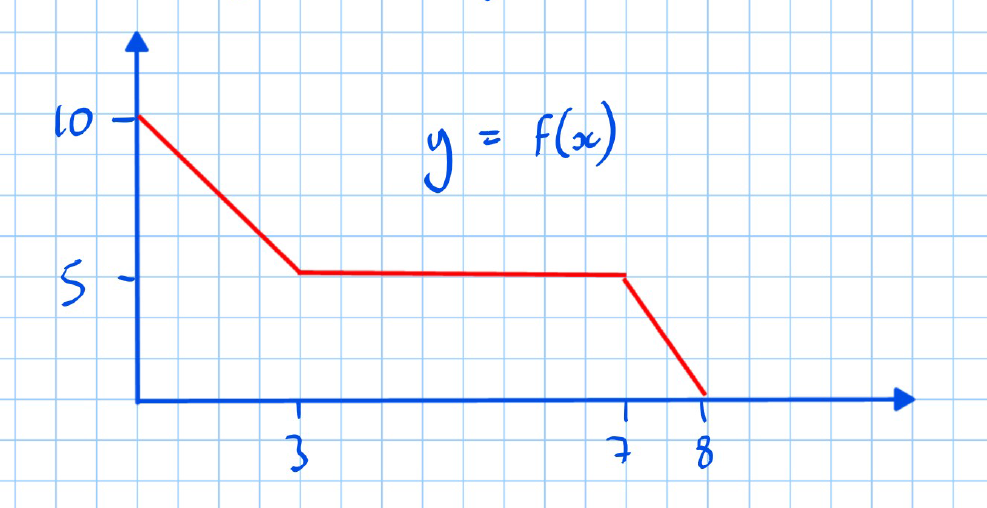
- Sketching
- Stretch by scale factor 2 parallel to the -axis.
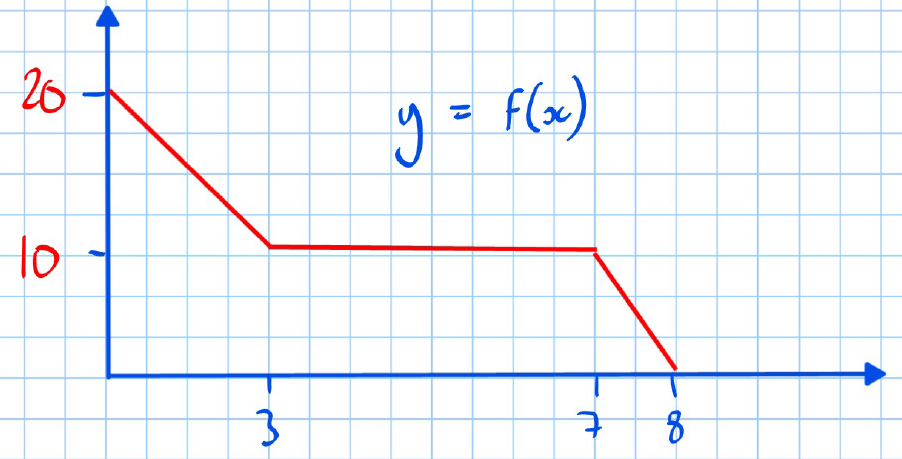
- Translation
- Translate by .
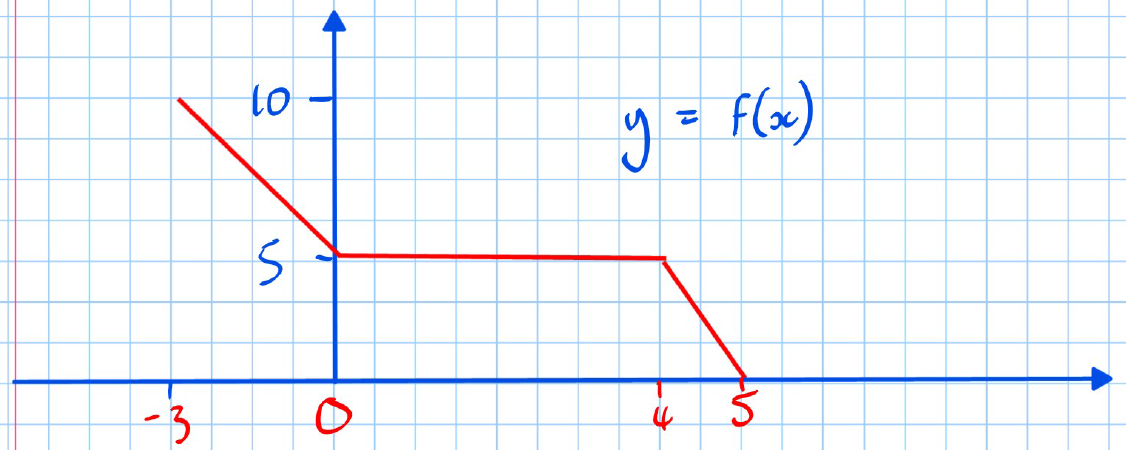
Note
Find the Equation of the Curve when the graph of is transformed as follows
- Translation translated by
- Reflection in the -axis
- Translation translated by
Note
Summary
- Translations: Move the graph up, down, left, or right.
- Stretches: Change the shape of the graph by scaling it.
- Reflections: Flip the graph over a specified axis.
Multiple Transformations of Functions
Recap:
- "Outside" transformations do what they say to .
- "Inside" transformations do the opposite of what they say to .
Note
Example 1: Describe fully the following transformation:
- Translate then Stretch S.F. parallel to the -axis.
- OR-
- Stretch S.F. parallel to the -axis then Translate .
Note
Notice: In the above example, the order of transformations being performed doesn't matter. Since one is in the x-direction and one is in the y-direction, they are independent of each other.
Note
Example 2: Describe fully the transformation that transforms
Note: Order is important as both transformations are in the -direction.
- First, : Stretch by S.F. 5 parallel to the -axis.
- Next, : Translate .
Note
Example: Describe fully the transformations that transform
Note here there are 3 separate transformations.
Two are "inside," and for "inside" transformations, the usual order is reversed.
-
Stretch by S.F. 3 parallel to -axis. independent of the two transformations so can be placed anywhere in this example.
-
Translate
-
Stretch by S.F. parallel to -axis. transformations is opposite order to BIDMAS.
Note
Question 1 (June 2005, Q9i [Modified])
The function is defined by , where and is a positive constant.
(i) A sequence of transformations maps the curve to the curve . Give details of these transformations.
- Translate
- Stretch by S.F. parallel to -axis.
- Translate