Inverse Functions (AQA A-Level Mathematics): Revision Notes
📚Revision Notes
2.8.3 Inverse Functions
Inverse of a Function
A function only has an inverse if it is one-to-one (-to-).
- Example: has no inverse.
- Function is many-to-one, therefore no inverse exists.
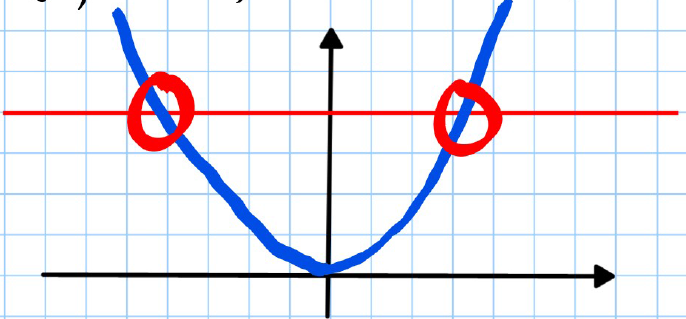
However, we can "artificially" restrict the domain of a function to make it one-to-one (-to-), thus forcing the existence of an inverse.
- Example:
- One-to-one, therefore has an inverse.
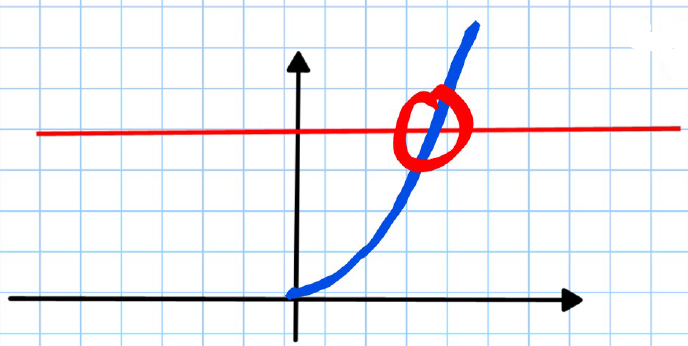
The inverse of a function is denoted for a function .
- For :
Steps to Find the Inverse of a Function
Note
Example: Find the inverse function of .
- Write as and swap 's and 's.
2) Rearrange to obtain :
3) Rewrite :
IMPORTANT: You should always write the domain of an inverse. This is the range of the original function.
4) Write the domain:
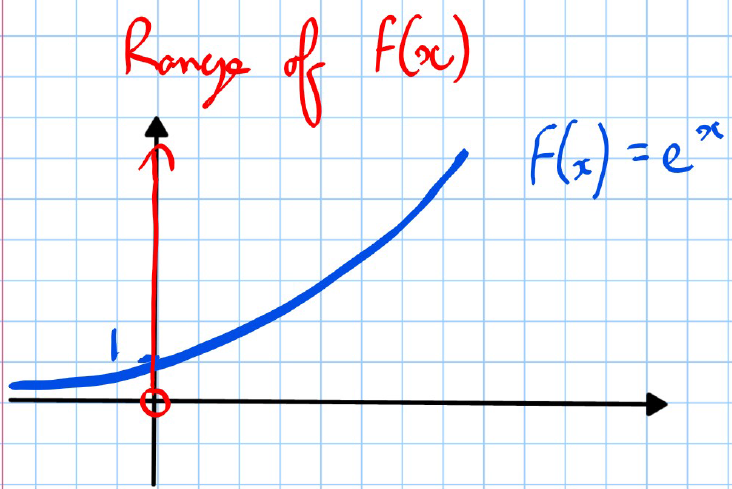
Range of
Range:
Range in terms of .
Note
Example: Find the inverse of
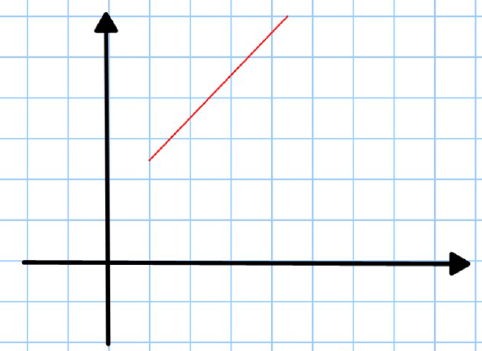
Let , then:
Geometric Relationship Between a Function and its Inverse
To find the inverse of a function, we simply swap its and y values. This is the equivalent of reflecting the graph through the line .
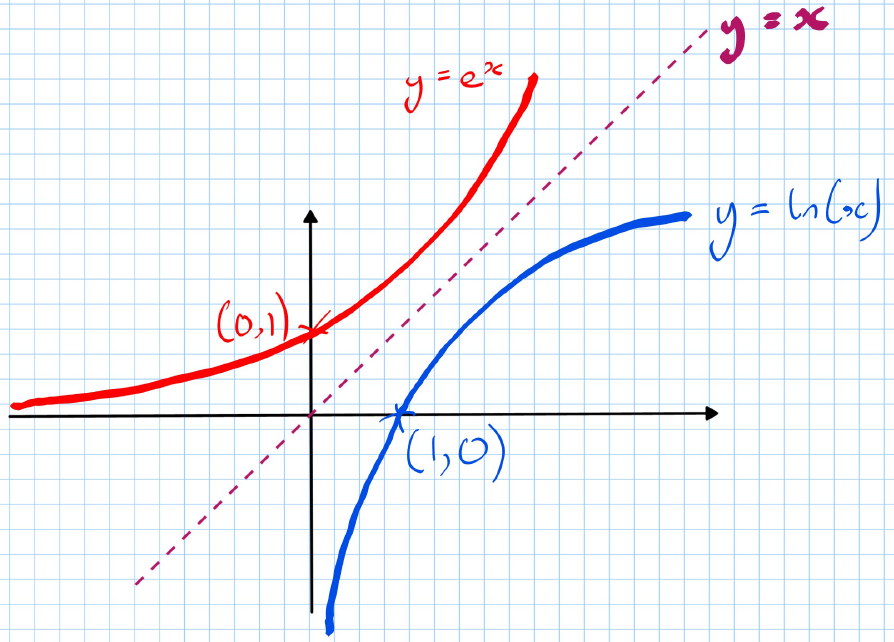
Graphical Representation:
- The graph shows the functions (red curve) and (blue curve) with the line as a dotted diagonal line.
- Key points marked on the graph:
- (0,1) on
- (1,0) on
Note
Advice: 2. Turn the page around so that you are looking directly up the mirror line . 3. Swap the coordinates of any of the points of intersections.
Note
Example: Given that , find where intersects . Since and are reflections of each other in the line , if they intersect, they do so on the line .
Therefore, solving and simultaneously:
Thus, the point of intersection is .