"e" (AQA A-Level Mathematics): Revision Notes
📚Revision Notes
6.1.3 "e"
The Number and Natural Logarithms
The Number
-
is a number approximately equal to 2.718281828.
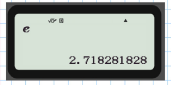
-
It exists because mathematicians searched for a function such that when you differentiate it, you get the same number back.
The Exponential Function
Note
- If , then .
Solving Exponential Equations
When solving equations involving , you would use the natural logarithm (denoted by ) to solve it.
Note
Example 1: Solve
-
Take the natural logarithm of both sides:
-
Simplify:
-
Solve for :
Fact: The Gradient Function of
Note
- The gradient function of is given by:
Note
Example 2: Solve
-
Simplify using the property :
-
Solve for :
-
Since is undefined, the valid solution is:
- Note: It is important to consider whether answers are valid. When discarding an answer, state why.
Note
Example: Solve
-
Start with the given equation:
-
Exponentiate both sides to eliminate the natural logarithm:
-
Simplify:
-
Solve for :
This provides the solution for x$$ in terms of the exponential function. Let me know if you need any further assistance!
Application: Decay of Substance A
Problem Statement
Substance A$$ is decaying exponentially, and its mass is recorded at regular intervals. At time years, the mass grammes of substance is given by:
Note
Example 3: Find the Time Taken for the Mass to Decrease to 25% of its Value When
-
At :
-
Find 25% of the initial mass:
-
Set up the equation:
-
Divide both sides by 40:
-
Take the natural logarithm of both sides:
-
Solve for :
Summary
Note
- is a fundamental constant in mathematics, used especially in exponential and logarithmic functions.
- The natural logarithm is the inverse of the exponential function .
- In solving exponential equations, it's crucial to consider the validity of solutions, particularly with logarithms.