Origins, Beliefs, and Strands (AQA A-Level Politics): Revision Notes
📚Revision Notes
Origins, Beliefs, and Strands
Liberalism is a political ideology that places the individual and their rights at its core. The ideology has evolved significantly since its origins, developing distinct strands that share common principles but differ in their approach to key issues such as the role of the state and the nature of freedom.
Origins of liberalism
Liberalism emerged from the Enlightenment of the seventeenth and eighteenth centuries. This intellectual movement challenged medieval politics and philosophy, rejecting faith and superstition in favour of reason and rational thought.
Note
Enlightenment: An intellectual movement that opposed the medieval politics and philosophy of faith, superstition and religion.
Early liberal thinkers made radical arguments that directly challenged the established political order. They argued that humans are born both free and morally equal, and that no one naturally possesses the right to rule over others. This directly attacked absolute monarchy, the dominant form of government at the time.
Note
Absolute monarchy: When the monarch exercises arbitrary (unlimited) power over the people as God's representative on Earth.
The ideology promoted several key principles:
- A belief in reason rather than faith as the basis for understanding society
- The importance of the individual as the fundamental political unit
- The centrality of freedom to human flourishing
Important
Early liberalism was radical and potentially revolutionary. Liberal ideas were central to major political upheavals, including the American Declaration of Independence (1776) and the French Declaration of the Rights of Man (1789). These documents embodied liberal principles of individual rights and government by consent.
Over time, liberalism developed different variants. Classical liberalism dominated from the late seventeenth century until the late nineteenth century. Modern liberalism has been the dominant strand since the late nineteenth century, though neo-liberalism emerged in the second half of the twentieth century as a revival of classical liberal economic ideas.
It is important to note that liberal ideas are not confined to parties called "Liberal". Liberal principles can be found across the political spectrum, including in the Liberal Democrats, Conservatives and Labour in the UK, as well as in both main parties in the USA.
Main beliefs of liberalism
Despite variations between different strands, all liberals share certain core beliefs:
Freedom and the individual
Freedom is central to all forms of liberalism because it benefits the individual. However, liberals debate how to define freedom. Classical liberals emphasise negative freedom (freedom from constraint), while modern liberals emphasise positive freedom (freedom to achieve one's potential).
Human nature
Liberals have an optimistic view of human nature, seeing humans as rational and reasonable beings. However, there are differences in emphasis:
- Classical liberals focus on humanity's natural qualities and the ability of individuals to satisfy their desires through their own efforts
- Modern liberals focus on what individuals can become given the right conditions, such as proper education and freedom from poverty
The role of the state
There is significant debate among liberals about the state's proper role:
- Classical liberals advocate a minimal role for the state, seeing it as a potential threat to individual liberty
- Modern liberals favour a more interventionist role to ensure everyone has equal life chances
Note
State: A body that is sovereign within a defined territorial area, with a legitimate monopoly of the use of force.
Society
Liberals debate how to promote and protect a diverse, tolerant society. They also disagree about the relationship between society, freedom and the individual.
Note
Tolerant society: A society that is willing to accept a wide range of moral values, beliefs, lifestyles and faiths, despite disagreeing with them.
The economy
One of the deepest divisions within liberalism concerns economic policy:
- Classical liberals favour free-market capitalism to drive economic creativity and prosperity
- Modern liberals favour state intervention in the economy to ensure everyone can flourish
Liberalism has evolved over time in response to historical events and other ideologies. The emergence of modern, industrialised societies particularly influenced how liberal ideas developed.
Classical liberalism (late seventeenth to late nineteenth centuries)
Classical liberalism dominated liberal thought from the late seventeenth century until the late nineteenth century. It has several distinctive features:
Radical political ideas
Classical liberals promoted government by consent, arguing that governments should represent the will of the people rather than act as their master. This was a revolutionary idea that challenged the legitimacy of absolute monarchy and aristocratic rule.
Radical views on gender (for some classical liberals)
Some classical liberals, notably Mary Wollstonecraft, extended the optimistic view that humans are rational to include women. This was highly radical for the time and challenged prevailing assumptions about women's intellectual capacities.
Egotistical individualism
Classical liberals believed in egotistical individualism - the view that humans are naturally self-seeking, rational and independent. However, this self-interest leads individuals to practise restraint and cooperate with others, because they want their own rights respected and therefore must respect the rights of others. Society is understood as a collection of individuals rather than as comprising social groups or classes.
Note
Egotistical individualism: Humans naturally seek to advance their own happiness and interests. This selfish approach involves self-restraint and cooperation as the individual wants to have their rights respected, so in turn must respect the rights of others.
Negative freedom
Classical liberals define liberty in terms of negative freedom - the absence of restraint. This leaves individuals free to pursue their own view of the good life without interference. The state can only legitimately intervene to prevent harm to others (the harm principle).
Note
Negative freedom: A concept of liberty as meaning an absence of constraint. Described by the liberal thinker Isaiah Berlin as 'freedom from' rather than 'freedom to'.
Important
Harm principle: John Stuart Mill argued that the government can only rightfully extend its power over the individual to prevent actions or beliefs that bring harm to others. It cannot extend this power in relation to self-regarding actions to protect the individual's own good.
Night-watchman state
Classical liberals advocate for a minimal state that acts only to protect "the peace, safety and public good of the people" (John Locke). The state only has the right to impose its power on the basis of the harm principle to ensure the widest possible freedom. The state should not paternalistically interfere with individuals' choices about their own lives.
Free-market capitalism
Classical liberals believe the market economy, based on property rights, can deliver prosperity for both individuals and society through free trade and competition. The state must not interfere with free trade and competition through subsidies, taxes or the promotion of monopolies. However, the state has a crucial role in protecting property rights and enforcing contracts.
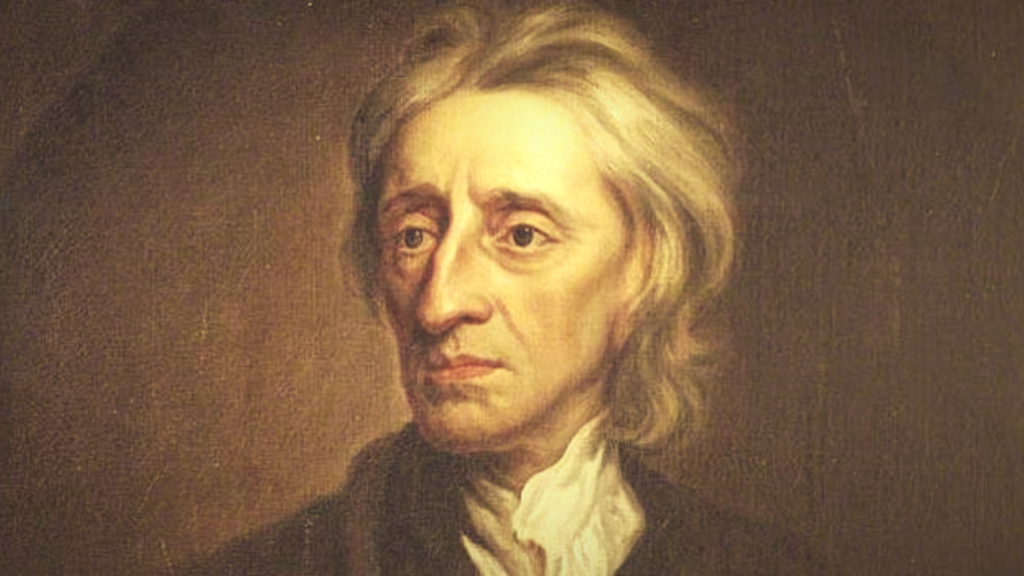
Key thinker: John Locke (1632-1704)
John Locke was a foundational thinker in classical liberalism. His work Two Treatises of Government (1690) attacked the idea that monarchy has a natural right to rule and established a liberal justification for a minimal state.
Important
Core ideas:
- Humans are naturally free, equal and independent, not naturally under the authority of any other body or person
- To understand why humans created the state, Locke imagined a state of nature before organised government existed
- In Locke's state of nature, humans are perfectly free and equal, with natural rights such as the right to property
- In the state of nature, people are bound by the "law of nature", where no one should harm another in respect of their life, liberty or possessions
- However, clashes of interest between free individuals would limit their ability to advance their own happiness
- As rational beings, individuals would enter into a social contract to create the state as a neutral umpire to resolve these clashes
Note
Authority: The right to exercise power.
State of nature: A concept used by political thinkers such as Locke and Hobbes to describe the hypothetical original characteristics of humankind and how people related to each other in a time before states and organised governments.
Social contract: There is a contract between the individual and the government, where the individual agrees with the state to obey its laws and, in return, the state improves their life. The state is invalid either if there is no consent or if it fails to improve the individual's situation.
Key principles of Locke's theory of the state:
- The state is a creation of humankind, established to protect and enhance natural rights
- The state only emerges because people consent to create it, and that consent is ongoing
- When the state breaks the contract by failing to protect and enhance natural rights, the people can withdraw their consent and replace the government
- The state is further limited by constitutionalism, with a clear separation of powers between the executive and legislature to prevent abuse of power
- The legislature should be the supreme power, but it is only a fiduciary power - it holds power in trust for the people
- The state should directly represent the will of property-owning individuals
Note
Constitutionalism: The government must be legally limited in its powers by a constitution in order to protect freedom.
Fiduciary power: The state holds its power in trust and must act in the interests of and for the benefit of the people, otherwise the social contract is invalid.
Example
Historical Application: The American Revolution
For many classical liberals, the American Revolution exemplified Locke's principles in practice - the American colonists withdrew their consent from British rule when they believed their rights were being violated, particularly through taxation without representation.
When comparing Locke with other thinkers, it is worth noting his optimistic view of human nature and the state of nature contrasts sharply with Thomas Hobbes, who saw the state of nature as a "war of all against all" requiring a powerful state to maintain order.
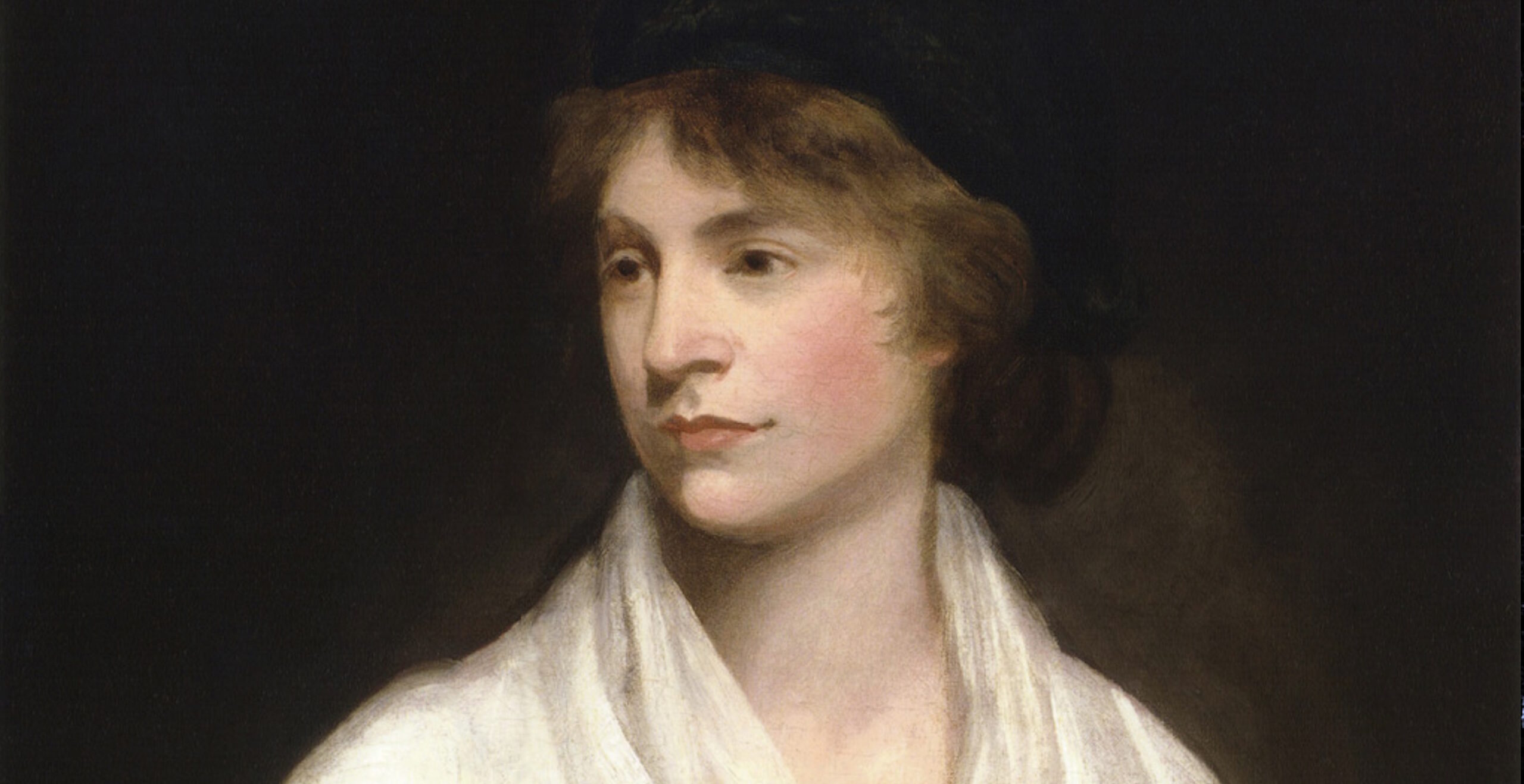
Key thinker: Mary Wollstonecraft (1759-97)
Mary Wollstonecraft extended liberal thinking to gender equality through her key work A Vindication of the Rights of Woman (1792).
Important
Core ideas:
- Humans are fundamentally rational, but existing society and the state promoted the view that women were not rational
- Women lacked formal equality, making them like slaves in a political and civil sense
- Women should have formal equality, including:
- The right to property (crucial to freedom and individualism)
- The right to education (to allow reason to prosper)
- The right to vote (to ensure genuine government by consent of all)
- Rights within marriage, including the right to divorce and protection against domestic violence
- Economic independence, so women would not need to marry out of financial necessity
By granting formal equality and giving women access to education, society would benefit from increased intellect, wisdom and morality, enabling social and economic progress.
Note
Formal equality: Equality under the law, as well as the principle that every individual is entitled to equal treatment in society.
Individualism: A belief in the importance of the individual over the collective within political thought, which is central to liberalism, and also that the individual exists prior to society.
Wollstonecraft opposed custom, tradition and practice that formed the basis for the divine right of kings and aristocratic rule, arguing these were irrational, oppressive and ignorant concepts. In their place, she argued for republicanism, formal equality for all, and constitutional protection of individual rights.
Note
Tradition: A form of knowledge passed down through the generations as customs and habits that enable us to know what to do in order to achieve a task successfully and so provide security and stability in an uncertain world.
Divine right of kings: The idea that a monarch is not subject to earthly authority but instead gains the right to rule directly from God.
Republicanism: A republic is a political system without a monarch, which emphasises citizens taking an active role in public and political life.
Important
Wollstonecraft's defence of the French Revolution (1789) contrasts with conservative thinker Edmund Burke's Reflections on the Revolution in France (1790), which defended custom, tradition and established practice.
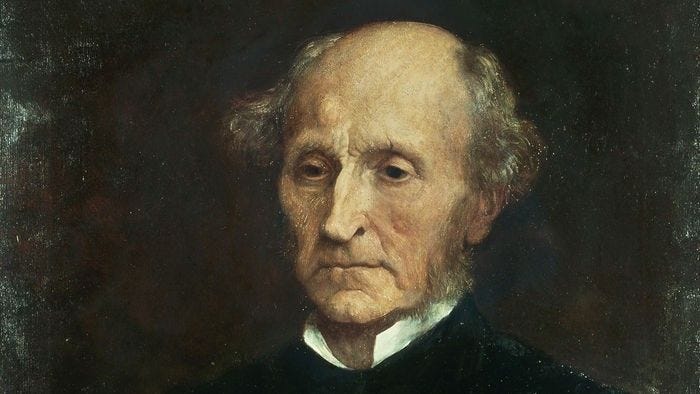
Key thinker: John Stuart Mill (1806-73)
John Stuart Mill provided the bridge between classical and modern liberalism by developing liberal thinking on freedom and individualism, especially in his work On Liberty (1859).
Important
Core ideas on freedom:
- Mill developed the concept of negative freedom, defining freedom as the absence of restraint that leaves individuals free to pursue their own view of the good life
- The law is only justified in preventing other-regarding actions that harm others' freedom, not in regulating self-regarding actions to protect the individual's own good
- Liberty is the driver of progress for the individual and allows them to achieve their individuality
- This benefits both the individual and society, as a "diversity of character and culture" enables reasoned debate and discussion to drive society forward
Note
Individuality: Mill passionately believed in the uniqueness of each individual, and freedom was needed to allow them to constantly develop their distinctive talents, characteristics and knowledge.
On education and human development:
Mill attached great importance to education in enabling people to develop. He criticised the hedonism of early liberal thinking, which focused purely on quantity of pleasure. Mill distinguished between lower pleasures (those of the body, such as eating and drinking) and higher pleasures of the mind.
Example
Mill's View on Human Development
The state's role, via education, is to enable people to constantly improve their mind and increase their higher pleasures. This is captured in Mill's famous declaration:
"I would prefer to be Socrates dissatisfied than a fool satisfied"
This statement illustrates Mill's belief that intellectual growth and higher pleasures are more valuable than simple contentment based on lower pleasures.
Liberty is more than a natural right - it is key to the ongoing development and learning of the individual, especially through education. This focuses on what the individual has the potential to become rather than what they currently are.
Note
Hedonism: The idea that happiness is the ultimate good and that it can be measured as pleasure and the absence of pain. This idea is based on the quantity of pleasure rather than the quality.
On government and democracy:
Mill worried that representative government could lead to "tyranny of the majority" with universal suffrage, especially without a well-educated electorate. He feared the majority would infringe on the individualism of minorities by voting for their own narrow interests.
Note
Mill's solution was to promote representative democracy, where an educated electorate chooses well-educated representatives to make decisions on their behalf. These representatives would aggregate all the demands of different individuals and parts of society to create broad consensus decisions rather than strictly following the will of the majority.
Important
Mill's concerns about the "tyranny of the majority" provide a basis for critiquing direct democracy, including the use of referendums in the UK and initiatives and propositions in the USA.
Democracy and liberalism
Locke's view that government should only represent property-owning men and Mill's fears about democracy raise important questions about whether liberalism and democracy are compatible.
Arguments for compatibility:
- Democracy enhances individualism by allowing individuals to use their vote rationally to shape the world
- Voting has an educational role for the individual
- Democracy through regular, free and fair elections creates government by consent, a crucial principle of liberalism
- Democracy restricts the concentration of power and places limits on the state - beliefs that classical liberals support
- Representative democracy dilutes majority rule, as elected representatives make decisions rather than the people directly
Arguments against compatibility:
- Democracy may lead to the "tyranny of the majority", especially where people have not been educated
- Universal suffrage should go hand in hand with universal education
- Classical liberals wished to restrict the franchise to those with property
- Mill suggested giving more voting power to the educated
Modern liberalism (late nineteenth century to the present)
Modern liberals questioned what freedom really means in the context of modern advanced societies and economies. Poverty and inequality appeared to restrict individuals' ability to develop, grow and pursue their own version of the good life.
Positive freedom
Modern liberals redefined the concept of freedom:
- Individualism is not about allowing self-seeking individuals to achieve their own pleasures, but about enabling individuals to flourish and grow both morally and intellectually to achieve their own individuality - developmental individualism
- Thomas Hill Green argued that in modern, capitalist societies, poverty and inequality must be tackled to "maintain the conditions without which a free exercise of human faculties is impossible"
- Liberty needed to be redefined as positive freedom - not just absence of restraint but the real ability to achieve one's individuality
- This led to a revision of the state's role - from seeing it as a potential restriction on freedom to viewing it as able to promote freedom by protecting people from social injustice
Note
Developmental individualism: Focuses on personal growth and flourishing rather than just self-satisfaction, emphasising what the individual can become rather than what they are.
Positive freedom: Isaiah Berlin defined this as 'freedom to' rather than 'freedom from'. The individual is free to develop, flourish and pursue their own version of the good life.
Enabling state
The concept of positive freedom led modern liberals to justify state intervention to protect freedom and individualism:
- The provision of a welfare state can be justified because it provides equality of opportunity, enabling all to flourish and develop
- This would be funded by increased taxation and public spending
- Based on the work of John Maynard Keynes, the state should intervene in the economy to bring about full employment and economic growth
- This ensures the prosperity necessary for all to be free to pursue their version of the good life
Note
Welfare state: The provision of education, health, housing and social security (e.g. pensions and benefits) by the state.
Equality of opportunity: The concept that all individuals have equal life chances, so inequalities generated by society must be tackled. If there is equality of opportunity, inequalities which result from differences in ability, creativity and hard work are acceptable.
Social liberalism
Modern liberalism revises classical liberalism's position on toleration:
- Classical liberals aimed to safeguard toleration by granting formal equality to all
- Modern liberals go further, arguing that society has discriminated against minorities
- They promote greater toleration and equality of opportunity through state intervention
- The state should engage in positive discrimination to favour groups who have suffered historical discrimination, ensuring a genuinely level playing field
Note
Discrimination: The differential treatment of groups or individuals, such as women, without any real justification for doing this based purely on the differences between them.
Positive discrimination: State intervention to give preferential treatment to particular groups in society to tackle historical discrimination and inequalities in society. Affirmative action in the USA is an example of positive discrimination.
Example
Modern Examples of Social Liberalism
Modern examples of social liberalism include support for same-sex marriage and the use of positive discrimination to promote real equality for women and ethnic minority groups.
Important
It is important not to confuse modern liberalism with socialism. Modern liberalism is based on foundational equality (all humans are born morally equal) and equality of opportunity, which can justify inequality based on meritocracy (social position and economic reward based on talent and hard work) and the need to incentivise individuals. This differs from socialist ideas of equality of outcome.
Key thinker: Thomas Hill Green (1836-82)
Thomas Hill Green changed liberalism's approach toward the state and developed clear arguments for positive freedom in his Lectures on the Principles of Political Obligation (1895).
Important
Core ideas:
- Freedom should be understood not just in a negative sense but in a positive sense - the freedom of the individual to rise above narrow self-interest to contribute to the common good of society by making the best of their unique talents and ability
- Positive freedom can only be achieved by removing hereditary privilege in society and tackling poverty
- The state must take a more positive role by freeing the poor from ignorance, disease, poor-quality housing and exploitation in the workplace
Key thinker: Betty Friedan (1921-2006)
Betty Friedan was a liberal feminist thinker who developed from a classical to a modern liberal position regarding gender equality.
Important
Early classical liberal phase (The Feminine Mystique, 1963):
- Friedan argued that the societal idea that women could find satisfaction exclusively in their roles as wife and mother left women feeling miserable and empty - "the problem that has no name"
- The assumption that mothers and wives have no time for careers limits their development as humans
- Women needed to be set free by getting a good education and working productively outside the home in full-time careers
- Marriage, motherhood and a professional career can all be achieved by individual effort if there is formal equality
Important
Later modern liberal phase (The Second Stage, 1981):
- Friedan moved to a more modern liberal approach, arguing that changes to public values, social institutions and leadership styles were needed to allow all people to achieve personal fulfilment
- She supported an activist women's movement to bring this about
- The state should not just grant formal equality but actively intervene to tackle gender inequality and ensure real equality of opportunity
- This might include granting state benefits to single, divorced or widowed mothers so they have equal opportunities to compete in the job marketplace
If studying feminism as an optional ideology, you can compare Friedan's ideas with those of more radical feminist thinkers.
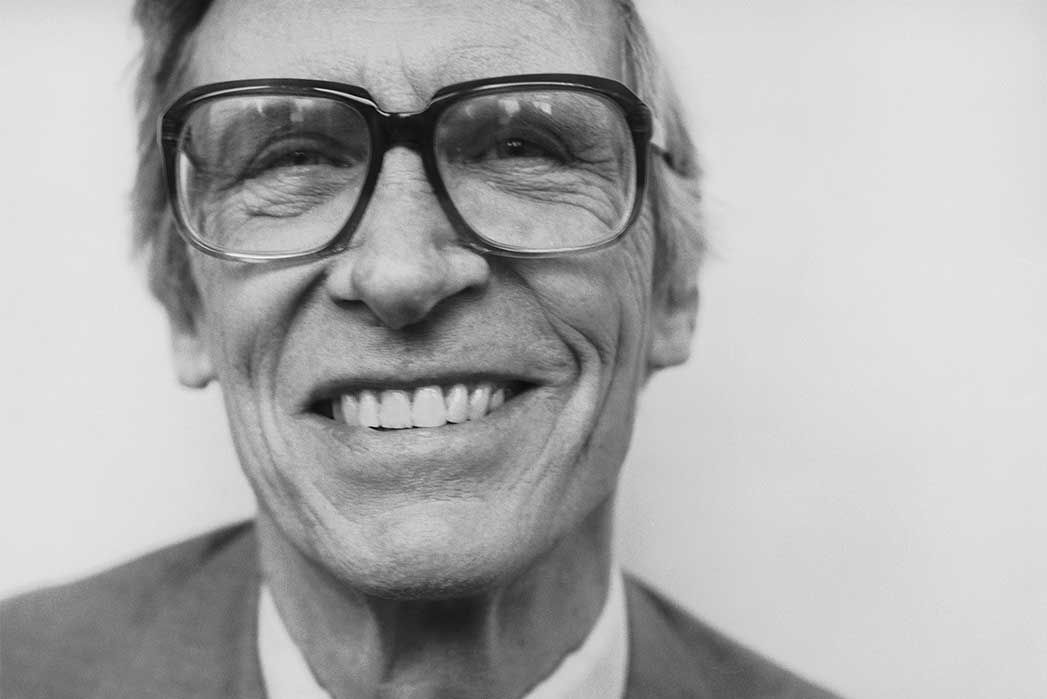
Key thinker: John Rawls (1921-2002)
John Rawls developed the idea of an enabling state based on the principle of equality as fairness in A Theory of Justice (1971).
Important
Core ideas:
- Rawls reaffirmed the liberal idea of foundational equality, arguing that everyone should have equal rights and basic liberties - this is his overriding principle
- He developed the idea of the "original position", a thought experiment where people construct the society they would like to live in
- In this construction, people would be under the "veil of ignorance" - they would have no idea what sort of person they would be in the new society in terms of wealth, gender, race, sexual orientation, abilities or health
- The rational individual would choose a more socially and economically equal society, as avoiding poverty is a more powerful drive than the desire for great wealth
- Therefore, an enabling state is consistent with government by consent
- This leads to the principle of distributive justice - inequalities of wealth are legitimate because they incentivise people to work harder, but only as long as they raise the income and wealth of the least well-off
Note
Foundational equality: All humans are born morally equal and so are deserving of equal natural rights, which are enshrined in law as legal and political rights.
Veil of ignorance: When designing a just society, the individual does not know what place they will hold in society; their gender, race, sexual orientation, abilities or state of health.
Distributive justice: Social inequality is permissible if there is equality of opportunity and the inequalities in society are only justifiable if they are to the greatest benefit of the least well-off.
Important
Classical liberals and neo-liberals would view distributive justice as a threat to freedom and property rights, as it supports progressive taxation to redistribute wealth to the least well-off.
Neo-liberalism (second half of the twentieth century to the present)
Neo-liberalism emerged in the second half of the twentieth century as a reaction against modern liberalism. F. A. Hayek, author of The Road to Serfdom (1944), was the most prominent neo-liberal thinker.
Hayek argued that his ideas were a strand of liberalism. He criticised modern liberal ideas and sought to return liberalism to its classical roots. However, neo-liberalism has been most closely associated with conservatives like Margaret Thatcher and Ronald Reagan.
Note
Neo-liberalism is also considered conservative because it is reactionary - it aims to roll back the welfare state and Keynesian economic management to return to the minimal state and free-market capitalism of the nineteenth century.
Key ideas of neo-liberalism:
- Reapply the economic ideas of free-market capitalism and campaign for a night-watchman state
- Private property and negative freedom are central to freedom and individualism (Hayek argued that without private ownership of the press, there could be no freedom of the press)
- The welfare state betrayed individualism in favour of collectivism favoured by socialism
- The welfare state places unjustifiable restrictions on individual liberty through high taxation
- It creates a dependency culture, leading to people relying on the state rather than helping themselves
- Free trade, free markets and globalisation are the best drivers of economic and social progress
Note
Collectivism: The idea that the collective rather than the individual is the main economic, social and political unit.
Core ideas of liberalism
Freedom and the individual
Individualism is a key liberal assumption. The individual - rather than classes, races or nations - is the fundamental unit for thinking about human nature, the state, society and the economy.
On one hand, each individual is unique with their own talents and abilities. On the other hand, everyone is morally equal on the basis that they are all individuals. Locke argued that all individuals have natural rights to "life, liberty and property".
Because each individual is unique and equal, freedom becomes the core liberal value. Humans flourish and progress when given the widest possible freedom to make rational decisions, own property and establish their own beliefs, lifestyles and values.
Note
John Stuart Mill summarised this principle: "Over himself, over his own body and mind, the individual is sovereign."
Two types of individualism:
Important
Egotistical individualism is associated with classical liberals:
- Individuals are self-seeking, self-reliant and independent
- Society is no more than a loose collection of individuals
- It leads individuals to cooperate with others and show self-restraint for their own self-interest
- This involves living in a society of peace and harmony where beliefs, values and lifestyle choices are respected
Important
Developmental individualism was developed by modern liberals, building on John Stuart Mill's ideas:
- Thomas Hill Green argued that individuals are free when they rise above narrow self-interest
- True freedom involves participating in a shared way of life and contributing to the common good by improving themselves
Human nature
Liberalism's optimistic view of human nature emerged from the Enlightenment and opposed the religious view that humankind is imperfect and flawed (the concept of original sin).
Note
Original sin: The Christian doctrine that every person is born sinful, with the urge to disobey God.
Locke argued that humans are naturally free, equal and independent, not naturally under the authority of any other body or person. This means there is no need for an all-powerful state like Hobbes's Leviathan (1651) to protect people from themselves.
Locke's idea that individuals should be given the widest possible freedom to act according to their will is based on their possession of reason.
Summary
Key Points to Remember:
-
Liberalism emerged from the Enlightenment, challenging absolute monarchy and religious authority through an emphasis on reason, individual rights and human equality.
-
Two main strands developed: Classical liberalism (late 17th-late 19th centuries) favours minimal state intervention, negative freedom and free-market capitalism. Modern liberalism (late 19th century onwards) advocates positive freedom, an enabling state and welfare provision to create genuine equality of opportunity.
-
Key liberal values include individualism (the individual is the fundamental political unit), freedom (central to human flourishing), rationality (humans are capable of reason), tolerance (accepting diverse beliefs and lifestyles) and equality (foundational moral equality).
-
Major liberal thinkers span from John Locke (social contract, minimal state, natural rights) and Mary Wollstonecraft (gender equality, formal rights) through John Stuart Mill (harm principle, individuality, tyranny of the majority) to Thomas Hill Green (positive freedom), Betty Friedan (liberal feminism) and John Rawls (justice as fairness, veil of ignorance, distributive justice).
-
Neo-liberalism represents a late 20th-century revival of classical liberal economic ideas, opposing the welfare state and advocating free markets, though it is often associated with conservatism rather than liberalism.