Origins, Beliefs, and Strands (AQA A-Level Politics): Revision Notes
📚Revision Notes
Origins, Beliefs, and Strands
Socialism is a political ideology focused on human equality and collective welfare. It developed as a response to capitalism and the inequalities created by the Industrial Revolution. At its core, socialism emphasises social equality - the fair distribution of wealth, income and status across society.
Origins of socialism
Socialism emerged in the nineteenth century from a combination of Enlightenment thinking and concerns about the growing inequality between rich and poor during industrialisation.
Early development
Utopian socialists Charles Fourier and Robert Owen first coined the term 'socialism'. They created blueprints for ideal future socialist societies to demonstrate how life could improve under socialist organisation.
Robert Owen believed human nature was malleable - that our characters are 'made for us, not by us'. He argued that capitalism created conditions of vice and misery that were unworthy of rational beings. Owen was convinced that providing the right environment could produce cooperative, dutiful, public-spirited characters.
Example
Practical Application: Owen's New Lanark Community
Robert Owen's model community at New Lanark demonstrated utopian socialist principles in action:
- Communal facilities for shared living
- Universal education for all residents
- Comprehensive welfare provisions
- Satisfying work with good wages and conditions
This practical experiment showed how changing social conditions could reshape human character and behaviour.
Scientific socialism
Karl Marx criticised Owen's approach as utopian socialism because it presented an ideal without understanding the actual conditions preventing its realisation.
Important
Marx and Engels developed scientific socialism - a scientific analysis of economic development showing how society divides into distinct classes locked in struggle. They argued this class struggle is the motor of history, making socialism's replacement of capitalism inevitable rather than merely desirable.
Main beliefs of socialism
Distribution of material goods
Socialism focuses on how material goods and resources are distributed. There should be equality and fairness in access to resources, with distribution based on need, not greed or private charity.
Note
This principle fundamentally challenges the capitalist notion that market forces should determine distribution. Instead, socialists argue that human needs should be the primary consideration in allocating resources within society.
Collectivism
The individualism promoted by conservatism and liberalism produces competition rather than cooperation, and inequality rather than fairness. Collective action - working together to achieve mutual benefit - is both morally superior and economically more successful than individual action. Society is enhanced when people work collectively.
Statism
The state plays a crucial role in ensuring fairness and equality within society.
Change
Socialism challenges capitalism and seeks change to redistribute resources in favour of the many, not the few. It responds to the perceived negative effects of capitalism.
Class
Class is the essential characteristic of society. It is defined by economic relations and shapes an individual's life and worldview.
Optimism
Socialists are optimistic about human nature. They believe people can be moulded to be cooperative, social and rational rather than selfish and individualistic. This transformation can be achieved by building a better and fairer society.
Historical materialism, class analysis and fundamental goals
Historical materialism
Historical materialism views history as driven by struggle between contending groups within society:
- In slave societies: master versus slave
- In feudal society: landowner versus peasant
- In capitalism: capitalist versus worker
These contending groups, or classes, are created by the relations of production - the relationship between those who own the means of production and those who do not.
The rise of capitalism
Towards the end of feudal societies, international trade led to a shift from craftsmen production to larger factories with steam-powered machinery and industrial production.
The bourgeoisie - owners of this new means of production - accumulated huge wealth and overthrew the existing feudal class relations between landowners and peasants.
Note
Capitalism presented, for the first time, the possibility for humans to live free from oppression and poverty through revolutionary technological changes and wealth creation. However, it also created a large proletariat - workers who must sell their labour to survive - while concentrating wealth in bourgeoisie hands.
In this way, capitalism is the precondition for socialism, as it creates the proletariat. Marx famously called the working class the 'gravediggers' of capitalism.
Class analysis
The contradictions between classes, created by the means of production, are essential to understanding the world:
Under capitalism:
- The bourgeoisie (ruling class) owns the means of production
- They exploit the proletariat (working class), who are forced to sell their labour to survive
- Workers are alienated from their labour as they produce commodities owned by capitalists and sold for profit, rather than producing what is needed or useful
Capitalism's internal contradictions:
- The desire for profit drives down wages and living standards for workers
- Wealth accumulates in the hands of the few
- This makes capitalism increasingly unstable and prone to deeper economic crises
Class consciousness:
Alienation, exploitation and deepening crises create class consciousness. Workers are forced to face 'with sober senses his real conditions of life, and his relations with his kind' (The Communist Manifesto, 1848).
Example
Development of Class Consciousness
Class consciousness develops in stages:
Stage 1: Workers become conscious of sharing common complaints against capitalism (a class 'in itself')
Stage 2: They develop awareness of themselves as forming a social class, the proletariat (a class 'for itself'), opposed to the bourgeoisie
This awakening of class consciousness drives the working classes to rise up, overthrow existing society and the state, and replace them with socialism.
Fundamental goals
The revolutionary transformation:
Important
The class relationship to the means of production and wealth distribution forms the base for the legal, political and social structure of society. This structure expresses, enforces and consolidates class relationships.
Therefore, the state is not neutral but 'a committee for managing the common affairs of the whole bourgeoisie' (The Communist Manifesto, 1848). The socialist revolution must overthrow the state, society and the existing economic system based on private property.
The dictatorship of the proletariat:
- This is a short-term transitional phase from capitalism to communism
- The dictatorship of the proletariat collectivises all property into common ownership for the good of all
- It must defeat opposing forces (counter-revolutionaries) through force, potentially in civil war
The withering away of the state:
- Common ownership leads to the end of class and class conflict
- With exploitation eliminated, there is no need for struggles over political power
- There is no need for a workers' state once class struggle has ended
- True democracy emerges as all are free
- The state withers away as society transforms from socialism to communism
Note
Communism is a classless society with no state and common ownership of wealth. Production is for necessary consumption and use, satisfying need rather than profit. This frees humans' creative energies and allows full freedom for all.
Key thinkers
Karl Marx (1818-83) and Friedrich Engels (1820-95)
Marx and Engels are the key thinkers of socialism. Their major works include The Communist Manifesto (1848) and Das Kapital (1867).

Core ideas:
- 'The history of all hitherto existing society is the history of class struggles'
- History is conflict between oppressed and oppressor, ending in revolutionary remaking of society along communist lines
- Capitalism has split society into 'two great hostile camps, into two classes directly facing each other - bourgeoisie and proletariat'
On the state:
Important
The state reflects the interests of whoever controls the means of production. In capitalism, the state reflects bourgeoisie interests and cannot deliver an evolutionary path to socialism through reform. The state, existing society and economic relations must be overthrown to deliver socialism.
On false consciousness:
- Liberal democracy was 'a democratic swindle', with parliaments 'a talking shop'
- The vote, moderate social reforms, religion and patriotism all attempt to weaken class consciousness
- Marx called religion 'the opium of the masses', dulling workers' ability to see their exploitation and historical mission to overthrow capitalism
On inevitability:
- Socialism is inevitable, driven by historical materialism
- It must be delivered from below by the working classes
Path to communism:
- Revolution must be followed by a dictatorship of the proletariat
- This brings all private property into common ownership
- It defends the revolution's gains from the dispossessed bourgeoisie
- The dictatorship transitions to abolition of all classes and a classless society
- The state will wither away
- Society will be ordered on the principle 'from each according to his ability, to each according to his needs'
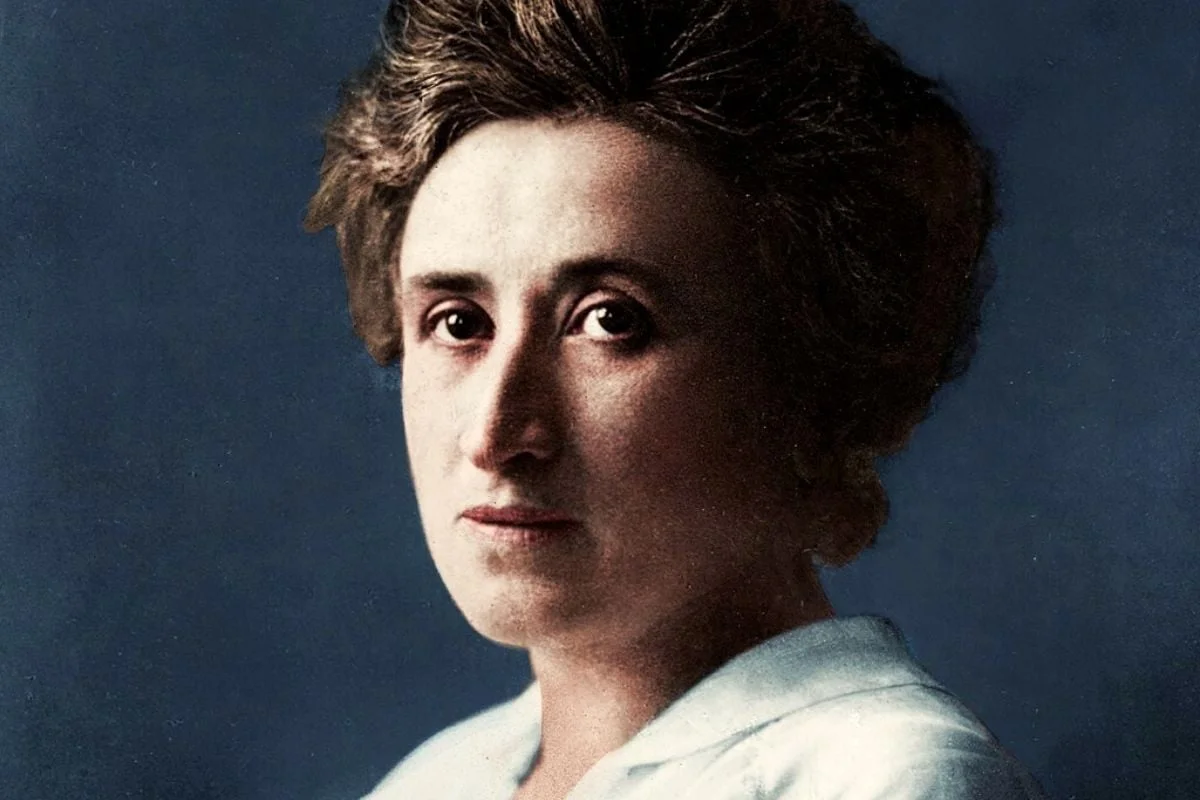
Rosa Luxemburg (1871-1919)
Luxemburg was a Polish-born socialist who developed the Marxist view of revolution and critiqued reformism.
The mass strike:
In The Mass Strike, the Political Party and the Trade Unions (1906), Luxemburg argued:
- The emancipation of the working class can only be achieved by the working class itself
- The mass strike is the strategy for revolution
- The mass strike is 'a historical phenomenon which, at a given moment, results from social conditions with historical inevitability'
- When antagonism between bourgeoisie and proletariat is greatest, the mass strike appears 'spontaneous' and overthrows the conditions that made it possible
Note
Benefits of the mass strike:
- Brings the proletariat together as a mass, giving them a sense of common interests and power
- Overcomes the atomisation of workers under capitalism
- Educates workers in organisation, developing their ability to organise society in the interests of the many
- Brings workers together to undermine and overthrow the state
Critique of reformism:
Important
In Reform or Revolution (1900), Luxemburg attacked the idea that socialism could be achieved through reform. She argued reformists 'do not choose a more tranquil, calmer and slower road to the same goal, but a different goal'.
The legislative reform route fails to recognise:
- The state represents and is controlled by the ruling class
- Reformism accommodates capitalism rather than replacing it
- Socialists value reforms not only for workers' benefits but because fighting for reform generates organisation and strength to challenge capitalism as a whole
- It abandons the historical materialism of scientific socialism
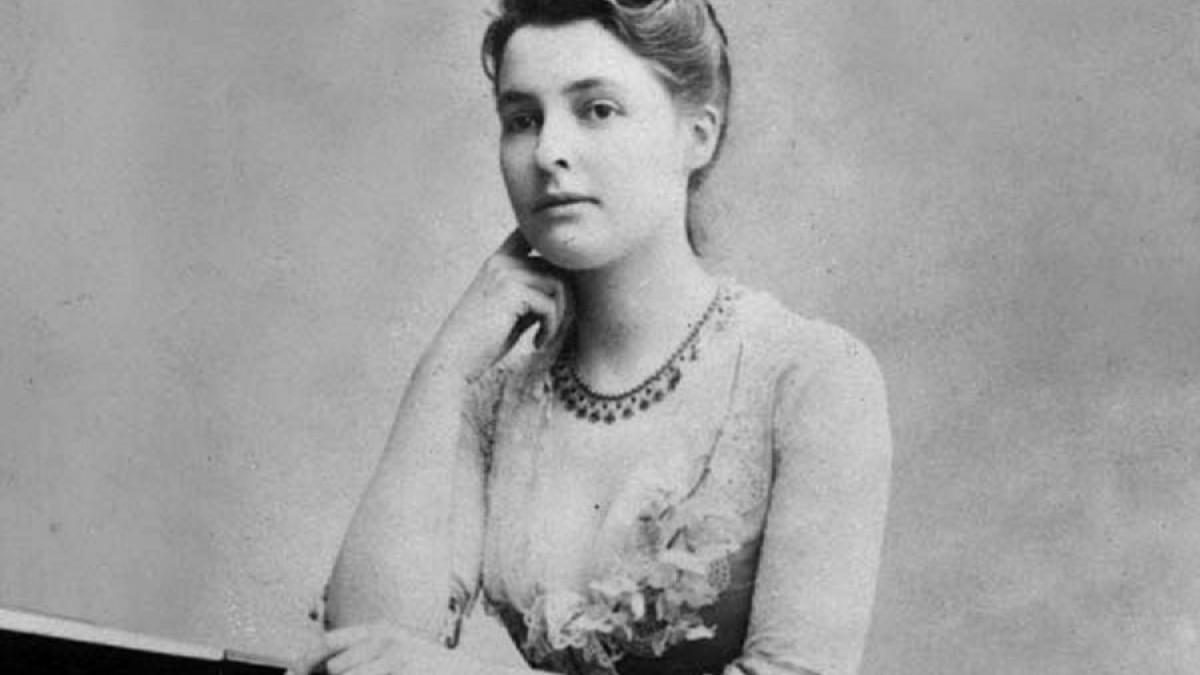
Beatrice Webb (1858-1943)
Webb was a key thinker in reformist socialism who underpinned democratic socialism. She was instrumental in establishing the Fabian Society, aligning it with the Labour Party, and drafting Clause IV of the Labour constitution of 1918, which focused on 'the common ownership of the means of production, distribution and exchange'.
Democratic socialists believe socialism should be pursued by democratic means, persuading the electorate of socialism's moral superiority through representative institutions. This contrasts with the revolutionary road to socialism.
Key arguments:
- Through painstaking research, Webb identified that 'crippling poverty and demeaning inequality' are by-products of capitalism's social structures, not individual actions or failings
- Therefore, poverty cannot be tackled through paternalism or charity - only by moving from capitalism to socialism
- Capitalism was a 'corrupting force' for human nature, making humans unnaturally selfish and greedy
The Minority Report:
Webb's The Minority Report of the Poor Law Commission (1909) argued for a 'national minimum of civilised life' and provided the foundation for much of the modern welfare state introduced by the Labour government of 1945-51.
The 'inevitability of gradualism':
Note
Webb rejected the Marxist idea that class struggle would bring socialism through revolution. Instead, socialism was inevitable but would be delivered gradually through piecemeal social and political reform by the state.
In the age of universal suffrage, the working classes would realise their exploitation under capitalism and vote for socialist parties. Socialist governments would gradually reform capitalism and take the means of production into public ownership.
This reform would produce a socialist society and shape human nature to be more cooperative, altruistic and fraternal. As the benefits of socialism become clear to all - because it is ethically superior to capitalism - the transformation would become permanent.
The nature of socialism
How should a socialist society come about?
The first major debate within socialism concerns the path to socialism: can it be achieved through evolution or does it require revolution?
Revolutionary socialism
Marx and Engels argued socialism will be achieved by revolution from below:
- The few will never willingly surrender their power and wealth
- Socialism will come through a class-based revolution where the many seize control of the state
- Socialists must be prepared to use force to defeat a violent counter-revolution by the few
- This replaces liberal democracy (dictatorship by the few) with the dictatorship of the proletariat (democracy of the masses)
- The dictatorship of the proletariat abolishes private ownership of the means of production and replaces it with common ownership
- This leads to abolition of all classes and a classless society
- This leads to communism where the state withers away
Evolutionary/reformist socialism
Evolutionary/reformist socialism delivers socialism through the ballot box and legal, piecemeal reforms, rejecting revolutionary politics.
Democratic socialists like Beatrice Webb believe in the 'inevitability of gradualism':
- Political democracy will naturally lead to common ownership of the means of production and thus to a socialist society
- There is a parliamentary road to socialism, so parliament rather than class struggle is the motor for change
- Universal suffrage enables the working class, whose lives are uniformly miserable within capitalism, to vote together in their class interest for socialist parties
- Socialism can be achieved by working within the existing state through education and gradual, piecemeal reforms delivered legally and peacefully
- Socialism would come about through all classes recognising its ethical superiority
- A working-class revolution is neither needed nor desirable
Important
Exam tip: Rosa Luxemburg's Reform or Revolution (1900) illustrates Marxist criticisms of evolutionary socialism. She argued socialism cannot be delivered by working within the state, as the state is controlled by and represents the interests of the ruling class. It is not a different path to the same end, socialism; rather it involves surrendering to capitalism.
To what extent is socialism compatible with capitalism?
Marxist tradition (fundamental socialism)
The Marxist tradition is entirely hostile to capitalism:
- Private ownership of the means of production is inherently exploitative
- Capitalism's thirst for profit can only be satisfied by driving down workers' wages, leading to exploitation and misery
- Capitalism's tendency towards worsening economic crises throws workers onto the unemployment scrapheap, creating further misery
- Marx, Engels and Luxemburg argued private property and the market must be abolished and replaced by common ownership and cooperation
- Once common ownership is established, there will be a classless society and the state will wither away
- This creates true democracy that allows humans to develop their fraternal and cooperative nature
Revisionist socialism
Revisionist socialism reinterprets socialism to account for changes in the world. It is associated with humanising rather than abolishing capitalism.
Revisionist socialists argue:
- Capitalism is incredibly efficient at producing economic growth and raising living standards
- Capitalism should be harnessed and humanised to achieve socialist ends
Note
Social democrats, like Anthony Crosland, argue progressive taxation, high levels of spending on public services and universal welfare can fairly distribute rewards, status and privileges. This minimises social resentment between classes and creates equal opportunities for all, securing social justice.
Social justice means fairness in distributing assets, wealth and advantages within society. It involves commitment to equality through redistribution via the state, including progressive taxation on the wealthy and provision of universal welfare.
Advocates of the third way, like Anthony Giddens, argue increased tax revenues produced by the free market can be invested in infrastructure and public services, especially education. This creates equality of opportunity.
Revisionist socialism
Social democracy
According to social democrats, the harsh world of capitalism had been transformed by reforms of the postwar Labour government under Clement Attlee (1945-51) through nationalisation, creation of the welfare state and Keynesian economics.
Keynesian economics involves using taxation and spending policies to create full employment and continuous economic growth.
Key arguments of social democracy:
- The Marxist theory of working-class misery and deeper economic crises had been disproved by growing economic output and living standards
- The power of the business-owning class had been reduced by increased government power and the rise of trade unions
- Managers, not business owners, were now running industry, so it was better to focus on control/regulation of capitalism rather than public ownership
- Managers were a new class in society, weakening Marx's idea of two competing classes under capitalism
- The mixed economy - a mixture of public ownership of key industries and services (rail, water, electricity) and most other industries under private ownership - was economically successful and reduced inequality
Modern socialism under social democracy focused on:
- Social justice: improving welfare and social equality through progressive taxation and redistribution of wealth to rectify market inequalities
- Social equality: tackling poverty and reducing inequality (though not complete equality, as 'extra responsibility and exceptional talent require and deserve a differential reward', in Anthony Crosland's words)
- Weakening 'the existing deep-seated class stratification with its consistent feelings of envy and inferiority, and its barriers to uninhibited mingling between the classes'
Important
Important distinction: Socialists focus on social equality (more equal distribution of wealth, income and status), whereas liberals can justify inequality provided there is equality of opportunity and meritocracy.
Anthony Crosland (1918-77)
Crosland's The Future of Socialism (1956) is arguably the most important revisionist work of the postwar era.
Core arguments:
- Crosland was a revisionist, arguing socialism had 'no precise, descriptive meaning' and was really a set of values, not a fixed programme
- Social equality was the fundamental aim, not ownership of the means of production
- 'Marx has little to offer the contemporary socialist' and the Marxist idea of imminent capitalist collapse had been disproven by events
- Crosland was extremely optimistic about economic growth, stating 'I no longer regard questions of growth and efficiency as being, on a long view, of primary importance to socialism'
On capitalism:
- Capitalism was becoming more managerial and technocratic, less focused on profit
- It was more willing to accept systems of regulation imposed by states
- The Keynesian economic approach could control the economy to keep delivering growth and ensure full employment without any need for more public ownership
On redistribution:
Note
Managed capitalism's ability to produce continuous growth could be harnessed. Progressive taxation and redistribution of wealth via the welfare state and public services could promote social equality and tackle poverty. This was 'capitalism with a human face'.
On education:
- Crosland emphasised ending segregation and selection in school education to provide comprehensive education for all
- This would help break down barriers between classes, minimising class distinctions
- It would provide all pupils with equality of opportunity
The third way
The third way is associated with Anthony Giddens and the Labour Party under Tony Blair.
Core principles:
- General acceptance that managed capitalism of Keynesian economics is dead
- Accepts the free market of neo-liberalism
- Aims to balance this with social democracy's commitment to community and equality of opportunity
- Willing to accept free-market economics but not an atomistic society
- Proposes the widest possible freedoms, but tied to responsibilities to the wider community
Key differences from traditional socialism:
- Emphasis on community and ties that bind everyone together tends to downplay the importance of class divisions and inequality
- Focus is on consensus and social harmony, not class conflict
- Rejects emphasis on social equality, instead focusing on providing equality of opportunity
- Gives people access to education and welfare targeted at the socially excluded (e.g. the poorest) so they can access opportunities in society
Role of the state:
- Not social engineering through redistribution (as Crosland proposed)
- The 'competitive' state should concentrate on social investment in infrastructure and especially education
- This makes the state more competitive in the global market
Focus on education:
- Education is key as it creates a skilled and knowledgeable workforce
- This enables competition in the modern, globalised economy
- Drives economic growth
- Allows individuals to realise their full potential
Economic growth:
- Economic growth is crucial as it provides the tax base for social investment
- Investment areas include education, transport infrastructure and technology infrastructure
Anthony Giddens (1938-)
Giddens's main ideas include rejection of traditional socialism and advocacy of the 'third way' in politics.
On globalisation:
In Beyond Left and Right (1994), Giddens states that 'Old Conservatism, at least in its more principled forms, is, as has been aptly said, the "other God that failed" alongside Communism and radical socialism.'
Note
The third way is a response to the changing world. Globalisation has transformed modern economies and the role of government. Government capacity to manage the economy is much reduced.
Government has two clear roles:
- Make the workforce more competitive through building skills and knowledge in education and training
- Build necessary infrastructure (transport, schools and hospitals) to maximise trade and investment
Combining right and left:
Giddens argued for a combination of right-wing economic and left-wing social policies. In The Third Way: The Renewal of Social Democracy (1998), he argued:
- Socialism had to accept that neo-liberalism was here to stay and was crucial as it promoted growth, entrepreneurship, enterprise and wealth creation
- Neo-liberalism had empowered the individual economically, bringing greater freedom, but had also undermined traditional communities
- Neo-liberalism needed to be married to principles of community and equality of opportunity from social democracy
On community:
- The principle of community could be delivered through devolving power to Scotland, Wales, regional assemblies and directly elected mayors, who represent various communities
- It is evident in the drive for social inclusion and the idea of rights coming with responsibilities
On equality of opportunity:
- Giddens focused on equality of opportunity, recognising it is denied to many
- This can be corrected by targeted, efficient public spending
- With targeted spending comes individual responsibility - local schools will be improved, but parents have responsibility to ensure their child attends and face consequences if they don't
On work:
- Work is the path out of poverty, so work needs to be made worthwhile as it gives people a sense of dignity and worth
- The state has responsibility to train and educate workers
- Individuals have responsibility to take those jobs
Example
Practical examples: Tony Blair's policies and US President Bill Clinton's political outlook illustrate the third way in practice.
Core ideas of socialism: human nature
Areas of agreement
Socialists generally hold the following views about human nature:
- Humans are social beings, naturally fraternal, cooperative and communal
- They seek solidarity rather than competition
- Human nature is flexible, multifaceted and shaped by social circumstances - this is the most important view socialists hold
- Humans change as circumstances change, but they also create new and different social relations and adapt to them
- If humans can create capitalism, they can create socialism
- Socialism holds an optimistic view of what human nature can become, given the right social relations
Areas of tension
Marx and Engels' perspective:
Note
Human nature is not fixed and cannot be understood independently of society. Human essence is 'the ensemble of social relations'. The only consistent feature is the need to labour to satisfy human needs.
Capitalism turns labour into forced labour to create profit, not to satisfy needs. This alienates the worker, preventing them from living satisfying lives, engaging in fulfilling work and relating to others.
Summary
Key Points to Remember:
-
Socialism developed in response to capitalism and the inequalities of the Industrial Revolution, drawing on Enlightenment ideas about human reason and progress.
-
Revolutionary socialism (Marx, Engels, Luxemburg) argues capitalism must be overthrown through class struggle and replaced with common ownership, eventually leading to a classless, stateless communist society.
-
Evolutionary/reformist socialism (Webb) believes socialism can be achieved gradually through democratic means, education and piecemeal reforms, with universal suffrage enabling workers to vote for socialist parties.
-
Social democracy (Crosland) accepts capitalism but seeks to humanise it through Keynesian economics, progressive taxation, universal welfare and public services to achieve social justice and relative equality.
-
The third way (Giddens) accepts free-market capitalism and focuses on equality of opportunity rather than social equality, emphasising community, individual responsibility and social investment in education and infrastructure.