Devolved Bodies in the UK (AQA A-Level Politics): Revision Notes
📚Revision Notes
Devolved Bodies in the UK
What is devolution?
Devolution is the transfer of governmental powers from the central parliament at Westminster to regional assemblies in Scotland, Wales and Northern Ireland. These regions have their own elected bodies that can create legislation in specific policy areas.
Under devolution, some powers remain with Westminster. These are called reserved powers and include areas such as defence, foreign policy and immigration. The powers transferred to regional assemblies are known as devolved powers.
Note
Devolution differs from federalism. In a federal system, powers are permanently divided between central and regional governments, requiring constitutional change to alter. With devolution, Westminster could theoretically reclaim transferred powers, though this is unlikely in practice.
Historical background
The UK's constitution is traditionally unitary, with power concentrated at Westminster. Devolution has modified this structure, giving the UK some federal characteristics.
While earlier attempts were made (particularly by the 1974-79 Labour government), devolution was successfully introduced in 1998 as part of Tony Blair's constitutional reforms. This followed successful referendums in 1997-98, where voters in Scotland, Wales and Northern Ireland approved proposals for elected regional assemblies.
Important
Historical Context: Devolution wasn't entirely new to the UK. Northern Ireland had its own parliament from 1921 to 1972, suspended during the Troubles and abolished in 1973. Scotland has always maintained its own education and legal systems, showing a history of regional autonomy even before modern devolution.
The Scottish Parliament
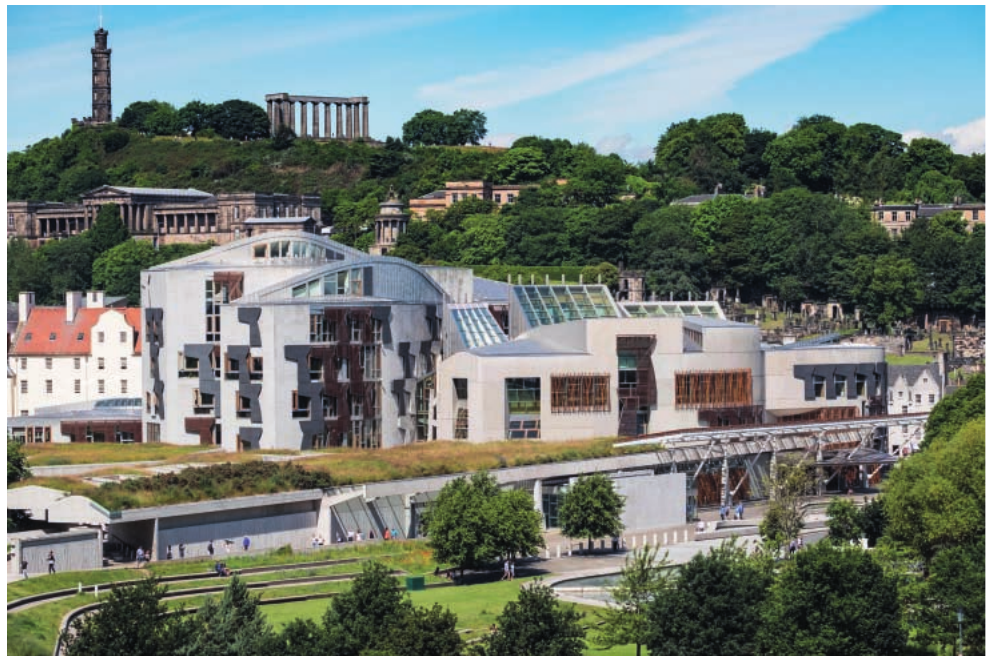
The Scottish Parliament, also known as Holyrood (after its Edinburgh location), was established following the 1997 referendum. It is elected every five years using the Additional Member System (AMS).
Key legislation for Scotland
Scotland Act 1998
The foundational Act granted primary legislative powers in domestic areas including law and order, health, education, transport and environment. It also allowed variation of income tax by up to 3p in the pound (Scottish Variable Rate).
Scotland Act 2012
This Act transferred significant tax-raising powers, enabling income tax changes of up to 10p in the pound (Scottish Rate of Income Tax). It also devolved stamp duty and landfill taxes, permitted borrowing up to £5 billion, and established Revenue Scotland tax authority.
Note
Expanding Financial Powers
The progression from the 1998 Act to the 2012 Act shows a clear pattern of increasing financial autonomy. The Scottish Parliament moved from being able to adjust income tax by just 3p to having control over 10p variations, alongside gaining control of additional tax streams. This reflected growing confidence in devolution's success.
Scotland Act 2016
This represented a major expansion of powers including equal opportunities, abortion law, speed limits and gaming machines. It gave control over air passenger duty, allowed creation of income tax rates across multiple bands, and enabled setting of voting age for Scottish elections (requiring two-thirds parliamentary vote). These changes delivered promises made during the 2014 independence referendum campaign.
The Scottish Parliament has passed over 300 pieces of legislation, demonstrating significant impact on Scottish policy and life.
The Welsh Senedd
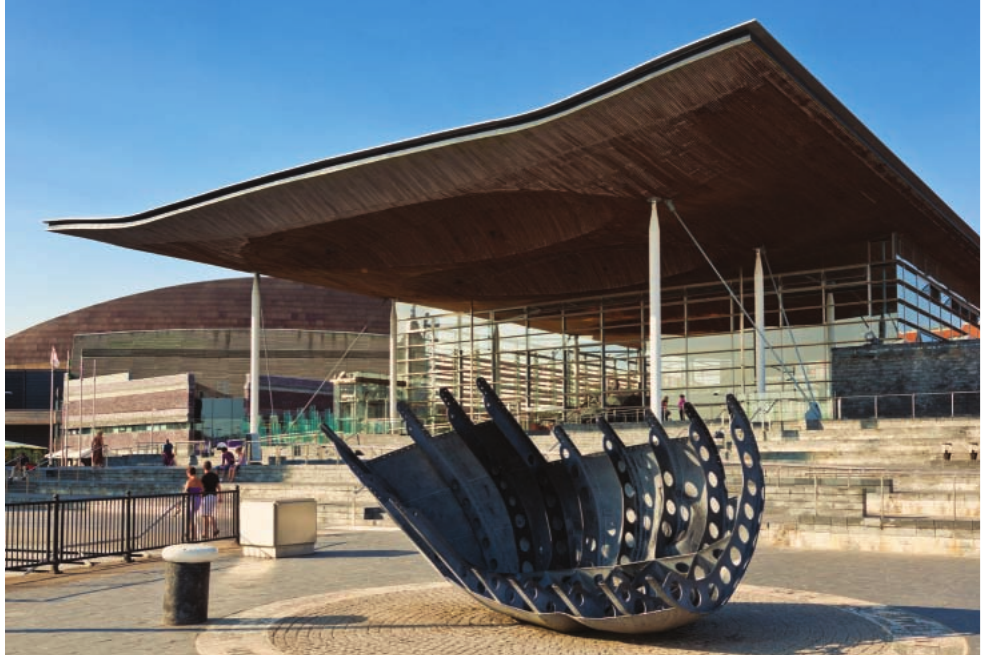
The Welsh Senedd (Welsh Parliament), formerly the Welsh Assembly, meets in Cardiff. Like Scotland, it uses AMS and holds elections every five years.
Key legislation for Wales
Government of Wales Act 1998
The initial Act created the Welsh Assembly with limited powers. It could devise secondary legislation in areas like agriculture, fisheries, education, housing and highways - powers similar to those previously held by the Secretary of State for Wales.
Government of Wales Act 2006
This Act enabled the Assembly to request additional powers from Westminster and allowed primary legislative powers if approved by referendum. It also established the Welsh Assembly Government (renamed Welsh Government in 2011).
Note
The Welsh Devolution Journey
Wales's devolution path differed markedly from Scotland's. Where Scotland began with primary legislative powers in 1998, Wales started with only secondary legislative powers - essentially the ability to modify how Westminster laws were implemented, rather than creating entirely new laws. This gradual approach reflected Wales's closer historical integration with England.
2011 Referendum
Voters approved primary legislative powers in 20 devolved policy areas with a clear 64% 'Yes' vote, showing growing support for Welsh devolution. Devolved areas included health, transport and agriculture.
Wales Act 2014
This marked the first major transfer of tax-raising powers, devolving stamp duty, business rates and landfill tax, and enabling creation of Wales-specific taxes.
Wales Act 2017
This Act significantly increased primary legislative powers and granted control over the electoral system (requiring two-thirds majority). It devolved policy areas including road signs, onshore oil and gas, harbours, rail franchising and energy efficiency. The Act allowed income tax variation of up to 10p in the pound, established Welsh Revenue Authority, permitted the name change, and put Welsh devolution on similar footing to Scotland (except policing and justice).
Senedd and Elections (Wales) Act 2020
This formally changed the legislature's name to Senedd Cymru (Welsh Parliament) and extended voting rights to 16- and 17-year-olds for Welsh elections.
Example
Policy Innovation: Organ Donation
The Senedd has unique authority over Welsh language legislation and has effectively used its primary legislative powers. A notable example is the introduction of an 'opt-out' organ donation system in 2015 - making Wales the first UK nation to adopt this approach. The policy was so successful that England followed suit, adopting the same system in 2020.
The Northern Ireland Assembly
Northern Ireland's devolution story is more complex, intertwined with the peace process following the Troubles - a period of sectarian violence beginning in 1969.
The Troubles and peace process
The conflict involved terrorist campaigns by two main groups:
- Loyalists/unionists - those wanting Northern Ireland to remain part of the UK (often associated with Protestants)
- Republicans/nationalists - those seeking a united Ireland with the Republic of Ireland (often associated with Catholics)
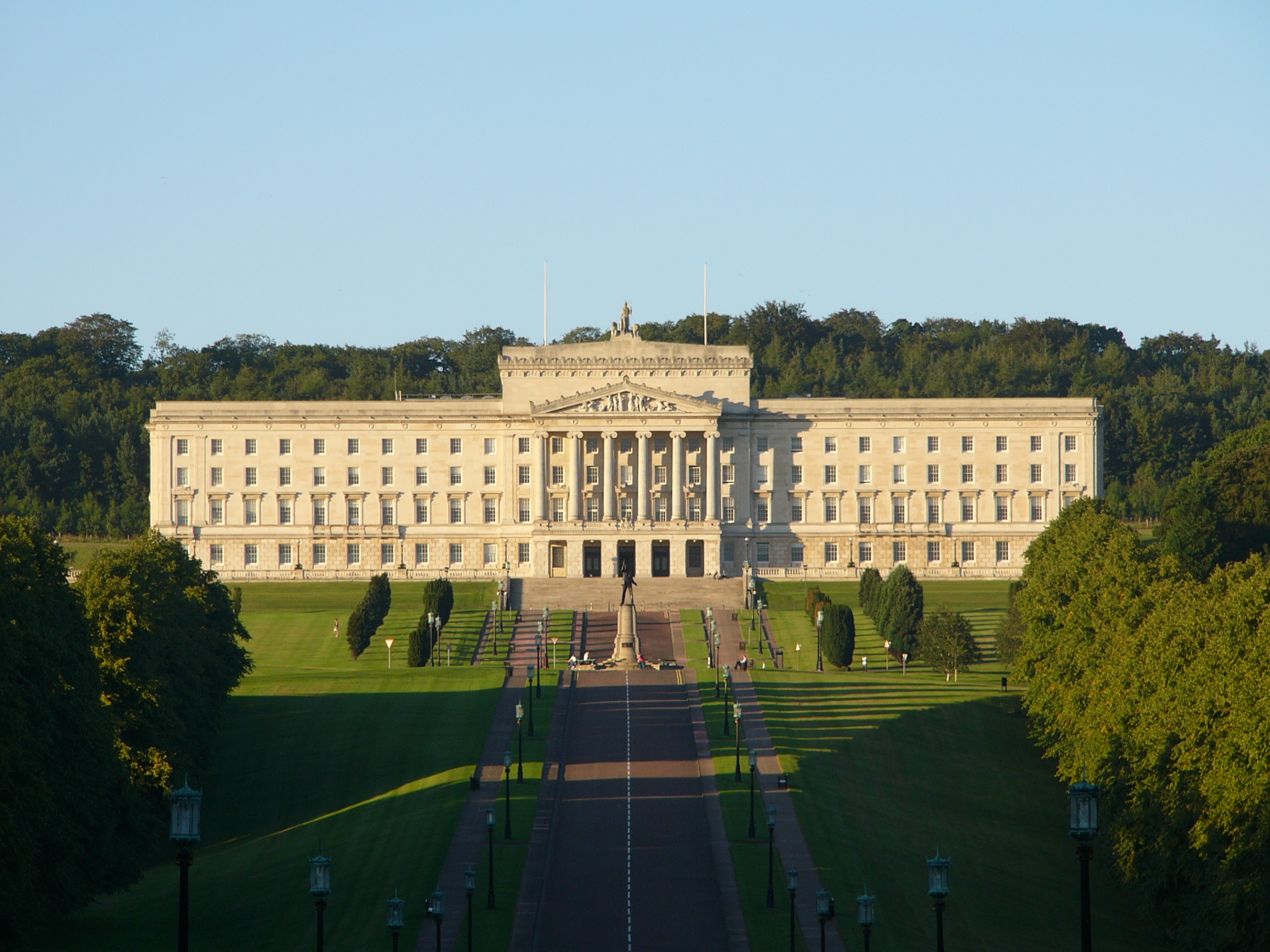
The earlier Stormont Parliament (1921-1972) was dominated by unionists and seen as discriminatory towards nationalists. It was suspended in 1972 and abolished in 1973.
Following paramilitary ceasefires in 1995, negotiations led by ex-US Senator George Mitchell resulted in the Good Friday Agreement in 1998. This promised devolved government restoration, prisoner releases, reduction in British Army presence, civil rights measures, and 'parity of esteem' for both communities.
A referendum in May 1998 approved the agreement by 71%-29%, enabling creation of the Northern Ireland Assembly and Executive.
Unique features of Northern Ireland devolution
Important
Power-Sharing Requirements
Northern Ireland's devolution differs fundamentally from Scotland and Wales due to its unique power-sharing arrangements:
- The Executive always contains members from both communities
- Ministerial posts are allocated proportionally by party strength
- The First Minister is chosen by the largest party
- The Deputy First Minister is chosen by the second largest party
- Assembly members (MLAs) must designate as 'nationalist', 'unionist' or 'other'
This ensures that government decisions require cross-community consensus, preventing domination by either side.
Different party structure
Northern Ireland operates with a distinct party system:
- Unionist parties: Democratic Unionist Party (DUP), Ulster Unionist Party (UUP)
- Nationalist parties: Social Democratic and Labour Party (SDLP), Sinn Féin
- Non-sectarian parties: Alliance Party, Green Party
- Main Westminster parties have minimal presence
Limited power expansion
Unlike Scotland and Wales, powers haven't significantly increased since 1998. The Assembly has very limited tax-raising powers, with corporation tax devolved in 2015 being the main addition.
Note
Assembly Suspensions
The Assembly was suspended 2017-2020 following power-sharing collapse between DUP and Sinn Féin. During suspension, Westminster intervened to extend same-sex marriage and legalise abortion - showing that while powers are devolved, Westminster retains ultimate authority in reserved matters.
Comparison of devolved bodies
| Feature | Scottish Parliament | Welsh Senedd | Northern Ireland Assembly |
|---|---|---|---|
| Elected members | 129 | 60 | 90 |
| Electoral system | AMS | AMS | STV |
| Government type (2026) | SNP government (minority) | Labour government (minority) | Power-sharing Executive |
| First Minister (2026) | John Swinney (SNP) | Eluned Morgan (Labour) | Michelle O’Neill (Sinn Féin) |
| Location | Edinburgh (Holyrood) | Cardiff | Belfast (Stormont) |
Devolved versus reserved matters
| Devolved matters | Reserved matters |
|---|---|
| Agriculture, forestry and fisheries | Benefits and social security |
| Education and training | Broadcasting |
| Environment | Constitution |
| Health and social services | Defence |
| Housing | Employment |
| Land use planning | Equal opportunities |
| Law and order | Foreign policy |
| Local government | Immigration |
| Sports and the arts | Trade and industry |
| Taxation (some forms)* | |
| Transport (many aspects) |
*Note: Northern Ireland has most of the same powers as Scotland and Wales, but not taxation.
The devolved assemblies enjoy considerable legislative autonomy. Westminster retains control only over reserved matters - primarily defence, foreign affairs, trade and immigration. The Northern Ireland Assembly has slightly fewer powers, particularly regarding taxation.
Case study: The M4 relief road
Example
Practical Application: The M4 Relief Road Dispute
This case illustrates tensions between devolved and UK governments and clarifies the limits of Westminster's authority in devolved areas.
In July 2020, Boris Johnson announced plans for a relief road for a congested M4 section in Newport, South Wales, promising to "do the things the Welsh government has failed to do". He described it as "providing a Vicks Inhaler to the nostrils of the Welsh dragon", arguing congestion harmed business investment.
The Labour-run Welsh government challenged this. They had previously scrapped the scheme in 2019 after declaring a climate emergency, arguing more roads would increase traffic and carbon emissions.
The Welsh government asserted that transport is entirely devolved, so the Prime Minister had no authority over Welsh road building. Economy Minister Ken Skates called Johnson's comments "nothing more than nonsense on stilts".
Key outcome: The UK government cannot simply override devolved government decisions in devolved policy areas. This case reinforced the principle that devolved matters remain under regional control, even when the UK government disagrees with decisions.
Has devolution been successful?
Arguments supporting devolution's success
Regional political recognition
Devolution allows regions to reflect different political preferences. For example, Scotland's more left-leaning politics enabled an income tax increase to 46p for highest earners (versus 45p elsewhere in UK), reflecting distinctive Scottish political values.
Strengthening the union
The system creates a 'best of both worlds' - regional autonomy in domestic policy while benefiting from the larger nation for defence and trade. This arrangement satisfies desires for self-governance without full independence.
Note
Growing Popular Support
Devolution has proven particularly popular with voters. This is most evident in Wales, where support grew dramatically from the 1997 referendum's narrow 50.3% approval to the 2011 referendum's clear 64% support. This trend suggests devolution has become more embedded and valued over time.
Peace dividend in Northern Ireland
Devolution was essential for the peace process and has enabled cross-community cooperation that would have been impossible under direct Westminster rule.
Electoral system diversity
The devolved bodies have demonstrated that minority and cross-party governments can function effectively, providing practical evidence for electoral reform debates.
Policy innovation
Devolved bodies act as 'legislative laboratories', testing policies that can be adopted elsewhere if successful. Notable examples include Scotland's 2006 smoking ban in enclosed public spaces (later extended UK-wide) and Wales's 5p plastic bag charge.
Arguments questioning devolution's success
Public service inequalities
Different provision and costs exist across the UK. Examples include free university tuition in Scotland versus £9,000+ fees in England, and free prescriptions in Wales and Scotland but not England. These disparities raise questions about fairness and equality.
Important
The Separatism Question
A significant concern is that devolution may have strengthened independence demands rather than satisfying them. The 2014 Scottish independence referendum was relatively close (55%-45%), showing substantial support for separation. Brexit further highlighted divisions, as Scotland and Northern Ireland voted Remain but had no direct role in negotiations. The SNP continues calling for a second independence referendum, suggesting devolution hasn't resolved the constitutional question.
Fragility in Northern Ireland
Community relations remain delicate, with the Assembly's suspension from 2017-2020 demonstrating ongoing challenges. Power-sharing has sometimes led to gridlock when communities cannot reach agreement.
Limited electoral reform impact
Despite successful use of alternative electoral systems in devolved bodies, this has not created momentum for replacing first-past-the-post at Westminster level.
Policy innovation claims
Critics argue that policies like smoking bans or plastic bag charges might have happened through Westminster anyway, questioning whether devolution truly enables innovation or simply accelerates inevitable changes.
Remember!
Summary
Key Points to Remember:
-
Devolution transfers specific governmental powers from Westminster to regional assemblies while retaining certain reserved powers centrally
-
Three devolved bodies exist: Scottish Parliament (Holyrood), Welsh Senedd, and Northern Ireland Assembly
-
Each body has evolved differently: Scotland had most powers from the start; Wales gained powers gradually; Northern Ireland has unique power-sharing arrangements
-
Reserved matters (defence, foreign policy, immigration, trade) remain with Westminster
-
Devolved matters include health, education, transport, environment, and law and order
-
Electoral systems differ: Scotland and Wales use AMS; Northern Ireland uses STV
-
Devolution has proven largely popular and enabled regional policy innovation, though it has also created some inequalities and potentially strengthened independence movements