Significant Changes to Parties Over the Last 50 Years (AQA A-Level Politics): Revision Notes
📚Revision Notes
Significant Changes to Parties Over the Last 50 Years
American political parties have undergone dramatic transformations over the past half-century. Understanding these changes is crucial for analysing contemporary US politics and the deep divisions that characterise modern American political life. The two main parties - the Democrats and Republicans - have shifted significantly in four key areas: their geographical support base, their ideological positions, the demographics of their voters, and how united they are when voting in Congress.
Geographical shifts in party support
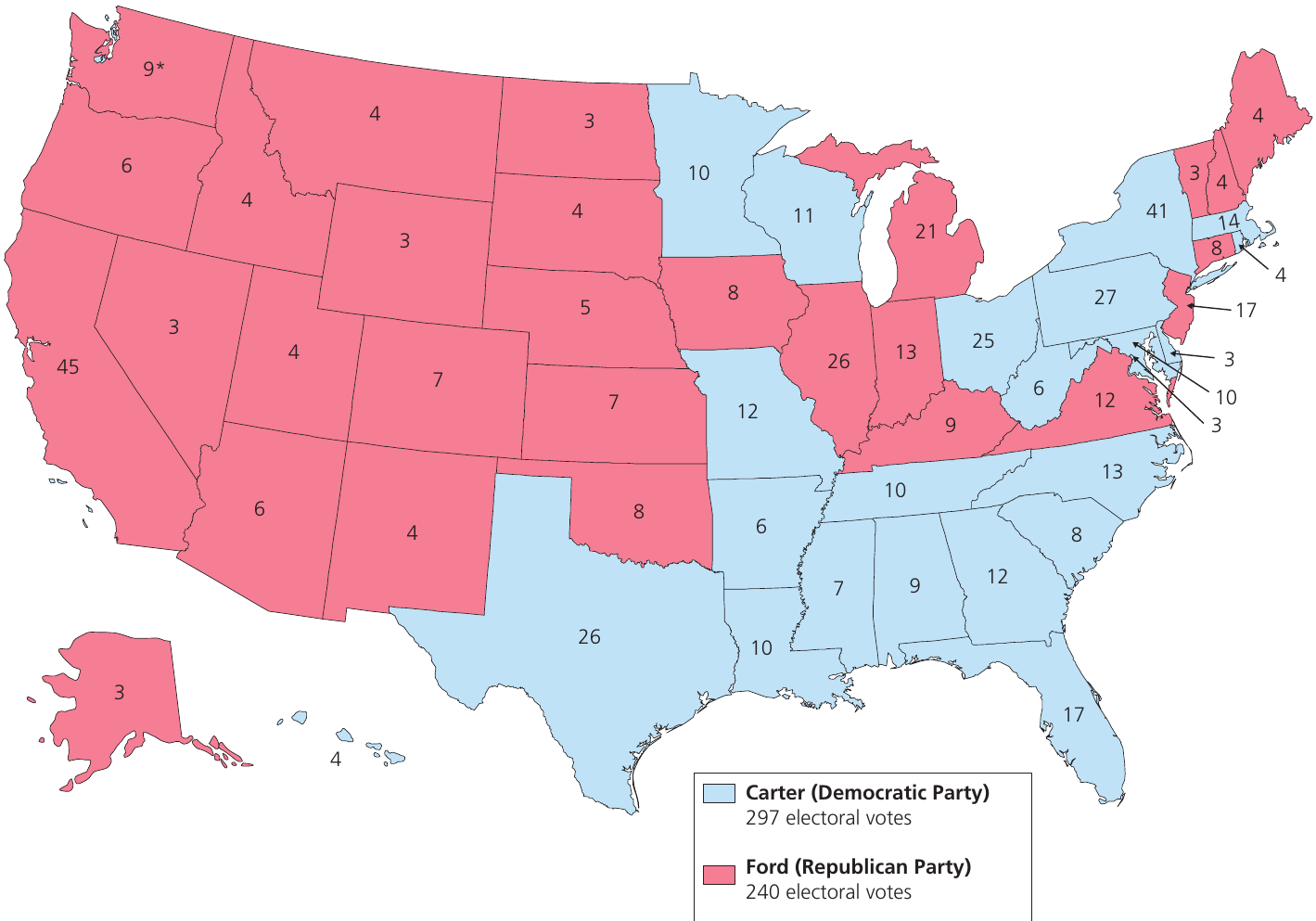
One of the most striking visual changes in American politics over the past 50 years has been the dramatic reversal of regional party support. If you compare electoral maps from the 1970s with those from recent elections, the transformation is remarkable.
Example
Historical Turning Point: The 1976 Presidential Election
The 1976 presidential election was the last time a Democratic candidate won comprehensively across the American South. Jimmy Carter, a Democrat from Georgia, carried most southern states in his victory over Republican Gerald Ford. At this time, the South was still largely Democratic territory, a legacy of the post-Civil War era.
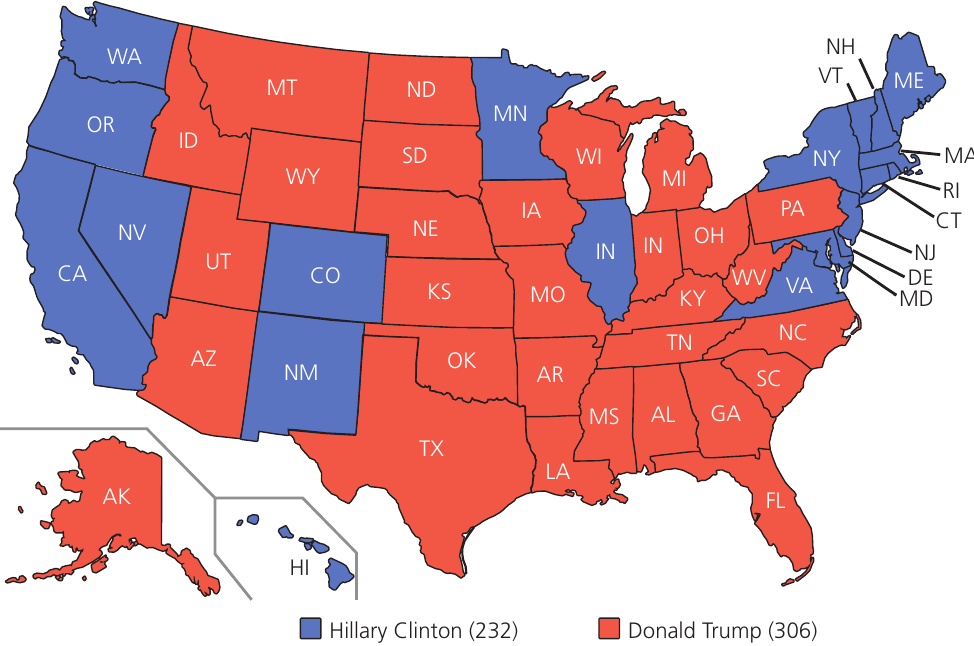
By 2016, the political map had been completely redrawn. The South had become solidly Republican, whilst the East and West coasts emerged as Democratic strongholds. This geographical transformation represents one of the most significant realignments in American political history.
Note
Until the early 1960s, political commentators could confidently refer to a Democratic 'Solid South'. However, by the first decade of the twenty-first century, this Solid South had flipped almost entirely to the Republicans. Even when southern Democrat Bill Clinton won the presidency in 1992 and 1996, he only managed to carry a handful of southern states.
Similarly, the Democrats last won Texas in 1976, whilst Republicans last won California in 1988 - these two largest states by Electoral College votes now represent opposite ends of the political spectrum.
This geographical shift didn't happen overnight. It was the result of profound ideological and demographic changes that began in the 1960s and accelerated through subsequent decades. The South's transformation from Democratic to Republican territory is closely linked to the civil rights movement and the parties' evolving positions on racial issues, social values and the role of government.
Important
Exam tip: When discussing geographical changes, always link them to specific elections and be prepared to explain why these changes occurred, not just what changed.
Ideological transformations
The simple version of the story is that Republicans have become more conservative over the past half-century, whilst Democrats have moved in a more liberal direction. However, the full narrative is more complex and centres on pivotal events in the 1960s.
The Republican shift to conservatism
The transformation of the Republican Party began in earnest during the 1960s. When Democratic President Lyndon B. Johnson signed the Civil Rights Act in 1964, he allegedly remarked to an aide: 'We (Democrats) have lost the South for a generation.' This prediction proved remarkably accurate, though the South didn't immediately flip to Republican control.
Note
Conservative Republicans such as Barry Goldwater and Richard Nixon deliberately developed what became known as the 'Southern strategy' - a political approach designed to appeal to white southerners who felt alienated by the Democratic Party's support for civil rights. Whilst there could be no return to formal segregation and overtly racist language was largely avoided, this strategy played a crucial role in transforming both the electoral and ideological landscape of American politics.
Example
The 1964 Republican Convention: A Defining Moment
At the 1964 Republican convention, Goldwater's supporters drove out black Republicans from state party leadership positions across the South and rebuffed efforts to strengthen the party's pro-civil rights stance. Although Goldwater suffered a landslide defeat in 1964, he arguably won the longer battle for the soul of the modern Republican Party.
The Republican ideological transformation, which was consolidated and refined by Nixon and Reagan, and later given a populist twist by Trump, revolved around several key policy areas:
Law and order: Against the backdrop of serious urban riots in 1967 and 1968, many Republicans adopted a strong law-and-order platform that resonated with voters concerned about social disorder.
Opposition to desegregation policies: Many Republican candidates positioned themselves against sensitive issues such as forced educational integration through 'busing', whereby schools were required to become more racially diverse, sometimes at the expense of parental choice.
Social conservatism: As liberal ideas about sexual morality and abortion gained ground, many Republicans embraced strongly conservative stances, opposing much of the feminist and sexual revolutions. Strong links developed with white evangelical preachers, marking the rise of the 'religious right'.
Limited government: Republicans increasingly adopted positions that were protective of Second Amendment gun rights and hostile towards 'big government' intervention.
Note
These ideological shifts led some conservative southern Democrats to switch parties. Jesse Helms (North Carolina) and Strom Thurmond (South Carolina) both changed their party labels from Democrat to Republican. Conversely, more liberal and moderate Republicans either lost in primaries or switched to the Democrats. John Lindsay, a former congressman and mayor of New York, noted when leaving the Republicans in 1971: 'Today the Republican Party has moved so far from what I perceive as necessary policies... that I can no longer try to work within it.'
The Democratic shift to liberalism
An almost parallel transformation occurred within the Democratic Party. As the party embraced civil rights and shed much of its southern conservative wing from the 1960s onwards, it became more liberal and racially diverse. By the turn of the millennium, Democrats had become champions of causes such as gun control, abortion rights (pro-choice), LGBTQ+ rights and universal healthcare provision.
As the Democratic Party moved leftward on social issues, it attracted support from moderate Republicans who felt their party had become too conservative. This trend continued into the twenty-first century, with notable defections including Republican politicians Arlen Specter (Pennsylvania) in 2009 and Lincoln Chafee (Rhode Island) in 2013.
Important
One quote neatly captures the scale of this ideological transformation. Senator Edward Brooke reflected on the 1950s: '[The Republican Party] was, I believe, much more progressive than the Democratic Party.' No one could make such a claim today. What makes Brooke's observation particularly striking is that he was himself African-American and served as a Republican senator for Massachusetts from 1967 to 1979 - a combination that would be highly unusual in contemporary politics.
Important
Exam tip: When discussing ideological shifts, remember that the process was gradual, not sudden. Be able to identify specific turning points and explain the causes behind these changes.
Demographic changes in party support
The ideological and geographical shifts described above have resulted in dramatically different support bases for each party. Understanding these demographic patterns is essential for analysing modern American elections and political behaviour.
Republican voters
Republican voters are now characterised by several demographic features:
- More likely to be white
- More likely to live in rural areas or small-town America
- More likely to attend church regularly
- Less likely to be educated to degree level or above
Democratic voters
Democratic voters present a contrasting demographic profile:
- Much more likely to be found in urban areas
- More likely to come from a diverse range of backgrounds and cultures
- Less likely to be religious
- Disproportionately more likely to have higher levels of formal education
Note
These demographic trends act as mutual reinforcers, as the two parties become increasingly distinct and represent different segments of American society. Party campaigns increasingly appeal (some might argue pander) to the specific concerns and values of their different voter groups.
For example, Democratic advertising often encourages supporters to view Republicans as racists, bigots and hostile to women's rights. Conversely, Republican-leaning voters receive messages portraying Democrats as fundamentally unpatriotic, subversive socialists and enemies of faith-based values who want to take away guns from law-abiding citizens whilst simultaneously defunding the police.
Important
This demographic sorting has profound implications for American democracy, as it means the two parties increasingly represent not just different political views but different ways of life, different communities and different cultural values.
Increased party cohesiveness
A final consequence of the growing partisan divide is a dramatic change in how the parties function and vote in Congress. The parties are now far more united in their voting behaviour, with much less bipartisanship than in previous decades. Major policies such as Obamacare and the Trump tax cuts were passed with very little support from the opposing party.
Example
Contrast in Legislative Bipartisanship: Then and Now
This represents a sharp contrast with earlier periods. When Johnson passed civil rights measures including the Civil Rights Act 1964 and the Voting Rights Act 1965, he relied heavily on Republican votes to get the legislation through. In the Senate, the Civil Rights Act was actually more popular with Republicans - 81% backed it compared with just 69% of Democrats. Such reliance on opposition party votes in Congress would be almost unthinkable in twenty-first-century US politics.
Impeachment as an indicator of party unity
Impeachment proceedings provide a stark illustration of increased party cohesiveness. In 1974, when the House moved to begin impeachment proceedings against President Nixon following the Watergate scandal, seven out of 17 Republicans on the House Judiciary Committee broke party ranks and voted with Democrats to impeach Nixon on charges of abuse of presidential power.
Important
Fast forward to 2019, and the contrast is striking. When the House voted to proceed with Trump's impeachment, not a single one of the 195 Republican lawmakers sided with the Democrats. This represents a complete transformation in party loyalty and cohesiveness.
Note
Study tip: Remember that whilst parties are far more united in opposing policies from the other party, they can still struggle to agree among themselves when in power. Republicans were completely united against Obamacare, but when they tried to implement their own healthcare reforms under Trump, they failed to agree amongst themselves and no reforms were passed.
Remember!
Summary
Key points to remember:
- The South has transformed from solidly Democratic to reliably Republican over the past 50 years, whilst the coasts have become more Democratic
- Republicans have become more conservative and Democrats more liberal, with the civil rights era of the 1960s marking a crucial turning point
- The Southern strategy was a deliberate Republican approach to win over white southern voters alienated by Democratic support for civil rights
- Party support bases now differ sharply: Republicans draw more support from white, rural, religious voters with less formal education, whilst Democrats attract urban, diverse, less religious voters with higher education levels
- Both parties are now much more cohesive in Congress, with far less bipartisanship than in previous decades - compare the Civil Rights Act 1964 (81% Republican Senate support) with Trump's impeachment (0% Republican House support)
Key terms: Southern strategy, Solid South, realigning elections, bipartisanship, cohesiveness, religious right
Important figures: Lyndon B. Johnson (signed Civil Rights Act 1964), Barry Goldwater (pioneered conservative Republicanism), Richard Nixon and Ronald Reagan (consolidated Republican conservatism), Strom Thurmond and Jesse Helms (Democrats who switched to Republicans)