Globalisation (Edexcel A-Level Business): Revision Notes
📚Revision Notes
Factors Contributing to Increased Globalisation
Understanding globalisation
Globalisation refers to the growing integration of the world's economies. It describes the process by which firms and individuals operate as though there is a single worldwide market rather than separate national economies. This development has accelerated significantly since the 1980s, transforming how businesses operate and how economies interact.
Many markets today function on a global scale. A multinational company might have its headquarters in London, secure funding from Japanese banks, manufacture products in China, run customer service operations from India, and sell goods across every continent. This interconnected approach represents the essence of globalisation.
Note
Modern Globalisation in Practice
Consider how a single product reaches consumers: A smartphone might be designed in California, use components manufactured in South Korea and Taiwan, be assembled in China, marketed through servers in Ireland, and sold simultaneously in over 100 countries. This complex web of international operations exemplifies how globalisation has transformed business practices.
Key features of globalisation
Modern globalisation exhibits several defining characteristics that distinguish it from traditional international trade:
Goods and services flow freely across borders. Companies such as GlaxoSmithKline can sell pharmaceutical products just as easily in Australia as in the UK. This represents a fundamental shift from historical patterns where domestic markets dominated business activity.
People enjoy greater mobility to live and work internationally. This has created multicultural societies where individuals from diverse nations work alongside each other in major cities worldwide. London, New York, and Singapore exemplify this trend, hosting workers from dozens of countries.
Economic interdependence has intensified between nations. Events in one economy now ripple across the globe. The 2008 financial crisis in the United States demonstrated this interconnectedness vividly, as the initial banking problems triggered economic disruption worldwide.
Capital moves freely between countries. Australian businesses can deposit savings in British banks. Investors purchase shares in foreign companies without restriction. Chinese insurance companies acquire American hotels, as demonstrated by the $2 billion purchase of New York's Waldorf Astoria Hotel in 2014.
Technology and intellectual property cross borders readily. Patents granted in the United States now receive recognition in other countries, facilitating international innovation and development.
Important
Globalisation Remains Incomplete
Despite significant progress, globalisation is not yet universal. Australia and the United States impose immigration restrictions. Trade barriers such as tariffs (taxes on imports) and quotas (limits on import quantities) continue to hinder the free flow of goods in certain markets. Complete worldwide integration remains a work in progress.
Case study: Estonia's globalisation journey
Example
Case Study: Estonia's Economic Transformation
Estonia provides an excellent example of how globalisation can transform a nation. After breaking ties with the Soviet Union in 1991, Estonia embraced market-based economic policies through several key strategies:
Policy Changes:
- The government privatised state industries
- Deregulated markets to encourage competition
- Welcomed foreign businesses with open investment policies
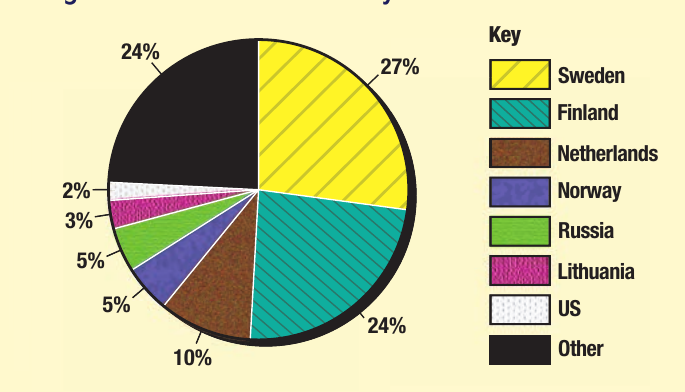
Technology Focus: Estonia positioned itself as a technology leader, creating one of the world's fastest broadband networks and encouraging tech start-ups. This openness attracted substantial foreign investment:
- Sweden: 27% of total FDI
- Finland: 24% of total FDI
- Netherlands: 10% of total FDI (by 2012)
This transformation demonstrates how embracing globalisation can revitalise a nation's economy within just two decades.
Reduction of international trade barriers
Trade liberalisation has emerged as a crucial driver of globalisation. Countries increasingly remove barriers that previously restricted international commerce, allowing goods and services to flow more freely across borders.
The World Trade Organization (WTO) plays a central role in promoting free trade. This international body persuades countries to abolish tariffs and other barriers, polices free trade agreements, settles disputes between governments, and organises trade negotiations. The WTO's influence has encouraged numerous nations to open their economies to international competition.
Note
The WTO's Core Functions
The World Trade Organization operates as the global referee for international trade, performing four essential functions:
- Advocacy: Persuading countries to remove trade barriers
- Enforcement: Policing free trade agreements between nations
- Arbitration: Settling disputes between governments
- Facilitation: Organising trade negotiations to expand free trade
Through these functions, the WTO has become one of the most influential drivers of globalisation.
Free trade agreements in practice
Free trade agreements eliminate or reduce trade barriers between participating countries. Several recent agreements illustrate this trend:
Example
Free Trade Agreements in Action
Australia-Malaysia Agreement (2012) Australia and Malaysia agreed to remove most tariffs on each other's exports. The agreement aimed to boost bilateral trade significantly beyond its existing £8 billion level. Both countries expected increased market access to drive economic growth.
EU-Singapore Agreement (2012) The EU and Singapore signed a comprehensive free trade agreement. This deal particularly benefited EU exports of cars and financial services. Singapore already ranked as the EU's second-largest trading partner, with the EU enjoying a trade surplus of £8 billion in 2011.
China-Australia Free Trade Agreement (2014) Finalised after negotiations beginning in 2005, this agreement demonstrates the complexity and significance of such deals:
- Australia agreed to reduce tariffs on all Chinese goods to zero
- China reciprocated for most Australian products
- The agreement liberalised services trade
- Both nations granted each other 'most favoured nation' status for investment
Before this agreement, Australia had already established seven other free trade agreements with countries including New Zealand, Singapore, Thailand, the USA, and Chile.
These agreements encourage international trade by allowing businesses to enter foreign markets without facing penalties. As trade volumes increase, businesses expand their global reach, reinforcing the process of globalisation. However, despite numerous existing agreements, complete worldwide free trade remains a distant goal.
Political change
Radical political transformations in certain nations have significantly accelerated globalisation. These changes have opened previously closed economies and allowed market forces to operate more freely.
The collapse of the Soviet Union
The dissolution of the Soviet Union in 1991 marked a watershed moment for globalisation. After years of economic decline compared to Western prosperity, Soviet leader Mikhail Gorbachev introduced two transformative policies in the 1980s. Glasnost drove political reform, while Perestroika restructured the economy toward market principles.
Important
Impact of Soviet Dissolution
This transformation granted independence to former Soviet republics including Latvia, Georgia, Lithuania, Belarus, Estonia, and Moldova. These newly independent nations:
- Opened their economies to international trade
- Developed trading relationships with Western countries
- Some joined the European Union
- Introduced market forces that liberalised trade
Russia itself began permitting greater movement of goods, services, and capital. Throughout the region, the introduction of market forces created new opportunities for international business that had been impossible for decades.
Eastern European reforms
The end of the Cold War triggered political and economic reforms across Eastern Europe as countries severed ties with the Soviet bloc. The removal of the Berlin Wall reunited West Germany and East Germany as a single nation. Romania ousted communist leader Nicolae Ceausescu in 1989. Czechoslovakia peacefully divided into the Czech Republic and Slovakia. Poland, Hungary, and Bulgaria embraced democracy.
These political changes initiated economic reforms that encouraged market economies to flourish. Foreign businesses could now invest and operate in regions previously closed to Western commerce, substantially expanding the scope of international trade.
China's economic transformation
Economic changes in China began in the 1970s following Chairman Mao's death in 1976. The government gradually loosened communist controls and implemented economic reforms. Agricultural efficiency improved by allocating land plots to individual farmers, who could retain output after paying the state its share.
Between the mid-1990s and 2005, China undertook large-scale privatisation of state enterprises. Trade barriers fell progressively, and China joined the WTO. The nation developed a robust manufacturing sector, invested heavily in infrastructure, and created a prosperous middle class with strong demand for Western goods. However, China remains at an intermediate stage of economic development, not yet fully "open for business" by Western standards.
Reduced cost of transport and communication
Dramatic improvements in international transport networks and communication technology have made globalisation far more practical and affordable.
Air travel revolution
Flying costs have fallen substantially while flight availability has expanded. Low-cost airlines have democratised air travel, making international business meetings and goods transport more accessible. In the UK, airlines such as easyJet, Ryanair, and Flybe offer affordable flights to numerous European destinations. India has similarly benefited from low-cost carriers including SpiceJet, GoAir, and Jet Airways, which provide cheap domestic and international services.
This accessibility allows business people to attend meetings worldwide and enables companies to transport goods internationally at reasonable cost. The expansion of air travel has effectively shrunk distances between markets.
Technology and internet
Modern technology enables instant transfer of complex data to any global location. Many employees can work from home or any chosen location, eliminating the need for office-based work. This flexibility allows firms to operate facilities worldwide without geographical constraints.

Note
The Internet's Global Impact
The internet transformed how consumers gather information and purchase goods. Shoppers can buy products from businesses located anywhere globally. Both large corporations and small enterprises can reach international markets by promoting their activities online.
A Scottish guest house can attract visitors from Japan and Australia through its website, demonstrating how even tiny businesses participate in globalisation. This democratisation of global reach represents one of technology's most significant contributions to economic integration.
Containerisation revolution
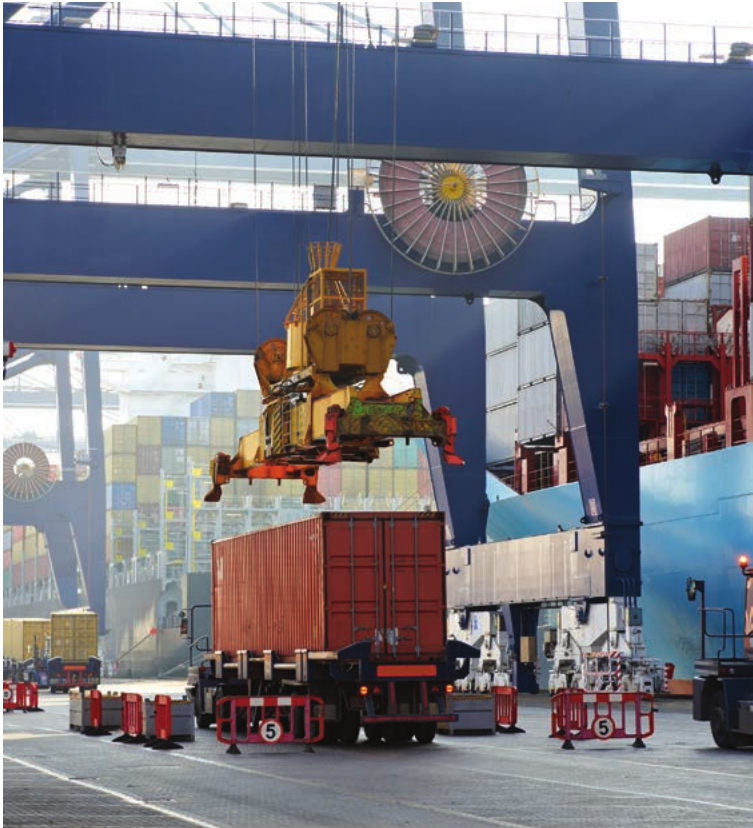
Containerisation has transformed global shipping. Containers are uniform metal boxes that load and unload easily from ships, lorries, and trains. This standardised approach provides flexible, cost-effective goods transport.
Example
The Revolutionary Impact of Containerisation
The impact of containerisation has been dramatic across multiple dimensions:
Cost Reductions: Loading costs plummeted from $5.83 per tonne for manual loading to just $0.16 per tonne using containers. This represents over 97% cost reduction.
Capital Efficiency: Capital tied up in stock during transport fell by 50% on routes such as Hamburg to Sydney. This freed up working capital for other business purposes.
Security Improvements: Theft losses tumbled because locked containers protect contents. Insurance costs declined correspondingly.
Speed Gains: Loading speed increased drastically. Manual labour could load only 1.7 tonnes per hour, but containerisation raised this to 30 tonnes per hour. Ships grew larger and spent less time in ports, further reducing costs.
Industry Consolidation: The efficiency gains from containerisation revolutionised goods distribution. European ports consolidated from 11 to just 3 major loading hubs, demonstrating the system's impact on logistics networks.
Increased significance of global companies
Transnational or multinational companies (MNCs) are companies that own or control production or service facilities outside their home country. These corporations have become increasingly important drivers of globalisation.
MNCs operate on a truly global scale, selling goods and services into international markets while maintaining production plants and facilities worldwide. Their power and influence have grown substantially. These corporations make significant contributions to world GDP and represent approximately two-thirds of global exports. They also undertake huge global investments in research and development, pushing technological boundaries.
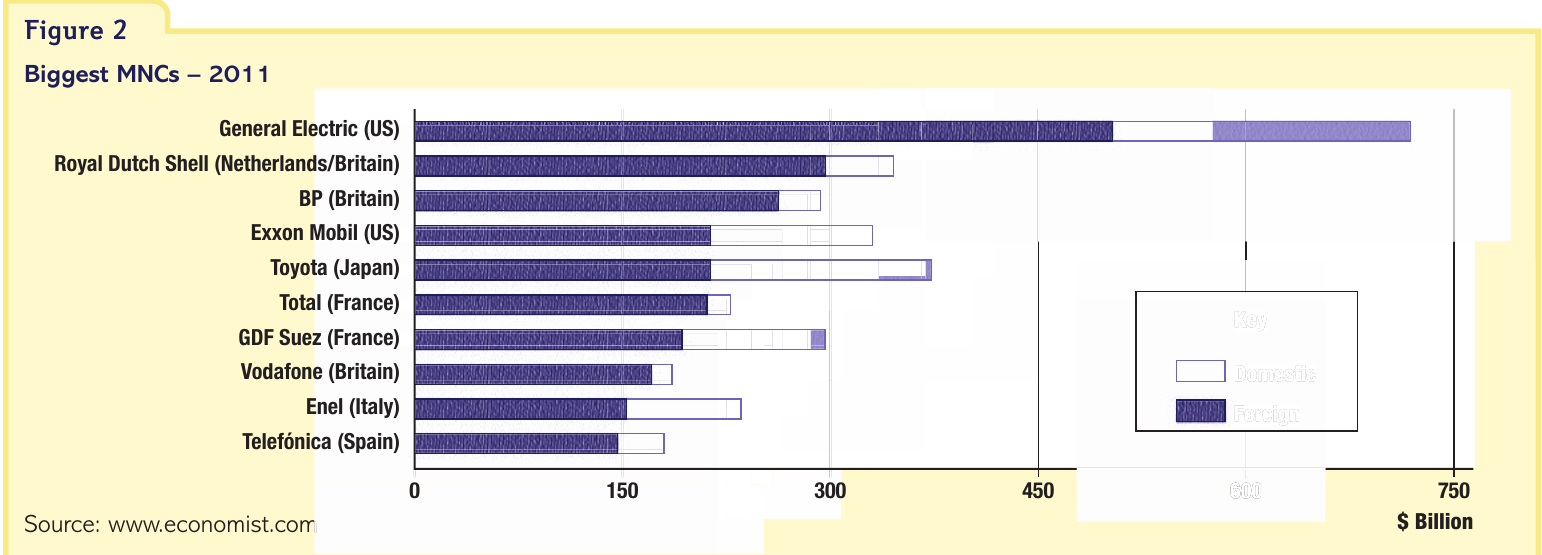
The world's largest MNCs include companies such as General Electric (USA), Royal Dutch Shell (Netherlands/Britain), BP (Britain), Exxon Mobil (USA), Toyota (Japan), and Total (France). These corporations operate extensive foreign operations alongside their domestic activities, as shown by the distribution of their business activities across multiple countries.
Important
The Pressure for Global Expansion
MNCs face continuous pressure to increase returns for shareholders. Consequently, they expand existing operations and search for new business opportunities wherever cost-effective globally. This drive for growth and profitability propels these companies to:
- Enter new markets
- Establish new facilities
- Develop new products for international consumers
This relentless pursuit of shareholder value serves as a powerful engine driving globalisation forward.
Note
Small Businesses in Globalisation
However, small businesses also contribute to globalisation. A Scottish guest house can attract international visitors through its website and social media presence. Many small firms supply multinational corporations, forming part of global supply chains. The role of globalisation extends beyond giant corporations to include businesses of all sizes.
Increased investment flows
Foreign direct investment (FDI) occurs when a company makes an investment in a foreign country. This might involve constructing a factory, distribution centre, or retail store, or developing extractive operations such as mines or plantations. FDI also includes purchasing 10% or more shares in a foreign business. Multinational companies undertake most FDI.
The UK attracts more FDI than any country except the United States. This foreign investment comes predominantly from Europe and the Americas.
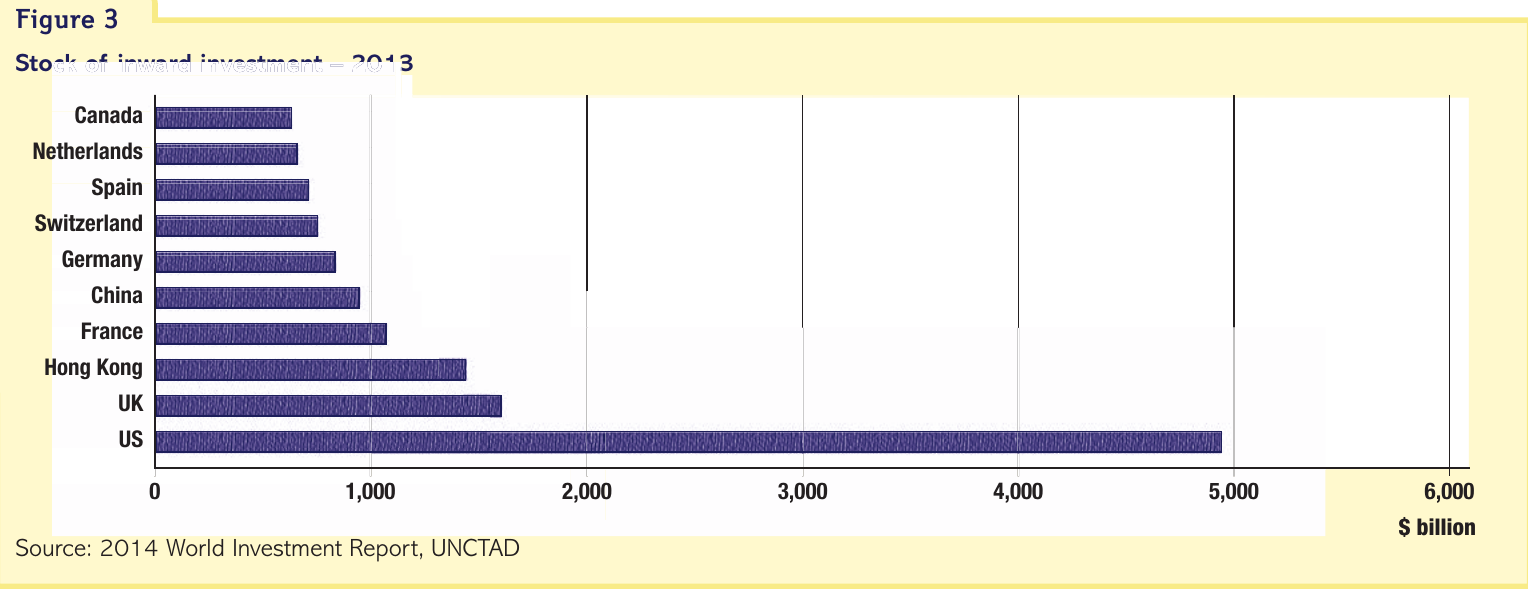
The chart shows that the United States leads globally in inward investment stock at approximately $5,000 billion in 2013. The UK ranks second at around $1,500 billion, followed by Hong Kong at roughly $1,300 billion. France, China, and Germany each attracted between $700-1,000 billion in investment stock.
FDI examples in the UK
Foreign investment in the UK demonstrates the scale and diversity of international capital flows:
Example
Foreign Direct Investment in the UK
Battersea Power Station Development (2013) A Malaysian consortium paid £400 million for Battersea Power Station in 2013. The buyers planned a 15-year development creating homes and offices, expected to generate approximately 13,000 jobs.
Automotive Industry Investment The UK car industry attracts substantial foreign investment:
- BMW: Invested £500 million in its Oxford Mini production plant
- Nissan: Decided to produce its premium Infiniti brand at its Sunderland facility
- Tata Motors: Expanded Range Rover production at its West Midlands plant, creating 1,500 additional jobs
These investments demonstrate how foreign capital creates employment, transfers technology, and strengthens the UK's manufacturing base.
UK investment overseas
British businesses also invest substantially in foreign projects. In 2015, Marks & Spencer announced plans to open 250 overseas stores, including 20 new food outlets in Paris. The company saw international expansion as crucial for improving financial performance. M&S also planned to build 100 sites in India, creating employment and boosting local economic activity.
FDI and development
FDI often contributes significantly to emerging nation development. China has made substantial investments across Africa. In 2014, over 500 Chinese companies operated in Zambia alone, bringing capital, expertise, and employment opportunities.
Note
How FDI Drives Globalisation
FDI spreads business activity, job creation, and wealth globally, making a huge contribution to globalisation. Investment flows also allow businesses to penetrate markets where trade barriers exist.
Countries typically welcome foreign businesses building factories more readily than those simply wanting to sell imported products. A factory creates local jobs and contributes to the domestic economy, making it politically attractive even when trade barriers would normally restrict imports.
Migration
Migration involves people moving to establish permanent or temporary residence in a new location. It typically refers to movement between different countries, though significant internal migration also occurs within large nations.
In 2013/14, 624,000 people moved to live in the UK, while 327,000 people left the UK to live elsewhere. This resulted in net migration of 297,000 people. Globally, approximately 3% of the world's population lives outside their birth country. However, some nations have much higher proportions—migrants constitute around 23% of Australia's and Switzerland's populations.
How migration drives globalisation
Migration contributes to globalisation through several mechanisms:
Cultural and goods importation: Migrants import their cultures into new environments. This often includes demand for goods from their home countries. The UK hosts many specialist shops catering to Polish immigrants, selling produce imported from Poland. This creates trade flows and market opportunities.
Labour supply: Migrants provide a supply of workers, often accepting lower wages than domestic workers. This allows businesses to reduce costs and gain competitive advantages in overseas markets. Lower costs enable companies to expand internationally and sell more products abroad.
Remittances: Migrants send a significant proportion of their earnings back to their birthplace. Families spend this money, generating demand in origin countries. Transnational companies benefit from this increased demand, spreading economic activity globally. Remittance flows represent a major source of income for many developing nations.
Skills transfer: Some migrants possess high skill levels—lawyers, doctors, teachers, musicians, writers, academics, and Premier League footballers. These individuals fill skills gaps and make substantial contributions to businesses and national income in their destination countries. This movement of talent helps spread expertise and knowledge globally.
Internal migration
Migration also occurs within countries on a large scale. China has experienced massive internal migration over the past thirty years, with workers moving from inland regions to coastal cities. These people seek jobs and opportunities unavailable in rural areas. Domestic Chinese migrants now account for approximately one-third of all domestic migrants worldwide.
Note
Internal Migration and Globalisation
This internal movement resulted from international investment and manufacturing sector development. Overseas businesses invested in these manufacturing centres because land and labour costs were cheap. Consequently, globalisation received a boost as production capacity expanded and goods became available for export at competitive prices.
Migration concerns
Important
The Migration Debate
Despite migration's contribution to global wealth, some countries worry it might cause social instability. Population sectors may blame immigration for domestic problems such as overcrowding and unemployment. Governments face pressure to reduce immigrant flows.
The UK Independence Party has gained support by making immigration reduction its central policy priority. This demonstrates the tension between economic benefits of migration and political concerns about its social impacts.
Growth of the global labour force
The global labour force has expanded substantially over recent decades. In 1980, 1.7 billion people worked worldwide. By 2010, this figure had grown to 2.9 billion—an increase of 1.2 billion workers. Chinese and Indian workers account for a significant proportion of this increase.
Several factors explain global labour market growth. World population increased from 4.45 billion (1980) to 6.85 billion (2010). More women entered the workforce. People began living longer and working longer. Migration effects also contributed to labour force expansion.
Impact on globalisation
This expanding labour market has driven globalisation through several channels:
Driving global demand: A larger workforce generates more income, which translates into spending on goods and services. Some of this spending targets imports from MNCs and other exporters. In China and India, where employment grew dramatically, millions escaped poverty and began making significant contributions to global demand. These emerging middle classes became important consumers of international products.
Controlling labour costs: Rising labour supply has restrained wage growth, particularly in developed countries. Increased labour availability pushes wages downward through supply and demand effects. This cost control has enabled businesses to maintain profitability while expanding activities more widely internationally.
Entrepreneurship growth: Some people entering the labour market eventually establish their own businesses after gaining work experience. This boosts global business numbers. Some of these new enterprises grow and develop international activities, providing another lift to globalisation.
Structural change
Economic structures evolve over time. In most Western economies, the contribution from primary (agriculture, mining) and secondary (manufacturing) sectors to national income has declined. The tertiary sector (services) now provides most income, employment, and wealth in developed nations.
This shift toward services enables economies to flourish because returns on capital invested in many service industries often exceed those in traditional sectors. Knowledge-based industries have become particularly important drivers of prosperity. These include biotechnology, information technology, research and development, education, software development, pharmaceuticals, care services, finance, aerospace, and security.
Services and globalisation
Structural changes toward services have contributed to globalisation because most knowledge-based industries are export-oriented. These sectors not only sell services abroad but also establish operations in multiple countries. They recruit high-quality staff from anywhere globally and foster international presence. The internet and social media have particularly helped deliver services to global markets. Both large and small businesses use these tools to raise profiles, communicate with potential customers, and sell products internationally.
Note
Advantages of Service Sector Globalisation
Many tertiary sector industries can locate anywhere, provided a market exists. They are not tied to specific geographical locations or influenced by traditional locational factors such as proximity to raw materials or power sources.
A retail chain such as Marks & Spencer can establish stores anywhere in the world, provided nearby populations want to shop there. This locational flexibility facilitates global expansion and reinforces globalisation.
Service industries often require less capital investment than manufacturing, reducing barriers to international expansion. A consulting firm can open an office in a new country far more easily than a manufacturer can build a factory. This ease of expansion encourages service businesses to pursue global growth strategies.
Remember!
Summary
Key Points to Remember:
Core Concepts:
- Globalisation means the growing integration of the world's economies, with businesses and people operating as though there is one worldwide market
- Eight main factors drive increased globalisation: trade liberalisation, political change, reduced transport/communication costs, growth of MNCs, increased FDI, migration, labour force expansion, and structural economic change
Institutional Framework:
- The WTO promotes free trade by encouraging countries to remove tariffs and other barriers, helping globalisation accelerate
- Political changes, particularly the Soviet Union's collapse (1991), China's economic reforms, and Eastern European democratisation, opened previously closed economies to international trade
Transport Revolution:
- Containerisation revolutionised shipping by reducing loading costs from $5.83 to $0.16 per tonne, dramatically cutting transport expenses
- This represents over 97% cost reduction in shipping expenses
Corporate Impact:
- MNCs contribute approximately two-thirds of global exports and make significant investments in research and development worldwide
- FDI spreads business activity, job creation, and wealth globally; the UK ranks second only to the USA in attracting foreign investment
Human Factors:
- Migration drives globalisation through cultural imports, labour supply, remittances, and skills transfer
- The global labour force grew from 1.7 billion (1980) to 2.9 billion (2010), driving demand and controlling costs
Structural Changes:
- Structural shift toward services and knowledge-based industries has accelerated globalisation because these sectors are highly export-oriented and locationally flexible
- Service industries require less capital investment than manufacturing, facilitating global expansion
Summary
Key Terms:
- Globalisation – the growing integration of the world's economies
- Free trade agreement – agreement between countries to remove tariffs and other trade barriers
- WTO (World Trade Organization) – international body promoting free trade by persuading countries to abolish barriers
- Transnational/multinational companies (MNCs) – companies owning or controlling production/service facilities outside their home country
- FDI (Foreign direct investment) – business investment in another country, such as building factories or purchasing significant shareholdings (10%+)
- Trade liberalisation – the removal or reduction of trade barriers between countries
- Containerisation – use of standardised metal boxes for transporting goods efficiently
- Tariffs – taxes imposed on imported goods
- Quotas – limits on quantities of goods that can be imported