Protectionism (Edexcel A-Level Business): Revision Notes
📚Revision Notes
Protectionism
What is protectionism?
Protectionism is an approach where governments deliberately restrict international trade to protect domestic producers from foreign competition. While most economists support free trade as beneficial for the global economy, governments sometimes believe that restricting trade serves their national interests better.
Note
The tension between economic theory and political practice: Most economists advocate for free trade based on its global benefits, yet governments frequently implement protectionist measures when they believe it serves their national interests.
Protectionist measures can take several forms, from making imports more expensive through taxes to placing physical limits on imported quantities. These barriers help shield domestic industries from overseas rivals, though they can create other economic challenges.
Why do countries use protectionism?
Governments justify trade barriers for several important reasons that reflect both economic concerns and political pressures:
Protecting employment
Domestic jobs may be at risk when cheap imports flood the market. Governments face criticism when unemployment rises due to foreign competition, so they may impose barriers to safeguard local employment. This is particularly important in industries that employ large numbers of workers.
Supporting infant industries
New or emerging industries often struggle to compete against well-established foreign rivals. Infant industries (new industries that have yet to establish themselves) may need temporary protection until they can grow, become efficient and exploit economies of scale.
Note
The Infant Industry Argument
Critics argue that governments have a poor track record of identifying which industries have genuine potential for future success. The challenge lies in determining when an industry is truly an "infant" with growth potential versus an inefficient industry that will never become competitive.
Preventing dumping
Dumping occurs when foreign producers sell goods below cost in a domestic market. This represents unfair competition that can destroy local industries. Governments may impose trade barriers to stop this predatory pricing practice.
Example
Real-World Example: US Anti-Dumping Duties
In 2014, the US imposed anti-dumping duties of 165% on Chinese solar products and 27% on Taiwanese solar panels. These substantial tariffs were designed to protect American solar manufacturers from products being sold below cost in the US market.
Raising government revenue
Import taxes (tariffs) generate income for governments, which can be spent on public services and infrastructure. This revenue stream can help improve living standards, though it should not be the primary motive for protectionism.
Blocking harmful or undesirable goods
Countries are justified in preventing the entry of dangerous, contaminated or culturally inappropriate products.
Example
Real-World Example: EU Food Import Ban
In 2011, the EU banned food imports from Japan following concerns about radioactive contamination from nuclear power station damage. This demonstrated how protectionist measures can serve legitimate public health and safety purposes.
Improving the balance of payments
When a country's spending on imports significantly exceeds its export earnings (creating a large balance of payments deficit), protectionist measures may help reduce the deficit. Countries must ultimately pay their way in international trade, so action may be necessary if the deficit becomes unsustainable.
Types of trade barriers
Tariffs
Tariffs (or customs duties) are taxes imposed on imported goods to make them more expensive. This encourages consumers to switch from foreign products to domestically-produced alternatives.
Note
How tariffs work:
- The government adds a tax to the import price (e.g. £50 on an imported camera)
- Higher prices reduce demand for imports
- Demand shifts toward home-produced goods
- The government collects revenue from the tax
Important
Critical Consideration: Price Elasticity of Demand
Tariffs only work effectively when demand is price elastic. If demand is inelastic, consumers continue buying imports despite higher prices. For example, if a 20% tariff only reduces demand by 2% (price elasticity of -0.1), the policy has minimal impact. This makes understanding demand elasticity crucial when implementing tariff policies.
Example
Real-World Examples of Tariffs:
Ecuador (2015): Imposed tariffs of 21% on Colombian imports and 7% on Peruvian imports to offset effects of a stronger US dollar. Colombian and Peruvian officials argued these measures violated principles of their customs union (the Andean Community).
African Countries (2014): Some African countries imposed tariffs up to 50% on many imported goods (excluding staples like beans, rice and flour) to encourage domestic production.
Import quotas
An import quota places a physical limit on the quantity of imports allowed into a country. This directly restricts supply of foreign goods, giving domestic producers a larger market share.
Effects of quotas:
- Domestic producers face less competition
- They gain more market share
- Prices typically rise because fewer cheaper imports are available
- Consumer choice may be reduced
Note
Embargoes: The Extreme Form
An embargo is an extreme form of quota where imports are completely banned, usually for political rather than economic reasons. For example, in 2015 an arms embargo prevented military goods being exported to Libya, while various embargoes existed between Russia and the EU due to the Ukraine conflict.
Example
Real-World Examples of Quotas:
Indonesia (2014): Imposed a quota on wheat flour imports, limiting total imports to 441,141 tons to protect local producers. Turkey, Sri Lanka and Ukraine received fixed quota allocations.
China (2012-2013): Maintained its quota of 34 foreign films per year (set in 2012) to protect its domestic film industry, the world's second-largest after the US, worth £2.1 billion in 2013.
Example
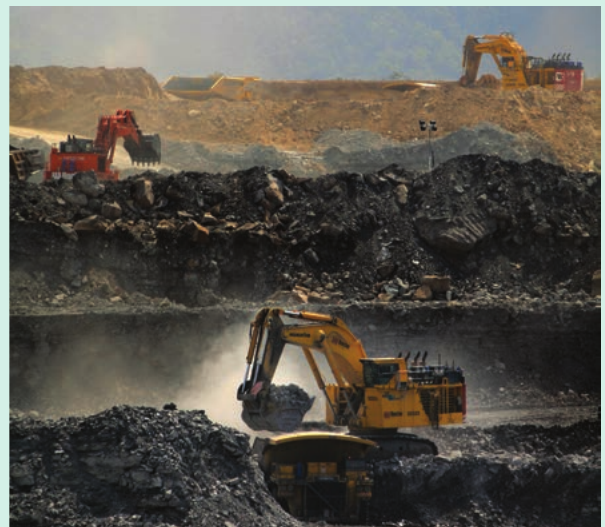
Case Study: China's Coal Tariffs
China imposed tariffs of 6% on Australian thermal coal and 3% on coking coal in 2014. This protectionism responded to falling global coal prices (from $136 in 2011 to $65 in 2015), with 70% of Chinese coal mines operating at a loss. The Australian coal industry argued these tariffs raised energy prices in China and jeopardized trade negotiations.
Government legislation and administrative barriers
Administrative barriers are rules, regulations and strict specifications that make it difficult for importers to penetrate overseas markets. Countries can reduce imports without using tariffs or quotas by requiring imported goods to meet demanding standards.
Note
How administrative barriers work:
- Imported goods must comply with safety regulations
- Products may need to meet cultural or environmental standards
- Shipments failing to meet requirements are rejected
For example, toy shipments might be returned if they fail to meet safety regulations imposed by legislation. The EU Food Standards Agency maintains lists of products that cannot be imported or should not be consumed, primarily to protect consumers from dangerous goods.
Subsidies
A subsidy provides financial support (grants, interest-free loans or tax breaks) to domestic producers or exporters. Unlike tariffs and quotas that restrict imports, subsidies help home businesses compete.
Subsidies to domestic producers:
- Lower production costs
- Increase supply
- Force equilibrium prices down
- Help firms compete with cheaper imports
Subsidies to exporters:
- Make it easier to break into foreign markets
- Support domestic industries competing internationally
Although subsidies may violate free trade agreements, governments frequently use them:
Example
Real-World Examples of Subsidies:
India (2012): Re-introduced subsidies worth $375 million to boost textile and engineering exports, aiming to revive the export industry and reduce the widening trade deficit.
Japan (2012): Provided $65 million in subsidies to domestic businesses working to reduce consumption of rare-earth materials, decreasing reliance on Chinese imports.
UK: Businesses received government subsidies for overseas fossil-fuel projects, including £528 million for oil exploration with Brazil's Petrobras and £330 million to Rolls-Royce for gas power initiatives with Russia's Gazprom.
Problems with trade barriers
While protectionism offers short-term benefits, several issues can undermine its effectiveness:
Retaliation and trade wars
When one country imposes barriers, affected trading partners often retaliate with their own restrictions. This 'tit-for-tat' behavior can escalate into a trade war where trade between countries significantly reduces or stops entirely, harming all parties involved.
Important
The Retaliation Risk
Trade wars create a destructive cycle where no country ultimately benefits. When nations engage in tit-for-tat protectionism, global trade volume decreases, prices rise, consumer choice diminishes, and economic efficiency suffers across all participating countries.
Limited impact with inelastic demand
Important
Why Tariffs Fail with Inelastic Demand
Tariffs prove ineffective when demand for imports is price inelastic. If a 20% price increase only reduces demand by 2% (elasticity of -0.1), the tariff achieves little. Consumers simply pay the higher price and continue importing. This makes understanding demand elasticity crucial before implementing tariff policies.
Long-term negative effects
While protectionism may reduce imports and help domestic industries initially, it can create long-term problems:
- Stifles genuine competition
- Protects inefficient industries that should improve or exit the market
- Provokes retaliation from trading partners
- May lead to destructive trade wars
- Raises consumer prices
- Reduces consumer choice
Exam guidance
Important
Evaluation Technique: The Temporal Distinction
When assessing protectionism's effects, distinguish between short-term and long-term impacts. In the short term, protectionism might successfully reduce imports and support domestic industries. However, in the long term it might stifle competition, protect inefficient businesses, provoke retaliation and possibly trigger trade wars. Making this temporal distinction demonstrates strong evaluation skills.
Application Approach: Consider how protectionism affects different stakeholders:
- Domestic producers
- Consumers
- Exporters
- Foreign competitors
- Government revenue
This multi-perspective approach strengthens analytical answers.
Key terms
Summary
Key Terms to Remember:
Administrative barriers – rules and regulations (such as trading standards and strict specifications) that make it difficult for importers to penetrate an overseas market.
Dumping – where an overseas firm sells large quantities of a product below cost in the domestic market.
Embargo – a complete ban on international trade, usually for political reasons.
Import quota – a physical limit on the quantity of imports allowed into a country.
Infant industries – new industries that have yet to establish themselves.
Protectionism – an approach used by a government to protect domestic producers.
Subsidy – financial support given to a domestic producer to help compete with overseas firms.
Tariffs or customs duties – a tax on imports to make them more expensive.
Trade barriers – measures designed to restrict trade.
Remember!
Summary
Key Points to Remember:
-
Protectionism protects domestic producers from foreign competition through various trade barriers, though it contradicts free trade principles supported by most economists.
-
Four main types of trade barriers: tariffs (import taxes), quotas (physical limits on imports), administrative barriers (strict regulations), and subsidies (financial support to domestic firms).
-
Multiple motives exist for protectionism: protecting jobs, supporting infant industries, preventing dumping, raising revenue, blocking harmful goods, and improving balance of payments.
-
Trade barriers create problems: Countries may retaliate with their own barriers, potentially escalating into trade wars. Tariffs prove ineffective when import demand is price inelastic.
-
Think short-term versus long-term: Protectionism may help initially but can stifle competition, protect inefficient industries and provoke damaging retaliation over time. Use this distinction to demonstrate evaluation skills in exam answers.