Employment and Unemployment (Edexcel A-Level Economics A): Revision Notes
📚Revision Notes
Employment and Unemployment
Understanding employment and the workforce
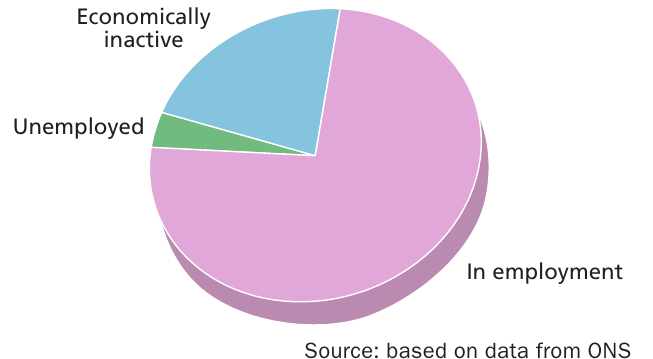
The working-age population consists of individuals who fall into distinct economic categories. In the UK, this refers to people aged between 16 and 64, although it's important to note that 65 is no longer considered the standard retirement age. In 2021, approximately 41.3 million people in the UK fell within this age bracket.
Employment categories
The working-age population can be divided into three key groups that help us understand the structure of the labour market:
In employment: This category includes people who work for firms, other organisations (such as government), or who are self-employed. These individuals are actively contributing to the production process through their labour.
Unemployed: These are people who are economically active and seeking work but currently do not have employment. The unemployed are part of the workforce because they are available for work and actively looking for jobs.
Economically inactive: This group comprises people of working age who are not looking for work for various reasons. This includes students, retired individuals, those who are sick, and people looking after family members. It also includes discouraged workers - people who have tried to find work but have given up looking after repeated failures to secure employment.
Note
The workforce (also called the economically active population) consists of everyone who is either employed or unemployed. In other words, the workforce includes all those who are working plus those actively seeking work. This is a crucial distinction because economically inactive people are not counted as part of the workforce, even though they are of working age.
Employment trends in the UK
The number of people in employment serves as an important indicator of economic performance. Employment represents the use of labour as a factor of production, contributing directly to the economy's productive capacity.
Since 1971, UK employment has shown substantial growth. Employment numbers increased from just over 24 million in 1971 to approximately 31 million by 2021. This represents a significant expansion of the workforce over five decades, reflecting both population growth and increased labour force participation.
Interestingly, although employment fell during the 2009 recession, recovery occurred relatively quickly, with employment reaching a new peak of 31.5 million by 2019.
Important
COVID-19 impact on employment data:
The employment data for 2020 and 2021 requires careful interpretation. During the COVID-19 pandemic, the economy was severely affected by lockdown restrictions. The government launched the Coronavirus Job Retention Scheme (CJRS) in March 2020, which remained in place until September 2021.
This scheme supported firms by paying workers who could not work due to lockdown restrictions. At its peak in mid-2020, almost 9 million workers were on furlough under the CJRS - representing nearly a quarter of total employment. However, in official statistics, these furloughed workers were still counted as being 'in employment', meaning the published figures don't tell the complete story about the true state of the labour market during this period.
Full employment
Full employment refers to a situation where people who are economically active in the workforce and are willing and able to work at prevailing wage rates can find employment.
Why full employment matters
Full employment is recognised as one of the core macroeconomic policy objectives. When large numbers of people are without jobs, the economy fails to make the best use of its labour resources. This represents a sacrifice of potential output that could otherwise be produced. From the perspective of unemployed individuals, not having work means missing out on income and the personal satisfaction that employment can bring.
What full employment doesn't mean
Note
Full employment does not mean that everyone will have a job or be self-employed. Setting aside those who are economically inactive, there will always be some level of unemployment in society, if only because people will be between jobs or engaged in job searches at any point in time.
Furthermore, operating very close to full capacity could put upward pressure on wages and consequently on prices. Therefore, there exists a potential conflict between achieving full employment and maintaining price stability.
Defining the level
Specifying a particular percentage that constitutes full employment proves difficult. The exact figure may vary between different time periods and across different countries, partly reflecting the degree of flexibility present in the labour market.
The key point is that full employment doesn't mean unemployment will be zero. However, it indicates a situation where unemployment is at a minimum sustainable level given the structure of the economy.
Measuring unemployment
The measurement of unemployment in the UK has been subject to debate and change over the years, with the standard definition used to monitor performance being altered several times, particularly during the 1980s when various modifications were introduced.
The claimant count
Historically, unemployment was measured by counting the number of people registered as unemployed and claiming unemployment benefit - specifically the Jobseeker's Allowance (JSA). This measure is known as the claimant count of unemployment.
To claim JSA, people must declare that they are out of work and capable of working, available for work, and actively seeking employment during the week in which their claim is made.
However, the Office for National Statistics (ONS) emphasises that the claimant count is not a true measure of unemployment. Rather, it provides only a partial indication of unemployment levels, and the figures are likely to vary between different areas and over different time periods.
The ILO unemployment rate
Due to limitations of the claimant count, it has been superseded for official purposes by the ILO unemployment rate. This measure is based on the UK Labour Force Survey.
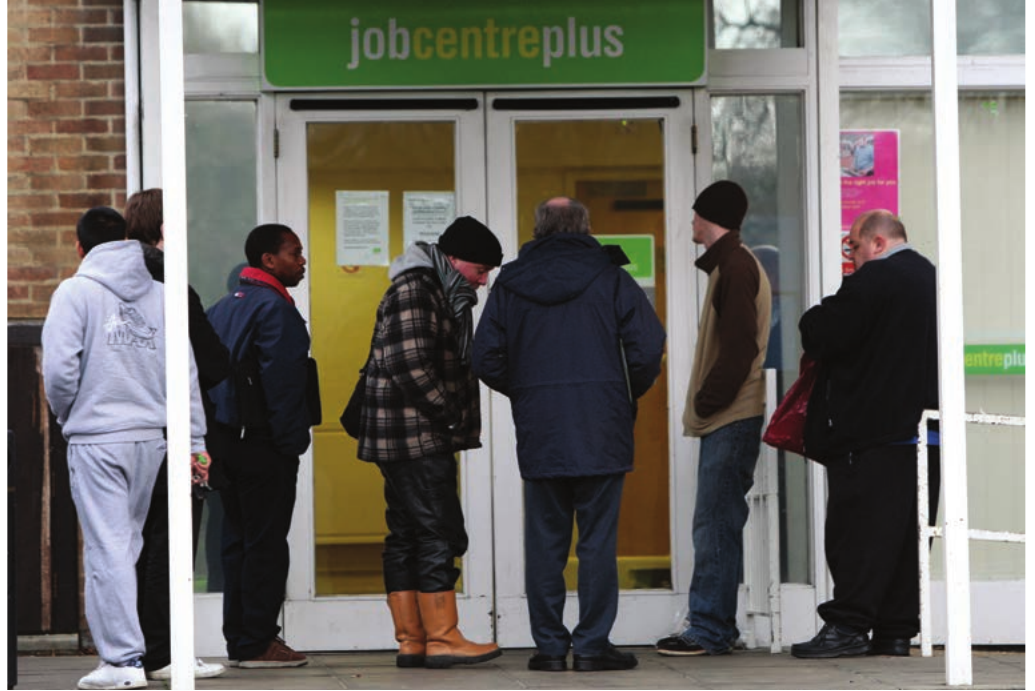
How the Labour Force Survey works:
The Labour Force Survey is a telephone survey of approximately 60,000 households, representing about 100,000 people. The data are based on roughly 40,000 households that respond each quarter.
The survey identifies the number of people who are available for work and seeking work but are currently without a job. This definition corresponds to that used by the International Labour Organization (ILO) and provides a closer representation of what economists consider unemployment to be.
Note
ILO definition of unemployment:
According to the ILO definition, a person is classified as unemployed if they are:
- Without a job, want a job, have actively sought work in the last four weeks, and are available to start work in the next two weeks; or
- Out of work, have found a job, and are waiting to start it in the next two weeks
This standardized definition allows for international comparisons and provides a more consistent measure than the claimant count.
Calculating the unemployment rate
When calculating the percentage rate of unemployment, the key question concerns what proportion of the active workforce is unemployed at any point in time. This is calculated by expressing the number of unemployed people as a percentage of the active workforce (which includes both employed and unemployed people).
Example
Worked Example: Calculating the Unemployment Rate
At the end of 2021, it was estimated that:
- 31.197 million people were in employment
- 1.306 million people were unemployed
Step 1: Calculate the total workforce Total workforce = Employed + Unemployed = 31.197 + 1.306 = 32.503 million
Step 2: Calculate the unemployment rate Unemployment rate =
Unemployment rate =
Historical trends
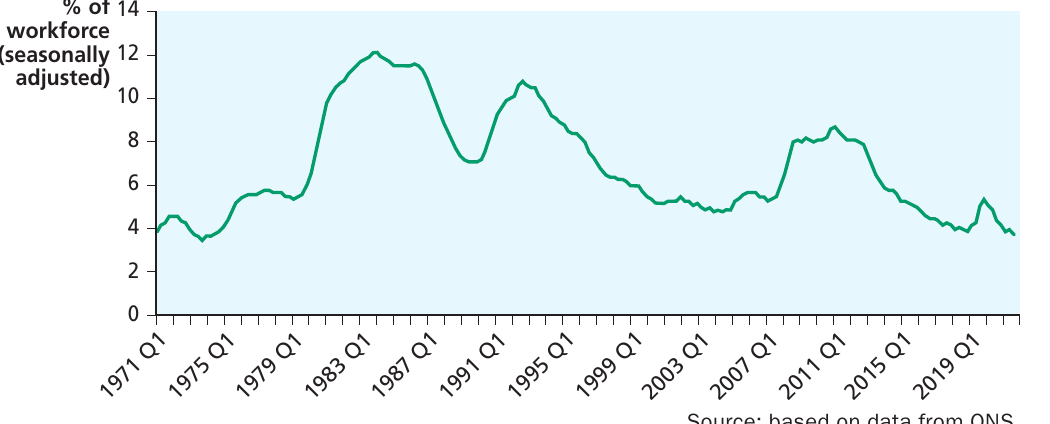
The ILO unemployment rate since 1971 reveals several important patterns. The surge in unemployment during the early 1980s stands out clearly, when the percentage of the workforce registered as unemployed exceeded 12%. This represented the highest unemployment rate in the post-war period.
Although unemployment appeared to be coming under control towards the end of the 1980s, it rose again in the early 1990s before entering a steady decline into the twenty-first century. Unemployment rose again following the financial crisis and recession of the late 2000s, but tailed off towards the end of the 2010s.
The increase in 2020 and 2021 is less dramatic than might have been expected given the pandemic's impact on the economy. However, this partly reflects the cushioning effect of the furlough scheme. By the end of 2022, unemployment had returned to its pre-pandemic level.
Note
Exam tip: When describing unemployment trends over an extended period, avoid working through every single observation. Instead, focus on identifying the main periods in which significant divergences from the norm occurred. This demonstrates your ability to analyze data rather than simply describe it.
Problems with measuring unemployment
It is important to understand the difficulties involved in measuring unemployment accurately, as these limitations affect how we interpret official statistics.
Sample-based measurement issues
The ILO unemployment data are based on sample evidence, which is then extrapolated to provide estimates for the UK as a whole. The sample cannot be guaranteed to be fully representative of the entire population.
From an economic analysis perspective, it would also be helpful to know how many people are unemployed in the sense of not being able to find employment at their desired wage. However, this information is not captured in the official definition.
Underemployment
Important
The official statistics may also fail to capture the full picture of labour market problems. Underemployment occurs where an individual is employed in a second-choice occupation or can only work part-time but would prefer to work full-time.
For example, in the UK context, underemployment could involve qualified lawyers or doctors finding themselves working as taxi drivers, or workers unable to secure as many hours as they would like. These individuals are counted as employed in official statistics, yet they represent an underutilization of the economy's human capital.
Measurement in developing countries
Measuring unemployment in developing countries becomes even more problematic. Without a social security system, unemployed workers have no incentive to register as unemployed. Furthermore, there may be people who cannot find jobs for which they are qualified and who therefore take jobs in second-choice occupations. This represents a form of underemployment and indicates that there is hidden unemployment in the economy.
Causes of unemployment
Unemployment arises for various reasons, and economists have identified several distinct types. It's important to understand that there will always be some unemployment in the economy, even when the economy is operating at equilibrium.
Frictional unemployment
In any dynamic economy, there will always be some level of unemployment. At any point in time, workers will be transferring between jobs. There are many reasons why individuals decide to seek a change of employment - they might wish to find a job offering better wages or working conditions, or their life circumstances might change (for example, achieving a qualification they previously lacked).
Some job changes may be forced on workers because production patterns need to keep pace with changing patterns of consumer demand and shifts in relative opportunity cost. In a typical period, some sectors of the economy will be expanding while others are in decline. It's crucial that workers can transfer from declining activities to those that are growing.
Note
Accordingly, there will be some unemployment while this transfer takes place. This is known as frictional unemployment. In many cases, the period of unemployment may be short and may not even register in official statistics if someone finds a new job before leaving their current employment.
This type of unemployment is considered natural and inevitable in a dynamic, well-functioning economy. In fact, some frictional unemployment is a sign of economic health, as it indicates workers have the freedom and opportunity to seek better employment matches.
Structural unemployment
In some cases, the transfer of workers between sectors may prove quite difficult to accomplish. For example, coal mining might be in decline while international banking is booming. However, it would be unreasonable to expect coal miners to transform themselves into international bankers overnight.
In situations like this, there may be longer-term unemployment whilst workers retrain for new occupations and adapt to new sectors of activity. Indeed, there may be workers who find themselves redundant at a relatively late stage in their careers and for whom retraining is not worthwhile, or who cannot find firms prepared to train them for a relatively short payback period.
This type of unemployment is known as structural unemployment. It arises because of the mismatch between the skills of workers leaving contracting sectors and the skills required by expanding sectors of the economy.
Important
Reinforcing factors:
Structural unemployment may be reinforced when unemployed workers discover that they lack the skills required to adapt to changing technology (technological unemployment), or if available jobs are in a different location (geographical unemployment).
Unlike frictional unemployment, structural unemployment tends to be longer-lasting and more difficult to resolve, as it requires significant retraining or relocation of workers.
Cyclical unemployment and low demand for workers
Unemployment could also arise during a period of recession, when demand for workers is low. Many economies experience regular fluctuations in economic activity, often known as the 'business cycle'. The unemployment that results during the downturn stage of the cycle is sometimes referred to as cyclical unemployment.
Demand-deficient unemployment:
In addition, there may be periods when the economy is in equilibrium below full employment because of a deficiency in aggregate demand. This is known as demand-deficient unemployment. Some economists believe a solution to this problem might be to boost aggregate demand, although not all economists agree that this approach is appropriate.
Seasonal unemployment:
There may also be times during the year when demand for labour varies because of seasonal effects. For example, the tourist sector experiences quiet periods during winter months. This can give rise to seasonal unemployment.
Wage levels
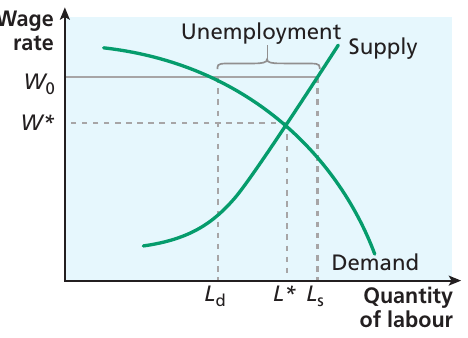
A further explanation for unemployment concerns wage levels. This can be analysed using the assumption that both the demand for and the supply of labour depend on the wage rate.
The diagram above shows a labour market where a free market equilibrium would establish wage W* and quantity of labour L*. However, if wages were set at W₀ (for example, because of a minimum wage policy), there would be disequilibrium between labour supply (at Ls) and labour demand (at Ld). Expressed differently, there would be more workers seeking employment at the going wage (Ls) than firms are prepared to hire at that wage (Ld). The difference represents unemployment.
Note
Reasons for above-equilibrium wages:
Several factors might cause this situation to arise:
- Trade union power: Trade unions may have used their power and influence to raise wages above the equilibrium level, thereby ensuring higher wages for their members who remain in employment whilst denying jobs to others
- Real wage inflexibility: Alternatively, it could be argued that real wages may be inflexible ('sticky') in a downward direction. A shock that reduced firms' demand for labour could leave wages above equilibrium, which might adjust downwards only slowly. This explanation for persistent unemployment, based on real wage inflexibility, was advanced by economists in the Keynesian school
- Voluntary unemployment: If unemployment benefits are set at a relatively high level compared with wages in low-paid occupations, some people may choose not to work, thereby creating voluntary unemployment. From the individual's perspective, this represents a rational choice based on the options available to them
From society's viewpoint, however, there needs to be a balance between providing appropriate social protection for those unable to obtain jobs and making the best use of available resources for the benefit of society as a whole.
Migration and unemployment
A contentious issue in recent years has been the question of migration and its effect on the domestic labour market. From an economic analysis perspective, this issue depends on the characteristics of immigrant workers, especially regarding their skills.
If immigrant workers have skills that complement those of native workers, then an inflow of migrants can have beneficial effects on the domestic economy. This could raise national income and result in an increase in demand for workers.
However, the situation differs where in-migrants substitute for domestic workers, such that the result may be a decrease in the equilibrium wage. The effects of migration on the labour market are complex and depend on various factors including skill complementarity and substitutability.
Costs of unemployment
The consequences of unemployment are mainly negative, affecting consumers, firms, workers, government, and society as a whole. This stems from the fact that when unemployment exists, the economy operates within its production possibility frontier and therefore fails to make the best possible use of its resources. In other words, there is an opportunity cost to unemployment.
Effects on consumers
Consumers are affected because the economy is operating below its capacity. This means resources are in shorter supply than they could have been, resulting in consumers experiencing a lower standard of living overall than could potentially be achieved.
Of course, it may be that some consumers suffer more than others depending on their circumstances and position in the economy.
Effects on firms
Because fewer people are employed, firms face lower demand for their products, resulting in lower sales and revenues. This in turn is likely to mean lower profits than could otherwise have been made.
On the other hand, there may be less pressure on firms to pay higher wages, which could partially offset the revenue losses.
Effects on workers
Involuntary unemployment describes a situation arising when an individual who would like to accept a job at the going wage rate is unable to find employment.
The burden of unemployment falls most heavily on those workers who lose their jobs or are unable to find employment. These workers most obviously experience a lower standard of living.
Important
There are also costs for the individual unemployed worker beyond the simple loss of income. Involuntary unemployment carries a significant cost in terms of forgone earnings and the need to rely on social security support. At the same time, the inability to find work and contribute to the family budget can impose costs in terms of personal worth and dignity.
Many individuals derive satisfaction and self-esteem from their work, and losing this can have psychological impacts beyond the purely financial.
Effects on government
The government is affected in two key ways:
Lower tax revenues: With fewer people in employment, earnings will be lower and income tax revenues will decline as a result. Indirect tax revenues will also fall if people are spending less on goods and services.
Higher spending on benefits: At the same time, there will be an increase in the number of people claiming social security benefits, causing government spending to rise.
These twin effects put pressure on government finances and may limit the government's ability to fund other important services.
Effects on society as a whole
All of these effects combine to have a negative impact on society as a whole. The economy is producing less output than it could, living standards are lower than they might be, and government finances are under pressure.
There may also be additional knock-on effects. Gloomy expectations about the economy may intensify the recession, creating a negative feedback loop. There may also be an increase in social unrest, which could lead to an increase in criminal activity as unemployed individuals struggle to make ends meet.
The broader social fabric can be damaged by persistently high unemployment, affecting community cohesion and social stability.
Summary
Key Points to Remember:
- The working-age population is divided into three categories: those in employment, the unemployed (who together make up the workforce), and the economically inactive
- Full employment is a key macroeconomic objective where everyone willing and able to work at prevailing wages can find employment - it doesn't mean zero unemployment
- Unemployment is measured in two main ways: the claimant count (based on JSA claims) and the ILO unemployment rate (based on the Labour Force Survey) - the ILO measure is the official standard
- Unemployment has multiple causes:
- Frictional: Job transitions (natural and short-term)
- Structural: Skills mismatch between declining and growing sectors
- Cyclical: Recession-related unemployment
- Demand-deficient: Insufficient aggregate demand
- Seasonal: Time-of-year variations in labour demand
- Wage-related: Real wage inflexibility, minimum wages, voluntary unemployment
- The costs of unemployment affect all parts of the economy:
- Consumers: Lower living standards due to reduced productive capacity
- Firms: Reduced demand, lower revenues and profits
- Workers: Loss of income, dignity, and self-esteem
- Government: Lower tax revenues combined with higher benefit spending
- Society: Broader negative effects including potential social unrest and reduced social cohesion