Laws of Logarithms (Edexcel A-Level Mathematics): Revision Notes
📚Revision Notes
6.2.2 Exponential Equations
Solving Exponential Equations
Note
Example 1:
-
Problem: is in the power and needs to be "brought down."
-
Solution: Take logs of both sides.
-
Apply the logarithm rule:
-
Solve for :
Alternative Solution with Different Base Logs
Given the same equation :
-
Apply the same logarithm rule:
-
Solve for :
Note: There is no rule for combining different logarithm bases directly.
Note
Example 2:
-
Apply the logarithm rule:
-
Solve for :
Note
Example 3:
-
Expand and rearrange:
-
Group the logarithm terms:
-
Collect like terms:
- Solve for :
Final Simplified Equation:
Solving Logarithmic Equations
Explanation:
asks: what power do I give to get ?
If I then give it that power, I get :
This idea can be applied to solving logarithmic equations.
Note
Example 1:
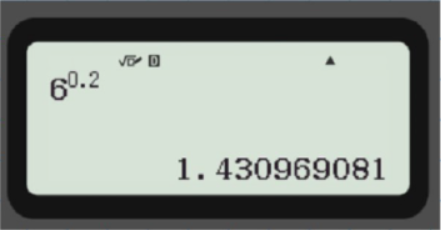
Note
Example 2:
$ \Rightarrow 4x = 12^{1/3}
$
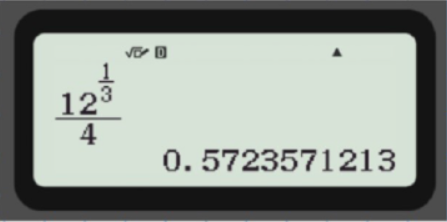
Note
Example 3:
$ \Rightarrow \log(x )+
\log(x^{2}) = 4$
\Rightarrow$$\log(x^{3}) = 4
$ \Rightarrow 10^{\log(x^{3})} = 10^4 \Rightarrow x^{3} = 10^4
$
Wrong Method:
because
Ensure a single term on each side
Note

Note
(Note: x = -1 is not valid because logarithms of negatives do not exist.)