The Process of Globalisation (Edexcel A-Level Politics): Revision Notes
📚Revision Notes
23.2.1 The Process of Globalisation
Globalization
Note
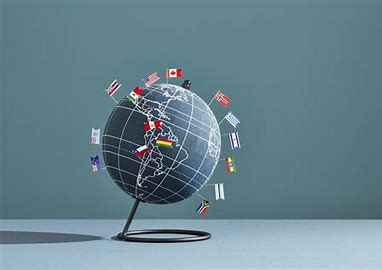
Globalisation refers to the increasing interdependence and interconnectedness between states, societies, and economies across the world. It is a multifaceted process that has economic, political, cultural, and technological dimensions, and it significantly shapes global relations and the functioning of nation-states.
What is Globalisation?
Interdependence and Interconnectivity
- Globalisation is characterised by the growing interdependence between states, which are increasingly connected through a complex web of interactions. This interconnectedness means that actions in one part of the world can have significant impacts elsewhere.
- Countries are becoming closer as they face shared challenges, such as climate change, that require collective action and cooperation. This shared responsibility is a key feature of globalisation, as it transcends national borders and necessitates global solutions.
Impact on Borders and Sovereignty
- From a liberal perspective, globalisation is seen as a process that makes national borders less significant. Liberals argue that in a globalised world, borders are increasingly irrelevant, particularly when it comes to issues that require global cooperation, such as environmental protection or trade.
- However, this view is contested by those who believe that states should maintain tighter immigration controls and protect their sovereignty against external influences. The debate over the role of borders in a globalised world highlights the tension between global integration and national sovereignty.
Role of International Law and Non-State Actors
- International law, which is traditionally made by states, allows states to determine the level of involvement of non-state actors, such as NGOs and IGOs, in their internal affairs. States can, in theory, restrict the influence of these actors within their borders.
- However, in practice, the growing power of NGOs, IGOs, and multinational corporations (MNCs) means that these non-state actors increasingly influence global politics, often acting faster and more decisively than state governments, particularly in humanitarian crises. This growing influence challenges the traditional state-centric view of international relations.
Legitimacy and Sovereignty
- Despite the challenges posed by globalisation, states still retain significant power and influence, particularly in areas where they have defined territory, resources, and the ability to make laws, form alliances, trade, and achieve economic prosperity. This legitimacy is crucial for maintaining sovereignty in a globalised world.
- States with economic power are also more likely to have military power, which further reinforces their sovereignty. In contrast, organisations like the UN, which rely on member states to provide military resources, highlight the limits of non-state actors in certain areas of global governance.
The Process of Globalization
Liberal Perspective on Globalization
- Liberals view globalisation as a positive development that offers significant opportunities for partnership, cooperation, and collective problem-solving. They believe that globalisation reduces the control that individual nation-states have over global issues, leading to greater trust, understanding, and peace between states.
- Liberals advocate for global governance, which involves the creation and strengthening of international and regional organisations, such as the European Union (EU), to address common challenges and promote cooperation among nation-states. This governance structure is seen as a way to manage globalisation in a way that benefits all participating states.
Realist Perspective on Globalization
- Realists are much more sceptical of globalisation, viewing it as a challenge to the supremacy and sovereignty of the nation-state. They argue that globalisation can constrain state actions and weaken national authority by pooling sovereignty in international organisations, which can dilute the power of individual states.
- While realists are generally critical of political globalisation, which they believe undermines the moral superiority of national interests over collective ones, they are more comfortable with economic globalisation. Realists see economic globalisation as an opportunity to maximise a state's economic power, which is essential for maintaining national strength and influence on the global stage.
The Dynamics of Globalization
Global Governance and Regional Organizations
- The process of globalisation has led to the rise of global governance structures that aim to manage the interconnected and interdependent nature of modern states. Organisations like the EU are examples of how states can pool sovereignty to address shared issues more effectively.
- This form of governance reflects the liberal belief in the potential for globalisation to create a more peaceful and cooperative world, where states work together to solve common problems.
Challenges to State Sovereignty
- The realist critique of globalisation centres on the perceived erosion of state sovereignty. Realists argue that by participating in international organisations and agreements, states may lose some of their autonomy and ability to act independently.
- This tension is evident in debates over issues like immigration, trade, and environmental policy, where the demands of global governance can conflict with national interests.
The Role of Non-State Actors
- Non-state actors, including NGOs, IGOs, and MNCs, play an increasingly prominent role in the process of globalisation. These entities can often act more quickly and with greater flexibility than state governments, particularly in areas like humanitarian intervention, where rapid response is critical.
- However, the power of these actors is not absolute. For example, the United Nations Security Council (UNSC) often faces gridlock due to the veto power of its P5 members, which can slow down or prevent collective action, highlighting the continued importance of state sovereignty in global governance.
Conclusion
The process of globalisation is a complex and multifaceted phenomenon that significantly impacts the sovereignty and functioning of nation-states. While it offers opportunities for greater cooperation and problem-solving on a global scale, it also presents challenges to traditional notions of state sovereignty and control. The perspectives of liberals and realists on globalisation highlight the ongoing debate over the benefits and drawbacks of this process, and the role of non-state actors further complicates the landscape of global politics. Understanding these dynamics is crucial for analysing the future of international relations in an increasingly interconnected world.
The Coronavirus Pandemic as a Key Example of Globalisation's Impact
Introduction
The coronavirus pandemic starkly illustrates how globalisation interconnects countries, causing direct impacts across borders. This crisis highlights the ways globalisation facilitates the rapid spread of effects worldwide, affecting economies, politics, and societies.
Rapid Spread of Disease
Globalisation, through increased international travel and trade, facilitated the swift transmission of COVID-19 from Wuhan, China, to the entire globe. The virus quickly evolved from a local outbreak to a global pandemic, showing the interconnected nature of modern societies.
Economic Interdependence
The pandemic underscored the economic interdependence between countries. Lockdowns and restrictions disrupted global supply chains, leading to shortages and production halts in various industries. The economic fallout was felt worldwide, illustrating the deep interlinkages of global economies.
Global Trade and Commerce
Globalisation has fostered an integrated trade system. The pandemic disrupted international trade, causing delays in ports, shipping routes, and logistics networks. This disruption led to shortages of essential goods and raw materials across the globe, demonstrating the interconnected nature of global trade.
Political and Policy Responses
The pandemic required a coordinated global response, showing how political decisions in one country can have international repercussions. Countries navigated international cooperation for vaccine development, distribution, and public health strategies, highlighting the need for global governance mechanisms in addressing transnational crises.
Public Health Systems
The pandemic exposed the varying capacities of public health systems worldwide, demonstrating how health outcomes in one country can influence others. The global nature of the crisis prompted international aid and support, illustrating interdependence.
Social and Cultural Impact
Globalisation also means that cultural and social impacts are shared across borders. The pandemic led to global changes in remote working, social behaviours, and cultural practices. The shared experience of lockdowns and health measures created a collective global experience, showing how global events influence cultural norms.
Challenges to Multilateralism
The pandemic posed significant challenges to multilateralism and international cooperation. Some countries adopted nationalist policies, prioritising their citizens over global needs, particularly in vaccine distribution. This highlighted the challenges globalisation poses to international solidarity and equitable resource distribution.