The Five Kingdoms (OCR A-Level Biology A): Revision Notes
📚Revision Notes
The Five Kingdoms
Introduction to the five-kingdom system
In 1969, Robert Whittaker proposed a five-kingdom classification system to better organise the diversity of life. This system recognised that organisms are built on two fundamental body plans – prokaryotic and eukaryotic – and that Linnaeus's original two-kingdom system (Plantae and Animalia) was insufficient to capture biological diversity.
The five kingdoms are:
- Prokaryota (also called Monera)
- Protoctista
- Fungi
- Plantae
- Animalia
Note
Viruses do not fit into this classification and have their own separate system. This is because viruses are not considered living organisms by most biological definitions – they cannot reproduce independently and lack cellular structure.
Characteristics of the five kingdoms
The five kingdoms are distinguished by several key features including cell structure, type of nutrition, and presence or absence of organelles. The table below provides a comprehensive comparison of these characteristics:
| Feature | Prokaryota | Protoctista | Fungi | Plantae | Animalia |
|---|---|---|---|---|---|
| Type of body | Mostly unicellular | Unicellular and multicellular | Mycelium of hyphae; yeasts are unicellular | Multicellular, branching body; not compact | Multicellular, most have compact body |
| Nuclear envelope | Absent | Present | Present | Present | Present |
| Cell walls | Present (peptidoglycan) | Present in some species | Present (chitin) | Present (cellulose) | Absent |
| Cell vacuoles | Present in few species | Algae: large permanent; Protozoans: small temporary | Large permanent vacuoles | Large permanent vacuoles | Small temporary (e.g. lysosomes, food vacuoles) |
| Organelles (e.g. microtubules) | Absent | Present | Present | Present | Present |
| Type of nutrition | Autotrophic and heterotrophic | Autotrophic and heterotrophic | Heterotrophic | Autotrophic | Heterotrophic |
| Motility | Some have flagella | Some have flagella or cilia | Absent | Gametes of some have flagella | Present (muscular tissue) |
| Nervous coordination | Absent | Absent | Absent | Absent | Present |
| Examples | Bacteria, cyanobacteria | Amoeba, algae, slime moulds | Mould fungi (Aspergillus), yeast | Liverworts, mosses, ferns, conifers, flowering plants | Jellyfish, coral, worms, insects, vertebrates |
Important
Key Distinguishing Features:
- The presence or absence of a nuclear envelope is the fundamental difference between prokaryotes and all other kingdoms
- Cell wall composition varies significantly: peptidoglycan in prokaryotes, chitin in fungi, and cellulose in plants
- Nervous coordination is unique to the animal kingdom
Kingdom Prokaryota
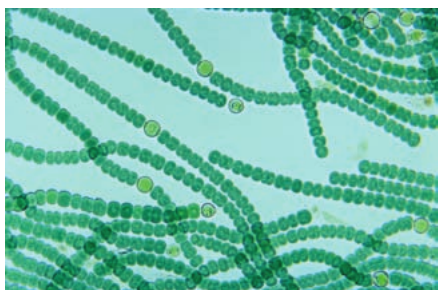
Prokaryotes are organisms whose cells lack a nuclear envelope and membrane-bound organelles. This kingdom includes bacteria and blue-green bacteria (cyanobacteria).
Structure and organisation
Prokaryotic organisms are typically found as:
- Single cells
- Filaments (chains of cells)
- Colonies (groupings of similar cells)
Prokaryotic cells are approximately in diameter – roughly 10 to 100 times smaller than eukaryotic cells. Despite their small size, prokaryotes comprise about 90% of the total biomass in Earth's oceans.
Note
The small size of prokaryotic cells is actually an advantage – it provides a high surface area to volume ratio, allowing efficient exchange of materials with their environment. This is one reason why prokaryotes can reproduce so rapidly and thrive in diverse conditions.
Habitats and adaptations
Prokaryotes inhabit a remarkable range of environments, demonstrating their exceptional adaptability. They are found in:
- Moderate terrestrial and aquatic habitats
- Extreme conditions (high temperature, extreme pH, high salinity) that would kill eukaryotes
These organisms that thrive in extreme environments are called extremophiles and have special adaptations that allow them to survive where other life forms cannot.
Metabolic diversity
Prokaryotes display an extensive range of metabolic processes, showing greater metabolic diversity than any other kingdom:
Autotrophic prokaryotes:
- Blue-green bacteria and some bacteria are photosynthetic
- Fix carbon dioxide and produce oxygen, similar to green plants
- Some can fix nitrogen gas () to form ammonia, which is then used to synthesise nitrogenous compounds
Heterotrophic prokaryotes:
- Feed as decomposers on organic materials (both living and dead)
- Some are parasites causing diseases (e.g. Neisseria meningitidis, Mycobacterium tuberculosis)
- Some use inorganic substances instead of oxygen in respiration
- Some live in anaerobic conditions and produce methane () as waste
Important
Common Misconception to Avoid: Not all prokaryotes are harmful! While some cause disease, the vast majority are beneficial or neutral. Many are essential for:
- Nutrient cycling in ecosystems
- Nitrogen fixation in soil
- Production of foods (yogurt, cheese, vinegar)
- Human digestion (gut bacteria)
Ecological importance
Prokaryotes play vital roles in maintaining ecosystem function and global nutrient cycles:
- Recycling elements (nitrogen, phosphorus, sulfur)
- Decomposition of organic matter
- Nitrogen fixation – converting atmospheric nitrogen into forms usable by plants
Without prokaryotes, ecosystems would collapse as essential nutrients would remain locked in dead organic matter.
Reproduction
Prokaryotes do not have linear chromosomes like eukaryotes and do not divide by mitosis. Instead, they use a simpler process:
- DNA replicates in the same way as eukaryotes
- No nuclear envelope breaks down (as none exists)
- No separation of chromosomes as in anaphase
- Cell division occurs by binary fission (a form of asexual reproduction)
Example
Binary Fission Process:
Step 1: The circular DNA molecule replicates Step 2: The cell grows and the two DNA copies attach to different parts of the cell membrane Step 3: The cell elongates, pulling the DNA copies apart Step 4: The cell membrane pinches inward, dividing the cell into two identical daughter cells
The closest prokaryotes come to sexual reproduction is the transfer of genetic material between individuals through:
- Direct exchange of DNA when bacteria join together
- Transfer of plasmids (even between different species)
This genetic exchange allows bacteria to acquire new characteristics, such as antibiotic resistance – a major concern in modern medicine.
Evolutionary significance
Mitochondria and chloroplasts in eukaryotic cells share many similarities with bacteria. Evidence suggests these organelles evolved from bacteria that were taken into or invaded eukaryotic cells over one billion years ago.
Note
This theory is called the endosymbiotic theory. Supporting evidence includes:
- Mitochondria and chloroplasts have their own circular DNA (like bacteria)
- They reproduce by binary fission (like bacteria)
- They have double membranes (suggesting engulfment)
- Their ribosomes are similar in size to bacterial ribosomes
Kingdom Protoctista
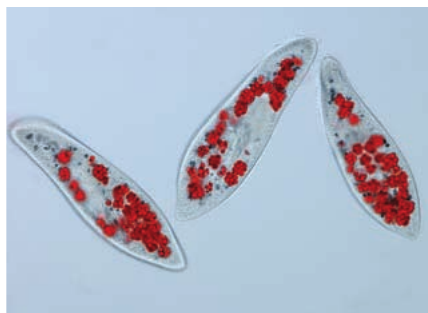
The kingdom Protoctista is composed of diverse eukaryotic organisms. A simple definition: any eukaryote that is not a fungus, plant or animal is classified as a protoctist.
Diversity and structure
This kingdom is often called the "catch-all" kingdom because of its incredible diversity. Protoctists include:
- Protozoans ('simple animals') – often single-celled
- Algae (including seaweeds) – ranging from single-celled to multicellular
Protoctists vary in organisation:
- Single-celled organisms (e.g. Paramecium)
- Filamentous forms
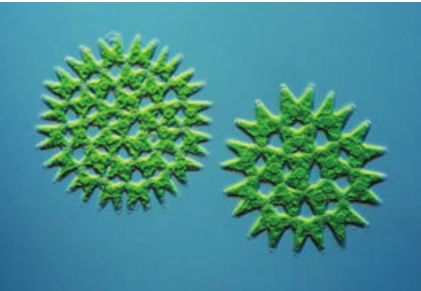
- Colonies of similar cells (e.g. Pediastrum duplex)
- Complex multicellular organisms (e.g. seaweeds)
Body organisation
Seaweeds are the most complex multicellular protoctists. Their bodies are not differentiated into true organs (roots, leaves, stems), but different regions are specialised for:
- Attachment
- Photosynthesis
- Sexual reproduction
Note
The lack of true organs is one reason seaweeds remain in Protoctista rather than being classified as plants, despite being photosynthetic. True plants have highly differentiated tissues and organs with specialised vascular systems for transport.
Evolutionary relationships
Many organisms in this kingdom may be more closely related to organisms in other kingdoms than to each other. For example, algae like seaweeds could arguably be classified in the plant kingdom.
This suggests that Protoctista is a polyphyletic group – meaning its members don't all share a common ancestor exclusive to this kingdom. This makes it the most controversial of the five kingdoms in terms of classification.
Ecological roles and importance
Protoctists are found in diverse natural and artificial environments and play crucial ecological roles:
- Algae are important photosynthetic organisms in aquatic ecosystems, forming the base of many food chains
- Ciliates are important in sewage-treatment works, where they feed on bacteria and control bacterial populations
- Some are significant pathogens (e.g. Plasmodium, which causes malaria)
Important
Algae and Global Oxygen Production: Marine algae (phytoplankton) are responsible for producing approximately 50-80% of Earth's oxygen – even more than all the world's forests combined! They also absorb vast amounts of carbon dioxide, playing a critical role in regulating global climate.
Kingdom Fungi
All fungi are heterotrophic organisms that obtain energy and carbon from dead and decaying matter or by feeding as parasites. None can photosynthesise.
Structure and organisation
Most fungi have a distinctive body structure that sets them apart from other kingdoms:
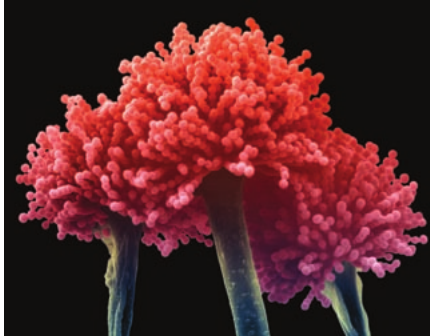
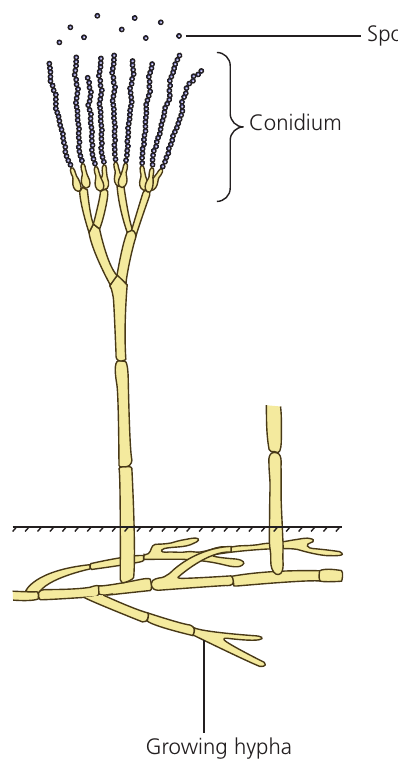
- Hyphae: microscopic cylindrical threads that grow over or through the food source
- Mycelium: the fungal body formed by a network of hyphae
Some fungi, such as yeasts, are single-celled and do not form hyphae.
Nutrition
Fungi have a unique method of feeding that distinguishes them from animals (which ingest food) and plants (which photosynthesise):
Example
Extracellular Digestion in Fungi:
Step 1: Hyphae secrete digestive enzymes onto their food source Step 2: Complex compounds (cellulose, starch, proteins) are broken down externally by these enzymes Step 3: The resulting soluble products (simple sugars, amino acids) are absorbed through the hyphal walls
This method is called extracellular digestion or absorptive nutrition, and it allows fungi to digest materials that are too large to be taken into their cells.
Growth patterns
The growth pattern of fungi reflects their efficient strategy for exploiting food sources:
- When grown on agar in Petri dishes, mycelia form circular colonies
- In soil or inside dead trees, hyphae grow in all directions, making it difficult to trace the extent of a mycelium
- Some fungal mycelia can be enormous (e.g. honey fungi Armillaria species can spread over with an estimated mass of 100 tonnes)
Note
The world's largest known organism is actually a fungus! An Armillaria fungus in Oregon, USA, covers approximately and is estimated to be thousands of years old. Most of it is underground as a network of hyphae.
Reproduction
Fungi reproduce both asexually and sexually, with spore production being central to both strategies:
Asexual reproduction:
- Production of millions of spores
- Yeasts reproduce by budding
- Spores are dispersed to find new food sources
Sexual reproduction:
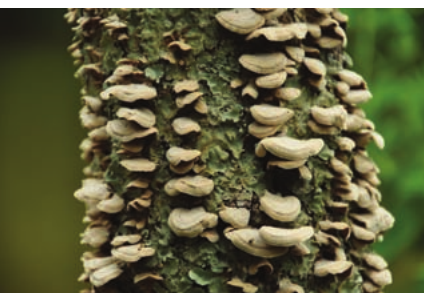
- Fruiting bodies (mushrooms, puffballs, toadstools, bracket fungi) release huge numbers of spores
- Yeasts produce haploid cells of different mating strains that fuse together
The enormous number of spores produced ensures that at least some will land in suitable locations for germination and growth.
Ecological importance
Fungi are important as:
- Decomposers, aiding the recycling of carbon (as carbon dioxide) and mineral elements (e.g. nitrogen)
- Parasites of plants – many are economically damaging pathogens of crop plants
- A few species are parasitic on animals
Important
Fungi as Decomposers: Without fungi, dead organic matter would accumulate and essential nutrients would not be recycled. Fungi are particularly important because they are among the few organisms that can break down lignin – the tough compound that makes wood rigid. This ability makes them essential for decomposing woody material in forests.
Kingdom Plantae
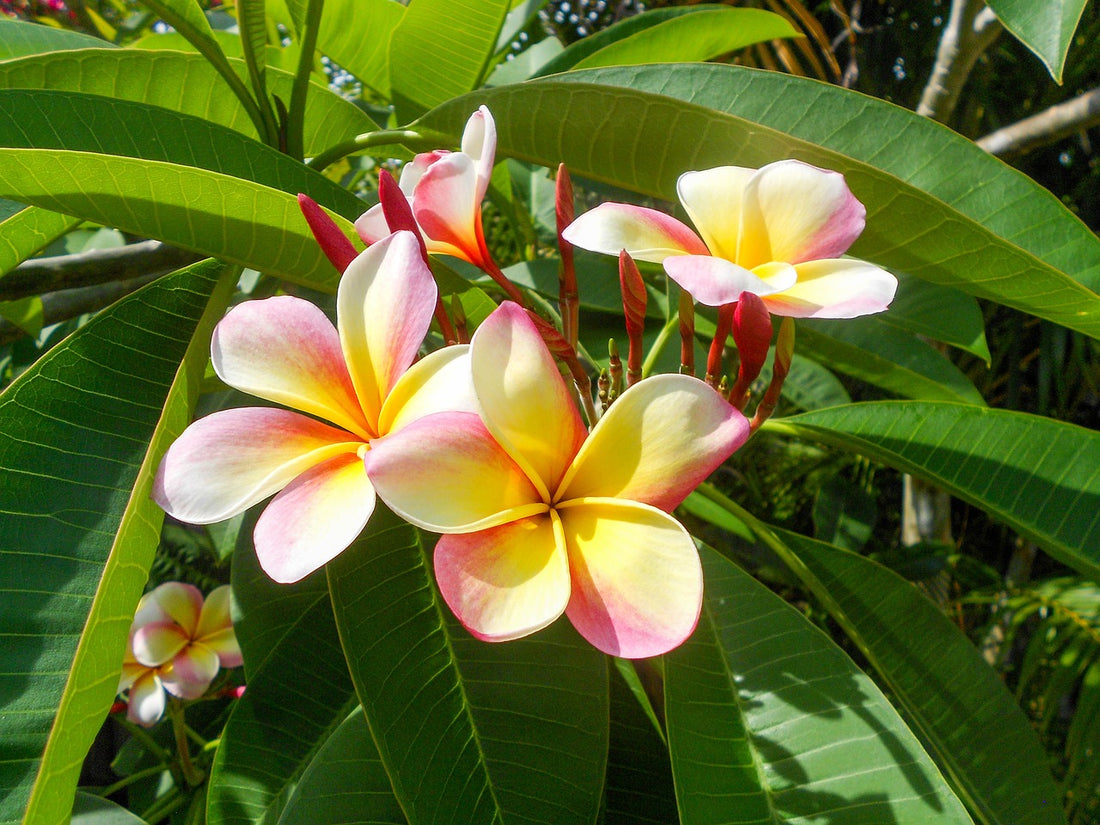
All plants are multicellular photosynthetic organisms with complex, highly branched bodies.
Structure and organisation
Plants have distinctive structural features that reflect their sessile (non-moving) lifestyle:
- Complex bodies often highly branched both above and below ground
- Fewer types of specialised cells and tissues compared with animals
- Greater biochemical diversity than animals
Note
Plants typically have indeterminate growth, meaning they continue growing throughout their lives rather than reaching a fixed adult size. This is why an old tree is much larger than a young tree of the same species, whereas most adult animals are similar in size.
Metabolism and nutrition
Plants are autotrophic and demonstrate remarkable metabolic capabilities:
They can:
- Carry out photosynthesis and respiration
- Synthesise many substances from simple raw materials:
- Carbon dioxide
- Water
- Ions (nitrate, sulfate, phosphate)
This gives plants a wider range of metabolic reactions than animals. Plants produce thousands of different compounds, including pigments, alkaloids, and defensive chemicals, from basic building blocks.
Movement and dispersal
Almost all plants are immobile because their bodies spread out to cover a wide area. However, this doesn't mean they lack all movement:
- Some show limited movement (e.g. Venus fly trap can snap leaves shut to trap insects)
- All have means of dispersal, usually linked to sexual reproduction
- Release spores to help spread the species
- In seed plants, spores are pollen grains carrying male gametes
Note
Plant Movement: While plants cannot move from place to place, they show many types of movement including:
- Tropisms – growth responses to stimuli (light, gravity, water)
- Nastic movements – non-directional responses (flower opening/closing)
- Turgor movements – rapid movements caused by changes in cell pressure (Venus fly trap, touch-me-not plants)
Life cycle
All plants have a distinctive reproductive pattern:
- A haploid stage that alternates with a diploid stage
- In seed plants (conifers and flowering plants), the haploid phase is reduced
This alternation of generations is called the alternation of haploid and diploid generations, with the dominant phase varying between different plant groups.
Ecological importance
Plants dominate most terrestrial ecosystems and are the foundation of life on land. Biomes and ecosystems are often identified by their dominant vegetation (e.g. oak woodlands, grasslands).
Important
Plants as Primary Producers: Plants are the primary producers in most terrestrial ecosystems, meaning they:
- Convert light energy into chemical energy through photosynthesis
- Form the base of food chains and food webs
- Provide habitats and shelter for countless other organisms
- Produce oxygen as a by-product of photosynthesis
- Regulate water cycles and climate through transpiration
Kingdom Animalia
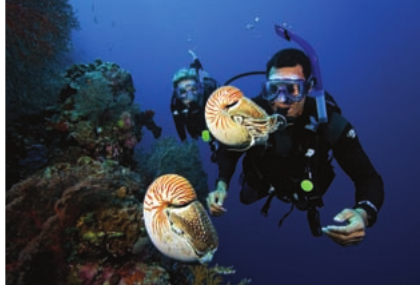
Animals are multicellular heterotrophic organisms with diverse methods of obtaining food.
Structure and organisation
Animals typically have highly organised bodies with distinct features:
- Compact bodies
- Wide range of tissues forming complex organs
- Organ systems where organs work together
- Nervous system (unique to the animal kingdom)
Important
The Nervous System – A Unique Feature: The presence of a nervous system is the defining feature that distinguishes animals from all other kingdoms. This allows for:
- Rapid response to environmental changes
- Coordination of body parts
- Complex behaviours
- Learning and memory (in more advanced animals)
In simple animals, the nervous system consists of a net of nerve cells. In complex animals, it consists of a brain with huge numbers of nerve cells and even larger numbers of interconnections.
Diversity and classification
The animal kingdom shows great diversity of forms, from microscopic organisms to the largest creatures on Earth. Animals are often divided into:
- Invertebrates (animals without backbones)
- Vertebrates (animals with backbones)
However, these are not major taxonomic ranks. The five vertebrate classes (fish, amphibians, birds, reptiles, mammals) are all classified in the phylum Chordata, which also includes some invertebrates.
Note
Invertebrates make up approximately 95% of all animal species! Despite being less familiar to us than vertebrates, invertebrates show incredible diversity and occupy virtually every habitat on Earth.
The phylum Chordata
The fundamental feature shared by chordates is the notochord – a stiffening rod that supports the body during early development and is replaced by the backbone in vertebrates.
Some invertebrate chordates (e.g. tunicates/sea squirts) do not develop bone and therefore have no backbone. All other invertebrates are classified into about 30 phyla representing the great diversity of form and function in this kingdom.
Nutrition
All animals are heterotrophs, though some enter partnerships with autotrophic organisms that live within their cells. The best example is corals, which partner with photosynthetic organisms and form the basis of very biodiverse ecosystems – coral reefs.
Note
Coral reefs are sometimes called the "rainforests of the sea" because they:
- Support approximately 25% of all marine species despite covering less than 1% of the ocean floor
- Are built by coral animals working in symbiosis with photosynthetic algae called zooxanthellae
- Provide food, shelter, and breeding grounds for countless marine organisms
Remember!
Summary
Key Points to Remember:
-
The five-kingdom system (Prokaryota, Protoctista, Fungi, Plantae, Animalia) was proposed by Robert Whittaker in 1969 to better organise biological diversity based on the distinction between prokaryotic and eukaryotic cells.
-
Prokaryotes (kingdom Prokaryota) lack a nuclear envelope and membrane-bound organelles, reproduce by binary fission, and show remarkable metabolic diversity including autotrophs and heterotrophs.
-
Cell wall composition varies across kingdoms: prokaryotes have peptidoglycan, fungi have chitin, and plants have cellulose, while animals lack cell walls.
-
Nutrition types distinguish kingdoms: Prokaryota and Protoctista can be autotrophic or heterotrophic; Fungi and Animalia are strictly heterotrophic; Plantae are autotrophic.
-
The nervous system is unique to kingdom Animalia, and most animals have compact bodies with complex organ systems, while other kingdoms lack nervous coordination.