Content Analysis (OCR A-Level Psychology): Revision Notes
📚Revision Notes
7.1.5 Content Analysis
Content analysis is a technique for analysing qualitative data of various kinds. Data can be placed into categories and counted (quantitative) or can be analysed in themes (qualitative).
Thematic analysis – a type of content analysis used when analysing qualitative data. Themes or categories are identified and then data is organised according to these themes.
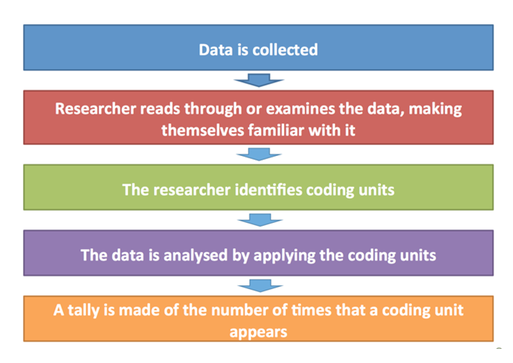
Example
Example: Researchers who wanted to look at the amount of aggression on TV might decide to use content analysis as a research method. Before they can conduct their research there are several steps that will have to go through.
- Decide what aggressive behaviour is.
- Develop a list of behaviour categories or behaviours that can be used to measure aggression.
- Decide on the sample you want to study (TV programmes or adverts, when and where).
- Create a tally chart to count the amount of aggression that you see.
- Assess the reliability of your results.
| Strengths | Limitations |
|---|---|
| High ecological validity because it is based on the observations of what people actually do – real communications that are current and relevant, such as newspapers or books people read. When sources can be retained or accessed by others, the content analysis can be replicated, therefore the observations can be tested for reliability. | Observer bias reduces the objectivity and validity of findings because different observers may interpret the meaning of the behavioural categories differently. Content analysis is likely to be culturally biassed because the interpretation of verbal or written content will be affected by the language and culture of the observer and the behavioural categories used. |