How Materials are Cycled (AQA GCSE Biology Combined Science): Revision Notes
📚Revision Notes
7.2.3 How Materials are Cycled
Note
In ecosystems, various materials are constantly recycled, ensuring the continuity of life. Two of the most important cycles are the carbon cycle and the water cycle.
The Carbon Cycle
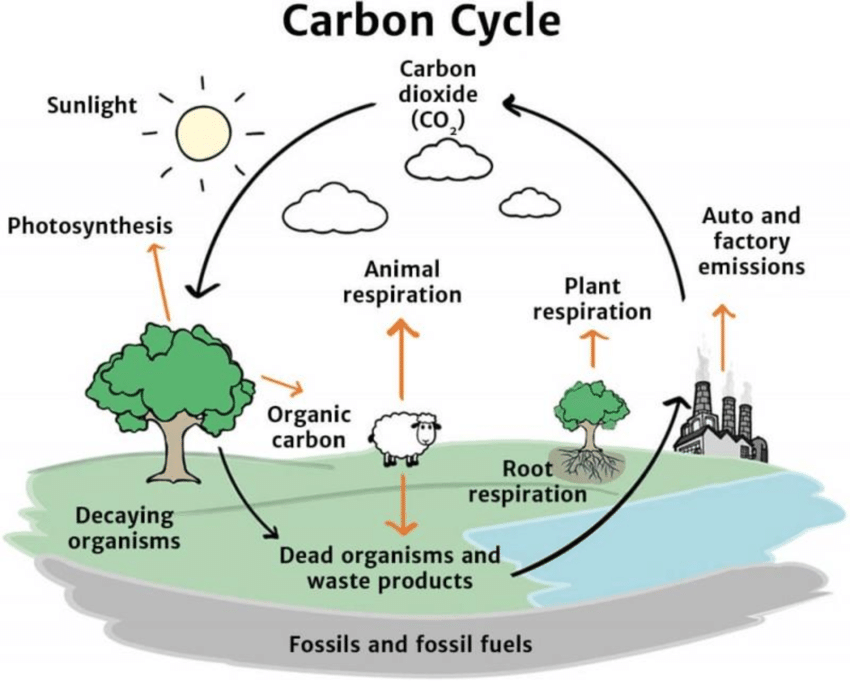
The carbon cycle is essential for regulating Earth's climate and supporting life.
- Photosynthesis: Carbon dioxide (CO₂) is removed from the atmosphere by green plants and algae during photosynthesis. They use the carbon to produce carbohydrates, proteins, and fats, which form the building blocks of their biomass.
- Movement through the Food Chain: When plants and algae are eaten by animals, the carbon is transferred up the food chain, becoming part of the animals' bodies.
- Respiration: CO₂ is returned to the atmosphere when plants, algae, and animals respire. Decomposers, such as bacteria and fungi, also respire as they break down dead organisms and waste, further releasing CO₂ while returning essential mineral ions to the soil.
- Combustion: CO₂ is returned to the atmosphere through combustion when wood and fossil fuels are burned. These fuels contain carbon that was originally captured by photosynthesis millions of years ago.
The Water Cycle
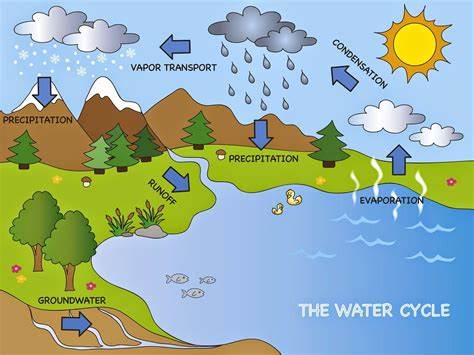
The water cycle is crucial for distributing water across the planet, supporting all forms of life.
- Evaporation: The sun's energy heats up water in seas, lakes, and rivers, causing it to evaporate and form water vapour.
- Transpiration: Plants also contribute to water vapour through transpiration, where water evaporates from the surface of their leaves.
- Condensation: As the water vapour rises, it cools and condenses to form clouds.
- Precipitation: Water is returned to the Earth's surface through precipitation (rain, snow, or hail). This provides fresh water for plants, animals, and replenishes water bodies.
- Runoff and Collection: Water from precipitation runs off into rivers, lakes, and eventually returns to the sea, where the cycle begins again.