The Reflex Arc (AQA GCSE Biology): Revision Notes
📚Revision Notes
5.1.2 The Reflex Arc
Note
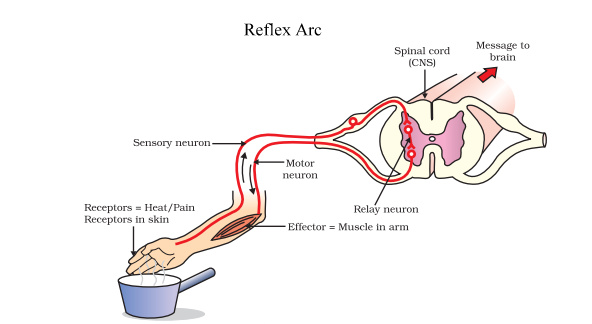
A reflex arc is the pathway taken by the nerve impulses that produce a reflex action. Reflex actions are automatic and rapid responses that protect the body from harm.
Note
Key Stages in the Reflex Arc:
- Stimulus Detection: A stimulus (e.g., heat, light) is detected by receptors.
- Sensory Neuron Activation: The receptors send an electrical impulse along a sensory neuron to the spinal cord (part of the central nervous system).
- Relay Neuron in the CNS: In the spinal cord, the impulse passes to a relay neuron (also known as an interneuron).
- Motor Neuron Activation: The relay neuron passes the impulse to a motor neuron.
- Effector Response: The motor neuron carries the impulse to an effector (a muscle or gland), causing it to respond (e.g., a muscle contracts to move a hand away from a hot surface).
Importance of Reflex Arcs:
- Reflex arcs enable quick responses to potentially harmful stimuli.
- These responses occur without involving the conscious part of the brain, which allows them to happen faster, protecting the body from injury.
Example
Examples include withdrawing a hand from something hot or blinking when something comes close to your eyes.