Legislation (AQA GCSE Business): Revision Notes
📚Revision Notes
Legislation
Introduction to business legislation
Governments create laws that affect how businesses operate across many different areas of the economy. These legal requirements are designed to control business behaviour that might otherwise put profit-making ahead of looking after the needs of stakeholders such as employees, customers, and the general public.
Understanding legislation is crucial for businesses as it creates both opportunities and constraints that can significantly impact operations, costs, and decision-making processes.
Note
Legislation serves as a balancing mechanism between allowing businesses to operate freely and protecting the interests of various stakeholders in society.
Equal pay and minimum wage legislation
The 2010 Equality Act
The fundamental principle established by the 2010 Equality Act is that men and women must receive equal compensation for performing work of equal value. This legislation goes beyond just basic salary payments and covers the complete employment package.
Important
Key Legal Principle: "Men and women are entitled to equal pay for work of equal value"
The act defines "pay" broadly to include all forms of compensation such as basic wages, bonuses, pension contributions, and other benefits provided through the employment contract. This comprehensive approach ensures that gender-based pay gaps cannot be hidden through different types of compensation.
Workers have important rights under this legislation, including the ability to request information from their employer through an equal pay questionnaire to check whether they are being paid fairly. If employees discover evidence of unequal treatment, they can take their case to an employment tribunal for resolution.
National minimum wage and living wage requirements
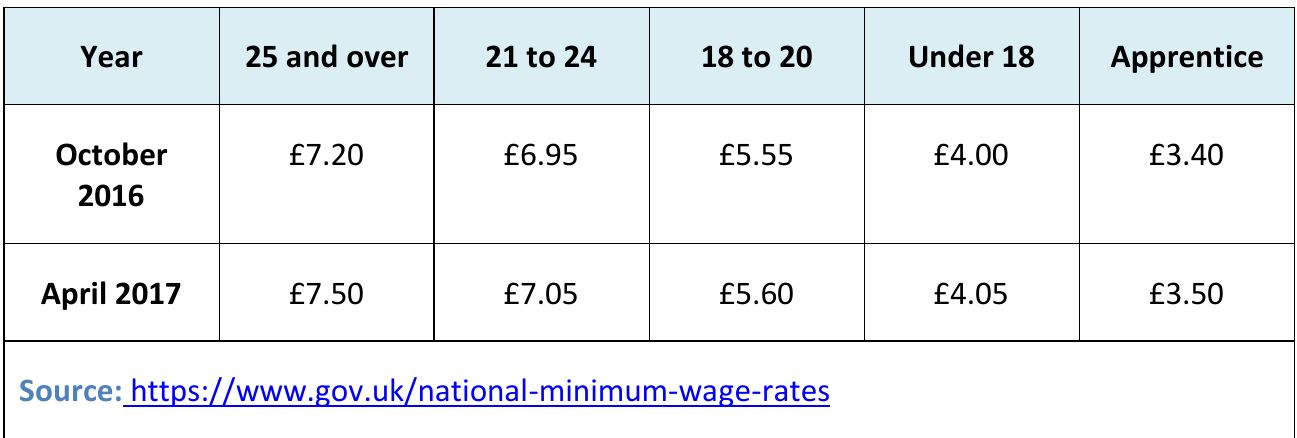
All employees must receive at least the national minimum wage (NMW) as set by law. Since April 2016, workers aged 25 and over are entitled to the higher national living wage (NLW) rate. The government reviews and typically increases these rates annually to reflect changes in living costs.
Note
The structured approach to minimum wage rates recognises that different age groups may have different levels of experience and financial responsibilities, with rates increasing as workers get older and more experienced.
Effects on businesses
Wage legislation creates both challenges and opportunities for businesses. Many companies experience increased labour costs, which can impact their competitiveness, particularly when competing with businesses in countries with lower wage requirements.
However, businesses that pay above minimum wage levels often benefit from improved employee motivation, reduced staff turnover, and higher productivity levels. This can lead to lower recruitment costs and better overall business performance.
Important
Companies that fail to comply with minimum wage requirements face serious consequences including substantial fines and negative publicity, which can damage their reputation and make future recruitment more difficult while potentially reducing sales.
Discrimination legislation
Understanding discrimination
Discrimination occurs when someone is treated unfairly because they are perceived as different from others. UK employment law makes it illegal for employers to discriminate against employees or job applicants based on several protected characteristics.
Important
Legal Definition: Discrimination is "treatment in an unacceptable way of anyone who is termed to be different"
These protected characteristics include:
- Sex (including pregnancy and maternity)
- Marital or civil partnership status
- Disability
- Race
- Age
- Sexual orientation
- Religion or belief
- Trade union membership status
- Whether someone works fixed-term or part-time
Areas where discrimination laws apply
Discrimination legislation covers multiple aspects of the employment relationship, creating comprehensive protection for workers. These laws apply during recruitment processes, when setting terms and conditions in employment contracts, making decisions about promotions and transfers, providing training opportunities, determining fringe benefits, and handling employee dismissals.
This broad coverage ensures that discrimination cannot occur at any stage of the employment relationship, from initial hiring through to the end of employment.
Employment rights legislation
Key employment rights
Employment rights are legal entitlements that protect workers and are enforced through the court system. These rights create a framework of protection that ensures fair treatment in the workplace.
Note
Legal Definition: An employment right is "something to which an employee is entitled, which is protected by law"
Important employment rights include:
- Receiving reasonable notice before dismissal
- Entitlement to redundancy payments when applicable
- Having a written employment contract
- Being able to request flexible working arrangements
- Receiving at least the national minimum or living wage
- Taking time off for parenting responsibilities
These rights help create a more balanced relationship between employers and employees, ensuring that workers have legal protections against unfair treatment while still allowing businesses to operate effectively.
Health and safety legislation
The Health and Safety at Work Act 1974
This crucial piece of legislation places a legal duty on employers to ensure, as far as reasonably possible, the health, safety, and welfare of all their employees while at work. The Health and Safety at Work Act 1974 recognises that workplace safety is a fundamental right and responsibility.
Important
The legislation requires employers to:
- Maintain safe operation and maintenance of the working environment, plant, and systems
- Ensure safe access to and around the workplace
- Handle and store dangerous substances safely
- Provide adequate health and safety training to staff
- Maintain appropriate welfare provisions
Broader health and safety responsibilities
Health and safety legislation extends beyond just protecting employees. Businesses must also consider the safety of visitors to their premises, employees working at other locations, members of the public who might be affected by business operations, and anyone who might be affected by the products or services the business provides.
This comprehensive approach recognises that businesses have a responsibility to society as well as to their immediate workforce.
Industry-specific considerations
While most small businesses can comply with health and safety requirements without excessive difficulty, certain industries face particular challenges:
- Food processing companies must maintain strict hygiene standards
- Hotels must ensure guest safety
- Chemical production involves dangerous processes and waste disposal
- Air travel requires passenger safety measures
- Tour operators must ensure holidaymaker safety
Effects on business
Many businesses initially view health and safety requirements as expensive and potentially making them less competitive, especially when competing with firms from countries with less stringent requirements. However, failing to meet these standards can result in unlimited fines and even imprisonment for serious breaches.
Note
Businesses that maintain high safety standards often find significant benefits including improved staff retention, higher motivation levels, increased productivity, and easier recruitment when vacancies arise. A safe working environment creates a positive workplace culture that benefits everyone.
Consumer protection legislation
Consumer Rights Act 2015
This comprehensive law provides significant protection for consumers when dealing with businesses of all sizes. The Consumer Rights Act 2015 covers multiple aspects of consumer transactions including product quality, returns and refunds, repairs and replacements, digital content, and delivery rights.
The act establishes several key requirements that businesses must meet:
- Products must accurately match their descriptions, avoiding misleading claims about features or benefits
- Goods and services must meet satisfactory quality standards that a reasonable person would expect
- Products must be suitable for their intended purpose
Trade Descriptions Act 1968
This legislation makes it a criminal offence for businesses to make false or misleading statements about their products or services. The Trade Descriptions Act 1968 is enforced by Trading Standards Officers and carries criminal penalties.
Important
Under this act, businesses cannot:
- Apply false descriptions to goods
- Supply products with false descriptions
- Make misleading statements about services, facilities, or accommodation they provide
Additional consumer protections
Consumer protection extends beyond these two main acts. Businesses cannot engage in unfair commercial practices such as misleading advertising or high-pressure selling techniques. Consumers have rights to returns and full refunds when products or services don't comply with legal requirements.
Services must be completed at reasonable prices and within stated timeframes, with customers able to request repairs or additional work at no extra cost if the original work is unsatisfactory. Since October 2008, consumers purchasing from home or work locations have a cooling off period of 14 days to decide whether to keep products they've ordered by phone or online.
Overall effects on business
Compliance costs and benefits
Businesses face additional costs when complying with legislation, including enhanced quality control measures, staff training, and administrative systems to ensure legal compliance. However, following these laws properly can lead to improved market reputation, increased customer trust, and potentially higher sales.
Note
Benefits of Compliance:
- Improved market reputation
- Increased customer trust
- Potentially higher sales
- Better employee relations
- Reduced legal risks
Consequences of non-compliance
Breaking any of these laws can result in serious consequences for businesses including repair and replacement costs, increased administrative expenses, damaged market reputation, and substantial financial penalties that can reach millions of pounds. These risks make legal compliance not just morally important but also economically essential for business success.
Important
Serious Consequences of Non-Compliance:
- Substantial financial penalties (potentially millions of pounds)
- Criminal prosecutions for serious breaches
- Damaged market reputation
- Increased operational costs
- Legal action from affected parties
Summary
Key Points to Remember:
- Legislation controls business behaviour to protect stakeholders including employees, customers, and the public
- Equal pay laws ensure fair compensation regardless of gender, while minimum wage legislation sets pay floors for different age groups
- Discrimination laws protect employees from unfair treatment based on characteristics like age, race, gender, and disability
- Health and safety legislation creates comprehensive duties for employers to protect everyone who might be affected by their business
- Consumer protection laws ensure fair dealing between businesses and customers, with serious penalties for non-compliance