Calculating Gradients (AQA GCSE Chemistry Combined Science): Revision Notes
📚Revision Notes
6.1.4 Calculating Gradients
What is a Gradient?
Note
The gradient of a graph tells us how steep a line is. When we talk about the rate of a chemical reaction, the gradient of the graph can help us figure out how quickly the reaction is happening at a specific point in time.
Why Calculate the Gradient?
By calculating the gradient of a curve on a rate graph, we can determine the rate of reaction at any particular moment during the reaction. This is especially useful because the rate of a reaction often changes as the reaction progresses.
How to Calculate the Gradient:
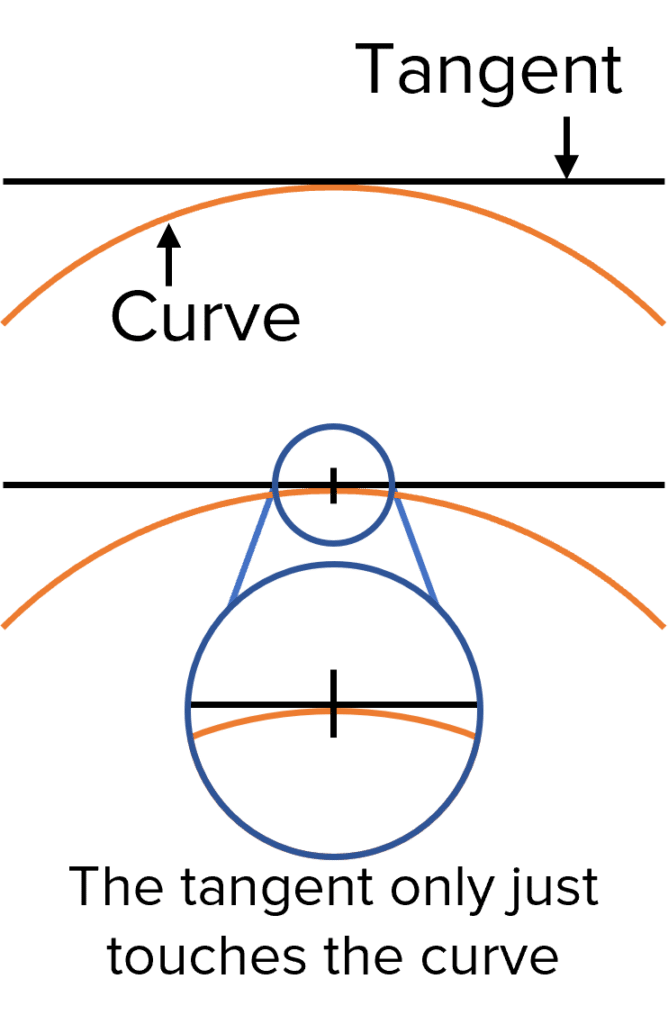
- To calculate the gradient of a curve on a graph, you first need to draw a tangent. A tangent is a straight line that touches the curve at just one point and doesn't cross it.
- Once you've drawn the tangent, you can use it to calculate the gradient.
Note
Steps to Calculate the Gradient:
- Draw a Tangent: Choose the point on the curve where you want to find the rate of reaction. Draw a straight line (tangent) that just touches the curve at that point.
- Find the Change in Amount:
- Draw two vertical lines from the points where the tangent intersects the y-axis.
- The difference between these two points on the y-axis gives you the change in the amount of substance (this could be in grammes, cm³, or moles, depending on what you're measuring).
- Find the Change in Time:
- Draw two horizontal lines from the points where the tangent intersects the x-axis.
- The difference between these two points on the x-axis gives you the change in time (usually measured in seconds).
- Calculate the Gradient: Use the formula:
This gives you the rate of reaction at the point where the tangent touches the curve.
Example
Example of Using a Gradient: Imagine you have a graph showing the amount of gas produced in a reaction over time. If you draw a tangent at a specific time and find that the gas amount changes by 10 cm³ over 2 seconds, you calculate the gradient (rate of reaction) as:
This means that at that specific time, the reaction is producing gas at a rate of 5 cm³ per second.
Why Use Tangents?
Note
Tangents are important because they let us measure the rate of reaction at a specific moment, not just the average rate over the entire reaction. This helps us understand how the reaction speed changes over time.