Metals as Conductors (AQA GCSE Chemistry): Revision Notes
📚Revision Notes
2.2.9 Metals as Conductors
Note
Metals are excellent conductors of both heat and electricity, and this is due to their unique structure and the behaviour of their electrons.
Delocalised Electrons:
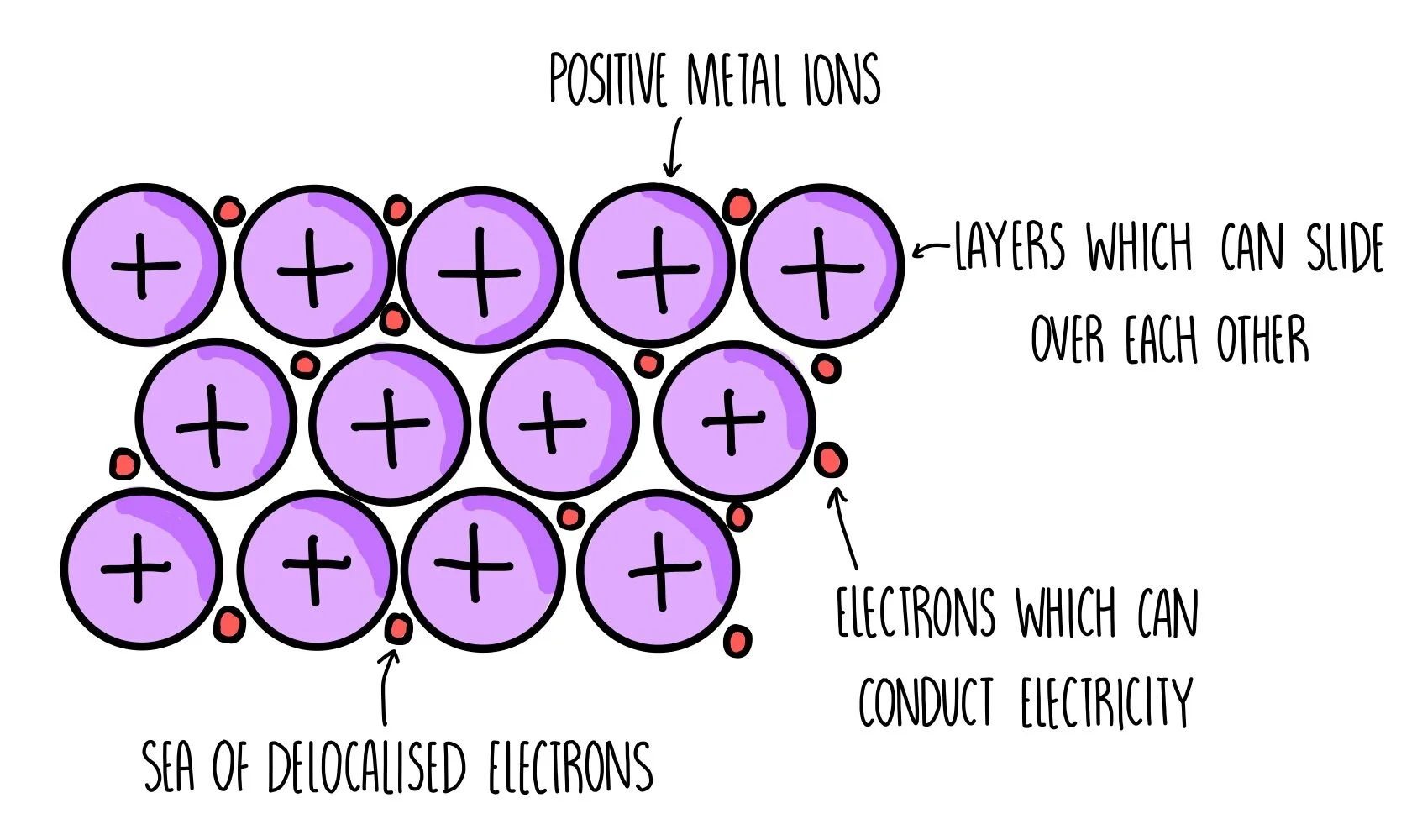
- In metals, some of the electrons are not tied to a specific atom. Instead, they are delocalised, meaning they can move freely throughout the metal's structure. These delocalised electrons are key to why metals can conduct electricity and heat so well.
- Electrical Conductivity: When a metal is connected to a power source, the delocalised electrons move in a specific direction, carrying an electric charge through the metal. This flow of electrons is what we know as an electric current.
- Thermal Conductivity: Metals are also good at conducting heat. When one part of a metal is heated, the delocalised electrons gain energy and move faster. They quickly transfer this energy throughout the metal, causing the entire piece to heat up evenly.
Metallic Bonding:
Note
The reason metals have these free-moving, delocalised electrons is due to their metallic bonding.
What is Metallic Bonding?
Note
In metals, atoms are arranged in a regular pattern, and they release some of their electrons to form a "sea of electrons" that surrounds the positively charged metal ions. The attraction between these positive ions and the sea of delocalised electrons holds the metal together.
Note
Why It Matters: This bonding gives metals their key properties:
- Malleability: The layers of atoms in a metal can slide over each other without breaking the metallic bond, which is why metals can be hammered into shapes.
- Ductility: Similarly, metals can be drawn into wires because the metallic bonds remain intact as the atoms slide past each other.
Example
Examples of Metal Conductors:
- Copper: Copper is commonly used in electrical wiring because it has very high electrical conductivity and is relatively inexpensive.
- Aluminium: Used in power lines and electrical cables because it's lightweight and still a good conductor of electricity.
- Gold and Silver: Although expensive, they are used in high-end electronics because they are even better conductors than copper and do not corrode.
Important
Importance of Metals as Conductors:
- Electronics and Wiring: Metals are essential in making wires, circuits, and electronic components because they efficiently carry electricity to where it's needed.
- Cooking Utensils: Metals like aluminium and stainless steel are used in pots and pans because they quickly and evenly distribute heat, making them ideal for cooking.
Summary:
Metals are good conductors of heat and electricity because of the presence of delocalised electrons that can move freely throughout the metal. These electrons carry energy and charge, making metals crucial in a wide range of applications, from electrical wiring to cookware.