Properties of Hydrocarbons (AQA GCSE Chemistry): Revision Notes
📚Revision Notes
7.1.3 Properties of Hydrocarbons
Note
As we learned before, hydrocarbons are compounds made up of only hydrogen and carbon atoms. The number of atoms within a hydrocarbon compound can affect its structure and properties.
Key Features of Hydrocarbons:
- Boiling point
- Viscosity
- Flammability
Boiling Point:
- The boiling point is the temperature at which a substance changes from a liquid to a gas. Long-chain hydrocarbons have strong intermolecular forces, leading to higher boiling points. They require more energy to break these forces, so they condense near the bottom of the fractionating column.
Short-chain hydrocarbons have weaker intermolecular forces and lower boiling points. They need less energy to break these forces, allowing them to rise higher and condense near the top of the column.
Example
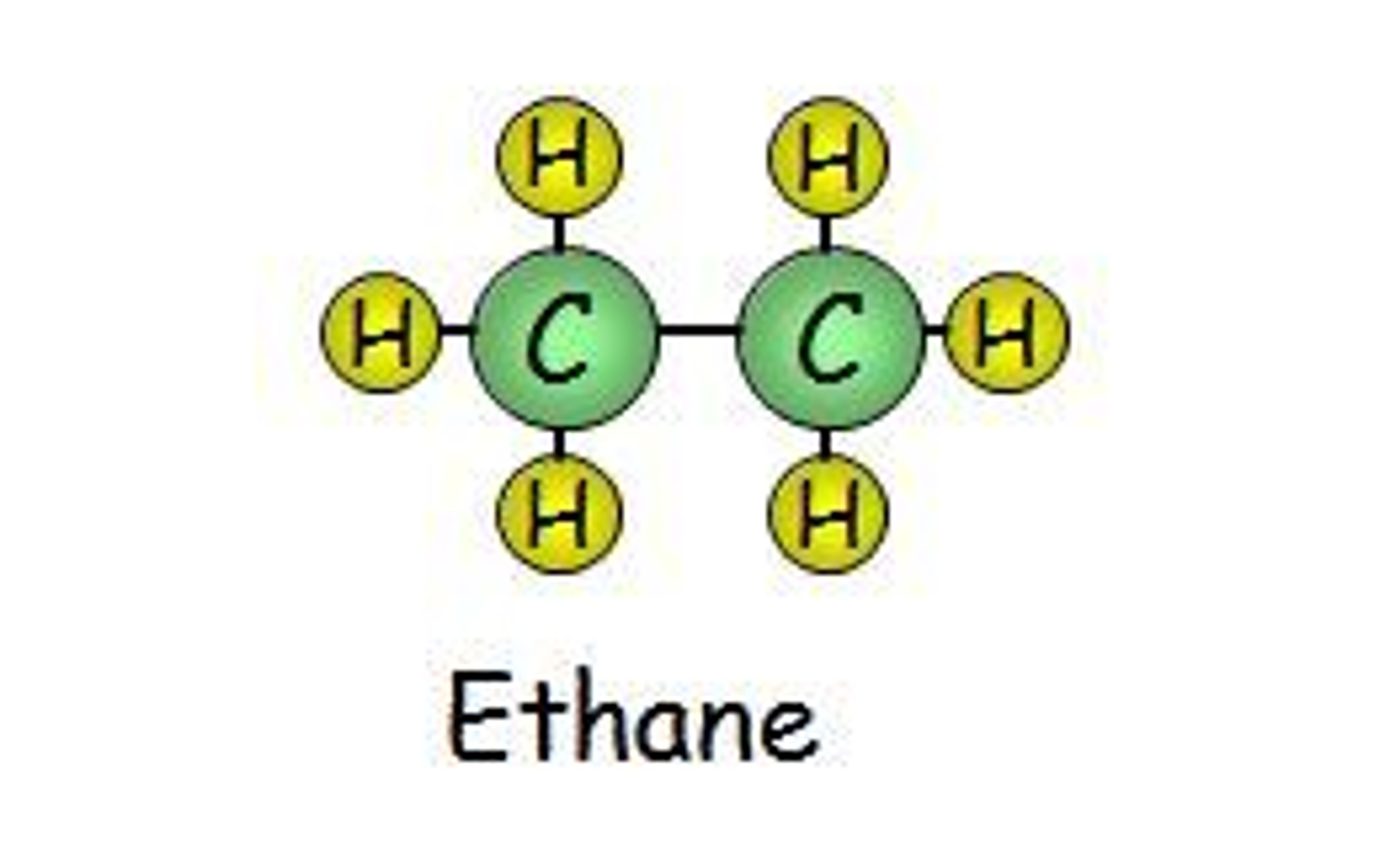
Example: Ethane (C₂H₆) has a boiling point of -89°C, while Heptane (C₇H₁₆) has a boiling point of 98°C.
Viscosity:
- Viscosity measures a liquid's resistance to flow or its "thickness."
- Larger hydrocarbons have higher viscosity, meaning they are thicker and flow less easily, due to stronger intermolecular forces.
Flammability:
- Flammability refers to how easily a hydrocarbon can combust.
- Smaller hydrocarbons are more flammable and are effective fuels, while larger hydrocarbons are less flammable.