Boolean Logic (AQA GCSE Computer Science): Revision Notes
📚Revision Notes
Boolean Logic - GCSE Computer Systems
What is boolean logic?
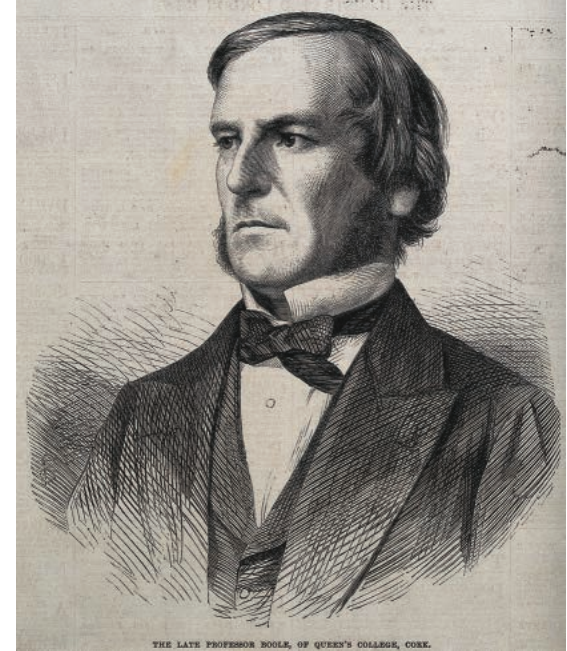
Boolean logic is a fundamental concept in computer science that deals with True and False values. It's named after George Boole, a brilliant English mathematician who lived from 1815 to 1864. Boole discovered something amazing - he realised that every logical decision we make can be simplified into just two possibilities: True or False.
Note
George Boole was working at Queen's College Cork in Ireland when he developed this revolutionary mathematical system. His work was so far ahead of its time that it took nearly a century for computer scientists to fully appreciate its importance in digital computing.
George Boole was working at Queen's College Cork when he developed this revolutionary idea. His work became so important to computing that we still use his name today - the Boolean data type in programming can only store one of two values: True or False.
How computers use boolean logic
Think about how computers work at their most basic level. Everything inside a computer is made up of tiny electronic switches called transistors. These switches can only be in one of two states:
- ON (which we represent as 1)
- OFF (which we represent as 0)
This is where Boolean logic becomes crucial. When a transistor is ON, we can think of this as True or 1. When it's OFF, we think of this as False or 0. This simple on/off system allows computers to process all the complex information we see on our screens.
Note
Modern computer processors contain billions of transistors, all working together using Boolean logic. Each transistor acts like a tiny decision-maker, contributing to the computer's ability to process complex information through millions of simple True/False decisions happening every second.
Different ways to represent boolean values
Here's something important for your exams - Boolean values can be written in several different ways, but they all mean the same thing:
| True | False |
|---|---|
| 1 | 0 |
| True | False |
| T | F |
| On | Off |
Important
Exam Tip: In your GCSE exams, questions will typically use 1 for True and 0 for False. Make sure you're comfortable working with these binary representations! This is the most common format you'll encounter in exam questions.
Why boolean logic matters in computing
Boolean logic is everywhere in computing. Every time a computer makes a decision, it's using Boolean logic:
- Is the user logged in? (True or False)
- Is the file saved? (True or False)
- Is the internet connection working? (True or False)
These simple True/False decisions, when combined in millions of different ways, allow computers to perform incredibly complex tasks like running video games, processing videos, or managing online banking systems.
Real-world applications
Boolean logic isn't just theoretical - you encounter it every day:
- Search engines use Boolean logic when you search for "cats AND dogs"
- Security systems check if a password is correct (True) or incorrect (False)
- Games constantly check conditions like "Is the player touching the ground?" to determine what happens next
Example
Worked Example: Boolean Logic in Daily Life
When you use a smartphone's face unlock feature:
- Camera captures your face → True (face detected) or False (no face)
- System compares to stored face → True (match found) or False (no match)
- If both are True → Phone unlocks
- If either is False → Phone stays locked
This simple True/False decision-making process happens in milliseconds!
Summary
Key Points to Remember:
- George Boole (1815-1864) invented Boolean logic - a system using only True and False values
- Boolean data types can only store True or False (nothing else!)
- Computers use transistors as electronic switches that are either ON (1/True) or OFF (0/False)
- In exams, you'll see Boolean values written as 1 and 0
- Boolean logic is the foundation that allows computers to make all their decisions and process information