Material management (AQA GCSE Design and Technology): Revision Notes
📚Revision Notes
Material management
Material management involves planning how to cut and use materials as efficiently as possible to reduce waste and save money. When working with any material, whether it's wood, metal, fabric, or plastic, careful planning before cutting can make a huge difference to both cost and environmental impact.
Understanding waste in manufacturing
In manufacturing, any material that doesn't end up in the final product is considered waste. This unused material represents lost money for manufacturers and reduces their profits significantly. Even small amounts of waste can add up to substantial costs when producing items in large quantities.
Manufacturers need to develop smart strategies to minimise waste during the marking out and cutting stages of production. The main approaches include careful planning of cuts, using tessellation techniques, working with standard material forms, and considering pattern matching requirements.
Note
It's important to remember that some waste is usually unavoidable when cutting materials. Factors like the width of saw cuts, laser cutting gaps, or overlap requirements between pieces mean that perfect efficiency is rarely possible. However, good planning can keep this waste to an absolute minimum.
Planning your cuts effectively
When preparing to cut materials, effective planning can dramatically reduce waste. There are three key principles to follow when laying out your cutting plan.
First, try to minimise areas of waste by arranging pieces as efficiently as possible. This means thinking carefully about how shapes can fit together and avoiding large empty spaces between cuts.
Second, align your pieces to the edges or corners of your material whenever possible. This approach helps you use the full width and length of your material sheet rather than leaving unusable strips along the edges.
Third, group similar parts close together. This strategy reduces the amount of material needed overall and can also speed up the cutting process.
Example
Worked Example: Circle Cutting Efficiency
When cutting circular pieces from sheet material, you have different options for arranging them:
Square formation:
- Circles arranged in a simple grid pattern
- Produces approximately 21.4% waste
Triangular formation:
- Each circle nestles into gaps between others
- Reduces waste to just 9.3%
This dramatic improvement shows how planning can significantly impact material efficiency.
Working with standard forms
All materials are manufactured and sold in standard forms and sizes. Understanding these standard dimensions is crucial for designers because it allows them to plan their designs around available material sizes from the start.
For example, if sheet materials are commonly available in 1-meter lengths, designers should try to incorporate this dimension into their designs. Alternatively, they might plan to use exact multiples of standard sizes, such as four pieces each measuring 250mm from a 1-meter length.
Working with standard forms helps reduce waste because you're not trying to cut awkward sizes from materials that don't suit your needs. It also often reduces costs because standard sizes are typically more economical than custom dimensions.
Note
When planning a project, always research the standard forms available for your chosen materials before finalising your design. This knowledge allows you to adjust dimensions slightly to work more efficiently with what's readily available.
Tessellation techniques
Tessellation, also known as tiling, provides an excellent method for maximising material use. This technique involves fitting shapes together so there are no overlaps or gaps between them, similar to how bathroom tiles fit together perfectly.
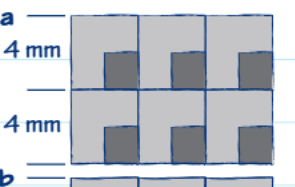 Tessellation works particularly well with laser cutting processes because there's minimal waste between each part. The precision of laser cutting means pieces can be placed very close together without risking damage during the cutting process.
Example
Worked Example: Tessellation Efficiency
Consider shapes that need to be cut from a sheet measuring 96 cm²:
Less efficient layout:
- Waste areas total 24 cm²
- Represents 25% of the original sheet
Proper tessellation:
- Reduces waste to virtually nothing
- Maximises value from each sheet
The key to successful tessellation is thinking creatively about how shapes can fit together. Sometimes rotating pieces or using alternating orientations can unlock much more efficient layouts than obvious arrangements.
Pattern and grain matching strategies
When working with patterned materials or materials with a visible grain structure, additional planning considerations come into play. Pattern matching involves aligning decorative elements so they flow naturally from one piece to another in the finished product.
 However, pattern matching requirements can increase material waste. For example, if a fabric has a pattern that repeats every 10cm, you might need to waste up to 10cm of material each time you match the pattern across different pieces. This waste occurs because you need to align the pattern correctly rather than simply using the most efficient cutting layout.
One strategy to reduce pattern-related waste is to choose materials with smaller pattern repeats when possible. A pattern that repeats every 5cm will typically generate less waste than one repeating every 15cm because you have more flexibility in how pieces can be positioned.
Important
Balancing Efficiency with Quality
Grain matching is particularly important when working with timber, where the direction of wood grain affects both appearance and strength. While matching grain direction creates a more professional appearance, it may require more material than random orientation would need.
Remember: Pattern and grain matching may increase waste but creates better-looking finished products, so balance efficiency with quality requirements.
Summary
Key Points to Remember:
- All unused material in manufacturing represents waste, which directly impacts profits and environmental sustainability
- Smart planning using the three key principles - minimise waste areas, align to edges, and group parts together - can dramatically reduce material waste
- Understanding standard material forms allows designers to plan more efficient projects from the start
- Tessellation techniques can eliminate virtually all waste by fitting shapes together without gaps or overlaps
- Pattern and grain matching may increase waste but creates better-looking finished products, so balance efficiency with quality requirements