Working safely (AQA GCSE Design and Technology): Revision Notes
📚Revision Notes
Working safely
Working safely is a fundamental principle in design and manufacturing that protects both workers and others in the workplace. Understanding how to identify risks, implement safety measures, and use appropriate protective equipment is essential for anyone involved in making activities.
Risk assessment
A risk assessment serves as the foundation of workplace safety. It involves systematically examining any process or workshop activity to spot potential dangers before they cause harm. The main purpose is to identify suitable precautions or control measures that can reduce or completely eliminate risks.
When conducting risk assessments, you need to consider various types of hazards that commonly occur in workshop environments. These hazards can be grouped into several categories, each presenting different challenges and requiring specific safety measures.
Important
Critical Safety Principle
Risk assessment must be completed before any work begins. Never assume a workplace is safe without properly identifying and evaluating all potential hazards first.
Physical hazards include hot items or liquids that can cause burns, electrical risks from faulty equipment or exposed wiring, and bright flashes that can damage eyesight. Sharp items such as blades, chisels, or broken materials pose cutting risks, while flying debris from grinding or cutting operations can cause serious injuries.
Note
Physical Hazard Examples
Physical hazards are often the most immediately visible dangers in a workshop. They include anything that can cause direct physical harm through contact, exposure, or proximity. Always be aware of your surroundings and maintain safe distances from potential physical hazards.
Mechanical hazards involve entrapment in moving parts of machinery, tripping or slipping on wet or cluttered surfaces, and working at heights where falls could occur. The operating strength of tools or machinery can also present risks if equipment fails or is used beyond its capacity.
Environmental hazards include exposure to toxic substances through fumes, spillages, and splashes, as well as excessive vibrations from power tools that can cause long-term health issues.
Safe working practices
Maintaining safety in the workshop requires following established procedures and maintaining constant awareness of your surroundings. These practices form the backbone of accident prevention and create a culture where everyone can work confidently.
Keep your work area clean and organised at all times. Knowing where emergency stops are located and never working alone ensures help is available if needed. When moving around the workshop, always walk rather than run, and carry tools and equipment safely to prevent accidents.
Note
Workshop Organization
A well-organized workspace isn't just about efficiency – it's a critical safety measure. Clutter creates tripping hazards, makes emergency equipment harder to reach, and can hide potential dangers. Take time to organise your workspace before beginning any task.
Behave responsibly and avoid distracting others who are operating machinery or handling dangerous materials. Ensure all tools remain in good working condition through regular maintenance and inspection. Only use machines or tools that you have been properly trained to operate, and always follow the manufacturer's instructions exactly.
Important
Never Bypass Safety Features
Safety guards and protective devices must always be in place before operating any machinery. These features are designed to prevent serious injuries and should never be removed or bypassed for convenience.
Never leave machines unattended or switched on when not in use, and always switch off equipment when changing tooling or making adjustments. Report all accidents and near-misses immediately, regardless of how minor they may seem. Always secure your work with clamps when required, and ensure adequate extraction systems are in place for dust and fumes. Finally, tie back any loose clothing or hair that could become caught in machinery.
Personal protective equipment
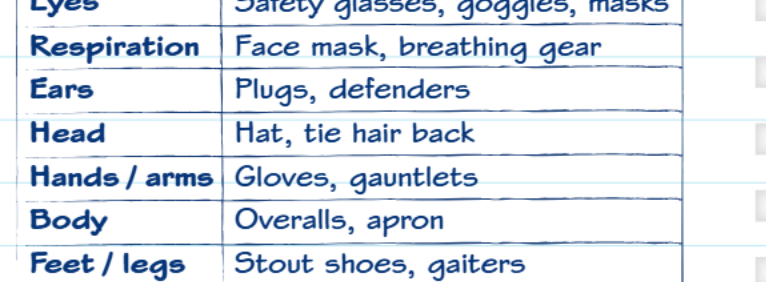
Personal protective equipment provides the last line of defence against workplace hazards when other safety measures are not sufficient. Different types of PPE protect specific parts of the body, and choosing the right equipment depends on the particular risks present in your work environment.
Important
PPE Selection Principle
PPE should complement, not replace, other safety measures. Always address hazards at their source first through engineering controls and safe work procedures before relying on personal protective equipment.
Eye protection includes safety glasses for general workshop use, goggles for chemical work, and specialised masks for welding or grinding operations. These protect against flying particles, chemical splashes, and harmful radiation.
Note
Eye Protection Guidelines
Your eyesight is irreplaceable. Even minor eye injuries can have lasting consequences. Choose eye protection based on the specific hazard – impact, chemical, or radiation – and ensure it fits comfortably to encourage consistent use.
Respiratory protection involves face masks for dust and particulates, and breathing apparatus for environments with toxic fumes or insufficient oxygen. Proper respiratory protection prevents lung damage from inhaling harmful substances.
Hearing protection comes in the form of earplugs for moderate noise levels and ear defenders for high-noise environments like machine shops. Protecting your hearing prevents permanent damage from prolonged exposure to loud sounds.
Note
Hearing Damage Prevention
Hearing loss from noise exposure is permanent and often gradual. If you need to raise your voice to be heard by someone arm's length away, the noise level requires hearing protection.
Head protection includes hard hats for construction work and hair restraints to prevent entanglement in machinery. These simple measures prevent serious head injuries and accidents.
Hand and arm protection involves selecting appropriate gloves for the specific hazard, whether chemical-resistant, cut-resistant, or heat-resistant gloves, along with gauntlets for extended arm protection during welding or handling hot materials.
Body protection includes overalls to protect your clothing and skin from chemicals or sparks, and aprons for specific tasks like metalworking or chemical handling.
Foot and leg protection requires sturdy shoes with reinforced toes and slip-resistant soles, along with gaiters to protect the lower legs from sparks or chemical splashes.
Safety signs and visual communication
Safety signs provide immediate visual communication about hazards, requirements, and emergency information. Understanding these signs is crucial for maintaining safety in any workshop or manufacturing environment.

Note
Universal Safety Communication
Safety signs follow international standards to ensure consistent understanding across different workplaces and countries. Learning these symbols once helps you stay safe in any workshop environment.
Prohibition signs use red circular symbols to indicate actions that must not be taken or behaviours likely to cause health risks. These signs clearly communicate what is forbidden in specific areas.
Mandatory signs appear as blue circles and show the correct actions that must be carried out or followed. They indicate required safety measures such as wearing specific PPE or following particular procedures.
Warning signs are yellow triangular symbols that alert you to potential dangers in the area. These signs help you prepare for and avoid hazardous situations before they become dangerous.
Direction signs use green rectangular formats to indicate areas of safety or medical assistance. They often include directional arrows to guide people to emergency exits, first aid stations, or assembly points.
Fire equipment signs show the location of firefighting equipment using red rectangular symbols. These ensure that fire safety equipment can be quickly located during emergencies.
Chemical hazard warning signs appear as orange diamond shapes and provide information about hazardous substances, often following international classification systems that indicate specific types of chemical dangers.
Legal framework and responsibilities
Understanding the legal requirements for workplace safety helps ensure compliance and protects both employers and workers. The Care of Substances Hazardous to Health regulations, commonly known as COSHH, represent a key piece of legislation in this area.
Important
Legal Compliance Requirement
COSHH regulations are legally binding. Failure to comply can result in serious legal consequences for both employers and workers. Understanding and following these regulations protects everyone in the workplace.
COSHH requires employers to prevent or reduce workers' exposure to hazardous substances. This means employers must identify what health hazards exist in their workplace and decide how to prevent harm to health through comprehensive risk assessments. The regulations cover a wide range of substances including chemicals, fumes, dusts, vapours, and biological agents.
Under COSHH, employers must provide appropriate training, ensure proper use of control measures, conduct health surveillance where necessary, and plan for accidents and emergencies. Workers also have responsibilities to follow training, use protective equipment properly, and report any problems with safety measures.
Note
Shared Responsibility
Workplace safety is a shared responsibility. While employers must provide safe working conditions and proper training, workers must actively participate by following procedures, using safety equipment, and reporting hazards or concerns.
Summary
Key Points to Remember:
-
Risk assessment is essential - Always identify potential hazards before starting any work and implement appropriate control measures to reduce or eliminate risks.
-
Follow safe working practices - Keep work areas clean, use tools properly, maintain equipment in good condition, and never work alone with dangerous machinery.
-
Choose appropriate PPE - Select the right protective equipment for each body part at risk, and ensure it fits properly and is maintained in good condition.
-
Understand safety signs - Learn to recognise different types of safety signs and their meanings to respond appropriately to workplace hazards and requirements.
-
Know your legal responsibilities - Understand COSHH regulations and other safety legislation to ensure compliance and protect yourself and others in the workplace.