Surface treatments and finishes (AQA GCSE Design and Technology): Revision Notes
📚Revision Notes
Surface treatments and finishes
Surface treatments and finishes serve to enhance both the functional and aesthetic qualities of textile materials. These processes help protect fabrics from various threats including heat, dirt, liquids, and general wear, while also enabling creative design possibilities.
Note
Surface treatments can be applied at different stages of textile production - during yarn creation, fabric manufacturing, or as finishing processes on completed textiles.
Dyeing techniques
Dyeing is a process that uses coloured pigments to alter the appearance of yarn, fibre, or completed fabric. This can be done through manual methods or large-scale industrial processes, depending on the intended application and scale of production.
Understanding dye types
There are two main categories of dyes used in textile production, each offering different benefits and challenges.
Natural dyes originate from organic sources such as plants, roots, berries, and flowers. These dyes provide an environmentally responsible option since they break down naturally without causing ecological harm. However, they typically produce more muted colours and may require additional processing steps to achieve desired results.
Note
Common sources of natural dyes include indigo from woad plants, red from madder root, yellow from turmeric, and brown from walnut hulls. These have been used for thousands of years across different cultures.
Chemical dyes are created from petroleum-based materials and various minerals. While these synthetic options can pose environmental and health concerns, they offer significant advantages including more vibrant and precise colours, reduced costs, and simpler processing requirements.
Important
While chemical dyes offer superior colour consistency and brightness, their environmental impact has led to increased interest in sustainable dyeing practices and eco-friendly alternatives in modern textile production.
Dyeing application methods
Rather than simply submerging entire pieces of fabric in dye, various specialised techniques allow for creative pattern-making and controlled colour application.
 Dip dyeing involves immersing only selected sections of fabric into the dye solution. This creates gradient effects where some areas remain in their original state while others take on the new colour, resulting in interesting transitions and patterns.
Direct printing uses specially crafted blocks made from materials like wood and foam to transfer colour directly onto fabric surfaces. This method allows for precise pattern repetition and detailed designs.
Example
Worked Example: Block Printing Process
Step 1: Create or select a printing block with raised design elements Step 2: Apply dye or ink evenly to the block surface Step 3: Press the block firmly onto the fabric surface Step 4: Lift carefully to reveal the printed pattern Step 5: Repeat to create consistent patterns across the fabric
Resist dyeing works by treating certain areas of fabric to prevent dye absorption. The treated sections maintain their original colour while untreated areas accept the new dye, creating contrasting patterns.
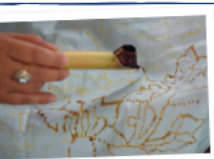 Batik functions similarly to resist dyeing but specifically employs wax as the blocking agent. The wax is applied to areas that should remain unchanged, creating a barrier that prevents dye penetration in those specific locations.
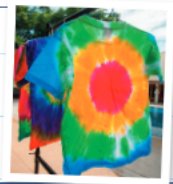 Tie dyeing produces distinctive patterns by binding or folding fabric before applying dye. This prevents uniform colour coverage and results in characteristic swirled, circular, or radial patterns that are popular in casual clothing and artistic textiles.
Mordants and colour fixation
Many dyes require additional chemicals called mordants to properly bond with fabric fibres. These fixing agents are applied before the dyeing process begins, creating chemical connections between the dye molecules and the fabric structure. This ensures colours remain stable through repeated washing and regular use.
Important
Without proper mordanting, many dyes will fade quickly or wash out completely. The choice of mordant can also affect the final colour achieved, sometimes producing entirely different hues from the same dye.
An important consideration is that natural fibres generally absorb dyes more effectively than synthetic materials. The final colour achieved often depends on the fabric's original hue, which may need to be bleached first to create more accurate or intense colour results.
Fabric protection methods
Fabric protection treatments significantly extend material lifespan while maintaining both appearance and functionality. These protective measures can be applied during the yarn production stage or after fabric completion, depending on the specific treatment and intended use.
Note
The timing of protection treatments is crucial - some work better when applied to individual fibres before weaving, while others are more effective as finishing treatments on completed fabrics.
Types of protective treatments
Flame retardant treatments involve applying halogenated or phosphorus-based chemicals to reduce fabric flammability. These treatments are essential for clothing, upholstery, and other textiles used in situations where fire safety is critical.
Stain protection employs specialised chemicals that create barriers preventing dirt and liquids from penetrating fabric fibres. This treatment makes cleaning more effective and helps preserve the material's original appearance over extended periods.
Example
Worked Example: Stain Protection in Action
When a liquid spills on treated fabric: Step 1: The protective coating causes the liquid to form beads rather than soak in Step 2: The liquid can be quickly blotted away before penetration occurs Step 3: Any remaining residue can be easily cleaned with minimal effort Step 4: The fabric maintains its original appearance and properties
Crease resistance involves applying resinous chemicals that prevent permanent wrinkling when materials experience folding or compression during use. This treatment is particularly valuable for garments and furnishing fabrics that need to maintain a smooth, professional appearance.
Water proofing applies materials such as PVC or polyurethane to fabric surfaces to repel moisture. This treatment is crucial for outdoor clothing, camping equipment, and other textiles that will be exposed to wet conditions.
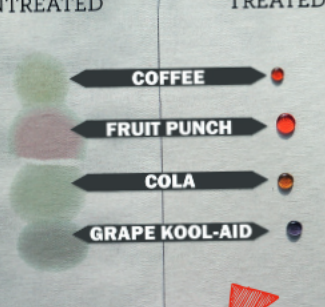 The effectiveness of these protection treatments becomes clear when comparing treated and untreated fabrics. Treated materials demonstrate significantly better resistance to staining and damage when exposed to various substances, making them easier to clean and maintain over time.
Summary
Key Points to Remember:
- Surface treatments improve both functional performance and visual appeal of textiles, offering protection against heat, dirt, moisture, and general wear
- Natural dyes provide environmentally friendly options with subtle colours, while chemical dyes deliver brighter results with easier processing
- Creative dyeing techniques like batik, tie-dye, and resist methods produce unique patterns by controlling which fabric areas receive dye
- Protective treatments including flame retardants, stain barriers, crease resistance, and waterproofing significantly extend textile durability and performance
- Mordants create essential chemical bonds that help dyes remain stable and colorfast through use and cleaning