Hot Desert Adaptations (AQA GCSE Geography): Revision Notes
📚Revision Notes
2.3.2 Hot Desert Adaptations
Note
Hot deserts have distinct characteristics that allow certain species to thrive in such an extreme environment. Plants and animals have developed adaptations which allow them to survive in hot
Plant Adaptations
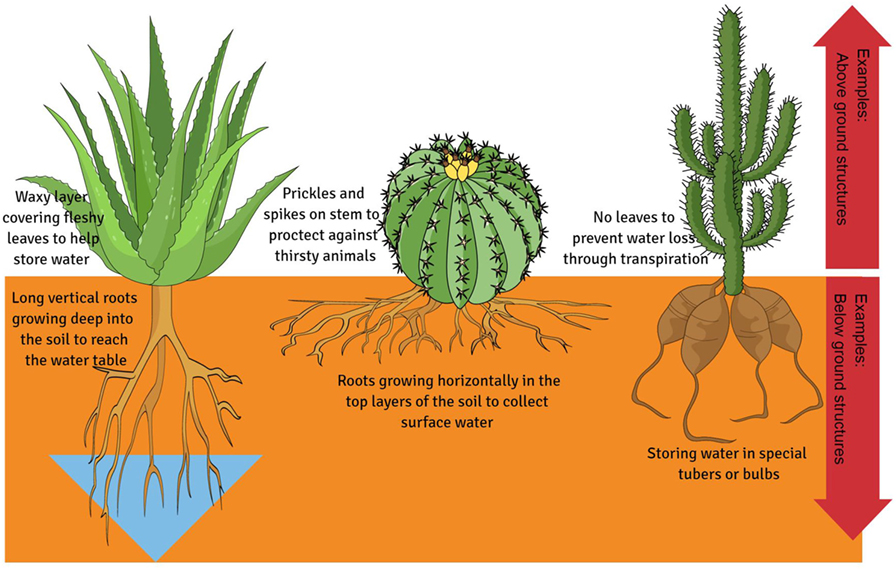
- Small Leaves
- Ensure less water is lost from the plant by transpiration because the leaf has a smaller surface area.
- Tap Roots
- Long roots (7-10 metres long) that reach deep underground to access water supplies.
- Much longer and bigger than the plant visible at the surface.
Plant Adaptations
- Spines
- Some plants have spines instead of leaves (e.g., cacti).
- Spines lose less water than leaves and are efficient in a hot climate.
- Spines also prevent animals from eating the plant.
- Waxy Skin
- Some leaves have a thick, waxy skin on their surface, reducing water loss by transpiration.
- Water Storage
- Some plants, known as succulents, store water in their stems, leaves, roots, or fruits.
- Plants that store water in their leaves and stems also have thick waxy skin, reducing water loss by transpiration.
How Have Animals Adapted?
Camel Adaptations
Camel Adaptations
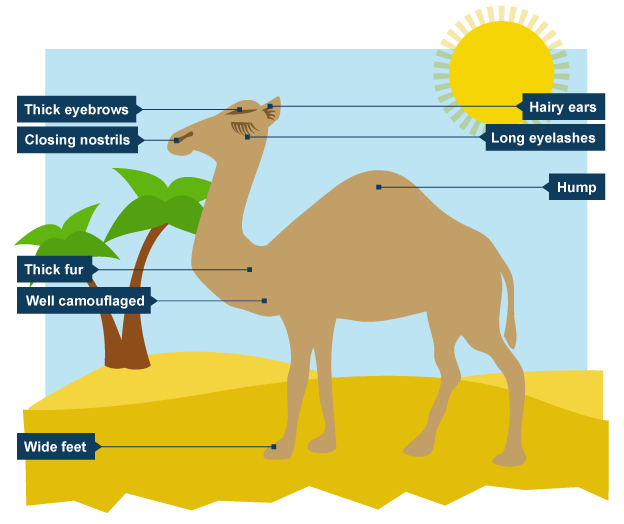
- Long Eye Lashes, Hairy Ears, and Closing Nostrils
- Help keep out sand.
- Thick Eyebrows
- Stand out and shade eyes from the sun.
- Wide Feet
- Prevent sinking in the sand.
- Water Conservation
- Can go without water for over a week because they can drink gallons in one go.
- Can go months without food, storing fat in their humps.
- Temperature Regulation
- Body temperature can change to avoid losing water through sweating.
- Camouflage
- Well camouflaged to blend into their environment.
- Behaviour
- Thick fur helps to keep them warm at night.
Fennec Fox Adaptations
Fennec Foxes
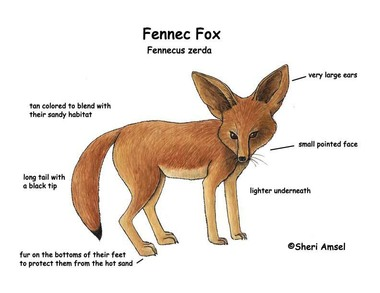
- Nocturnal to stay cool at night.
- Large ears provide a large surface area to lose heat and are covered in fur to insulate.